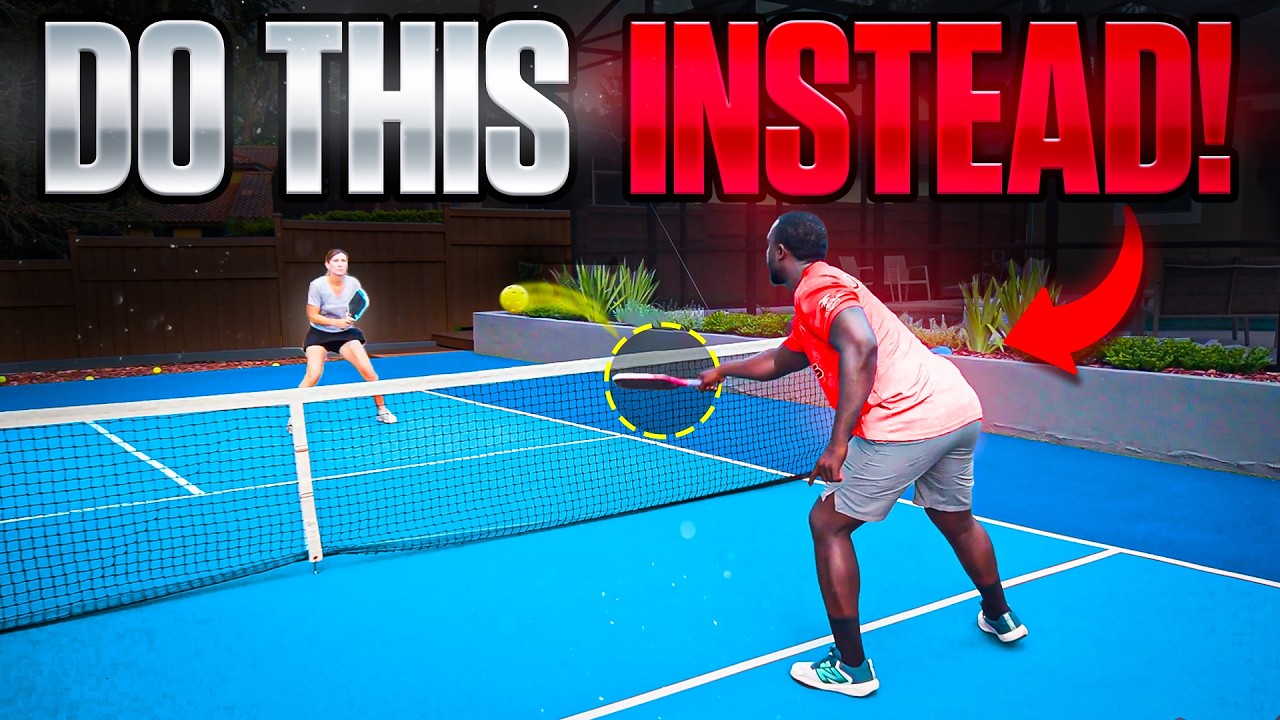
If the ball always feels too fast, your feet are the problem, not the pace. These 3 pickleball footwork drills train you to move before the ball arrives so you stop reaching and start controlling.
If the ball always feels too fast in your pickleball games, your pickleball footwork is the reason, not the ball itself.
Most players spend all their practice time on paddle work, spin, and speed-ups. They never train their feet on purpose.
The result is predictable. You reach, you pop it up, you lose control. You feel rushed on shots that should feel comfortable.
These three drills come from Cliff Pickleball on YouTube, built specifically for 3.5 and 4.0 players who keep asking the same question: why am I always late?
The answer is almost always the same, and the fix is simpler than you think.
Love pickleball? Then you'll love our free newsletter. We send the latest news, tips, and highlights for free each week.
The Real Problem Is Not the Ball Speed
The ball feels fast because your feet are slow. That is the whole story.
When you move at the same moment you try to hit, you are already behind.
Reaching kills your control, and once you are reaching you are just surviving the shot instead of placing it.
The fix is a mindset shift as much as a physical one. Move before you make contact.
That single habit separates players who look calm from players who always look like they are scrambling.
When you move first, you buy a half second of stillness before contact, and that is where you actually see the court.
You can read where your opponents are standing, find the open side, and hit with intention instead of desperation.
If you want the technical side of the movement itself, this breakdown of how to improve your pickleball footwork pairs well with everything below.
Drill 1: The Throw, Move, Hit Sequence
This drill trains the core habit of moving before you swing. You only need a basket of balls and some open space.
Here is how it works:
- Toss a ball to your side, away from your body.
- Move your feet first before you swing.
- Then hit the ball after you have established your position.
You can throw the ball high if you need extra time to think through the movement decision. The goal is to make moving first a reflex, not an afterthought.
Most players are shocked by how unnatural this feels at first. Their instinct is to reach.
That instinct has been built over hundreds of repetitions of doing the wrong thing.
This drill rewires it.
Do this consistently and you will stop reaching mid-rally. You will start arriving, which is a completely different feeling.
If you want to see what poor shot selection looks like when you are always late, check out this breakdown of 6 in-game pickleball mistakes you are making right now.
Why Do Tennis Players Struggle With This?
Tennis players come to pickleball with a serious habit that works against them: happy feet.
In tennis, constantly moving your feet is smart because the court is huge and the ball travels far.
In pickleball, that habit becomes a liability. The court is smaller, and every shot requires much more stability at the moment of contact.
If your feet are still dancing when the paddle meets the ball, you will pop it up or hit it long almost every time.
The goal is not to shuffle frantically. It is to get into position and be still before the ball arrives.
Think less like a tennis player chasing down balls and more like a goalkeeper who reads the play early and gets set.
For a deeper look at tennis habits hurting your pickleball game, that article covers several of the most common crossover problems.
 The Dink Media Team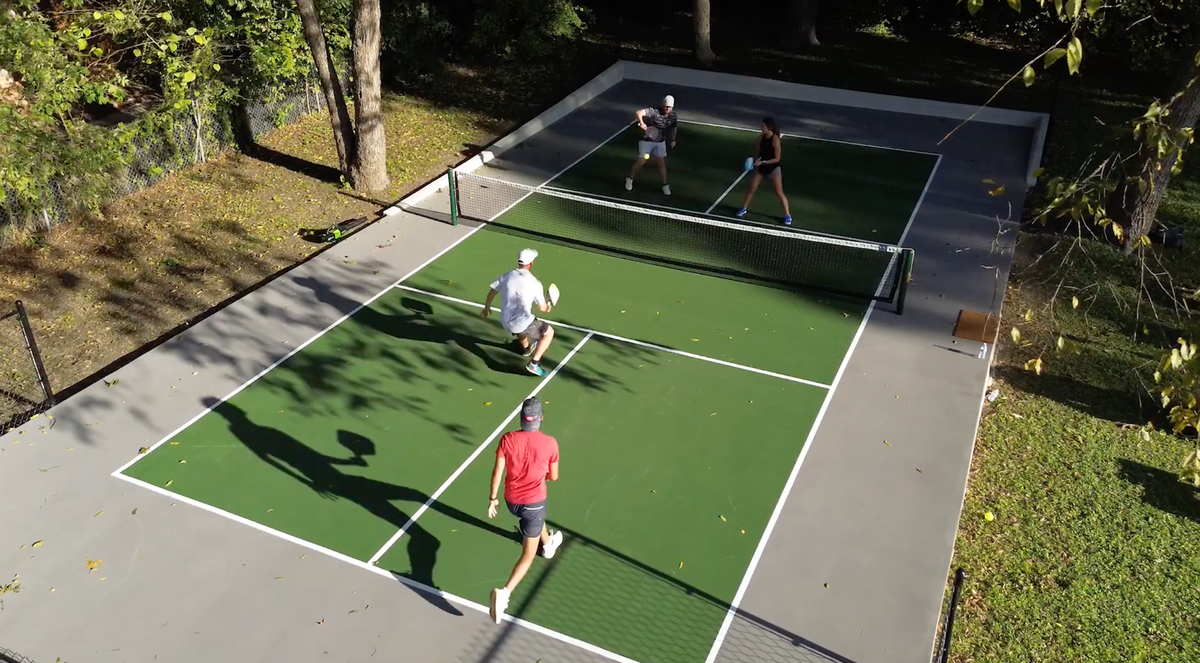
Drill 2: The Second Bounce Method
This is the drill that changes how you read pace. Most players watch the first bounce and freeze there. That is the mistake.
Here is the concept: when a ball lands, it does not stay where it bounced.
It keeps moving. A ball with pace is going to continue traveling after that first contact with the court.
The second bounce is where that ball would land if the court kept going.
Your job is to track that second bounce location and move toward it immediately after the first bounce, not after.
When you train yourself to watch for the second bounce, something clicks. You stop chasing the ball reactively and start reading it predictively.
You are no longer surprised by where it ends up because you already knew.
Watch what this looks like in practice:
- Ball is thrown or hit toward you.
- First bounce happens. You are already reading the trajectory and pace.
- You begin moving toward the second bounce location before the ball even gets there.
- By the time the ball arrives at your contact point, your weight is loaded and you are set to hit.
The weight transfer is worth noting here. Even on a simple lateral step, you should still be shifting your weight onto the contact-side leg as you hit.
Then return to your ready position after.
That stability is what makes the difference between a clean drive and a floater that gets punished.
If you want to go deeper on anticipating where the ball is going before it gets there, these court positioning tells are a great companion read.
 The Dink Media Team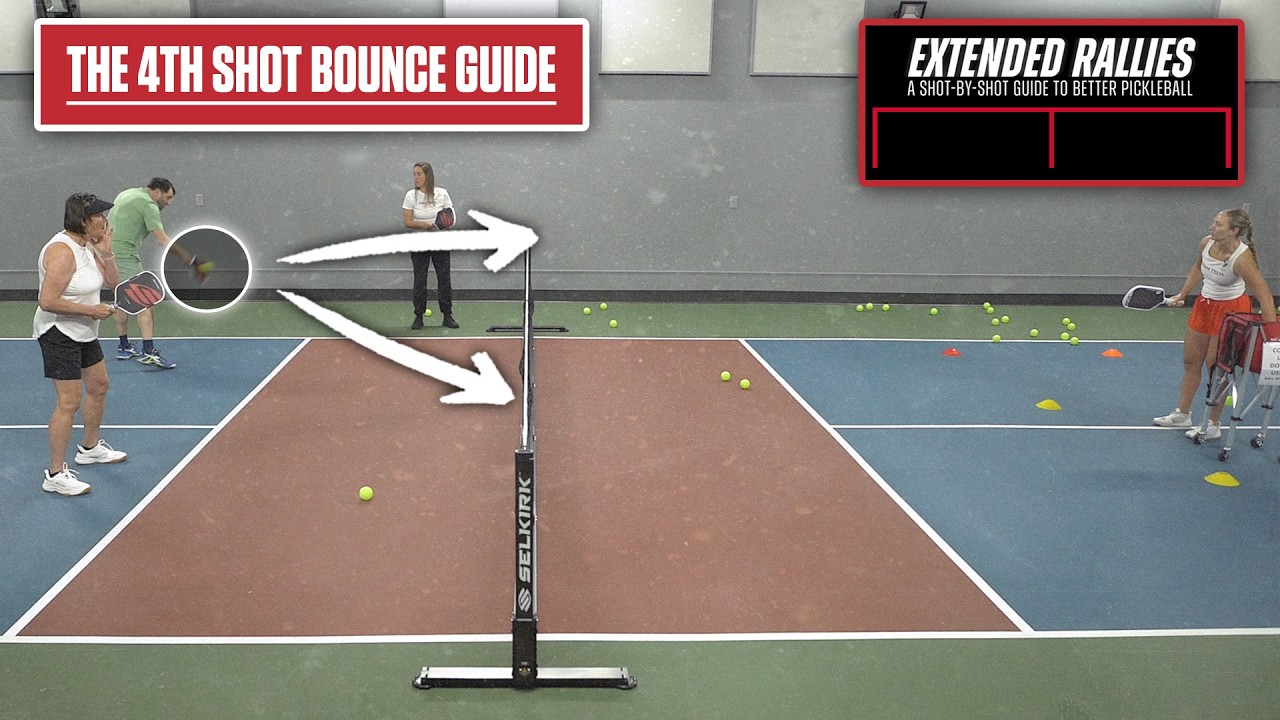
What Makes Ben Johns Look Like He Is Moving in Slow Motion?
Ben Johns does not look fast. He looks deliberate. Players who watch him for the first time often say he seems almost slow, and yet he gets to every ball.
The reason is anticipation. He understands where the ball is going before it gets there, and he positions his body to be in the right place at the right moment.
He is never chasing. He is always arriving.
That is the standard to chase. Not frantic movement, but smart early movement. You do not need elite athleticism to do this.
You need reps training your brain to read the court earlier.
Understanding what higher-rated players actually see on the court helps explain why their footwork always looks so effortless.
 The Dink Media Team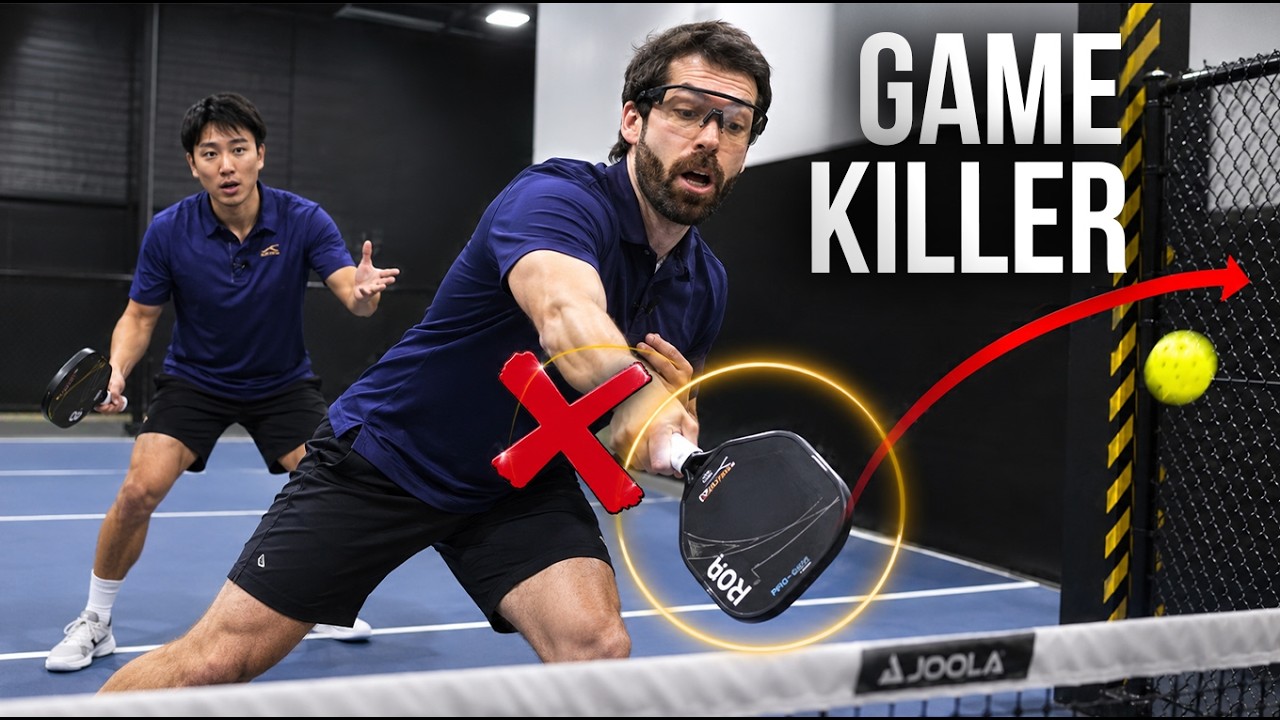
Drill 3: Drive, Reset Space, and Move Forward
This third drill targets a very specific and very common mistake: stepping too deep into the court after you drive the ball.
Here is what happens when you do it wrong. You drive the first ball and rush forward. Your opponent blocks it at your feet.
Now you have no space, no time, and almost no chance of keeping the ball in play cleanly. Even if you dig it out, it is floating, and they are ready to smash it.
The correct sequence looks like this:
- Drive the first ball and step into the court briefly for momentum.
- Immediately recover back to create space between you and the ball.
- Hold that space so the next ball, even if it is low, does not jam you.
- Once you hit your next controlled shot, use that momentum to advance forward.
- As soon as your opponent is about to hit, stop and get low. No split step required here, just stillness and a low base.
The mistake most players make is running hard into the kitchen after the drive. They think urgency equals good court movement.
It does not. Controlled advancement beats frantic rushing every single time.
Creating that buffer of space gives you options. When the ball is blocked at your feet and you have no room, you are at 50/50 odds at best.
When you have space, you are in control of the point.
For a look at how the transition zone specifically works against players who rush, this breakdown of the transition zone covers the mechanics well.
 The Dink Media Team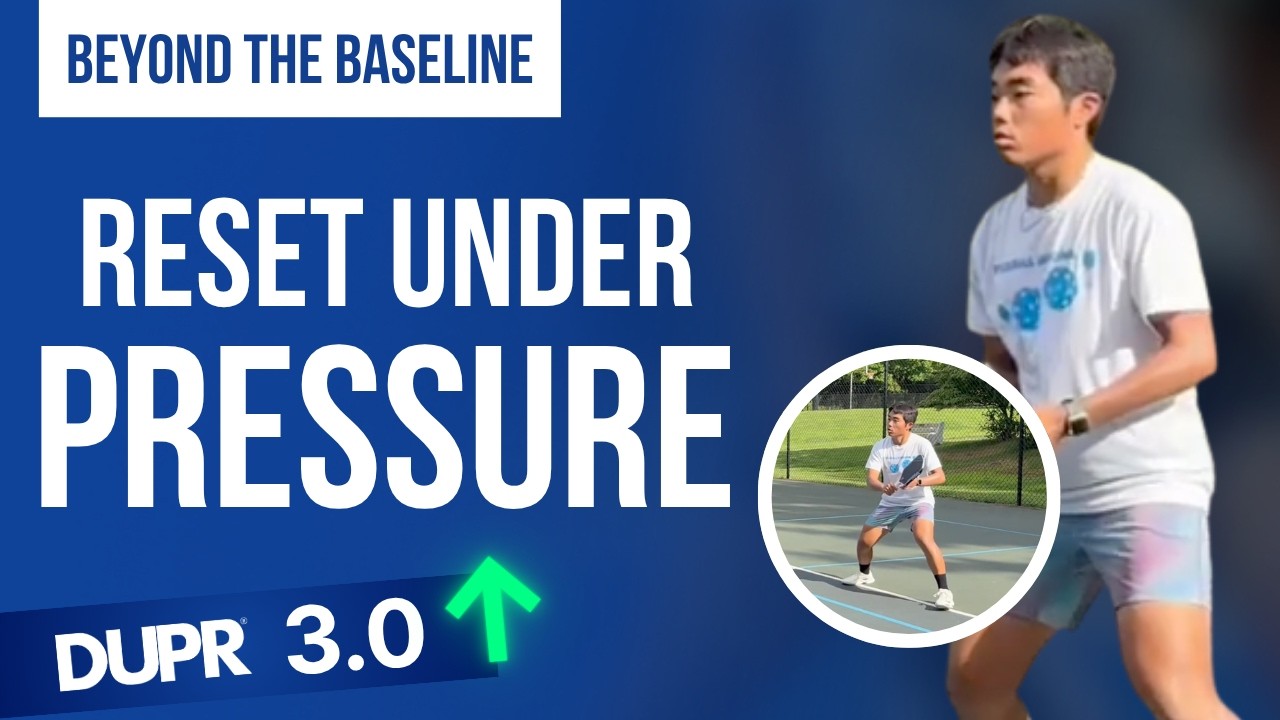
How Do These Drills Connect to Each Other?
Each of these three drills builds on the same core idea: being early is everything.
The throw, move, hit drill builds the reflex of moving before contact. The second bounce method trains your eyes to read pace and trajectory before the ball arrives.
The drive and reset drill teaches you to manage your court position after the attack so you stay in control of the point rather than scrambling.
When all three are working together, you stop reacting and start playing.
That is when the ball starts to feel slower, not because anything changed about the game, but because you are already where you need to be.
For players trying to break through to the next level, these mindset shifts for 3.5 players are worth reading alongside these drills.
 The Dink Media Team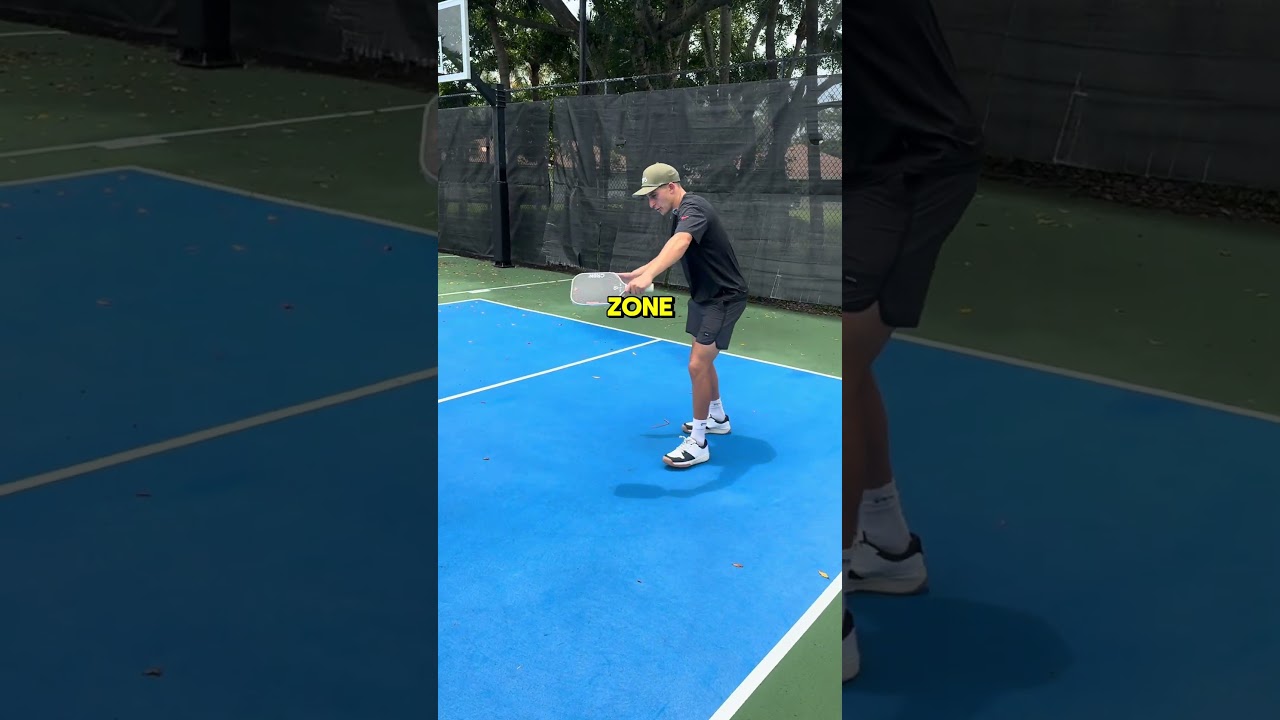
Putting the Drills Into a Real Practice Session
You do not need a full court to work on any of these. A basket of balls, a wall, or even a partner feeding from a short distance is enough.
Here is a simple structure to follow:
- 10 minutes of throw, move, hit on your forehand and backhand sides.
- 10 minutes focused on reading the second bounce, starting with slower tosses and building up pace.
- 10 minutes of drive, recover, reset with a partner or ball machine to simulate the third drill in a real rally context.
Do these three times a week and the results will show up in your games within a few sessions. You will stop being late. You will stop reaching.
You will start looking like the player who always seems to have more time than everyone else on the court.
For players who want to build a more complete drilling blueprint, this 90-minute drilling guide from a PPA pro is an excellent starting framework.
And if you want to see how bad habits at the 3.5 level specifically hold players back, these 15 bad habits you may not know you have is a sharp reality check.
The ball is not too fast. You just have not trained your feet to get there first. Start with these drills, stay consistent, and that feeling of being rushed will disappear.
Frequently Asked Questions
Why does the ball always feel too fast in pickleball?
The ball feels fast because your feet are not moving early enough, not because the ball is actually faster. When you move at the same time you try to hit, you are already behind. Training yourself to move before contact is the direct fix.
What is the second bounce method in pickleball footwork?
The second bounce is the location where the ball would land if the court kept going after the first bounce. By tracking that spot immediately after the first bounce, you move earlier and arrive set rather than scrambling. It eliminates reactive chasing and replaces it with predictive positioning.
Should I use a split step in pickleball?
A split step is not always necessary, especially at the kitchen line during a drive sequence. What matters more is getting low and stopping your forward momentum before your opponent contacts the ball. Stillness at the right moment beats a textbook split step done at the wrong time.
Why do tennis players struggle with pickleball footwork?
Tennis players often develop happy feet, constant small shuffling movements, because the larger court demands it. In pickleball, that habit creates instability at contact and leads to popped-up shots or errors long. The smaller court rewards stillness and a solid base over constant movement.
How many times a week should I practice pickleball footwork drills?
Three sessions per week with focused footwork practice is enough to create noticeable changes within a few weeks. Even 30 minutes split across the three drills outlined here will rewire your movement habits faster than hours of casual rally play. Intentional repetition beats volume every time.

Love Pickleball? Join 100k+ readers for free weekly tips, news & gear deals.
Subscribe to The Dink