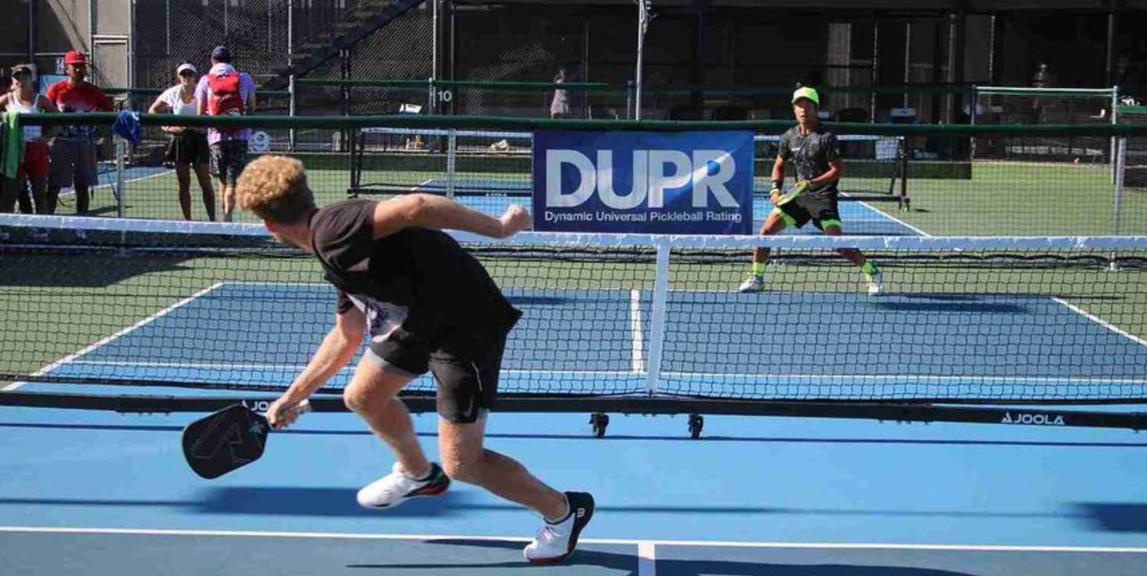
How to Reset in Pickleball When You Are Under Attack at the Kitchen
Knowing how to reset when attacked kitchen pickleball firefights erupt is what separates 4.0 players from 4.5s. Master these techniques and you'll stop giving away free points under pressure.
Knowing how to execute a pickleball reset when exchanges get ugly is the single most underrated skill in the game. Not the third shot drop. Not the ATP. The reset.
Because if you can't neutralize a hard ball coming at your body at the NVZ line, none of your offensive weapons matter.
Here's the reality: most recreational players panic when they're getting attacked.
They tighten up, swing too hard, and gift their opponents exactly what they wanted. A popped-up ball. A free put-away.
A point they didn't earn. You can stop that cycle today.
Love pickleball? Then you'll love our free newsletter. We send the latest news, tips, and highlights for free each week.
What Is a Reset in Pickleball, and Why Does It Change Everything?
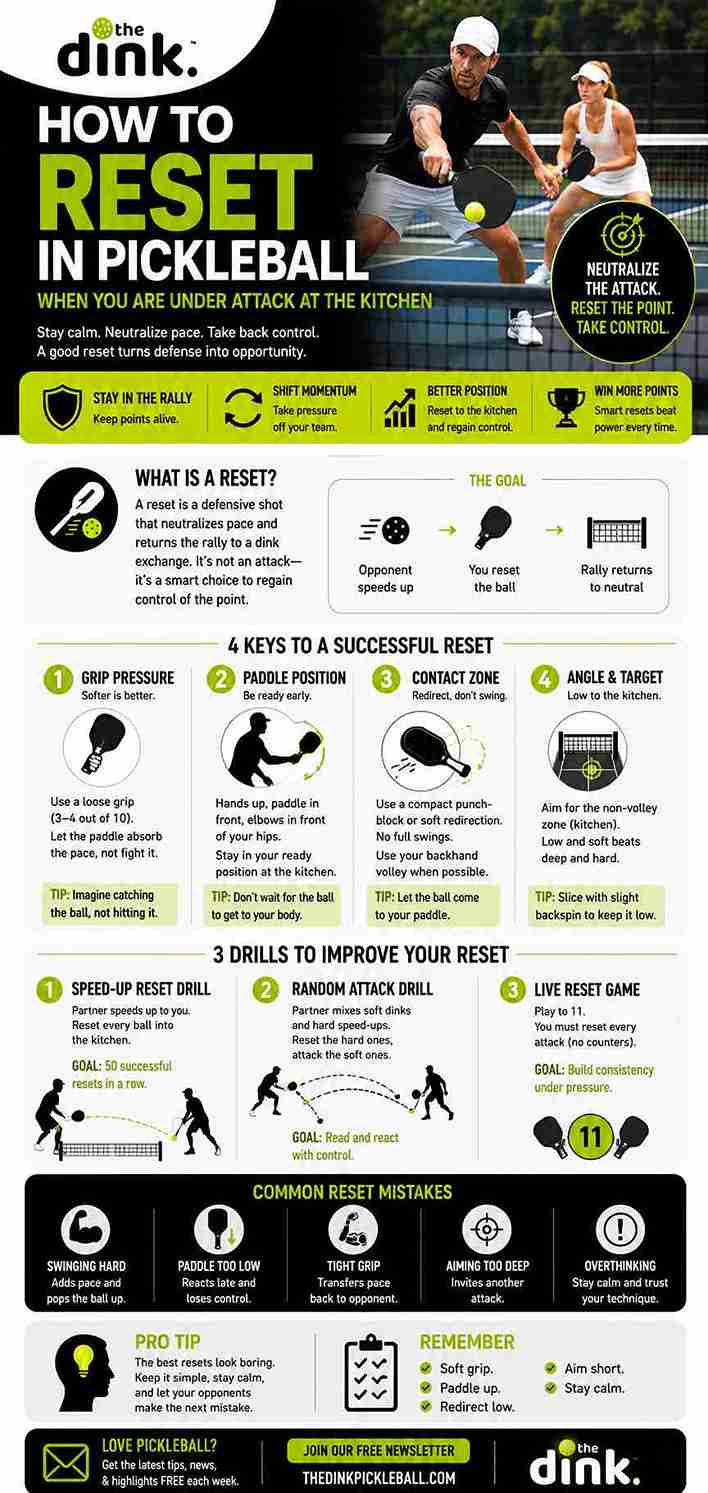
A pickleball reset is a defensive shot designed to neutralize pace and return the rally to a dinking exchange.
It's not a counter-attack. It's not a block. It's a calculated surrender of aggression in exchange for court position and control.
When your opponents speed up from the kitchen line, they're making a calculated bet: that you'll either miss outright or pop it up.
A successful reset proves them wrong. The ball lands soft in the non-volley zone, the rally resets to neutral, and suddenly you're the one with options again.
Understanding the pressure zone in pickleball is the first step here.
Knowing when you're in danger before the ball arrives is what lets you prepare the right response instead of reacting in survival mode.
Why Most Players Fail at the Pickleball Reset When Attacked at the Kitchen
The problem isn't physical. Most players have the paddle skill to execute a reset. The problem is the swing thought they bring into the shot.
When a fast ball is coming at your chest or shoulder, every instinct says to match the energy. To hit back hard. To fight fire with fire.
That instinct is wrong, and it's costing you points by the dozens.
Contact point matters enormously here.
Balls arriving at or above your shoulder height are the most dangerous to reset because your paddle angle naturally opens up, which sends the ball high. L
ow contact points, around waist or below, are actually far easier to neutralize because gravity is working with you.
The second issue is grip pressure. Squeezing your paddle tighter when you're under attack is almost a universal mistake.
A firm grip transfers pace back into the ball. A loose, relaxed grip absorbs it. This is the whole game.
How to Reset When Attacked: Kitchen Pickleball Situations Demand It
Here's the technical framework, broken into four components. Get all four right and you have a legitimate reset. Miss one and the ball goes back up.
Grip Pressure: The Biggest Variable in a Pickleball Reset
Aim for a grip pressure around 3 or 4 out of 10 when resetting. That sounds absurdly light. It's not.
The paddle face needs to act like a shock absorber, not a racket. When you let your paddle do the work, you stop adding energy to the ball and start redirecting it.
A helpful mental cue: imagine you're trying to catch the ball on the paddle face, not deflect it. That shift in mindset alone will drop your reset errors significantly.
Paddle Position: Ready Before the Ball Arrives
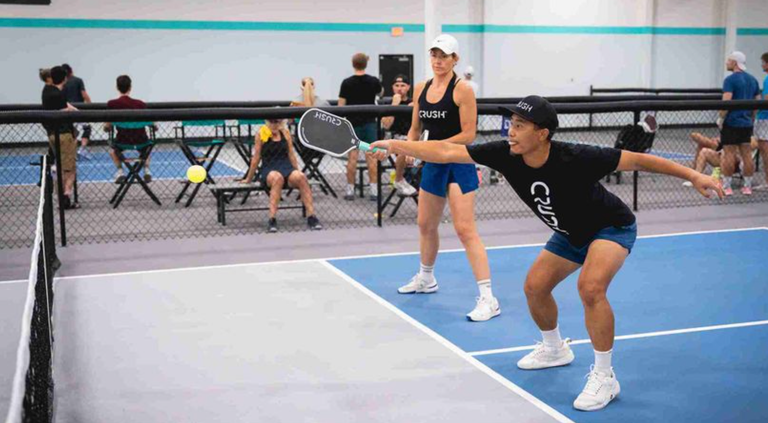
Your reset will fail before it starts if your paddle isn't already up and in front of you. Hands up, paddle face slightly open, elbows in front of your hips.
That's the ready position for defending at the kitchen line.
Most players who struggle with the reset when kitchen rallies get fast are starting with their paddle low or at their side.
By the time they react, they're off-balance and swinging from a bad position. This is a classic kitchen positioning error.
Contact Zone: Redirect, Don't Swing
This is non-negotiable: do not swing at a speed-up ball. The moment you take a full swing at a hard incoming shot, you've lost the reset.
The arm swing adds pace and reduces control.
Instead, use a compact punch-block or a passive redirection.
Move the paddle to the ball's path, absorb contact with a relaxed arm, and guide the ball downward toward the kitchen.
Think of it as a controlled deflection. The backhand volley is your best friend here.
It's naturally in front of your body and requires less arm movement than a forehand response.
Angle and Target: Low to the Kitchen
Your target is always the NVZ. Not deep. Not the sideline. The kitchen. Resetting to a deep ball gives your opponent another easy attack.
Resetting into the non-volley zone forces them to hit upward on the next shot, which immediately shifts pressure back.
A slice reset shot with slight backspin can be devastating when executed right because the ball stays low after bouncing and drags your opponent into an uncomfortable position.
This is the kind of dink variation that elite players use constantly.
What Are the Best Drills to Sharpen Your Pickleball Reset Under Attack?
The pickleball reset under pressure can be trained systematically. You don't need a ball machine. You need a drill partner willing to feed you fast balls.
Drill 1: The Speed-Up Pickleball Reset Drill
Partner stands at the kitchen and deliberately speeds up to your body or backhand. Your job is to reset every single ball into the NVZ. No counter-attacks. No winners. Pure resets, 50 in a row. This is one of the most effective advanced drills you can run because it isolates the exact skill under the exact pressure that makes it hard.
Drill 2: The Three-Ball Reset Sequence
Partner feeds one slow ball, then immediately speeds up the second. You reset the second ball. Partner plays out the third wherever it lands. This builds the pattern recognition you need to recognize an attack coming and pre-load your defensive paddle position.
Drill 3: The Passive Pickleball Reset Block
Stand two feet behind the kitchen line. Have a partner fire balls at you. Keep the paddle completely still. No arm movement. Just paddle placement. This forces you to learn redirection through angles alone, removing the temptation to swing. This drill directly addresses one of the hardest dinking and defense challenges in the game.
How to Stay Composed When Kitchen Pickleball Pressure Gets in Your Head
The mental side of resetting under attack is real. When balls are flying at your body at speed, the physiological stress response fires.
Heart rate goes up. Grip tightens. You react instead of respond. This is where most defensive reset breakdowns happen, not in technique, but in composure.
Research published in the Journal of Sport and Exercise Psychology consistently shows that athletes under pressure revert to pre-trained movement patterns, not cognitively controlled ones.
In plain language: you play the way you've practiced. If you've drilled resets under low pressure, you'll still feel the urge to swing under high pressure.
If you've drilled them specifically under simulated attack conditions, you've hardwired a better response.
Understanding what elite players think during every dink can help you build the composure to execute your reset shot when it counts most.
One tactical tool worth using: the 6-second mental reset. When you're on a losing streak in a firefight, deliberately slow the pace of your own resets.
Let the ball bounce. Take a breath. Pickleball is full of patterns, and breaking the rhythm your opponent is riding is itself a defensive weapon.
The Pickleball Reset Isn't Passive. It's a Weapon.
Here's a concept shift that changes how you think about this skill: the pickleball reset isn't defensive. It's offensive sequencing.
When you successfully reset after being attacked at the kitchen, you've done three things. You survived the attack. You forced your opponent to reload.
And you've bought yourself the chance to re-establish the dinking exchange on your terms.
The most unattackable players in pickleball are the ones who have made their opponents believe that speeding up is pointless.
When you reset consistently, you train your opponents to stop attacking you. That changes the entire tactical flow of the match in your favor.
This is why the five shots every serious player needs include the reset alongside the third shot drop and the speed-up.
It completes the system.
- Drop
- Dink
- Absorb
- Reset
- Re-attack
That's the full loop. Knowing when and how to return a hard block or smash is the natural next step once your pickleball reset mechanics are solid.
For players looking to speed up that development, mastering faster hands in pickleball directly complements every skill covered in this guide.
Key Takeaways
- A pickleball reset is a defensive shot that returns pace to a neutral dinking exchange, not a counter-attack
- Grip pressure is the single biggest technical variable: aim for a 3-4 out of 10, not a death grip
- Backhand volleys reset more reliably than forehand responses because they naturally put the paddle in front of the body
- Compact redirection, not a swing: your arm should barely move on a true defensive reset shot
- Low to the kitchen is always the target: deep resets give opponents another attack opportunity
- Drill resets under speed specifically: pressure training is the only way to hardwire the skill
- A consistent pickleball reset makes opponents stop attacking you, which reshapes the entire match
Frequently Asked Questions
What does it mean to execute a pickleball reset when attacked at the kitchen?
A pickleball reset means absorbing a hard incoming shot and returning it softly into the non-volley zone, slowing the rally back to a neutral dinking exchange. The goal is to neutralize your opponent's speed advantage and regain full control of the point.
Why is the backhand better than the forehand for resetting under attack?
The backhand volley sits naturally in front of your body, which means less swing and more control over your defensive reset shot. When you reset with a forehand, the arm tends to open up and swing across the body, adding unwanted pace that pops the ball up instead of dropping it into the kitchen.
How do I execute a pickleball reset when balls are coming directly at my body?
Body shots are the hardest to reset because there's nowhere to comfortably redirect. Get your elbow up and out, turning the shot into either a forehand or backhand response, and treat it as a compact punch-block. Practice this specific scenario in drills because the correct movement won't feel natural until you've repeated it hundreds of times.
What grip should I use for a pickleball reset?
A continental grip works best for the pickleball reset because it allows quick paddle face adjustments between forehand and backhand without re-gripping. More important than grip style is grip pressure: keep it light, around 3-4 out of 10, so the paddle absorbs pace instead of deflecting it back up.
How long does it take to develop a reliable pickleball reset under attack?
Most players see meaningful improvement in three to four weeks of dedicated reset drilling, assuming they're specifically practicing under speed rather than just dinking slowly. Pair those drills with actual match-play situations and your defensive reset shot becomes instinctive much faster.

Love Pickleball? Join 100k+ readers for free weekly tips, news & gear deals.
Subscribe to The Dink