
5 Essential Senior Pickleball Strategies Every Player Should Master
Senior pickleball strategies aren't about playing less, they're about playing smarter. Here are five essential tactics that help older players win more points, stay injury-free, and outlast opponents who rely on pure power.
Senior pickleball strategies are the reason older players routinely beat opponents half their age.
It's not luck. It's a system, and if you haven't built one yet, you're leaving wins on the table.
Pickleball is the rare sport where experience and IQ genuinely outperform youth and athleticism.
Research published in the Journal of Aging and Physical Activity confirms that tactical sports narrow the age gap dramatically compared to power-dependent activities.
On the pickleball court, a 65-year-old who has mastered shot placement and patience can dismantle a hard-hitting 35-year-old who doesn't understand the game.
Most senior players already have the raw material. What they need is the framework. These senior pickleball strategies give you exactly that.
Love pickleball? Then you'll love our free newsletter. We send the latest news, tips, and highlights for free each week.
Senior Pickleball Strategies Start With Owning the Kitchen
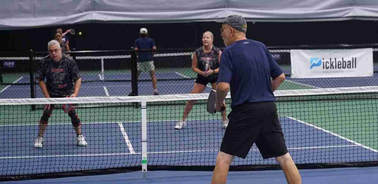
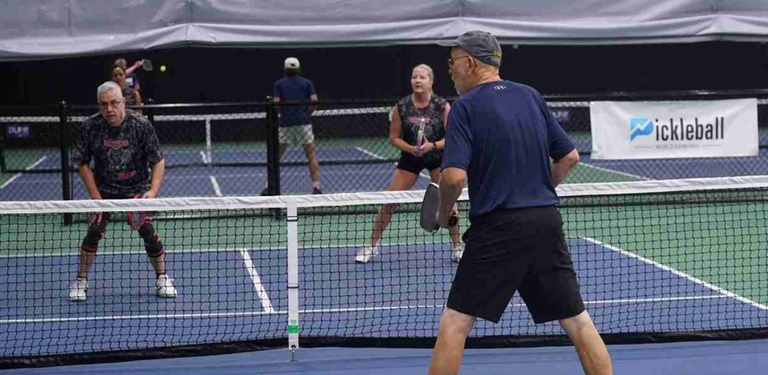
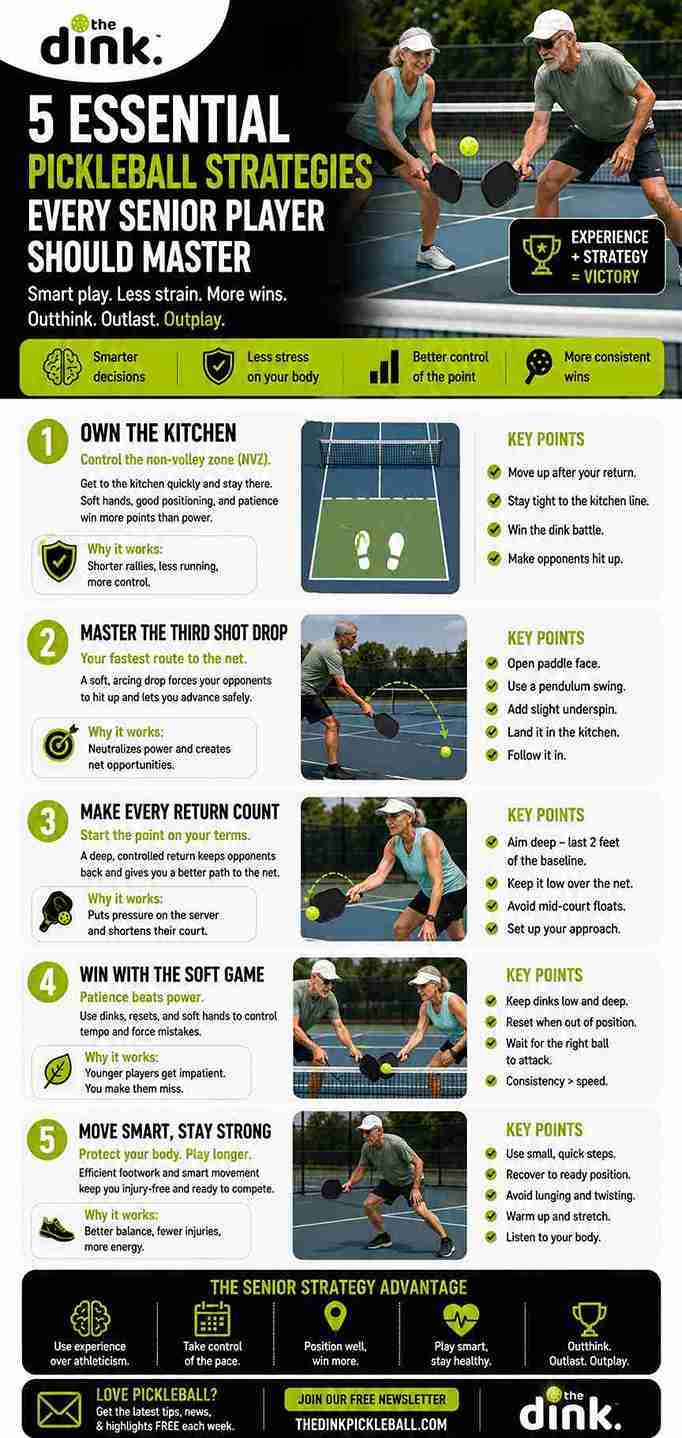
Every solid senior pickleball strategy routes back to the non-volley zone (NVZ), the kitchen. Get there, dominate it, and stay there.
This 7-foot strip of court is where pickleball games are actually decided.
Here's why this matters specifically for older players. As reaction time naturally slows, you want to eliminate situations that demand explosive reflexes.
When both teams are locked into a soft dink exchange at the net, the game slows to your speed.
You're controlling the tempo. You're deciding when the rally escalates.
Positioning at the kitchen isn't just about standing in the right spot, it's about arriving there efficiently after the return and holding that line when your opponent tries to pull you back.
Research from the Journal of Sports Sciences confirms that net dominance in racket sports significantly reduces physical demand by shortening rally time and minimizing court coverage requirements.
That's not a wellness insight. That's a competitive edge.
Turning mediocre dinks into winners is the next step.
Senior players who understand angle selection and spin manipulation in dink exchanges win points their opponents never even saw coming.
Master the Third Shot Drop: Your Fastest Route to Net Control
If you're not hitting the third shot drop consistently, you're making your opponents' lives too easy.
This is the shot that separates recreational players from competitive ones, and it's especially critical for senior pickleball players because it eliminates the footrace to the net.
What is the third shot drop? It's a soft, arcing shot from the baseline on the third shot of a rally that lands in the opponent's kitchen, forcing them to hit up.
When it works, they can't attack. That float time lets you advance to the NVZ line and settle into the dink exchange where you have every advantage.
Think of the third shot drop as your passport. Without it, you're stuck at the baseline trading drives with players who may have more pace.
With it, you're dropping it into the kitchen and walking forward into your preferred game.
The mechanics: open paddle face, continental grip, pendulum swing with slight underspin.
The ball should peak before the net and drop into the kitchen.
Build this through solo drilling sessions at least a few times a week, it's the fastest skill investment that elevates your game.
Why Your Return of Serve Is Costing You Points
Senior pickleball players often underestimate the leverage sitting inside a quality return of serve.
A deep, controlled return pins the server at the baseline, gives you a cleaner path to the net, and reduces how much court you need to cover.
Maximizing your return of serve means targeting depth, not pace. You don't need to blast the return, you need it landing within the last two feet of the baseline.
That keeps the server honest and prevents them from following a weak mid-court ball right to the net ahead of you.
According to USA Pickleball's official resources, the two-bounce rule already gives the returning team a structural advantage.
Use it. A quality return followed by a smart approach is one of the most underrated senior pickleball strategies in the game.
It also sets up your 4th shot positioning in doubles for everything that follows.
The Soft Game Advantage: Why Patient Pickleball Beats Power Every Time
Is the Soft Game the Best Senior Pickleball Strategy for Winning?
Yes, and here's why. The soft game rewards consistency, angle awareness, and patience. All three improve with age and court time.
Unlike speed-based skills that erode over time, soft game mastery compounds. The longer you play, the sharper your reads get.
Experience teaches you how to read spin, recognize patterns, and identify when to escalate.
A 60-year-old who has played five years has seen thousands of dink exchanges.
They know which ball to speed up, which to keep slow, and exactly where to place the ball to create an opening.
Younger players who thrive on hard exchanges get impatient in long dink rallies. They'll eventually pop one up. That's your ball.
The case for boring pickleball makes this point directly: winning with patience isn't passive. It's a calculated approach that forces opponents into mistakes.
The reset shot is essential here when you're pulled out of position or handed a hot ball you can't attack cleanly, a soft reset back to the kitchen neutralizes the point and restarts the dink rally.
Learning to become unattackable is the defensive backbone of this strategy.
Senior players who play patiently and consistently become incredibly difficult to beat because they refuse to give opponents anything to work with.
Know your full shot toolkit. Dinks, drops, resets, lobs, and ATP variations each serve a distinct role.
Protect Your Body: The Senior Pickleball Strategy Nobody Talks About Enough
Here's the senior pickleball strategy most players overlook: staying on the court.
Injury prevention isn't just a wellness concern, it's a competitive one. You can't execute senior pickleball strategies with a flared knee or a strained Achilles.
According to research published in Injury Epidemiology, pickleball injuries in players over 60 most commonly involve the lower extremities, ankle and knee. Most are preventable.
Bulletproofing your knees through targeted strengthening (quad work, single-leg balance, hip stability) dramatically reduces injury risk.
Pair that with a consistent muscle care routine and you're building the foundation for long-term court longevity.
Footwork adjustments matter too. A more conservative split step, lower, wider, more grounded, lets you move efficiently without overextending joints.
Sound stance fundamentals directly support this.
And pre-game warm-up is non-negotiable: adding even 10 minutes of structured warm-up before real play cuts injury risk substantially.
A study from NIH/PubMed found that regular racket sport participation in adults over 60 is linked to lower all-cause mortality and improved cardiovascular health. Players who stay active live longer.
If you're managing arthritis alongside your pickleball habit, the Arthritis Foundation confirms that low-impact racket sports are among the most joint-friendly exercise options for older adults.
Key Takeaways
- Senior pickleball strategies center on court IQ, not athleticism: experience is a real competitive advantage
- Kitchen dominance eliminates the reflexes battle and plays directly to older players' strengths
- The third shot drop is the most important transition shot for getting to the net efficiently
- Deep returns of serve buy time, set up net position, and reduce court coverage demands
- The soft game (dinks, resets, drops) rewards patience and pattern recognition, both improve with age
- Injury prevention is a competitive strategy: staying healthy keeps you in the game long-term
Frequently Asked Questions
What Are the Most Effective Senior Pickleball Strategies for Doubles?
The most effective senior pickleball strategies for doubles prioritize consistent kitchen positioning, soft game control, and minimizing unforced errors. Get to the NVZ line together after the return, maintain a patient dink exchange, and target the middle to reduce your opponents' communication and exploit coverage gaps.
How Should Senior Pickleball Players Prevent Common Injuries?
Build a pre-game warm-up routine, strengthen the muscles surrounding the knee and ankle, and use court shoes designed for lateral movement, not running shoes. A conservative split step reduces joint stress on quick direction changes. For players dealing with chronic joint issues, the Arthritis Foundation recommends pickleball as a low-impact option with proper bracing and scheduled rest between sessions.
Why Is the Soft Game Better Than Power Play for Older Pickleball Players?
Power-based play demands faster reaction times and more explosive movement, both of which decline with age. The soft game (dinks, drops, resets) rewards consistency, angle awareness, and patience, all of which improve with experience. Leaning into the soft game gives pickleball for seniors a structural edge over opponents who rely exclusively on hard exchanges.
What Is the Third Shot Drop and Why Does It Matter for Senior Players?
The third shot drop is a soft, arcing shot from the baseline that lands in the opponent's kitchen, preventing an attack and creating time to advance to the NVZ line. For older pickleball players, it eliminates the need to outrun opponents to the net. It's the most reliable transition shot in pickleball and one of the fastest ways to improve your overall game.
How Often Should Senior Pickleball Players Practice Each Week?
Most sports medicine guidelines suggest 3-4 sessions per week for senior racket sport athletes, with at least one rest day between sessions. USA Pickleball recommends combining recreational play with targeted drilling for the fastest improvement. The AARP pickleball clinic series offers structured guidance specifically designed for older players returning to or deepening their game.

Love Pickleball? Join 100k+ readers for free weekly tips, news & gear deals.
Subscribe to The Dink