Pickleball Kitchen Strategy for 3.5 Players: What to Focus on First
Kitchen strategy 3.5 pickleball players need is less complicated than you think, the gap between a 3.0 and a 3.5 comes down to a handful of repeatable habits at the non-volley zone. Here's exactly where to focus first so you stop losing points you should be winning.
Kitchen strategy 3.5 pickleball players need isn't a mystery. It's just rarely explained in the right order.
Most players at this level already know the kitchen matters.
What they don't know is which part of their NVZ game is costing them the most points, and what to fix before anything else.
Here's the thing: the jump from 3.0 to 3.5 isn't about hitting harder or serving better.
It's almost entirely about what happens when both teams reach the kitchen line. DUPR data consistently shows that most rally-ending errors at amateur levels happen within three shots of the NVZ.
Fix your kitchen game, and your rating follows.
Love pickleball? Then you'll love our free newsletter. We send the latest news, tips, and highlights for free each week.
What Kitchen Strategy Actually Means at 3.5
Kitchen strategy in pickleball refers to how you play the non-volley zone (NVZ), the 7-foot area on each side of the net where you cannot volley the ball.
According to USA Pickleball's official rulebook, striking a ball in the air while standing in or touching the NVZ line is a fault.
That rule shapes everything.
For a 3.5 player, kitchen strategy 3.5 pickleball means: how do you get to the NVZ line, how do you stay once you're in, and how do you win exchanges without forcing shots you can't reliably make?
It's a completely different mindset than baseline play.
At 3.0, most players spend too much time in the transition zone between the baseline and the kitchen.
They hit balls from mid-court, pop them up, and gift their opponents easy winners. At 3.5, the instinct to get forward kicks in.
The problem: getting there and playing well once you arrive are two different things.
Research on intermediate racquet sport performance consistently points to court positioning errors, not poor shot mechanics, as the primary source of unforced mistakes at this level.
How to Position Yourself at the Kitchen Line
The biggest positioning mistake at 3.5 is standing too far back from the NVZ line. Players drift away thinking they'll gain reaction time.
They're actually giving up the most valuable real estate on the court.
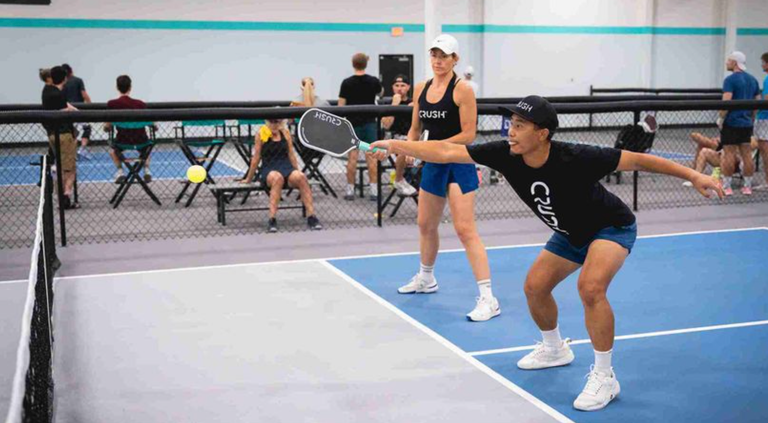
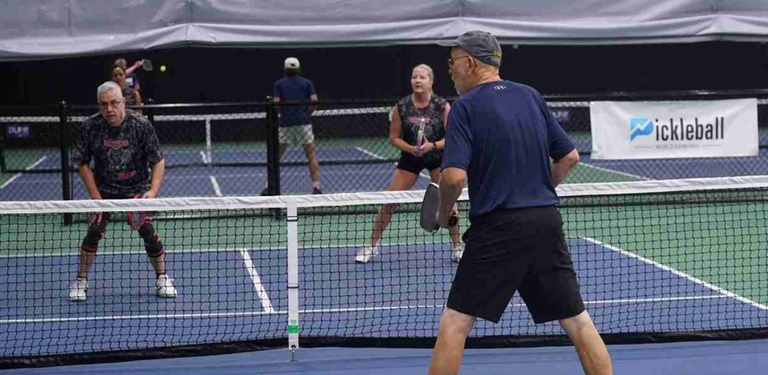
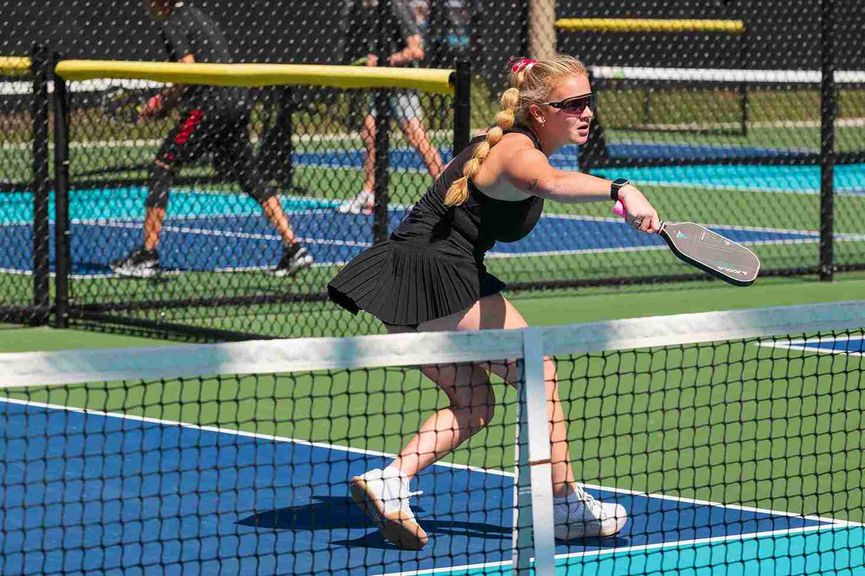
Proper kitchen positioning means toes close to the NVZ line, not straddling it, not two feet behind it.
Standing back invites high balls and forces upward contact, exactly the kind of attackable response your opponent wants.
The framework is simple: whenever you arrive at the kitchen line, plant and hold.
Don't drift. Stay square to the net with your paddle out front and above your wrist.
Good stance fundamentals mean you're ready to react without resetting your feet first.
In doubles, court positioning as a unit matters as much as individual placement.
If your partner drifts back, the entire defensive structure collapses. Stay together, stay forward, hold the line.
Does Your Third Shot Drop Actually Get You to the Kitchen?
The third shot drop is the shot hit by the serving team on the third shot of a rally, usually from near the baseline, that lands softly in the opponent's non-volley zone and forces them to hit upward, giving the serving team time to advance to the NVZ line.
Without a reliable third shot drop, kitchen strategy for 3.5 pickleball players is irrelevant.
You can't execute NVZ tactics if you never get there. Every serious player at every level treats this shot as non-negotiable.
At 3.5, it doesn't need to be perfect every time. It needs to be low enough to prevent an easy attack and deep enough to give you time to move forward.
- Aim for the kitchen, not past it. A drop landing past the NVZ line is attackable.
- Take pace off. This is a touch shot. Let the ball arc, don't drive it.
- Move forward as you hit it. Don't wait to see where it lands. Commit to the transition. Practice the movement alongside the shot.
The drive-vs-drop decision follows the same logic on every transition shot: when in doubt, drop.
 The Dink Media Team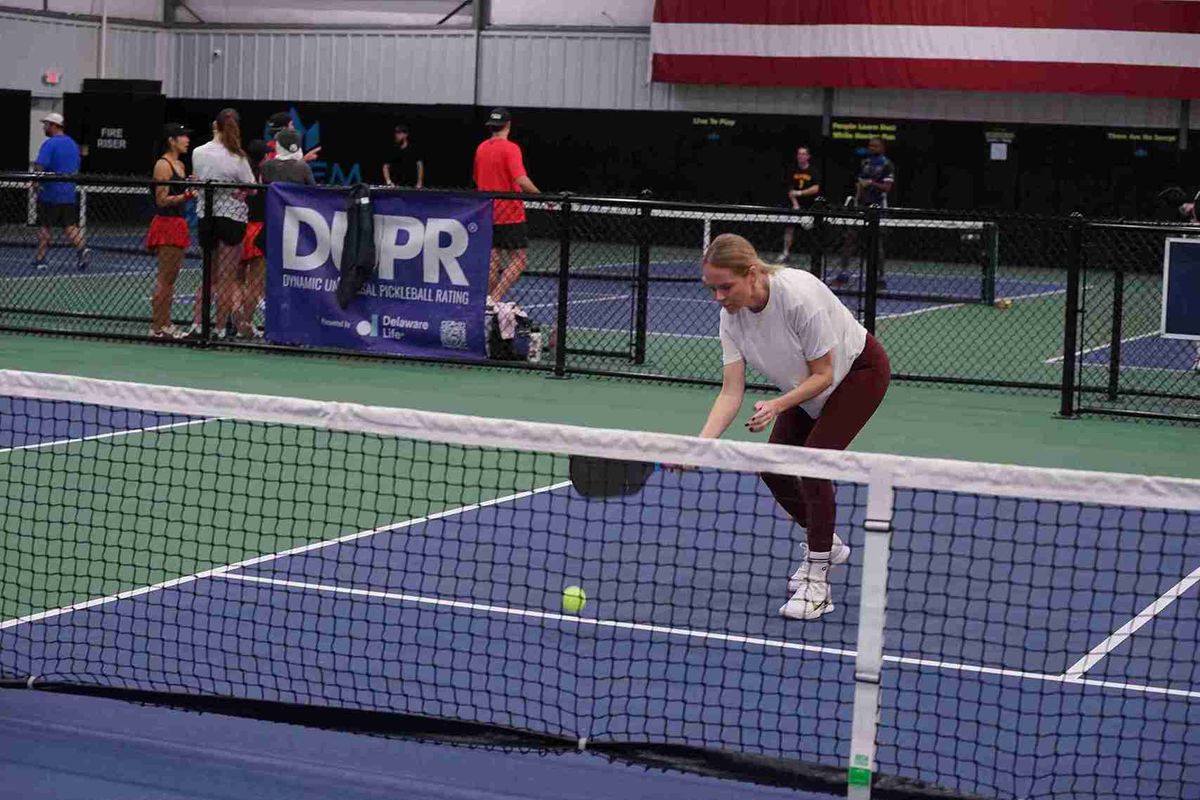
Does Your Dinking Pattern Have an Actual Strategy?
Most 3.5 players dink reactively. Ball comes, they hit it back. That's survival, not strategy.
Real kitchen strategy 3.5 pickleball means having a plan for where you're sending the ball and why.
The geometry of dinking matters here:
- Cross-court dinks are lower-risk. The net is lower at the center, and the court angle gives more room for error. Build your dinking default around this ball.
- Down-the-line dinks are higher-risk. The net is taller at the sideline, and if your opponent redirects, you've opened your court. Use them as a change-up.
- Body dinks are underused at this level. A ball aimed at your opponent's hip jams them and produces weak, floaty responses.
Turning mediocre dinks into winners doesn't mean hitting harder.
It means hitting smarter. When you feel the urge to attack, ask: is this ball actually attackable, or am I just impatient?
Most 3.5 players attack too early. The case for boring, consistent play is well-made, let your opponent make the first mistake.
The Dink Media Team
How to Reset Instead of Panic at the Kitchen
Every 3.5 player faces this scenario: an opponent speeds up the ball, panic sets in, and you either pop it up or blast it out.
Neither works. The answer is the reset, a soft, controlled ball that drops back into the kitchen and restarts the exchange on neutral terms.
Resetting effectively is one of the most underrated skills at this level. Here's how to actually do it:
- Soften your grip. A tight grip produces a fast, uncontrolled response, usually a short, attackable ball. Let the paddle absorb pace.
- Move the ball cross-court. Same geometry as dinking: cross-court gives you margin on the net and court.
- Stay low. A reset from an upright stance sails long. Bend your knees and get the paddle below the ball.
The hardest dinking drill specifically trains this: rapid-fire exchanges that force you to reset repeatedly under pressure. Add it to your routine and you'll feel the difference within a few sessions.
What you're building is the ability to slow the game down when your opponent speeds it up.
That's the hallmark of a true 3.5 player, and the exact skill that sets up your next rating jump.
The Dink Media Team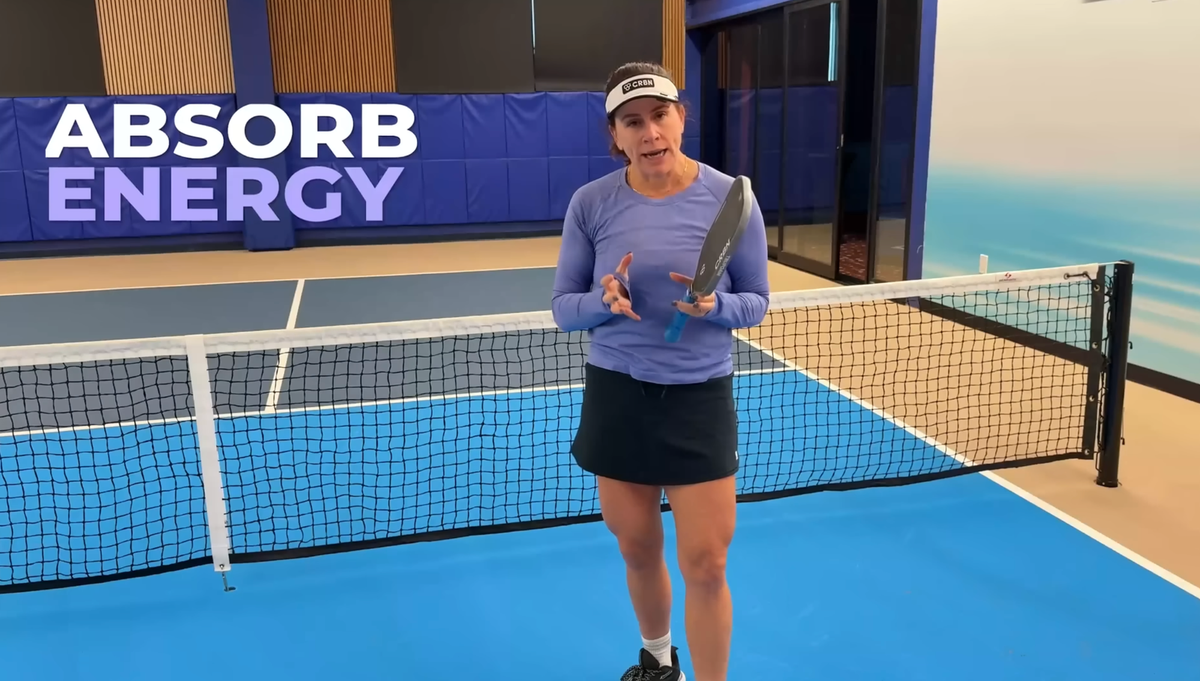
The Kitchen Mistakes Costing 3.5 Players the Most Points
Knowing what you're doing wrong is half the fix. These are the kitchen errors that show up most often at 3.5:
- Popping the ball up. Almost always a paddle-position problem. If your paddle is low and you're reaching upward to contact the ball, it goes up. Keep the paddle out front, above your wrist.
- Attacking from below the net. If the ball is below the tape, it cannot be attacked cleanly. Hit it soft, reset, and wait for a better opportunity.
- Moving backward under pressure. Instinct says retreat when you're under fire. Strategy says hold your ground or step into the ball. Moving back opens the middle and hands your opponent the angle. Staying unattackable is about staying forward.
- Not talking to your partner. "Mine" and "yours" are two of the most valuable words in doubles pickleball. Simple teamwork adjustments eliminate the hesitation that produces missed shots between partners.
The Dink Media Team
A Simple Kitchen Drill Routine for 3.5 Players
Theory only takes you so far. Here's a focused routine built around the NVZ tactics above:
- Cross-court dink rally (10 min): Both players at the kitchen, dinking cross-court only. Goal: 50 consecutive without a mistake. Solo drills fill the gaps between sessions.
- Third shot drop practice (10 min): One player at the baseline, one at the kitchen ready to attack. Serving team hits drops; kitchen player attacks anything attackable and lets good drops land. Focus on moving forward with the shot.
- Speed-up and reset (10 min): At the kitchen, one player speeds up every fifth ball. The other resets. Rotate roles. The figure-8 variation adds movement for extra difficulty.
- Live kitchen play (15 min): Start every point at the NVZ line. No baseline rallies, pure kitchen pressure from the jump.
That 45-minute session, done consistently, will move your 3.5 game faster than almost anything else you do.
The kitchen is where points are won and lost at every level. Start there, and everything else gets easier.
The Dink Media Team
Key Takeaways
- At 3.5, NVZ play, not power, is the primary differentiator
- Consistency beats aggression: most kitchen errors at this level are unforced
- Staying close to the NVZ line is the single biggest structural fix
- The third shot drop is the gateway to the kitchen; without it, everything else is secondary
- Dinking cross-court is lower-risk than dinking down the line, build your pattern around it
- Patience is a weapon; players who out-wait their opponents win more rallies
Frequently Asked Questions
What is kitchen strategy in 3.5 pickleball?
Kitchen strategy 3.5 pickleball refers to how you position yourself at the non-volley zone, manage dinking exchanges, and control rally pace at the net. At this level, it centers on consistency, staying close to the NVZ line, and knowing when to reset rather than attack. Getting these habits right is the primary driver of improvement from 3.0 to 3.5.
How important is the third shot drop for kitchen strategy at 3.5?
It's the most important shot in your kitchen game, it's what gets you to the kitchen in the first place. Without a reliable third shot drop, NVZ strategy barely matters. Aim for a drop that lands in your opponent's kitchen with enough softness that they can't attack it, giving you time to advance to the line.
Should 3.5 players be attacking at the kitchen?
Attack when the ball is above net height and you have a clear angle. Most 3.5 players attack too early, off balls that are still too low. The rule: if the ball is below net tape, reset it. If it's above net height and you have a real angle, attack. Patience in the dinking exchange is one of the most underused advantages at this rating.
What's the biggest kitchen mistake 3.5 pickleball players make?
Standing too far back from the NVZ line. Players drift away thinking they'll gain reaction time, but this invites high balls and forces upward contact that opponents can attack. Fix: plant your feet close to the line when you arrive and hold position rather than letting the rally push you backward.
How do I practice kitchen strategy as a 3.5 pickleball player?
Combine cross-court dinking drills for consistency, third shot drop work from the baseline, and speed-up-and-reset exchanges at the NVZ. Starting practice points from the kitchen line rather than the baseline, forcing pure NVZ play, accelerates development faster than full-court rallies. Focused, structured practice beats open play every time.

Love Pickleball? Join 100k+ readers for free weekly tips, news & gear deals.
Subscribe to The Dink