3 Court Positioning Tells That Let You Anticipate Every Third Shot Drop
Most players blame slow reactions when they miss the third shot opportunity. The real fix is reading court positioning before the serve even lands.
If your court positioning in pickleball always feels one step behind, your reactions probably are not the problem.
The real issue is that you are waiting to see what happens instead of reading what is about to happen.
The information is already on the court before the serve ever leaves your partner's hand.
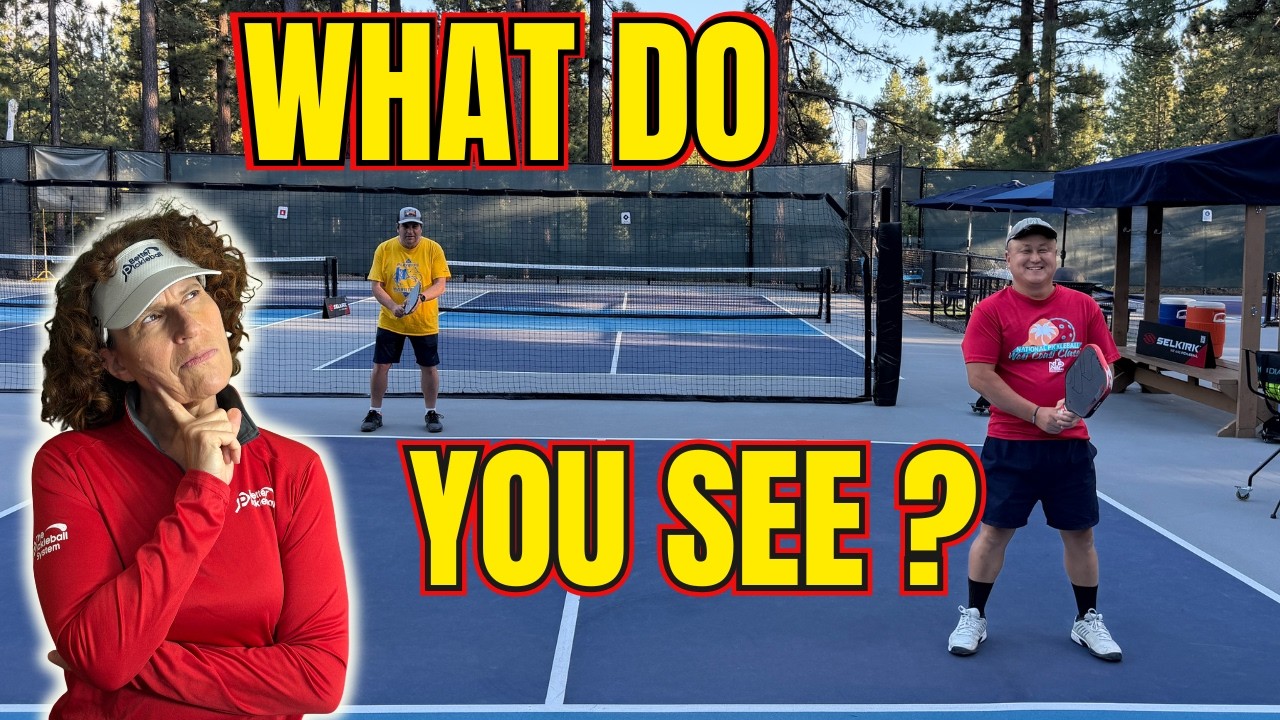
This breakdown comes from Better Pickleball on YouTube, where coach CJ Johnson walked players through a real positioning scenario and found that 64% predicted the outcome wrong.
Here is how to be in the 36% who get it right.
Love pickleball? Then you'll love our free newsletter. We send the latest news, tips, and highlights for free each week.
The Real Reason You Feel a Step Behind
Most players think being late to the ball is a speed problem. It is actually an information problem.
Speed matters less than you think once you learn to process what you are seeing before the point starts.
Good pickleball court positioning tells you the future if you know what to look for.
Here is CJ's scenario. You are on the serving team, your partner serves deep (landing within 4 feet of the baseline), and you look across at the return team before the serve happens.
Most players see two opponents standing somewhere on the other side and think nothing of it. That is the mistake.
Every detail of where those two players are standing is a clue about what shot is coming next, which is the same logic behind the four key strategies to winning in 2026.
Tell 1: Where Is the Returner Standing?
This is the first read to make, and it is the most important one.
If the returner is standing close to the baseline when your partner serves deep, that returner is going to be forced backward.
Their body will be moving away from the net at the exact moment they need to send the ball forward.
That is what coaches call negative energy. When that happens, the return almost always comes up short.
A short return is gold for the serving team.
It means the pickleball third shot can be taken from closer to the net, and the returner has almost no chance of reaching the non-volley zone in time for the fourth shot.
That is the chain reaction that starts with one pickleball court positioning read.
If you want to understand how serve depth creates this exact scenario, the most important aspect of your serve is worth your time.
What Does Negative Energy Actually Mean?
Here is the simple definition: when a player's body momentum moves opposite to where they need to hit the ball, the shot loses power and control.
That momentum conflict is well documented in movement and force-production research.
Think about hitting a forehand while sprinting sideways away from the ball. Your swing has to fight your own body, and the result is usually weak, short, or mishit.
When a returner gets pushed back by a deep serve, you are watching negative energy happen in real time. That is your cue to start moving forward.
 The Dink Media Team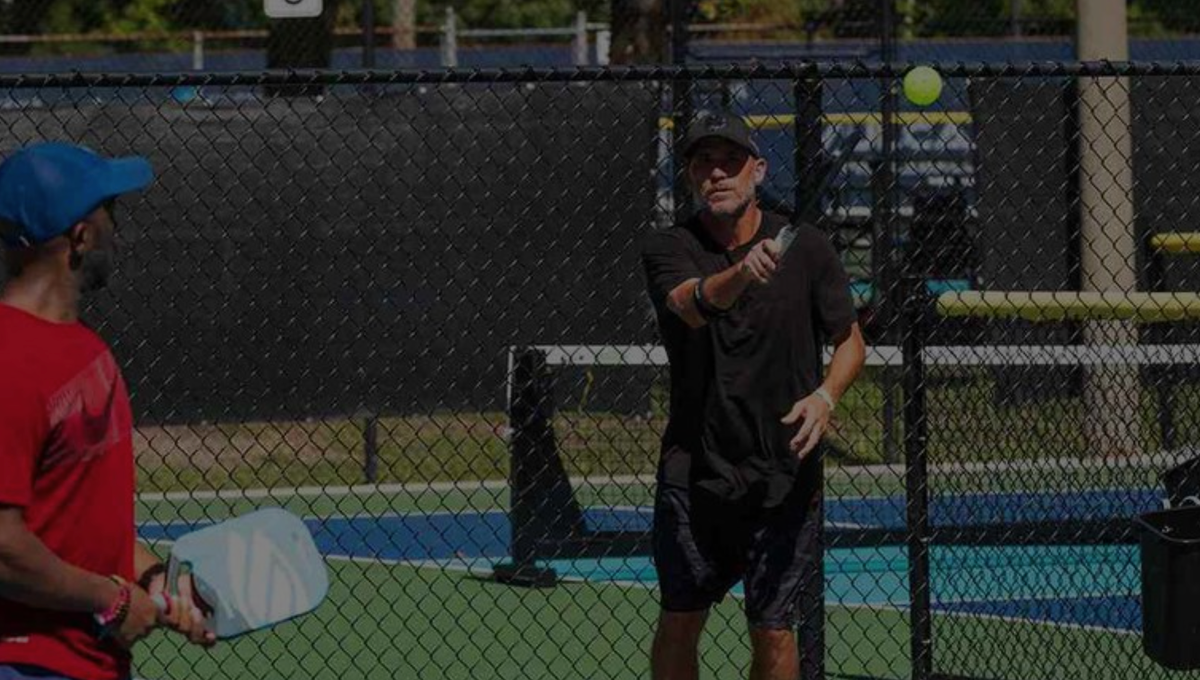
Tell 2: Can the Returner Even Get to the Kitchen?
Once you identify that a short return is likely, the next question is whether the returner can recover. Based on their starting position, the answer is usually no.
If they start near or behind the baseline and get pushed further back, they will be hitting their fourth shot from well off the non-volley zone line.
That is a brutal shot to execute even at advanced levels.
Check out this breakdown of pickleball return of serve positioning to understand why starting position has such a massive impact on the rally.
The data on deep returns and rally win rates backs it up.
Even if they somehow hit a great fourth shot from back there, their team's pickleball court positioning is broken.
They are out of sync, and that opens huge pressure opportunities.
 The Dink Media Team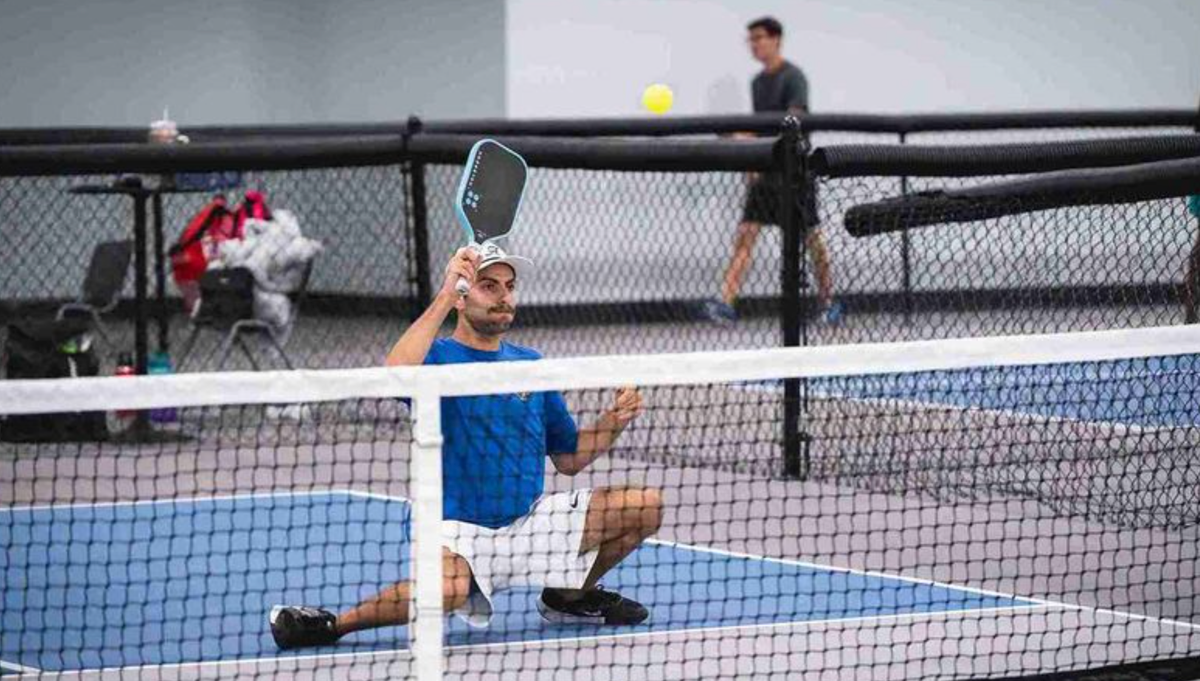
Tell 3: Where Is the Non-Returner Standing?
This is the layer most players ignore completely, and it is where 64% of the people CJ surveyed went wrong.
The non-returner's position tells you whether the opposing team can bail each other out.
In CJ's scenario, the non-returner is several steps left of the center line and a step off the non-volley zone line.
To compensate for a short return, they would need to move laterally to the center and step forward to the kitchen line at the same time.
That is too much ground to cover cleanly under pressure, which is exactly why doubles stacking exists as a fix.
So now you have two reads stacked on top of each other:
- The returner is likely to hit short because of negative energy from a deep serve.
- The non-returner is too far left and too far back to cover for their partner.
That combination tells you, before the ball is even struck, that the serving team is about to have a real opportunity.
That is not luck. That is reading pickleball court positioning correctly.
 The Dink Media Team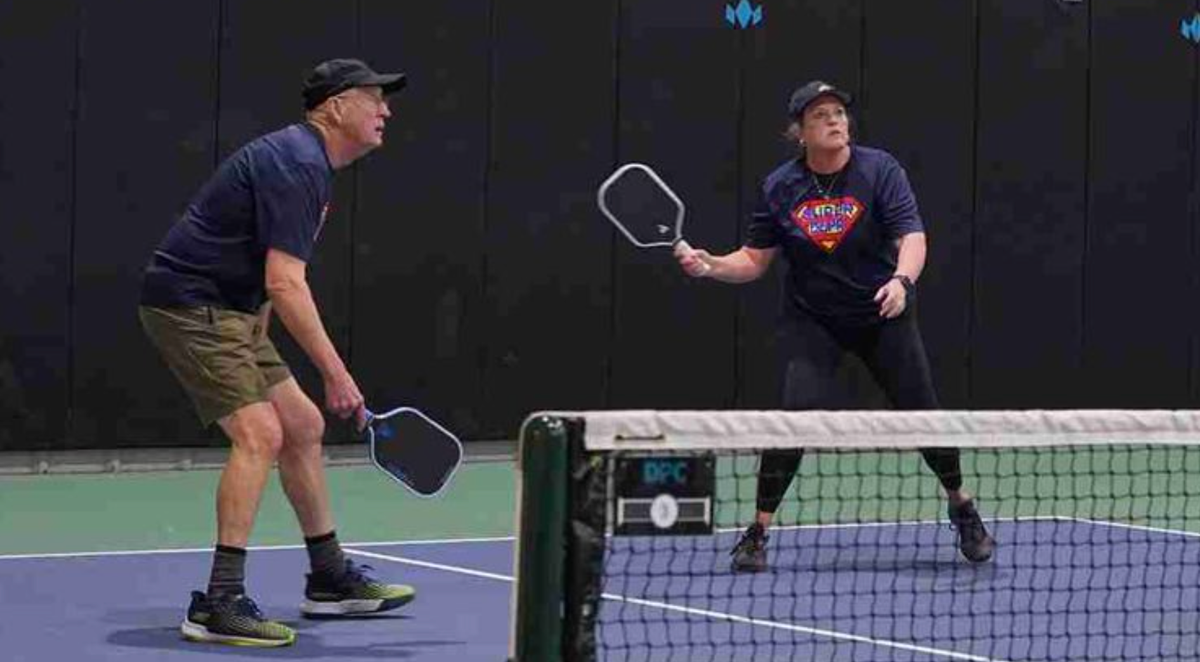
So What Do You Do With This Information?
Once you have read both layers before the serve, you have to act. This is where most players still hesitate even after nailing the read.
Here is what the serving team player should do:
- Watch your partner's serve. If it lands deep near the baseline, your read is confirmed.
- Take one step forward into the court. Do not wait for the return to bounce. Let your momentum carry you in.
- Set up to capitalize with an aggressive, well-placed third shot.
In the slow-motion footage CJ reviews, the server is already moving forward while the returner is still jammed up at the baseline. Neither opponent has moved.
The server is already 2 to 3 feet into the court by the time the ball bounces on the other side.
That is the difference between reading the court and just reacting to it.
For more on placing your third shot once you have created the opening, here is where your third shot drop actually needs to land.
 The Dink Media Team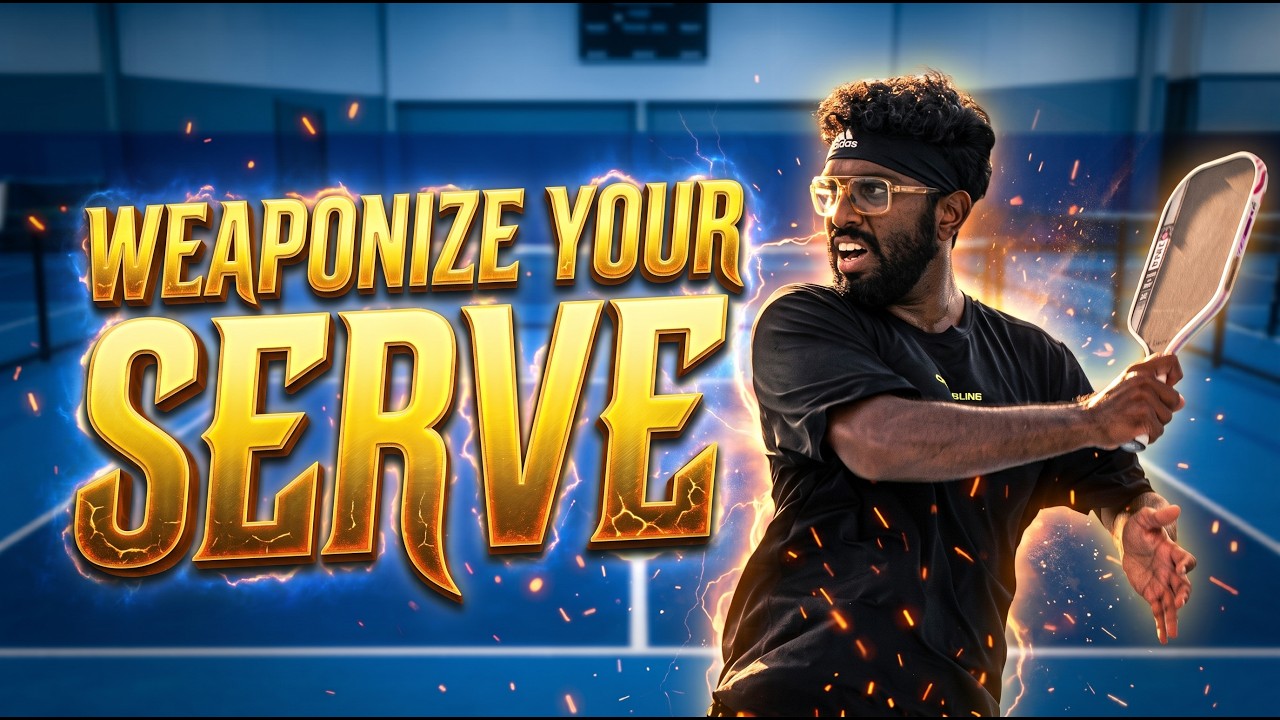
The Serve Trajectory Bonus Tip
Watch where the serve crosses the net. A serve that clears by about 3 feet of height is far more likely to land deep than a flatter serve.
If you are struggling to get depth consistently, raise your trajectory and see what happens.
This applies to returns too: a higher arc gives you depth, and depth forces negative energy on the other side.
These three serve mistakes that cost you points cover the idea in more detail.
 The Dink Media Team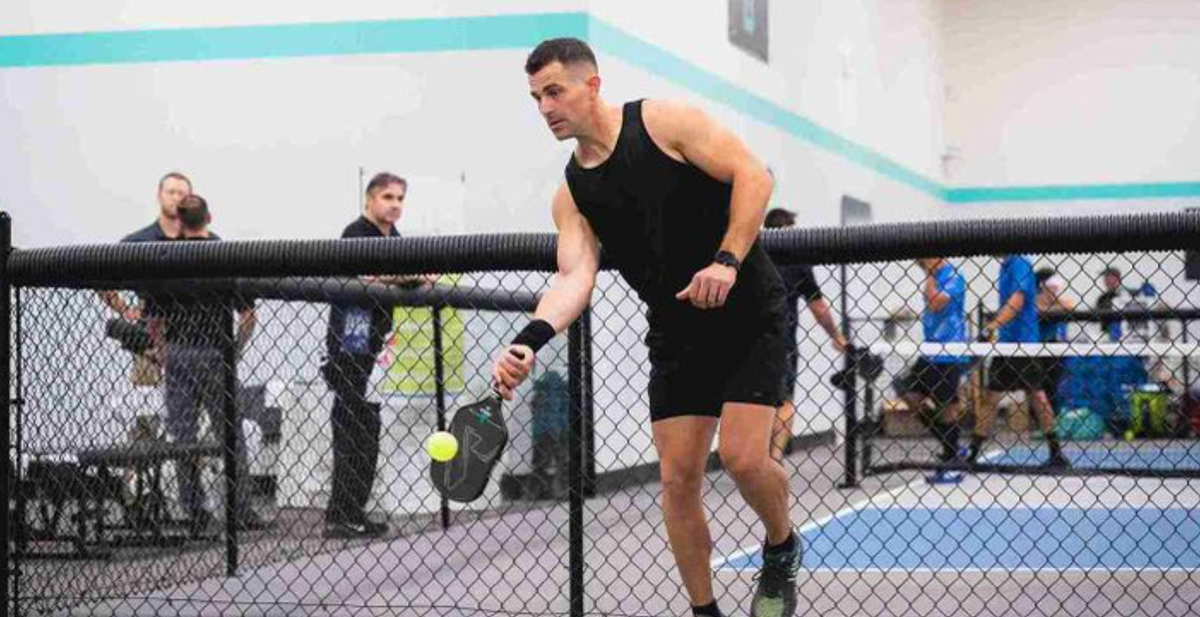
How Does This Change Your Decision-Making in Real Time?
The whole point of reading these tells is to compress your decision window.
Instead of waiting for the return and then deciding what to do, you are already in motion before the return is even hit.
That is not recklessness. It is probability management.
When two positioning reads line up, the likelihood of a short return is high enough to justify moving early.
You are not committing blindly. You are acting on strong evidence.
This is exactly the kind of pickleball IQ that separates players who always seem to be in the right spot from players who feel like they are always a step late.
If you want to keep building this skill, these five pickleball IQ tips for outsmarting better players are a natural next step.
And if you are wondering how this kind of anticipation fits into bigger strategy patterns, here are three shot selection rules most players consistently get wrong.
 The Dink Media Team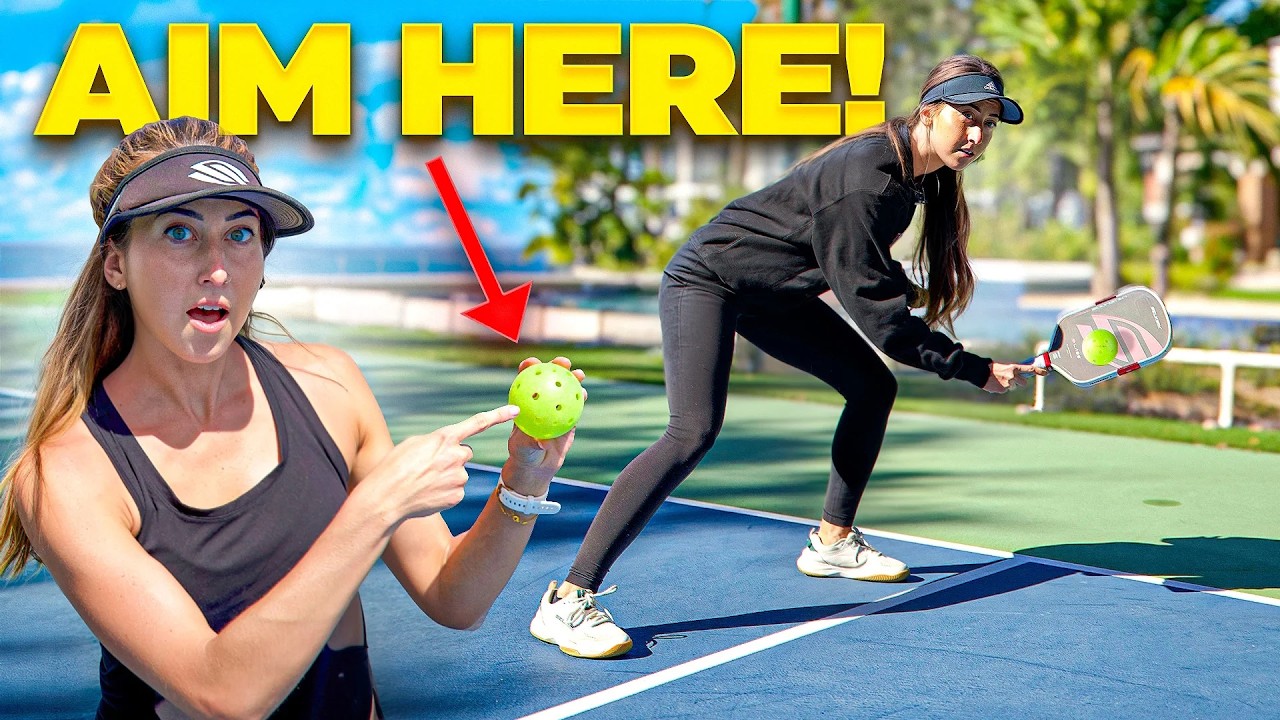
Putting the Reads Together Before Every Serve
Run this checklist every time your partner is about to serve. It takes about two seconds once it becomes habit.
- Returner position: Are they close to the baseline? If yes, a deep serve forces them backward and creates negative energy.
- Returner recovery path: Can they reach the non-volley zone in time for the fourth shot? If not, they are hitting from a disadvantaged position.
- Non-returner position: Are they off the center line or off the kitchen line? If yes, they cannot cover a short return.
When all three reads point the same direction, move forward as soon as the serve lands deep. That is your green light.
Sharpening your pickleball court positioning pairs well with fixing the bad habits underneath it, and the rope rule is the fastest way to stop ball watching.
Build the reading skill alongside it and you stop being a step behind.
You can also tighten serve accuracy to make those deep serves repeatable, and the simple secret to a perfect serve is a clean place to start.
Reps matter too, which is what the 12 drills you need in 2026 are built for.
Once you are winning the positioning battle, three keys to a better backhand third shot drop will help you finish those opportunities.
And if you want the bigger picture, this simple 4-step system to win more games in 2026 and these 6 essential shots to master for 2026 are worth bookmarking.
Frequently Asked Questions
What does negative energy mean in pickleball?
Negative energy means a player's body momentum is moving in the opposite direction of where they need to send the ball. When a returner gets pushed back by a deep serve, their body is going backward while they try to hit the ball forward. That conflict almost always produces a short, weak return.
How do I know when to step forward after my partner serves?
Step forward when two things align: the serve lands deep near the baseline, and the returner was already standing close to the baseline before the serve. Those two facts together make a short return highly likely. Start moving as the serve lands, not after you see the return.
Why does the non-returner's position matter on a serve?
The non-returner's position tells you whether the opposing team can recover from a bad return. If they are far from the center line and off the non-volley zone, they cannot get into good position quickly enough to cover for their partner. That means even a mediocre third shot can put the serving team in control.
Does serve depth really affect the quality of the return?
Yes, consistently. A serve landing within 4 feet of the baseline forces the returner to move backward, which creates negative energy in their swing. Raising your serve trajectory over the net by about 3 feet is one of the fastest ways to start getting deeper serves without changing your mechanics.
How do I build the habit of reading court positioning before every serve?
Run a quick two-second checklist before every point: check the returner's starting position, estimate their recovery path to the kitchen, and check the non-returner's location relative to the center line and non-volley zone. Do it every single point and it becomes automatic within a few sessions.
Love Pickleball? Join 100k+ readers for free weekly tips, news & gear deals.
Subscribe to The Dink