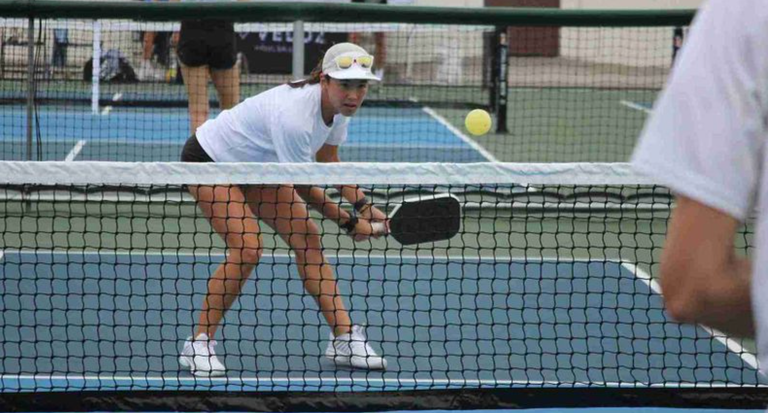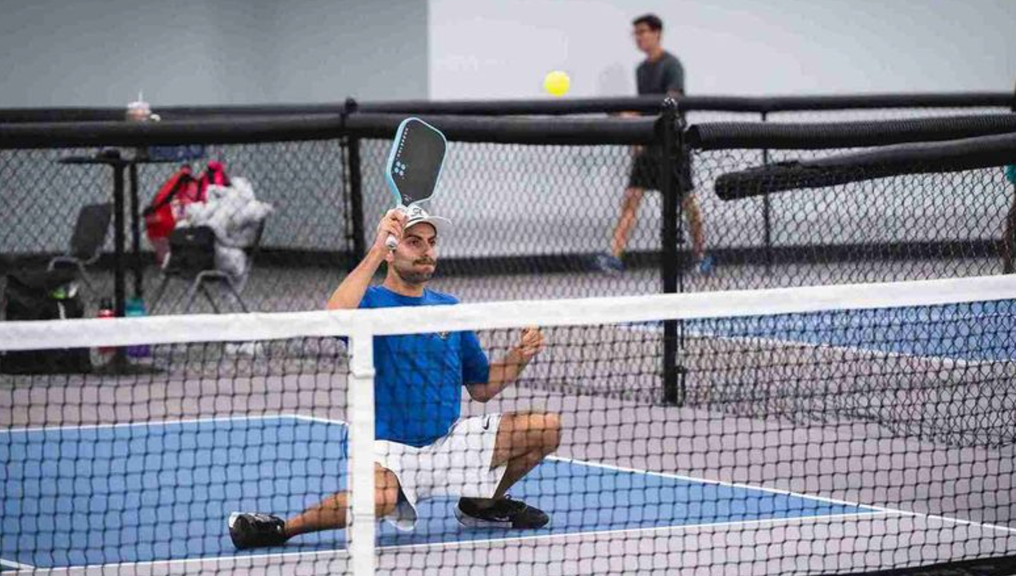
What Is the Kitchen in Pickleball? The Non-Volley Zone Explained
What is the kitchen in pickleball? It's the 7-foot non-volley zone on either side of the net where you can't hit a volley, and it's the most rule-dense, strategy-rich area on the entire court. Master it, and you'll immediately start winning more points.
What is the kitchen in pickleball? It's the most important 7 feet on the court , and if you don't understand every wrinkle of how it works, you're giving away free points every single game.
Every beginner gets the basics: don't hit a volley from the kitchen. But there's a lot more going on inside that painted rectangle than most players realize.
The momentum rule, the line calls, the strategic battles at the non-volley zone. This is where pickleball actually lives.
Getting this right separates players who stall at 3.5 from those who push past it.
Love pickleball? Then you'll love our free newsletter. We send the latest news, tips, and highlights for free each week.
What Is the Kitchen in Pickleball?
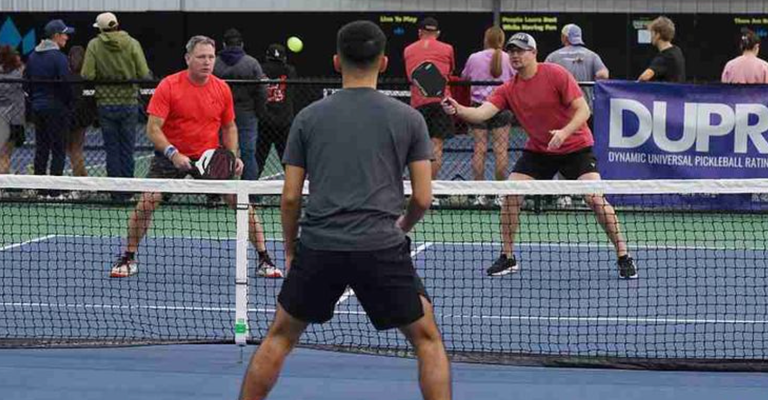
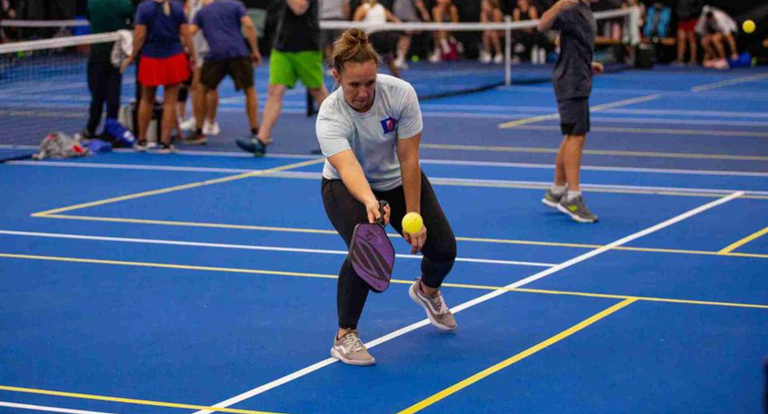
The kitchen in pickleball is the non-volley zone (NVZ): a 7-foot-deep, 20-foot-wide rectangle painted on both sides of the net.
Per USA Pickleball's Official 2025 Rulebook, no player may volley a ball (that is, hit it before it bounces) while standing in or touching any part of this zone.
That includes the lines themselves.
The term "kitchen" is borrowed from the shuffleboard world, where landing a puck in the scoring area closest to the center (called the kitchen) was something to avoid.
In pickleball, the concept carried over: the kitchen is the danger zone. Step in at the wrong moment and you've handed your opponent the point.
Here's the thing: the rule isn't just "don't stand in the kitchen." It's more nuanced than that, and those nuances are what trip up players at every level.
Learning how to position yourself at the kitchen line is one of the highest-impact skills you can develop.
The Kitchen Dimensions You Need to Know
The kitchen stretches 7 feet from the net on each side, spanning the full 20-foot width of the court.
On a standard pickleball court (44 feet long by 20 feet wide), that means each kitchen zone occupies 140 square feet.
The kitchen lines themselves are part of the zone. If your foot is on the NVZ line when you volley, that's a fault.
The sidelines adjacent to the kitchen are not part of the NVZ, but the line connecting the kitchen to the net on each side is.
Yes, it matters that much. Getting pulled wide near the NVZ line is a common tactical trap. Know your boundaries, literally.
What Are the Pickleball Kitchen Rules?
The pickleball kitchen rules come down to one core principle: no volleying from the non-volley zone.
But the rule has teeth in three specific situations most players don't fully account for.
First, you can't volley while standing in the kitchen. Second, you can't volley while touching the kitchen line.
Third, and this is the one that catches everyone: you can't volley if any part of your momentum after the swing carries you into the zone.
Drop your paddle in the kitchen after a volley? Fault.
Your partner accidentally gets pushed into the zone during your swing? Also a fault, though that one almost never comes up.
Working on pickleball's hardest dinking drills will sharpen your footwork so you learn exactly where your body is in relation to the line at all times.
Can You Step Into the Kitchen in Pickleball?
Yes, absolutely. You can step into the kitchen whenever you want, as long as you're not volleying.
If the ball bounces inside the kitchen, you're allowed (and often required) to step in and play it.
The only prohibition is hitting a ball out of the air while you're in or touching the zone.
That's where the go-to slice dink becomes so valuable.
A well-placed dink into the kitchen forces your opponent to let the ball bounce, step in, and play up, which completely changes the exchange.
Players who truly understand when to step in and when to stay back at the non-volley zone play at a different level.
It's not about avoiding the kitchen; it's about controlling who has to enter it and when.
JW Johnson's unusual dinking technique is a masterclass in exactly this kind of kitchen manipulation.
 The Dink Media Team
What Counts as a Kitchen Violation in Pickleball?
A kitchen violation (officially a fault) occurs in any of these situations:
- Volleying while standing in the NVZ (foot fully in the zone)
- Volleying while touching the NVZ line (any part of your body or clothing)
- Volleying and then entering the NVZ before your momentum has stopped (the momentum rule)
- Carrying a ball from a volley into the zone: if your follow-through takes the paddle head into the kitchen after contact
The momentum rule deserves its own spotlight.
Per USA Pickleball's 2025 official rules, a player may not carry momentum from a volley into the non-volley zone, even if the shot was hit from outside the zone.
You can legally volley from just behind the kitchen line, but if you stumble or step forward into the zone after contact, it's a fault regardless.
Understanding the full court dynamics involved in a third shot drop starts with understanding why the kitchen creates such a premium on neutralizing pace.
 The Dink Media Team
Why Does the Kitchen Rule Matter So Much in Pickleball?
The kitchen rule is the single biggest reason pickleball isn't just a faster version of tennis.
When new players ask what is the kitchen in pickleball, they expect a simple answer.
They don't expect it to be the rule that restructures every shot, every transition, and every point.
It forces points to be constructed. You can't blast your way to an easy put-away by running to the net and picking off every ball before it bounces. You have to earn it.
Honestly, it's the most strategically interesting rule in any racket sport.
The non-volley zone creates a constant negotiation: who can force whom to pop a ball up so they can pounce?
That chess match happens almost exclusively near the kitchen line, and it's what makes high-level pickleball so compelling to watch and play.
The backhand volley is the most commonly needed weapon when you're working the kitchen line in a fast exchange. Get comfortable with it.
How the Non-Volley Zone Shapes the Game
Every strategic decision in pickleball flows backward from the kitchen. Why does the third shot drop exist?
Because you need to neutralize pace and get both teams moving to the non-volley zone.
Why does the drive vs. drop decision matter so much? Because one invites a kitchen battle and the other tries to bypass it.
The NVZ also shapes serve and return strategy.
Once you understand that both teams want to establish position at the kitchen line, the entire shot selection logic of the game clicks into place.
Where you stand on your return of serve matters precisely because of where you're trying to get to next: the kitchen.
 The Dink Media Team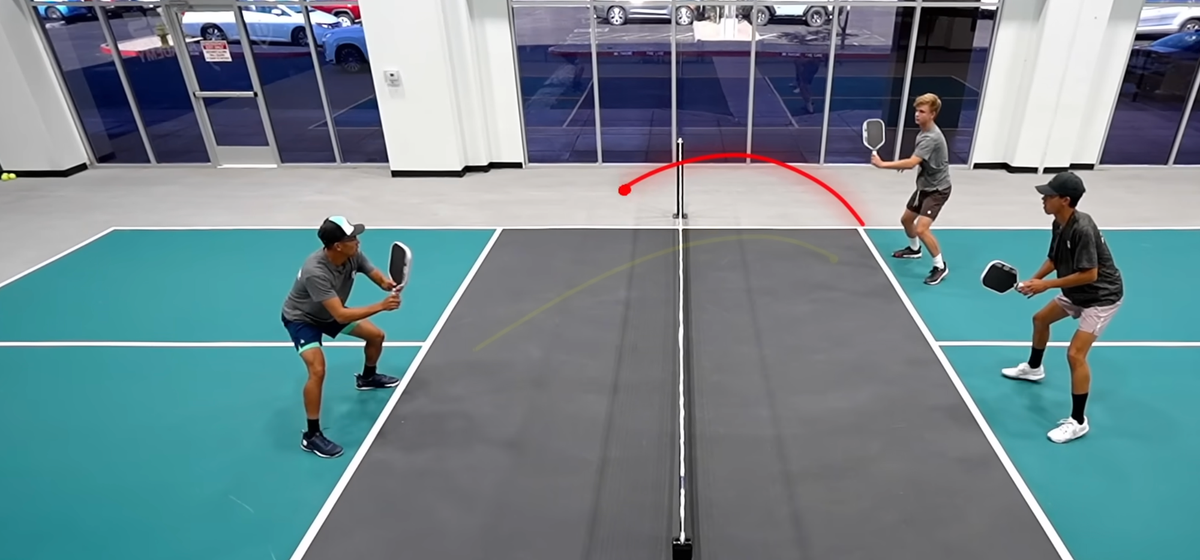
Kitchen Strategy: How to Use the Non-Volley Zone to Your Advantage
Knowing what is the kitchen in pickleball is the easy part. Knowing how to weaponize it is where games are won.
If someone asks you "what is the kitchen in pickleball and why does it matter," the honest answer is: it's the zone that determines every tactical decision from the moment the serve lands.
Here's the core framework:
- Get there first. The team that establishes position at the non-volley zone first has a structural advantage. They see the ball come up and can attack. The team stuck at the baseline is playing defense.
- Make your opponents dink up. A dink that drops below net height into your opponent's kitchen forces them to hit up to you, and hitting up means you get to attack. Turning mediocre dinks into winners is a skill. Practice it.
- Use the kitchen as bait. A sharp cross-court dink into the far corner of the kitchen creates an extreme angle that's nearly impossible to attack from. It's a setup shot, not a winner, but it builds toward one.
- Serve strategy near the kitchen line is also underrated. Placing your serve near the kitchen line on the correct side can limit your opponent's return options and make it harder for them to transition forward.
 The Dink Media Team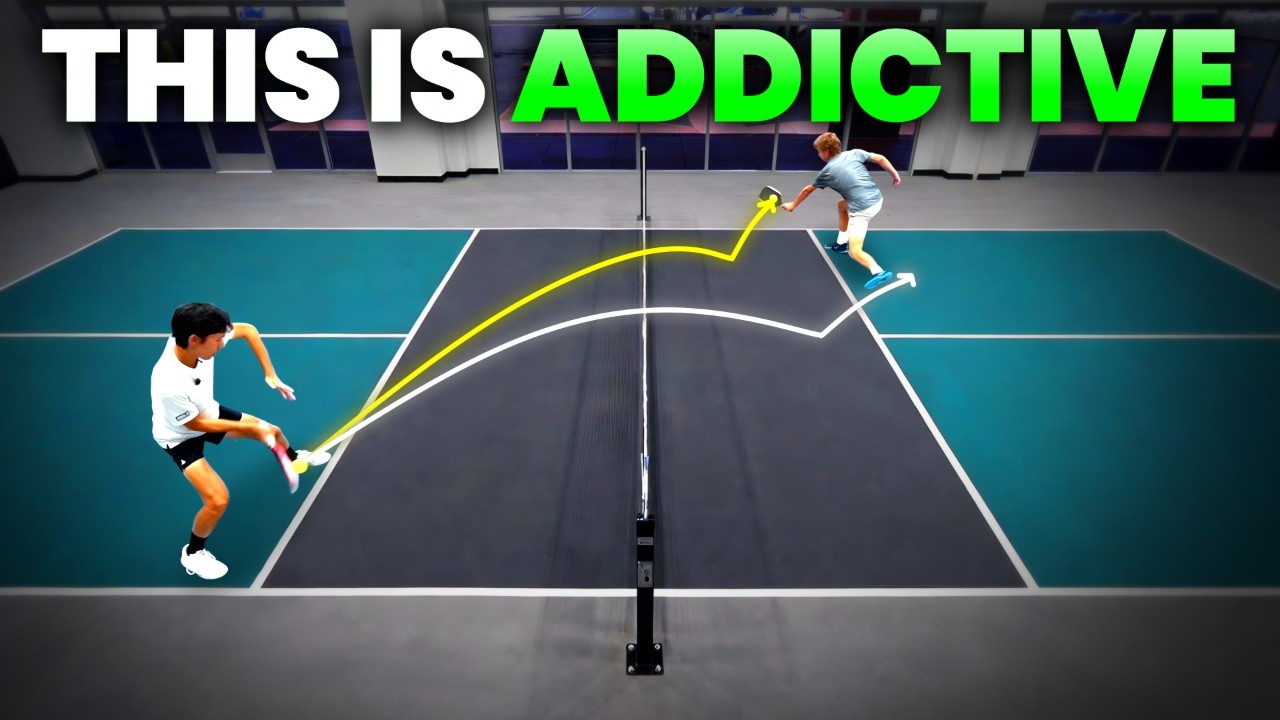
What Is the Kitchen in Pickleball Doubles vs. Singles?
In doubles, the kitchen creates a permanent battle zone.
Both teams want to occupy the non-volley zone simultaneously, which creates those grinding dink rallies you see at the pro level.
Doubles strategy is almost entirely built around kitchen positioning: who's at the line, who's poaching, who forces who to move.
In singles, the kitchen rules are identical, but the strategy shifts. You're covering the whole court alone, so you're more likely to be caught at mid-court.
Mid-court tips for singles are built around the kitchen too, because even in singles, getting to that 7-foot zone is still the goal.
One more thing: the swing volley, the aggressive, full-swing punch at a high ball at the kitchen line, is the single most lethal shot in pickleball when executed from just outside the NVZ.
Learn it. And practice the footwork so you stay legal when you fire it.
 The Dink Media Team
Key Takeaways
- The kitchen is the 7-foot non-volley zone (NVZ) on each side of the net, running the full 20-foot width of the court.
- You cannot volley (hit a ball before it bounces) while standing in the kitchen or touching the kitchen line.
- You can step into the kitchen to hit a ball that has already bounced there.
- The momentum rule means that if your swing's follow-through carries you into the kitchen after a volley, it's still a fault.
- Mastering kitchen positioning and dinking is the fastest way to improve your pickleball rating.
Frequently Asked Questions
What is the kitchen in pickleball?
The kitchen in pickleball is the non-volley zone (NVZ): a 7-foot-deep rectangle on each side of the net that spans the full 20-foot width of the court. Players cannot volley (hit the ball before it bounces) while standing in or touching the kitchen or its boundary line. The rule exists to prevent players from dominating the net with an unreachable smash.
Why is it called the kitchen in pickleball?
The name comes from shuffleboard, where the "kitchen" referred to the 10-off scoring area in the back of the shuffleboard diagram, a zone you wanted to avoid. Early pickleball players, many of whom came from shuffleboard communities, borrowed the term. Being "in the kitchen" has meant being in trouble ever since.
Can you stand in the kitchen in pickleball at any time?
Yes. You can stand in the kitchen whenever you want. There's no rule against simply being in the zone. The restriction is specifically on volleying (hitting the ball before it bounces) from the kitchen. If the ball bounces in the kitchen, you can step in, let it bounce, and play the shot normally.
What happens if you step in the kitchen in pickleball after a volley?
That's a fault, and the point goes to your opponent. Under the momentum rule in the USA Pickleball 2025 Official Rulebook, if your follow-through or body momentum carries you into the non-volley zone after hitting a volley, even if you were standing legally outside the zone when you struck the ball, it's still a fault.
How do you practice kitchen rules and pickleball NVZ strategy?
The most effective drills are cross-court dinking exchanges with a focus on keeping the ball low and angled. Start with straight-ahead dinking to build consistency, then add cross-court angles to simulate real-match kitchen battles. Solo drills against a wall can also help with your touch near the non-volley zone when you don't have a practice partner.

Love Pickleball? Join 100k+ readers for free weekly tips, news & gear deals.
Subscribe to The Dink