
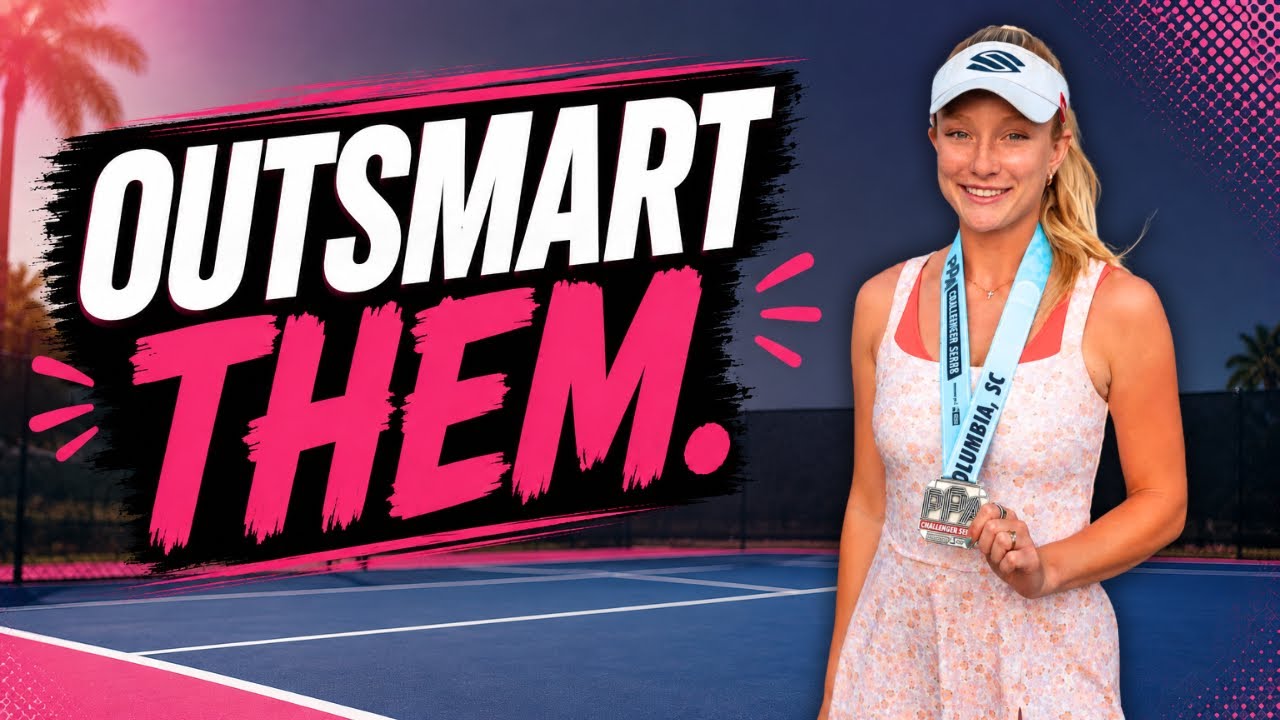
Your pickleball IQ matters more than your shot quality. These 5 tips from PPA pro Ashley Griffith show you how to read opponents, time attacks, and build smarter points.
Your pickleball IQ is what separates players who grind out wins from players who lose despite having cleaner strokes.
If you have ever walked off the court wondering how someone with worse shots just beat you, this is the article you need to read.
Smarter players are not hitting harder.
They are reading the point earlier, making better decisions under pressure, and positioning themselves based on what they just hit, not just where the ball is.
These five tips come straight from Ashley Griffith, a professional pickleball player on the PPA Tour, who breaks down the specific IQ mistakes she sees recreational players make constantly and exactly how to fix them.
Love pickleball? Then you'll love our free newsletter. We send the latest news, tips, and highlights for free each week.
Tip 1: Read Your Opponent, Not Just the Ball
Most recreational players watch the ball exclusively.
That works at lower levels, but once you play anyone competitive, reacting to the ball alone puts you permanently a half-step behind.
The fix is to split your attention between the ball and your opponent's body. You are looking for cues: Is their paddle face open? Are they reaching or balanced?
Are they leaning in or back on their heels?
Each of those tells you something specific about where the ball is going before it even leaves their paddle.
Here is what to track every time your opponent is about to make contact:
- Paddle face angle: An open face almost always signals a cross-court or lifted shot.
- Body lean: If they are leaning back, expect a ball that floats. If they are leaning in, expect pace.
- Foot position: A player stretched wide cannot generate a strong attack. That is your signal to move forward.
- Reaching vs. set: A player who is reaching to make contact has far fewer shot options than one who is balanced and loaded.
Once you start reading these cues, your anticipation improves dramatically. You stop guessing and start knowing.
This is also why getting to the kitchen quickly matters so much. The closer you are to the net, the better your sight lines on your opponent's body and paddle.
Tip 2: Know When You Actually Have the Green Light
Ball height is the single most important factor in deciding whether to attack.
Get this rule wrong and you will keep putting attackable balls into the net or setting up easy counters for your opponent.
Here is Ashley's framework, and it is worth memorizing:
- Below the waist: Reset. Trying to speed up a ball that is below the tape is low percentage, full stop.
- At waist height: Counter. Take a short swing and match pace without committing to a full attack.
- Above the waist: Green light. This is where you pull the trigger and go.
The other variable is whether you take the ball out of the air or off the bounce.
Taking it out of the air removes time from your opponent and is almost always the right call on attackable balls.
But if the ball is below the waist and you are tempted to speed it up off the bounce, reset instead.
If you have been struggling with the decision to attack versus reset, this breakdown on reset failures will help you understand why the shot breaks down when it does.
The green light concept sounds simple.
Most players still get it wrong because they are responding to opportunity (a ball that feels attackable) rather than height (a ball that actually is).
Tip 3: Let Your Shot Determine Your Next Position
This is one of the clearest markers of pickleball IQ you will see on any court. Low IQ players hit and watch.
High IQ players hit and immediately move to the right position based on what they just hit.
The logic is straightforward. Your shot tells you where the likely return is coming. If you know where the return is coming, you can be there before it arrives.
Here is how it plays out in practice:
- Hit a crosscourt dink: Shift to cover the line. You opened that angle and your opponent will often go back at it.
- Hit a middle dink: Stay centered, cover the middle return.
- Hit an attack shot: Step in and lean forward. You are expecting a defensive block, not a reset.
- Hit a popup: Take a step back. You know a speed-up is coming and you need time to react.
Most players stand still after they hit. That one habit costs them more points than almost any technical flaw.
Understanding common positioning mistakes will make this tip click faster.
The movement comes from knowing where to be, and that starts with understanding what you just gave your opponent.
 The Dink Media Team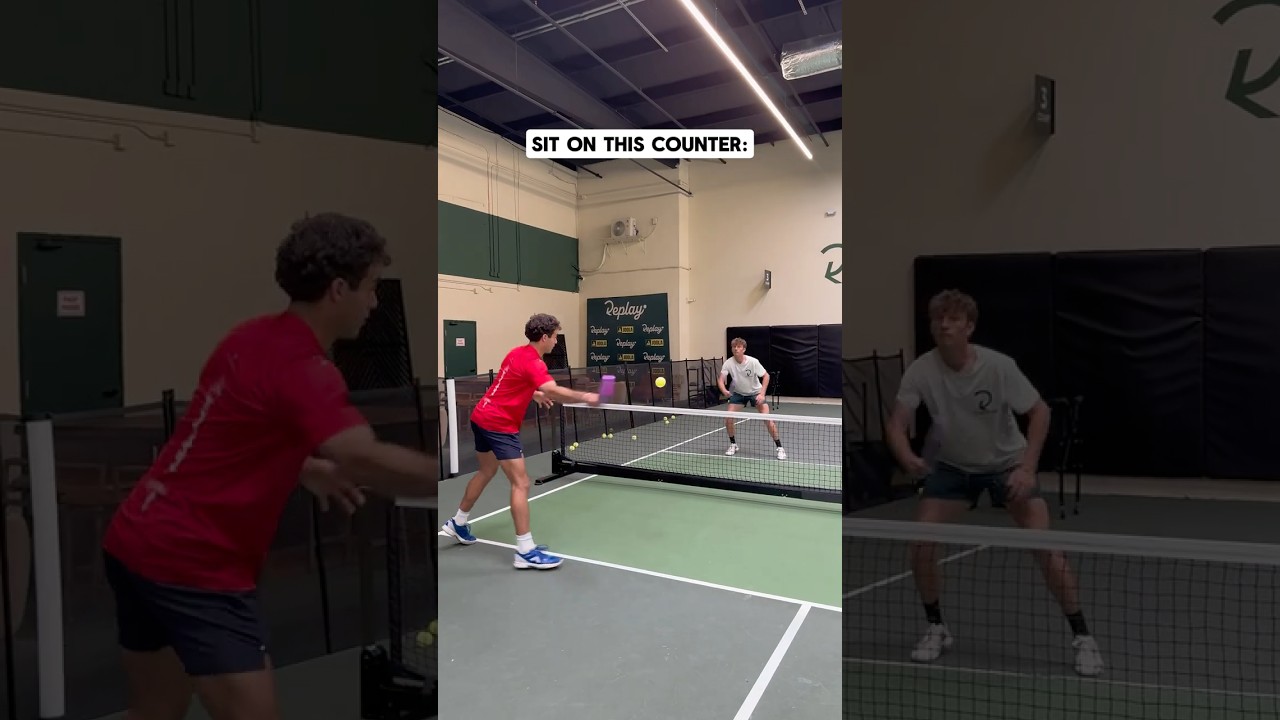
Tip 4: Stop Going for Winners. Start Creating Them.
This is Ashley's favorite tip from the entire video, and it is the one most recreational players resist because it requires patience they have not built yet.
The idea is this: forcing a winner from a neutral ball is low percentage.
Creating the conditions for a winner from a ball you earned is how professionals actually score points.
Watch any top 10 PPA match and count the shots before a popup appears. It is often 10 to 15 dinks deep before the opening arrives.
Anna Leigh Waters and Tyra Black are exceptional at this because they commit to the pattern and do not force things early.
Your job is to figure out what pattern sets up the ball you want:
- If your opponent moves poorly, work them in the dink exchange to create angles and get the popup.
- If their overhead is weak, a well-placed lob forces that exact weakness.
- If their forehand is unreliable, push the ball there repeatedly until they give you a ball above the waist.
Forcing an attack from the baseline or transition zone is the most common version of this mistake. Work your way into the kitchen, build the point, then strike.
This connects directly to two-shot combinations that set up easy attacks. Those patterns exist because no single shot creates a winner consistently. Sequences do.
If you want to understand how elite players build and sustain pressure through a rally, these rally lessons from the best point ever played are worth studying carefully.
 The Dink Media Team
Why Do Smarter Players Always Seem One Step Ahead?
Because they are. They are not reacting to opportunities. They are manufacturing them.
A player with high pickleball IQ has already decided what ball they want, and every shot they hit pushes the point toward that outcome.
You feel like they are one step ahead because they planned three shots earlier where they wanted to be.
That is a skill you can build. It starts with identifying one setup pattern and committing to it in every game until it becomes automatic.
This three-step formula gives you a clean framework for structuring that kind of pickleball strategy from the first ball of the rally.
 The Dink Media Team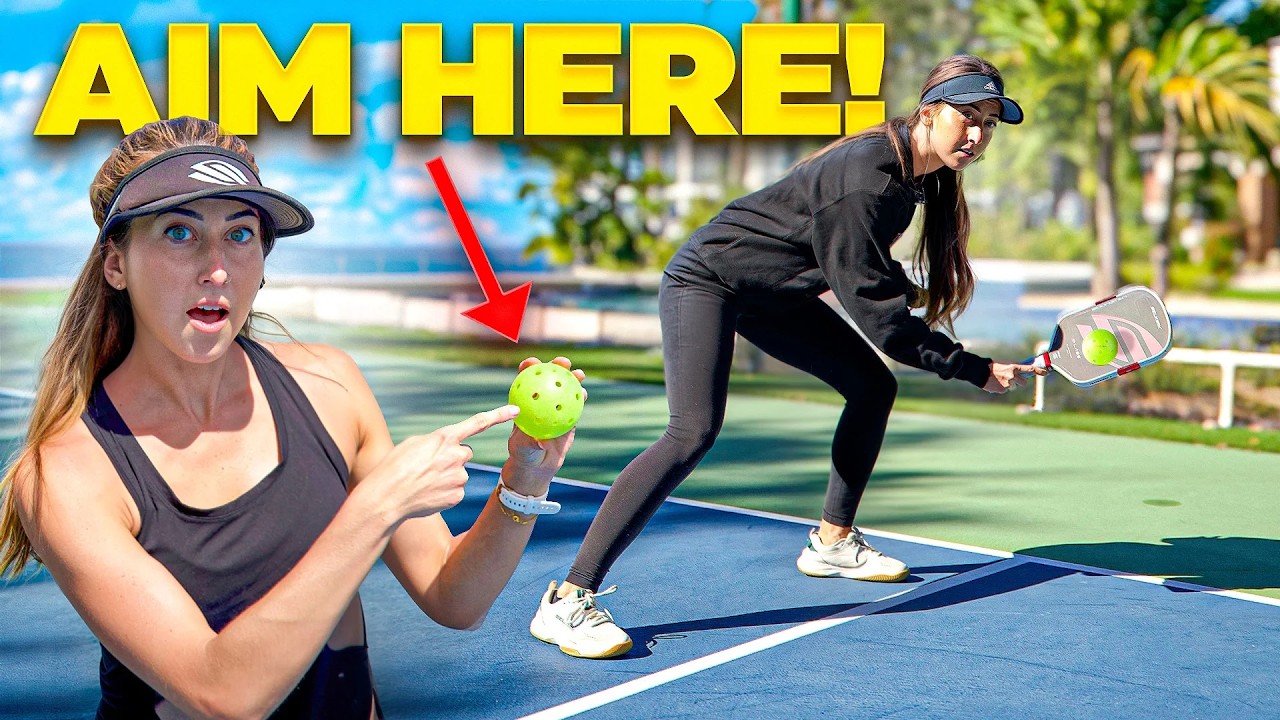
Tip 5: Figure Out Why You're Losing
This is the tip nobody wants to do and the one that separates players who plateau from players who keep improving.
You have to analyze your losses with enough specificity to actually change something.
"I played bad" is not an analysis. It is an excuse that keeps you stuck.
Ashley records her matches after every tournament and watches the footage to identify exactly where points are being lost.
Is it footwork breaking down? A specific stroke collapsing under pressure?
Positioning errors at the kitchen? Each of those has a different fix, and you cannot find the fix until you find the cause.
Here is a simple post-match process to build this habit:
- Ask yourself where most of your errors came from: unforced errors, forced errors, or opponent winners.
- Identify whether those errors came from a specific shot or a specific situation.
- Record at least one match per month and watch it with fresh eyes, focusing only on your side of the court.
- Pick one thing to work on in your next practice session based on what you saw.
The best players you know are doing this.
Not after every point, but after every match. That feedback loop is what makes improvement systematic instead of accidental.
If you want to make your practice sessions actually fix what you find in that footage, these drills a PPA pro still uses every practice will give you a structure to work within.
And if you are trying to identify whether your losses are pattern-based, these four reasons players stay stuck at 3.5 are a useful diagnostic for spotting habits that show up in your footage repeatedly.
 The Dink Media Team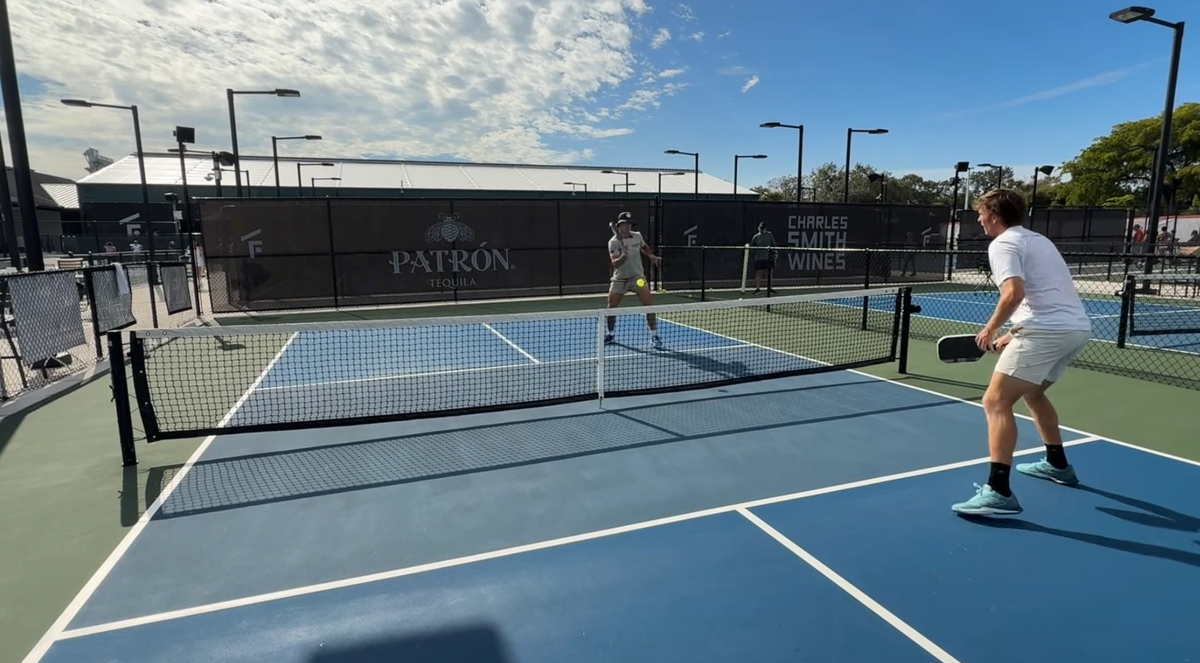
Putting All Five Together
None of these tips require you to hit harder. None require a new paddle. They all require you to think more deliberately during play and more critically after it.
Start with just one. Pick the tip that describes your most consistent problem and work on it exclusively for two weeks.
You will notice a difference faster than you expect.
Once that becomes automatic, add another. That is how pickleball IQ actually builds, one decision at a time until smarter play is your default.
For players who want to see exactly how these IQ principles show up at the highest level, the habits of every 5.0 player map almost perfectly to what Ashley covers here.
The gap between 3.5 and 5.0 is mostly mental, not physical.
And if you are working on building points more deliberately, this cross-court dinking tip is a great place to start setting up the patterns tip four describes.
Frequently Asked Questions
What is pickleball IQ and how do you improve it?
Pickleball IQ is your ability to read the game, anticipate shots, and make good decisions under pressure. You improve it by watching your opponents actively during rallies, analyzing your own matches, and building intentional patterns instead of reacting randomly. Recording your games and reviewing them is one of the fastest ways to accelerate this.
How do I know when to speed up in pickleball?
Attack when the ball is above your waist. Below the waist, reset. At waist height, counter with the same pace they gave you.
This rule has exceptions, but following it will immediately reduce your unforced errors on speed-up attempts.
Why do I keep losing to players with worse shots than me?
They are almost certainly making smarter decisions about when to attack, where to position after each shot, and how to build points systematically. Shot quality matters less than decision quality at most recreational levels. Focus on your positioning and your shot selection before worrying about technique.
How should I position myself after I hit a shot in pickleball?
Your position after a shot should reflect where you just sent the ball. Hit crosscourt and cover the line. Hit an attack and step in.
Hit a popup and step back. Moving immediately after contact, before you see the return, is what separates reactive players from anticipatory ones.
How do professional pickleball players create winners instead of forcing them?
Pros build toward a specific ball by working a pattern in the dink exchange, often 10 to 15 shots deep, until their opponent produces the opening they were waiting for. They identify a weakness (poor overhead, weak forehand, slow feet) and systematically push the point toward exposing it. Patience and a clear plan are what make that possible.

Love Pickleball? Join 100k+ readers for free weekly tips, news & gear deals.
Subscribe to The Dink