You don't need lightning-fast reflexes if you're already in the right spot
ickleball is a game of split-second decisions, and one of the most underrated skills separating casual players from competitive ones is anticipation.
Ryan Fu, a pro pickleball player and content creator, breaks down exactly how to read your opponent's positioning and predict where the ball is headed before it even gets there. If you've been wondering how to improve reflexes and reaction time on the court, Fu's answer reframes the entire question.
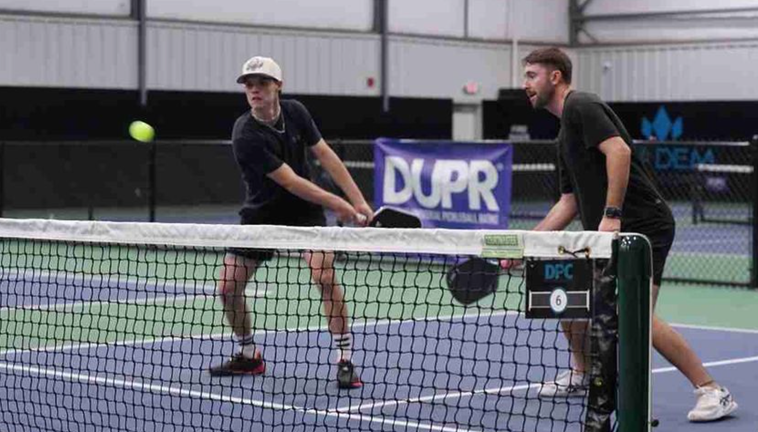
According to Fu, anticipation accounts for roughly 60% of what people call "hand speed" at the kitchen. That's a huge insight: you don't need lightning-fast reflexes if you're already in the right spot. The real work is learning how to train your brain to read the court, not how to increase raw reflex speed.
Love pickleball? Then you'll love our email newsletter. We send the latest news, tips, and highlights for free each week.
Reading the Sideline Dink
When your opponent dinks the ball to the sideline, they're setting up a predictable pattern.
Fu's approach is to immediately get both hands on the paddle and anticipate a speed-up down the line. If they go crosscourt instead, he keeps that two-handed backhand ready and adjusts his counter shot accordingly.
The key here is to commit to a defensive position based on the court geometry. If the ball is on the sideline, the angles are limited, so you can narrow your focus and react with confidence rather than panic. This is how to develop reflexes that actually hold up under pressure: not by training faster reactions, but by eliminating the guesswork before the shot comes. Recognizing your court position is the mechanical foundation this kind of anticipation is built on.
The Center-Court Dink and Chest-Level Threats
Things get trickier when the dink lands directly in front of you, between your shoulders.
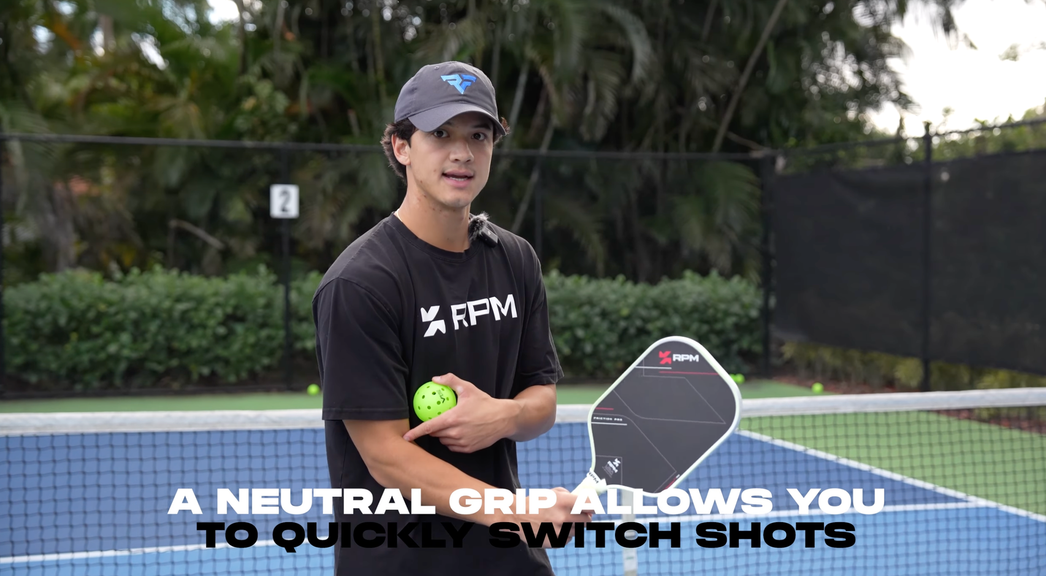
Fu holds a neutral grip with one hand and anticipates a backhand counter at chest level or slightly below. He's not worried about wide forehands because if your opponent speeds up from that position, the ball will likely sail out.
By protecting the high-percentage zone (your chest and inside hip), you're playing smart percentages rather than trying to cover every possible shot. This is the core of how to have better reflexes in pickleball: shrink the decision, and the reaction takes care of itself. The 2 essential pickleball techniques you're missing at the kitchen line covers the grip and paddle positioning side of exactly this scenario.
 The Dink Media Team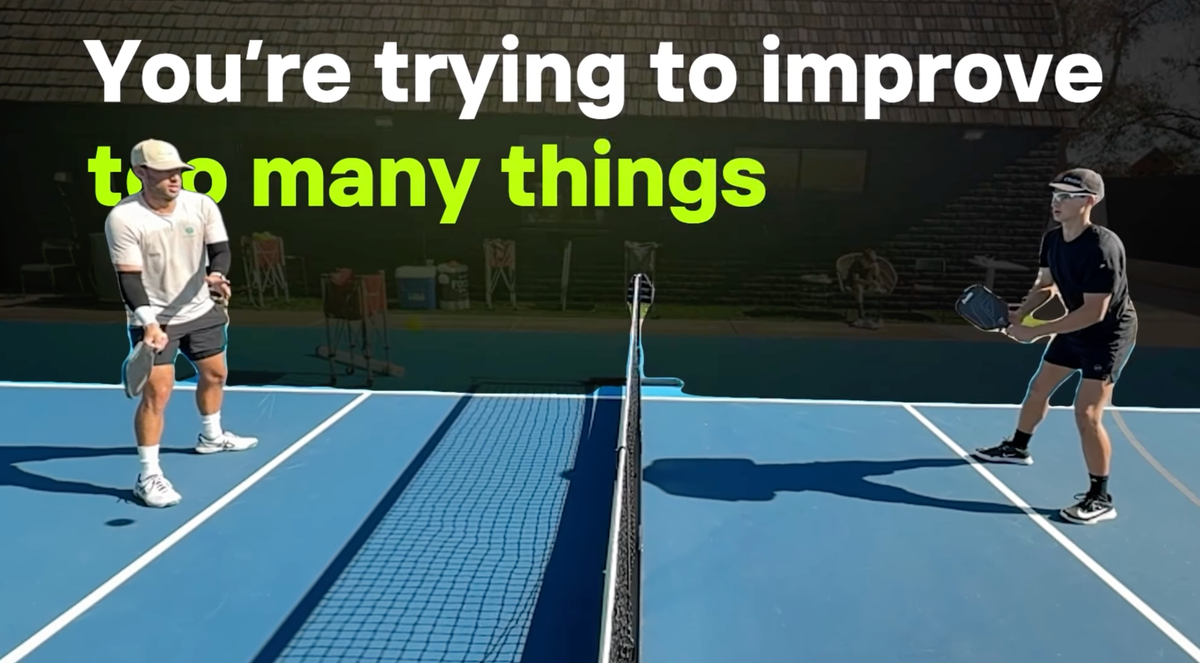
The Center-Line Position
When the ball lands closer to the center line and toward your right shoulder (if you're on the left side), Fu keeps his paddle facing the center without cheating either direction. He anticipates the ball might come to his inside hip since the center positioning gives opponents multiple options.
A lot of players will attack straight through the middle, which is an easy turn to the backhand. Anything further out is likely going out anyway, so again, you're defending the most dangerous zone. This is how to heighten your reflexes without training reaction time directly: make your default position the right one, and your body does the rest. How to control the middle court is the natural next read once you understand how Fu frames center-line threats.
 The Dink Media Team
The Takeaway
The real takeaway from Fu's breakdown is that anticipation isn't magic. It's pattern recognition.
By understanding court geometry, your opponent's positioning, and the limited options available from each spot, you can position yourself to react faster. You're not reacting to the ball; you're reacting to what you already predicted. That's the real answer to how to enhance your reflexes: build the mental map first, and your body follows.
That's the difference between a 3.5 and a 4.5 player at the kitchen line.
Anticipation is half the battle. Pickleball IQ is the other half, and the players who combine both are the ones who look impossibly fast without ever seeming rushed. If you want to go deeper on the hands side of this, the framework for developing faster hands in pickleball pairs directly with everything Fu breaks down here.
Heads up: hundreds of thousands of pickleballers read our free newsletter. Subscribe here for cutting edge strategy, insider news, pro analysis, the latest product innovations and more.
Frequently Asked Questions
How do you improve reflexes and reaction time in pickleball?
The most effective way to improve reflexes and reaction time in pickleball is to train anticipation, not raw speed. By reading your opponent's court position and understanding the angles available from each spot, you can pre-position your paddle before the ball is struck, which makes your reaction appear faster without actually increasing your reflex speed.
How do you develop reflexes for the kitchen line specifically?
Start by narrowing your focus to the highest-percentage zones your opponent can attack from their current position. According to pro player Ryan Fu, anticipation accounts for roughly 60% of what players call hand speed at the kitchen, meaning most of what looks like fast reflexes is actually pattern recognition and smart pre-positioning.
Can you train reflexes without drilling speed-up shots repeatedly?
Yes, and Fu's approach is proof. Instead of drilling pure reaction drills, he trains anticipation by studying court geometry and committing to defensive positions based on where the ball lands. Simple wall drills can reinforce this if you focus on reading the rebound angle rather than just reacting to pace.
What's the difference between reflexes and anticipation in pickleball?
Reflexes are involuntary responses to a stimulus; anticipation is a trained cognitive skill that reduces the stimulus you need to respond to. In pickleball terms, better reflexes help at the highest levels, but better anticipation is what moves most rec and intermediate players up a full rating within a single season.
How do pro pickleball players seem to react so fast?
They're not reacting to the ball. They're reacting to what they already predicted. Pro players like Ryan Fu read opponent positioning, body language, and court geometry to narrow their defensive focus before the attack comes, which is why elite kitchen exchanges look effortless even at high pace.
Love Pickleball? Join 100k+ readers for free weekly tips, news & gear deals.
Subscribe to The Dink