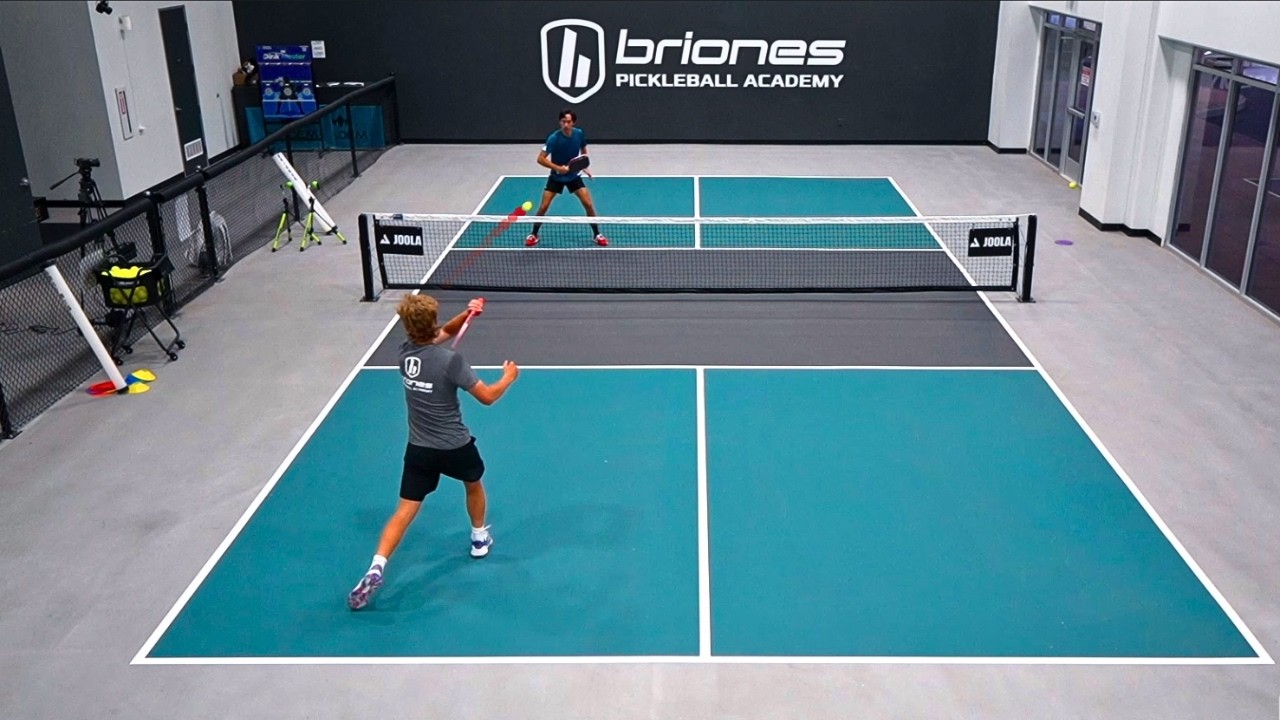
The Kitchen Arrival Percentage Most Players Never Track (But Should)
Your kitchen arrival percentage tells more about your pickleball level than almost any other stat. Learn how to measure it, why it matters, and exactly how to improve it.
Your kitchen arrival percentage is the single biggest skill differentiator in pickleball, and almost nobody is tracking it.
Not your dink consistency. Not your third shot drop. Not your speed-up game.
How often you successfully get from the baseline to the kitchen line, balanced and ready, after you serve is what separates players at every level from 3.0 all the way to the pros.
This insight comes straight from Anna Bright on YouTube, one of the top professionals in the game, and it reframes how you should be thinking about your own development.
This article breaks down what kitchen arrival percentage is, how to measure it honestly, and what you need to do to improve it.
Love pickleball? Then you'll love our free newsletter. We send the latest news, tips, and highlights for free each week.
What Is Kitchen Arrival Percentage and Why Does It Matter?
Kitchen arrival percentage is the rate at which you successfully reach the non-volley zone line, in a balanced position, after you serve the ball.
Most players have no idea what their number is. That is exactly the problem. You cannot fix something you are not measuring.
Anna Bright puts it plainly: from 3.0 to 3.5, from 3.5 to 4.0, from 4.0 to 4.5, from 4.5 to pro qualifier, this one stat tells her everything she needs to know about your game.
It is not a minor detail. It is the foundation everything else is built on.
If you are serious about improving, understanding where you currently stand is step one.
Here are five signs you are ready to move up a skill level, and kitchen arrival is central to all of them.
What Actually Counts as "Arriving" at the Kitchen?
This is where most players fool themselves. Getting your feet near the kitchen line is not the same as arriving at it.
Balanced arrival means you are there with your weight under control, your paddle ready, and your body able to respond to whatever comes next.
If you stumble forward, lean too far, or get caught moving when the ball arrives, that does not count.
Think about it this way. A player who is leaning and scrambling at the line is in a worse position than a player who is two steps behind it but completely set.
The goal is controlled presence at the kitchen, not just physical proximity to it.
This connects directly to your footwork and your split step timing.
Fix your split step timing and you will notice your kitchen arrivals become far more controlled and consistent.
How Do You Actually Measure This?
You need to film yourself. There is no other honest way to do this.
Set up your phone at court level so it captures your full baseline-to-kitchen movement. Then go back and watch every single rally where you are the server.
Every time you touch the ball as the server, that is a tally mark.
Every time you reach the pickleball kitchen line in a balanced position before the next exchange, that is a second tally mark.
Your kitchen arrival percentage is simply the second number divided by the first.
Do this across at least one full session, ideally two or three, so you have a real sample size.
Here is what to look for when you review the footage:
- Are you stopping short of the kitchen line and camping mid-court?
- Are you arriving off-balance, leaning forward or sideways?
- Are you getting there on time, or is the ball already coming before you land?
- Are you moving toward the kitchen at all after your third shot?
Most players who do this exercise for the first time are genuinely surprised. They think they are getting to the kitchen.
The tape says otherwise.
If your drilling is not translating to match improvement, this is often the reason.
You drill your third shot in isolation, but you never practice the full sequence of shot plus transition plus arrival.
 The Dink Media Team
Why Is Kitchen Arrival Percentage the Biggest Level Differentiator?
The kitchen line is where pickleball is won and lost. Full stop.
Players who control the kitchen control the rally. They can attack short balls, absorb pace, and force opponents into uncomfortable positions.
Players stuck at mid-court are perpetually reactive and perpetually vulnerable.
This is not just theory. Watch any pro match and track how fast players like Anna Leigh Waters or Tyra Black get to the pickleball kitchen line after a serve or return.
The kitchen line habits that make Tyra Black so hard to beat are built on exactly this kind of consistent, fast, balanced arrival.
At the 3.0 to 3.5 level, players rarely get to the kitchen cleanly. At 4.0 to 4.5, they get there more often but still make positional errors.
At the pro level, pickleball kitchen line arrival is nearly automatic.
The gap is not about raw athleticism. It is about intentional movement patterns built through deliberate practice.
 The Dink Media Team
What Is Holding You Back From Getting There?
There are a few specific reasons most recreational players fail to arrive at the kitchen consistently after serving.
- The third shot does not give you time to move. If your third shot drop or drive is weak, the ball comes back fast and you get pinned. Work on third shot drop placement so you create a slower, lower return that gives you time to advance.
- You are not moving as soon as you hit. A lot of players watch their shot to see where it lands before they start moving. By then you have lost a full second of transition time. Your feet should be moving the moment contact is made.
- You are not using the transition zone properly. The area between the baseline and kitchen is not a place to stop. It is something to move through. If a ball is coming at your feet mid-transition, you need to know how to handle it and keep advancing.
- Your movement is reactive, not proactive. Actually, strike that word. Your movement should be planned and deliberate, not something you figure out after the ball leaves your paddle.
- You do not have a clear arrival target. Some players know they should get to the kitchen but do not have a specific footwork pattern to get there. Lateral movement training gives you the physical tools to move efficiently without grinding on your joints.
 The Dink Media Team
How Do You Actually Train This?
Knowing your kitchen arrival percentage is only useful if you do something with the information. Here is how to practice it with purpose.
Full sequence drilling. Stop practicing your third shot drop in isolation.
Start practicing the full sequence: serve, third shot, then move. Every rep should end with you arriving at the kitchen in a balanced position.
If you do not make it there, the rep does not count, even if the shot itself was good.
Shadow movement reps. Before you even pick up a ball, walk through the movement pattern from the baseline to the kitchen.
Feel what a balanced arrival looks like.
Your body learns patterns through repetition, and even slow-motion walkthrough reps build the motor memory you need under pressure.
You should also build awareness of where you are stopping. If you keep getting stuck at the baseline, the issue is usually a combination of weak third shots and no movement habit trained into your game.
Fix both at the same time.
Rally tracking in live play. Keep a simple tally on your phone or a piece of paper at the side of the court.
Every serve, mark it down. Every balanced kitchen arrival, mark it.
After a session, calculate your percentage. Then do the same thing the following week and compare.
The goal is incremental improvement.
If you are arriving at the pickleball kitchen line 40 percent of the time right now, getting to 55 percent over the next month will have a noticeable impact on your results.
Getting to 70 or 80 percent will transform your entire game. Players working toward the 4.0 level who fix this one metric tend to see rapid rating gains.
 The Dink Media Team
What Should Your Target Percentage Be?
There is no perfect universal number, but here is a honest framework based on skill level.
- 3.0 to 3.5 players: Most are arriving less than 40 percent of the time. Getting above 50 percent is the first real milestone.
- 3.5 to 4.0 players: Should be targeting 55 to 65 percent consistent kitchen arrival. Below that and you will stay stuck.
- 4.0 to 4.5 players: The goal is 70 percent or higher. At this level, arrival quality matters as much as arrival rate. Are you balanced when you get there?
- 4.5 and above: The best players in open and pro play are arriving at elite rates. The variance is minimal because kitchen arrival has become a default habit, not a conscious decision.
If you want a comparison point for what intentional tracking looks like in practice, here is how to track pickleball progress without obsessing over every number.
The goal is to use data to guide practice, not to stress about it.
 The Dink Media Team
The Honest Truth About Why You Are Not Improving
Most players think they have a shot problem. They do not. They have a positioning problem.
The shot errors, the pop-ups, the getting attacked, the inability to reset: most of it traces back to being in the wrong place when the ball arrives.
And being in the wrong place traces back to not getting to the kitchen consistently enough after the serve.
Fix your kitchen arrival percentage and you will find that a surprising number of other problems start to solve themselves.
Your habits reveal your level instantly to anyone watching, and nothing reveals more than where you are standing when the rally gets interesting.
Get your camera out. Watch yourself. Count your arrivals.
Then go fix what you find. The reasons players stay stuck at 3.5 are almost always mechanical and habitual, not physical. This is one you can start fixing this week.
Anna Bright is right: this one stat tells her everything she needs to know about your game. Now it should tell you something about yours too.
Frequently Asked Questions
What is kitchen arrival percentage in pickleball?
Kitchen arrival percentage is the rate at which you reach the non-volley zone line in a balanced, controlled position after you serve the ball. You calculate it by dividing the number of times you arrive at the kitchen correctly by the total number of serves you hit. It is widely considered the most revealing single stat for measuring overall player development.
How do I measure my kitchen arrival percentage?
Film your matches or practice sessions from court level so your full movement from baseline to kitchen is visible. Watch the footage and put a tally mark for every serve, then a second tally mark for every time you reach the kitchen line balanced and ready. Divide the second number by the first to get your percentage.
Why can't I get to the kitchen after serving?
The most common reasons are a weak third shot that allows opponents to return the ball too fast, waiting to watch your shot before you start moving, and having no trained movement pattern for the transition zone. Work on your third shot quality and start moving your feet the moment you make contact with the ball.
What is a good kitchen arrival percentage for a 4.0 player?
A 4.0 player should be aiming for 65 to 70 percent or higher. Below that range and you are likely getting pinned at mid-court too often, which creates defensive situations and forces errors. Consistently hitting 70 percent or above with balanced arrivals is a strong indicator you are ready to compete at the 4.5 level.
Does kitchen arrival percentage matter for the return of serve too?
Yes, but the serving team faces the bigger challenge because they have to cover more ground and hit a quality third shot first. Return of serve kitchen arrival is generally easier because the returner has a head start. Focusing on kitchen arrival as the server will have a larger impact on your overall game because it is the harder problem to solve.

Love Pickleball? Join 100k+ readers for free weekly tips, news & gear deals.
Subscribe to The Dink