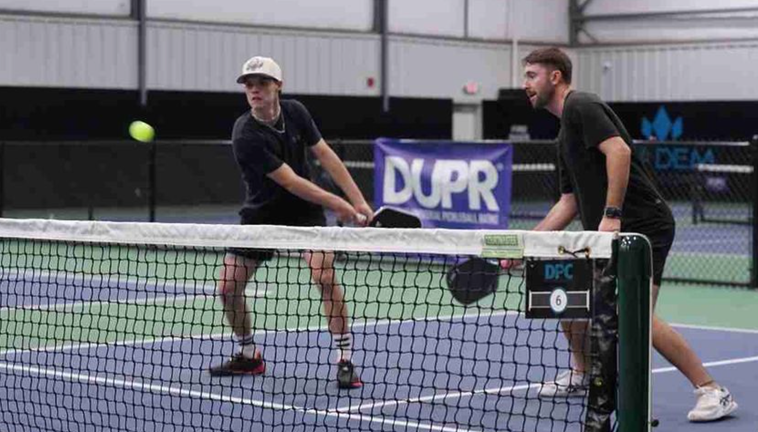

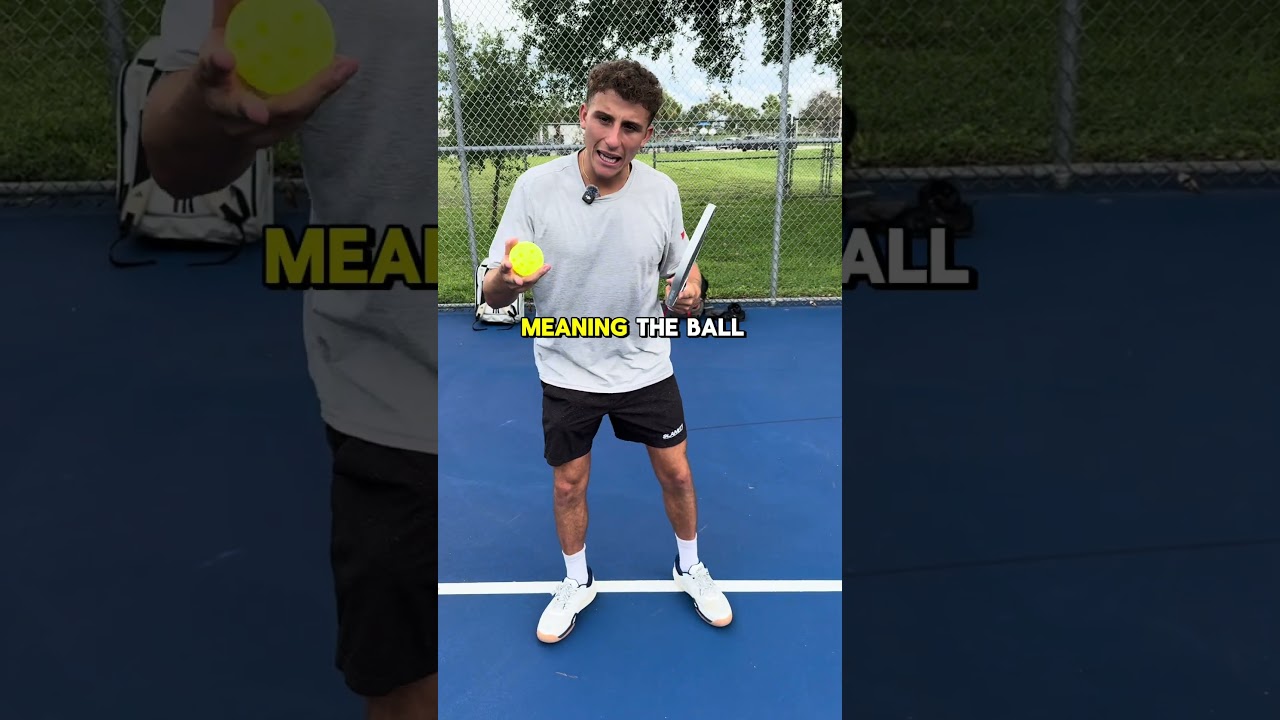
A pro pickleball player reveals the three most common mistakes that are sabotaging your third shot drop. Here's what you need to fix to improve consistency and control.
The third shot drop is one of the most critical shots in pickleball, and it's also one of the most butchered. 3 tips to stop missing your third shot drops is the quick-fix companion read if you want targeted corrections before diving into the full breakdown here.
After three years competing at the professional level, one thing has become crystal clear: most players are making the same preventable mistakes that keep them from mastering this essential shot.
If you're struggling to hit consistent third shot drops, you're not alone.
The good news? The fixes are simpler than you think.
APP pro Tanner Tomassi is here to break down exactly what's going wrong and how to correct it.
Love pickleball? Then you'll love our free newsletter. We send the latest news, tips, and highlights for free each week.
Why Does the Third Shot Drop Matter So Much?
Before we get into the mistakes, let's establish why this shot matters. The third shot drop is your transition tool.
It's the shot that takes you from the baseline and moves you forward into the net, where you can control the rally and finish points.
Without a solid third shot drop, you're stuck at the baseline, reacting to your opponent's shots instead of dictating play.
That's a losing position in modern pickleball.
If you're serious about leveling up your overall game, mastering 6 essential pickleball shots to elevate for 2026 starts right here with the third shot drop.
Mistake #1: You're Not Getting Your Hips Behind the Ball on Your Third Shot Drop
Here's the most common error: players reach for the ball with one arm instead of positioning their entire body correctly.
When the ball comes to you, your instinct might be to extend and grab it, but that's exactly backward.
The fix is straightforward. Get your hips directly behind the ball. This means your entire body should be aligned with where you want the shot to go.
When you do this, your consistency skyrockets.
 The Dink Media Team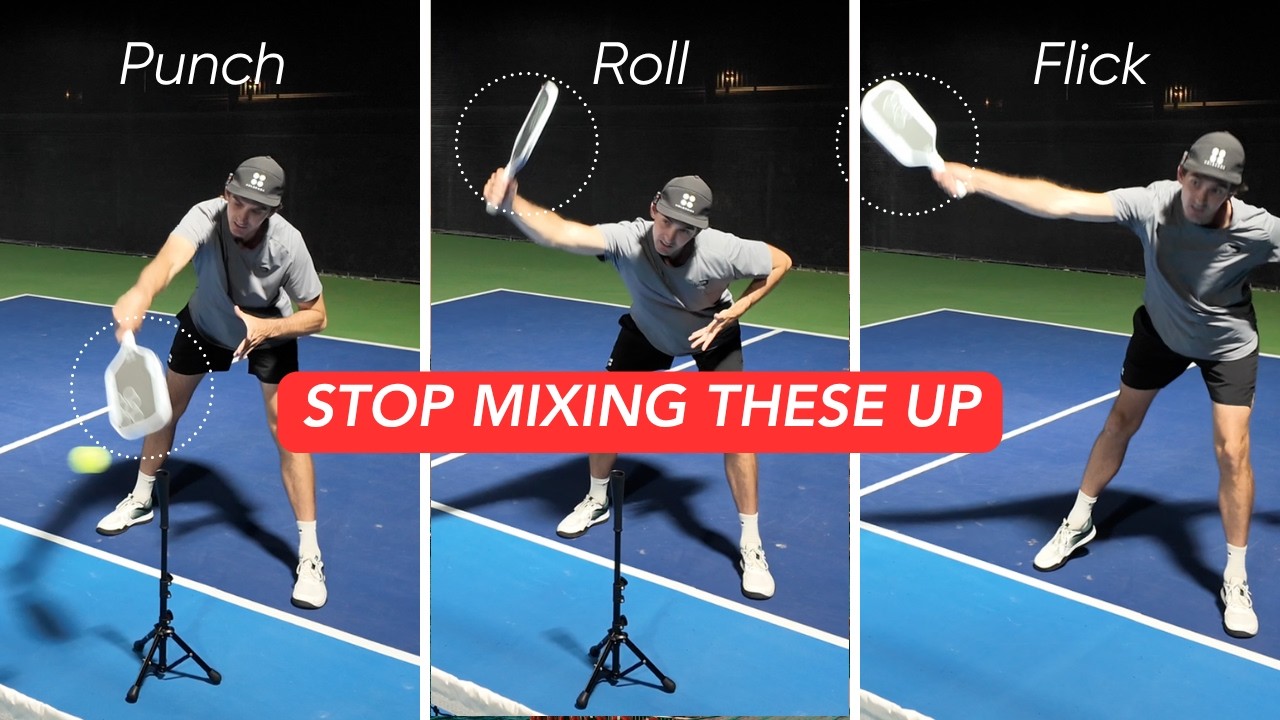
Think of it this way: your hips are your foundation. If they're not positioned correctly, your arm and paddle are working against your body's natural mechanics.
You'll lose power, control, and consistency all at once.
The difference between reaching with one arm and positioning your hips is the difference between a shot that lands in the net and one that clears it softly.
It's not a small detail. It's the foundation of the entire third shot drop.
Perfecting your pickleball posture reinforces exactly this kind of full-body alignment, and it pays dividends across every shot in your game, starting with the third shot drop.
How Body Positioning Affects Your Third Shot Drop Consistency
Body position is everything when it comes to shot-making reliability.
Players who consistently hit quality drops are not just skilled with their paddle hand; they are disciplined with their footwork.
Getting your hips behind the ball is the first physical commitment you make to executing a high-percentage drop.
This is also where the #1 mistake killing your shot-making consistency in pickleball shows up most often on the third shot drop.
Stop reaching. Start moving.
 The Dink Media Team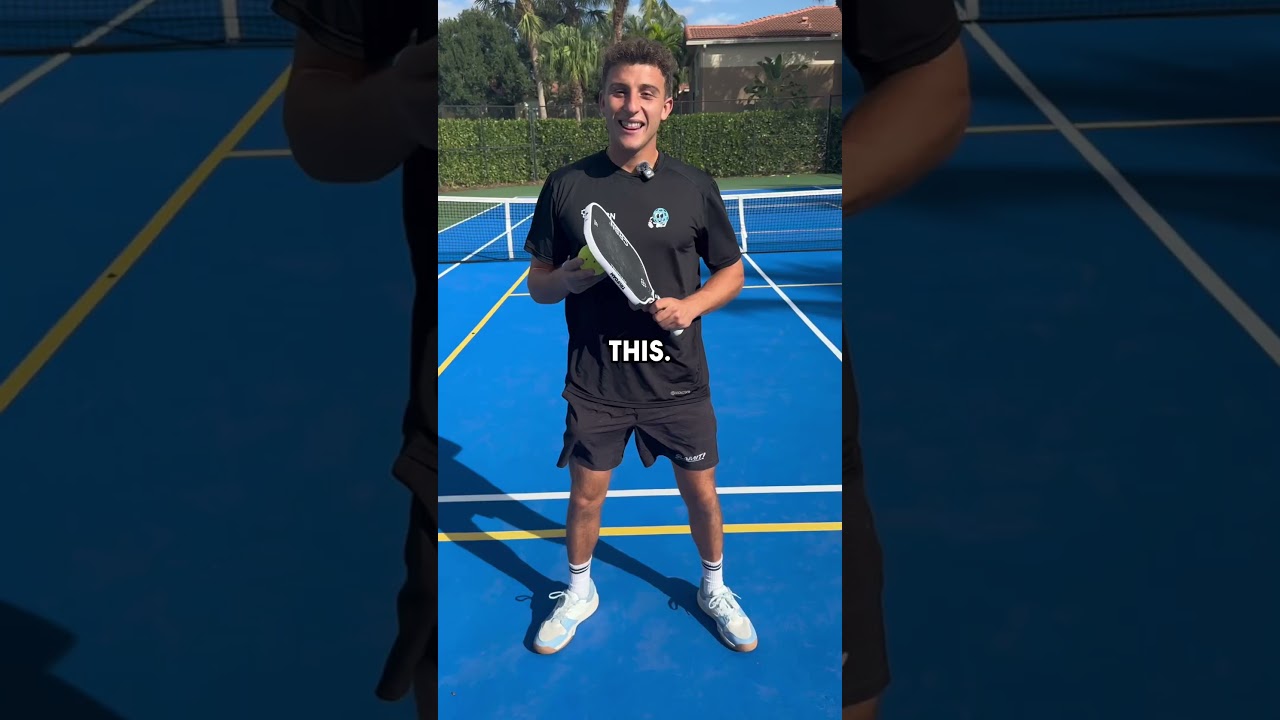
Mistake #2: You're Preparing Too Late on Your Third Shot Drop
Here's what most players do: the ball is coming toward them, their paddle is still up high, and then at the last second, they drop the paddle and hit the shot all in one frantic motion.
This creates inconsistency because you're trying to do too much at once.
The solution is to prepare early for your third shot drop.
When you see the ball coming your way, your paddle should already be out in front and down, ready to receive it. You're not accelerating into the shot.
You're sitting, waiting, and catching the ball.
This is a timing issue, not a strength issue. By preparing early, you give yourself time to judge the ball's trajectory and make micro-adjustments.
Your paddle is already in position, so you're just guiding the ball over the net instead of manufacturing the entire shot at the last moment.
The rhythm changes everything. Early preparation means smooth execution. Late preparation means panic and mistakes.
How early preparation buys time and slows down pace of play in pickleball breaks down exactly how this applies to the third shot drop and every shot that follows.
Why Timing Is the Hidden Key to a Better Drop Shot
Timing isn't something you either have or you don't.
It's a skill built through repetition and awareness. When you commit to early paddle preparation, your brain stops rushing and starts reading.
That's when your third shot drop transforms from a scramble into a controlled, soft shot that dies near the kitchen line.
The 12 drills you need to play your best pickleball in 2026 includes specific preparation drills designed to ingrain exactly this third shot drop habit. Put in the reps.
 The Dink Media Team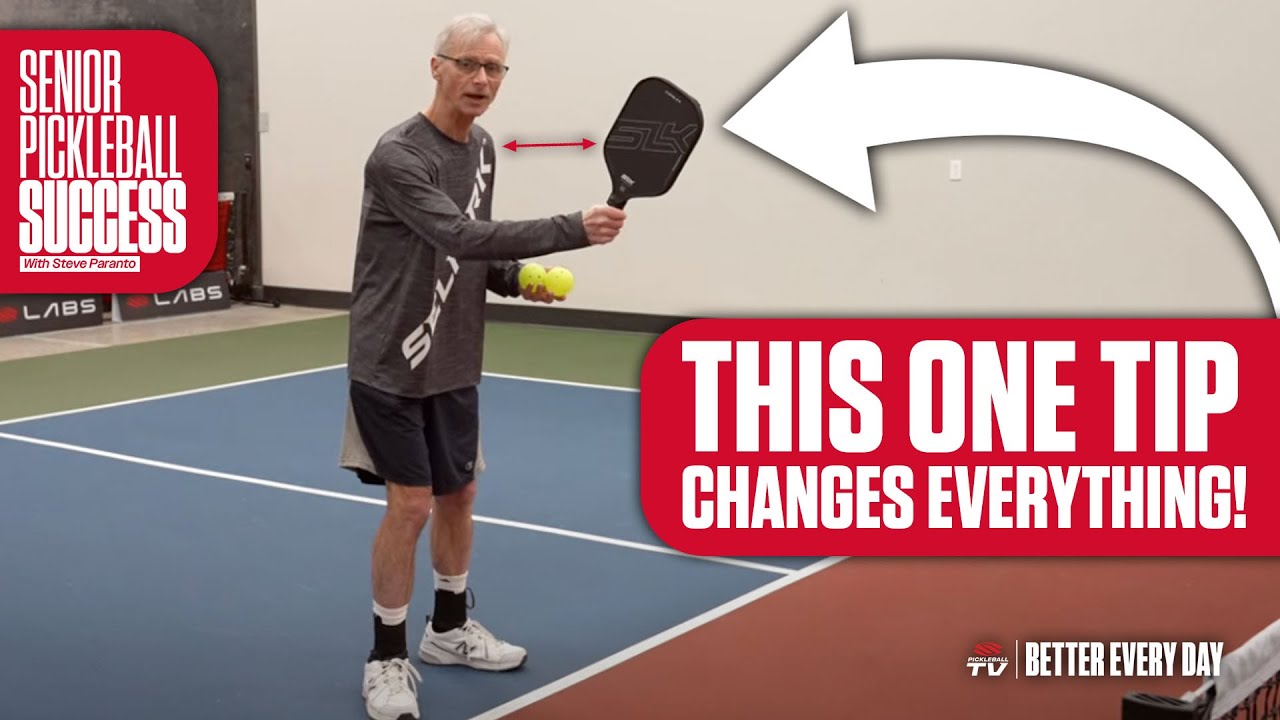
Mistake #3: The Short Hop Problem (The Most Common Error on the Third Shot Drop)
This is the biggest culprit, and it's surprisingly easy to fix. Most players try to hit the third shot drop on the short hop, right after the ball bounces.
This is incredibly difficult to do consistently.
Here's why: a short hop gives you almost no margin for error. The ball is moving quickly, and you have to time your paddle contact perfectly.
One millisecond off, and the ball either goes into the net or flies long.
Instead, let the ball bounce and make contact as it starts to drop.
This gives you more time to react, more control over the shot, and a much larger window for success.
The ball is moving slower, and you're hitting it on the way down, which naturally softens the shot.
This single adjustment will improve your consistency more than anything else. Stop trying to be a hero on the short hop.
Let the ball bounce, and then execute.
For more technique breakdowns like this, 5 drop shot techniques to elevate your pickleball game is worth bookmarking now alongside this third shot drop guide.
How Contact Point Changes Everything on the Drop Shot
Where you make contact with the ball determines the entire shot outcome.
Hit it too early off the bounce and you're fighting physics. Hit it at the top of the bounce and you lose the natural arc that makes the third shot drop so effective.
The sweet spot is on the way down, where the ball slows, your paddle face naturally opens, and the shot floats rather than drives.
It's not magic. It's mechanics.
The science-backed method to hit perfect pickleball drops every time explains the physics in plain language and is one of the clearest breakdowns of third shot drop contact-point control available.
 The Dink Media Team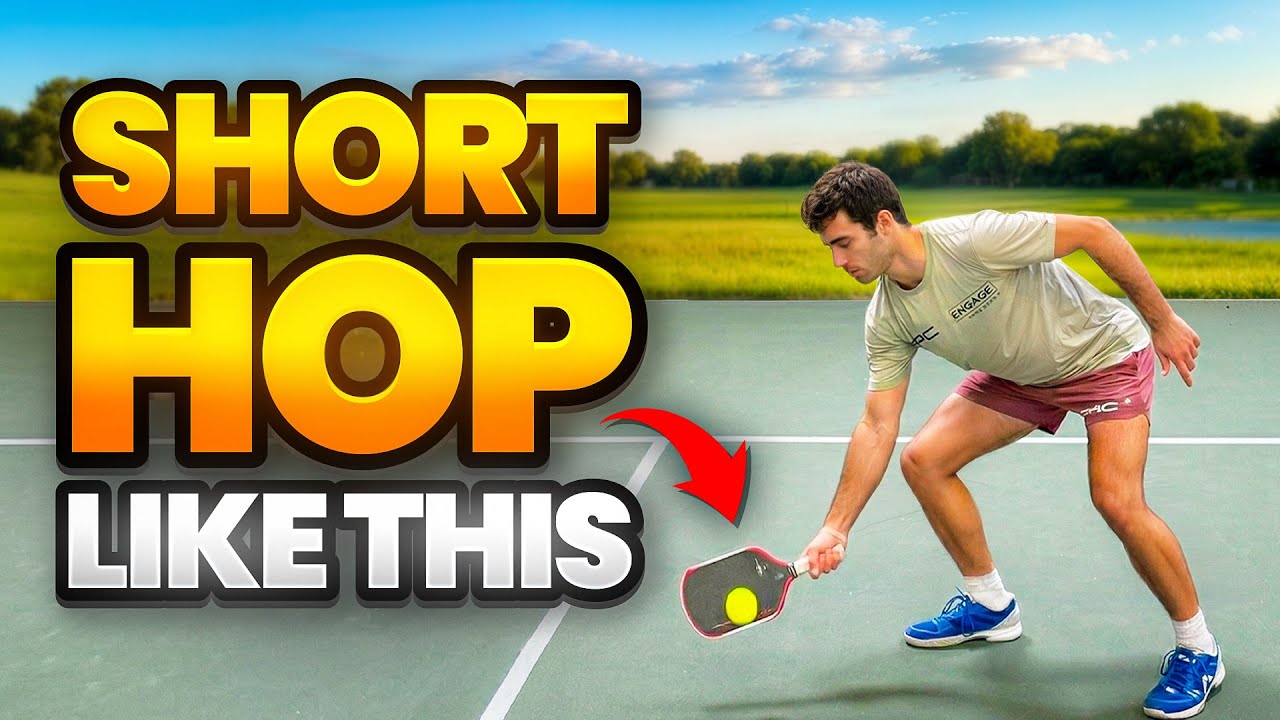
Putting It All Together: Fixing Your Third Shot Drop
The third shot drop doesn't require special athleticism or years of training. It requires understanding the fundamentals and executing them consistently.
Get your hips behind the ball, prepare early, and let the ball bounce before you hit it.
These three adjustments will transform your game. You'll move forward into the net more often, control more rallies, and finish more points.
That's the power of fixing the fundamentals.
If you want a structured system to layer these third shot drop skills into a complete game plan, a simple 4-step system to win more pickleball games in 2026 is the logical next read.
The next time you're on the court, focus on one of these three mistakes at a time. Don't try to fix everything at once.
Pick the one that resonates most with your game, work on it for a few sessions, and then move to the next one.
Your third shot drop is about to get a whole lot better.
Stop Making These Mistakes and Start Playing Smarter
Every one of these three errors has the same root cause: reacting instead of preparing. Pickleball rewards players who think one step ahead.
When you commit to better body position, earlier preparation, and a cleaner contact point, the third shot drop stops being a weakness and starts being a weapon.
Understanding the pickleball transition zone is the next piece of the puzzle. Once your third shot drop is landing consistently, knowing what to do as you approach the net is what separates 4.0 players from 5.0 players.
How to break 5.0: the 5 pickleball shots you must master before 2026 lays out that roadmap clearly.
And if you're still working on keeping the ball low after the third shot drop, how to stop being a pickleball banger and master soft game skills ties it all together.
And if you're still working on keeping the ball low after the drop, knowing how to stop being a pickleball banger and master soft game skills ties it all together.
Soft game mastery starts with the third shot drop. It doesn't end there.
Frequently Asked Questions
What is the third shot drop in pickleball and why does it matter?
The third shot drop is a soft, arcing shot hit from near the baseline that lands in or near the kitchen on your opponent's side. It matters because it neutralizes your opponent's advantage at the net and gives you time to move forward and take control of the rally. Without it, you're stuck defending from the back of the court.
What's the difference between a third shot drop and a third shot drive?
A third shot drop is a soft, arcing shot that lands near the net on your opponent's side, designed to move you forward and into a neutral position. A third shot drive is a faster, flatter shot designed to put immediate pressure on your opponent. The drop is used when you want to transition forward and take control; the drive is used when you want to attack immediately.
How do I know if I'm hitting the ball too hard on my third shot drop?
If your ball is consistently landing past the service line or bouncing high on your opponent's side, you're hitting it too hard. The goal is a soft shot that lands within a few feet of the net. Focus on reducing your paddle acceleration and letting the ball's momentum do most of the work.
Should I always let the ball bounce before hitting my third shot drop?
In most situations, yes. Letting the ball bounce gives you more time, a slower ball to work with, and far greater control over your contact point. As you improve, you'll develop the ability to handle short hops consistently, but prioritize the bounce-and-drop approach until your mechanics are locked in.
Why do my third shot drops keep going into the net?
This usually comes down to one of two things: you're hitting too hard, or your paddle face is too closed (pointing downward too much). Focus on a softer touch and a slightly more open paddle face. Let the ball's natural trajectory carry it over the net rather than forcing it, and make sure your hips are positioned correctly behind the ball at contact.

Love Pickleball? Join 100k+ readers for free weekly tips, news & gear deals.
Subscribe to The Dink