
The punch volley is the shot that keeps hard hitters from crowding the kitchen. Here are five keys to hit it deep, balanced, and with confidence.
The punch volley is the shot most players are missing when a hard hitter starts pounding them at the kitchen line.
You block everything, the ball keeps coming back faster, and eventually you pop one up and lose the point.
Blocking is only half the answer. If every ball you return dies in the kitchen, the banger never has to back up, and they keep crowding the net.
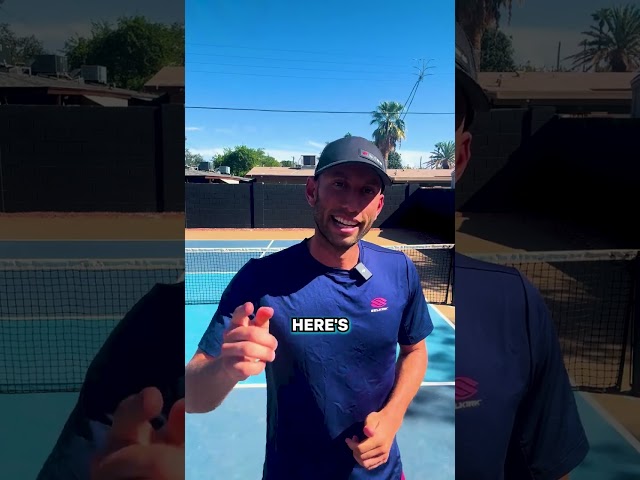
These keys come from Better Pickleball on YouTube, where CJ Johnson breaks down exactly how to hit the shot.
Below you will find the ready position, the paddle path, the balance trick, and when to choose it over a block.
Love pickleball? Then you'll love our free newsletter. We send the latest news, tips, and highlights for free each week.
What Is a Punch Volley and Why Does It Beat a Banger?
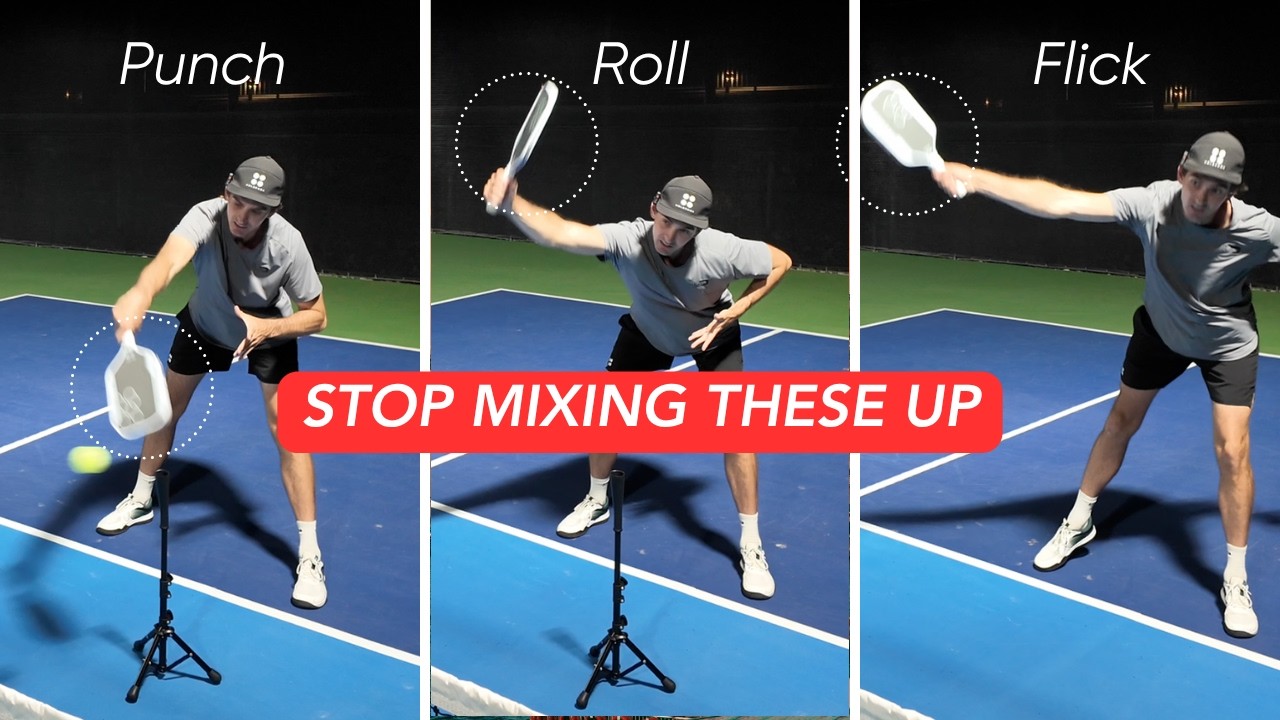
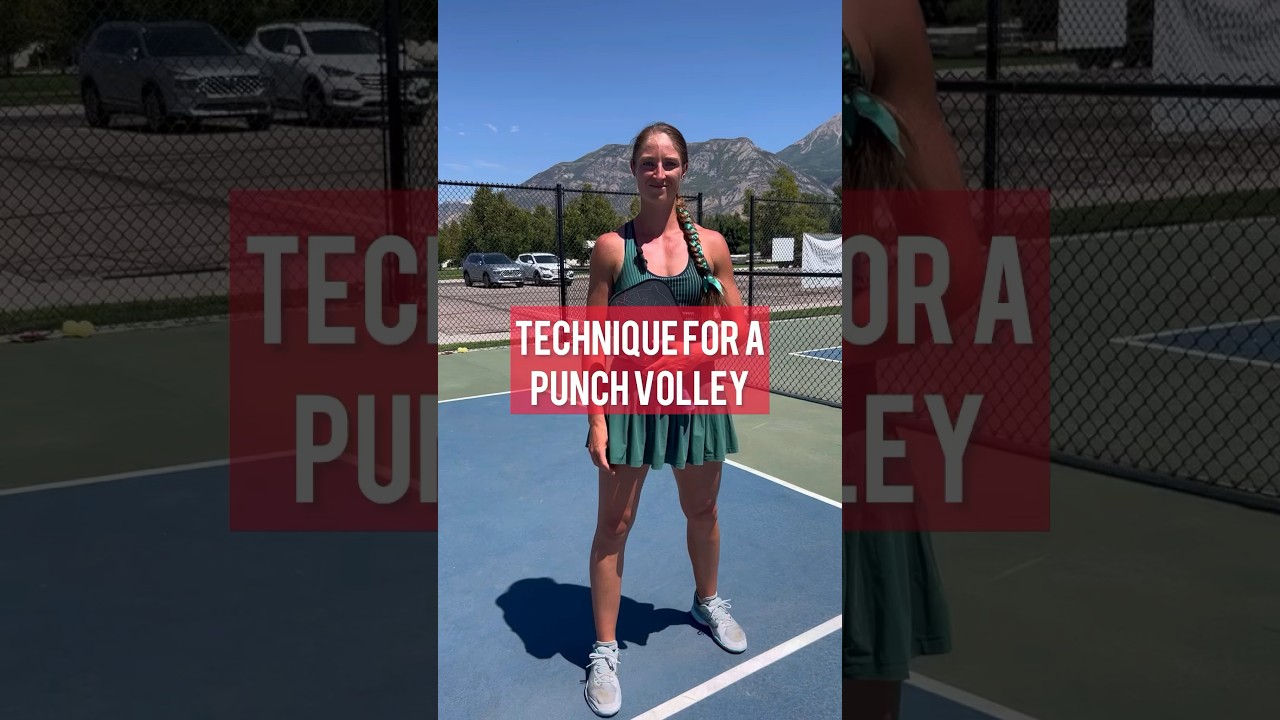
A punch volley is a firm, compact volley where you push the paddle forward through the ball to send it deep, instead of absorbing its pace like a block.
Against a hard hitter, you have two tools.
The block volley takes pace off the ball, and the punch volley keeps your opponent honest by driving them away from the non-volley zone.
Use the block when the ball arrives at full speed.
Use the punch volley when the ball comes in a little softer, because you have enough time to put something on it.
If your blocks keep popping up, start with these block fixes to stop popping up balls. A clean block and a clean punch volley work as a pair.
Key 1: Build a Ready Position That Can Actually Punch
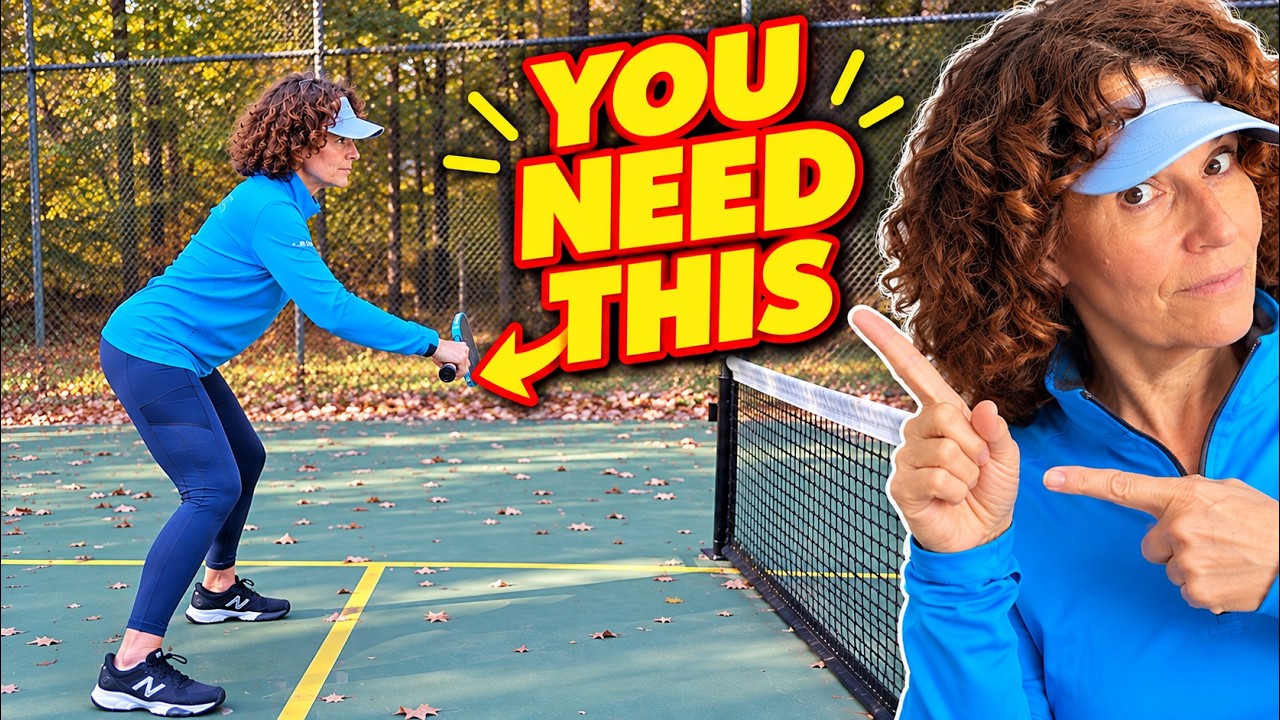
A good punch volley starts with a wide base, forward weight, and a bent knee, because the shot comes from your shoulder and needs a stable platform.
Most players at the kitchen line stand tall with straight legs. That ready position makes it hard to move efficiently, and it kills your ability to drive through the ball.
Here is the setup, step by step:
- Widen your feet. Think from outside your shoulders to the inside of your feet.
- Get your weight forward. Feel your shoulders over the front part of your foot, which CJ calls the triangles.
- Stick your fanny out slightly. Do not let your shoulders drift up toward the sky.
- Keep your paddle out in front. Hold it near the center of your body, away from your chest.
That paddle position matters. The ball will usually cross the net about a paddle height or so above it, and your paddle should already be waiting there.
If your feet feel slow at the line, this is worth reading next: footwork fixes for safety and better shots.
Key 2: Keep the Paddle Face Square
Your paddle face should be square, meaning parallel to the net, at the moment you start the punch volley.
A square face sends the ball straight ahead and gives you a predictable trajectory. Tilt it open and the ball floats. Close it and the ball dives into the net.
Players often get sloppy here because the ball is coming fast. They slap at it with a loose wrist and the face wobbles at contact.
Keep your wrist firm and let your shoulder drive the motion. You are guiding the ball, not swinging at it.
Watching the contact point helps more than most players realize. These tips on watching the ball to hit cleaner shots pair well with a square paddle face.
 The Dink Media Team
Key 3: Push Through Four Balls
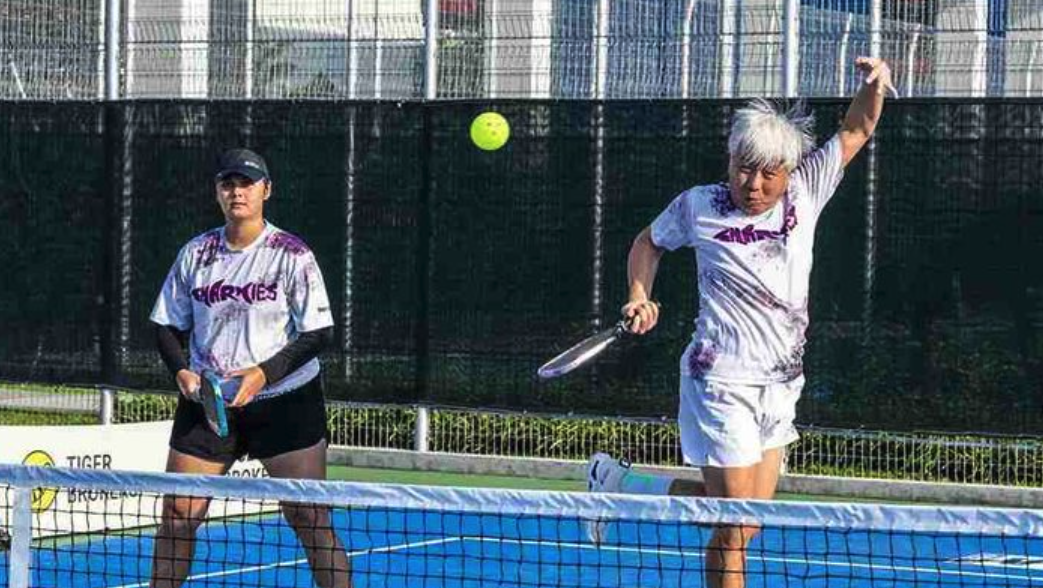
The simplest way to get depth is to imagine four balls lined up in front of you, then push your paddle through all four.
Picture the ball you are hitting plus three more directly in front of it. Your job is to move the paddle through that whole row using your shoulders.
That follow-through creates the right trajectory. The ball clears the net by about a paddle height, then lands roughly four feet from the baseline.
Four feet from the baseline is a tough spot to deal with. Your opponents have to retreat and handle a deep, heavy ball, and that gives you time to move forward.
Here is what the four-ball cue fixes:
- Stopping short. Players who jab and stop the paddle at contact send the ball short and give the banger an easy attack.
- Swinging too big. The cue keeps the motion compact and forward, not around your body.
- Floating the ball. A firm push through contact keeps the ball low and driving.
If you want a harder, flatter ball in general, check out these tips for a harder pickleball drive that stays in.
 The Dink Media Team
Key 4: Use Your Off Hand as a Balance Pole
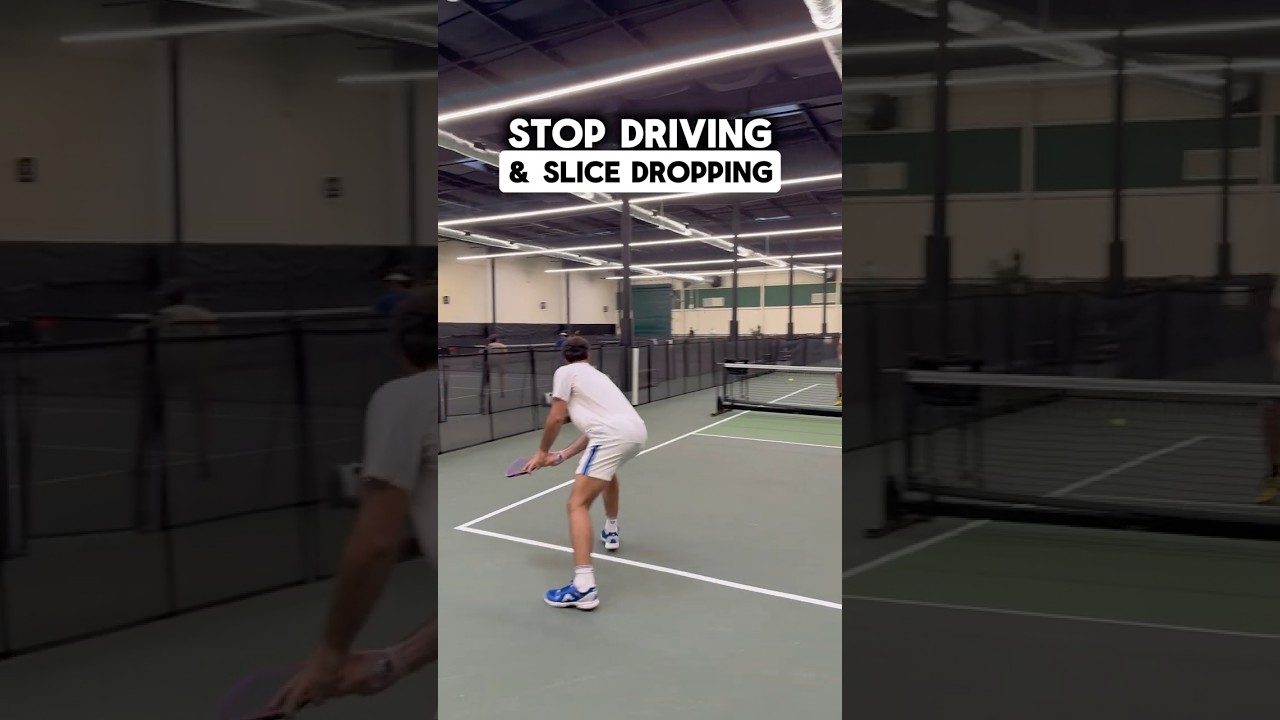
Your off hand is a balance tool, and a quiet off hand is one of the most common reasons a punch volley falls apart.
CJ uses the wire walker comparison.
A wire walker carries a long pole because arms alone do not give enough stabilization, and your off arm plays the same role on the court.
If you hit a two-handed backhand, you can put your off hand on the paddle for extra stability. That works fine, and CJ does it himself on many punch volleys.
If you hit one-handed, let your off arm float out to the side. Do not tuck it tight against your body.
That arm naturally counterbalances the push, and you stay settled through the shot instead of lunging forward. Balance is doing more work here than technique.
 The Dink Media Team
Key 5: Know When to Punch and When to Block
Choose the punch volley when the ball is coming slightly slower than full throttle, and choose the block when the ball is truly flying.
This decision happens in a split second, so build a simple rule. If you feel rushed and the ball is jumping on you, take pace off with a block.
If you feel like you have a half beat to set your paddle, punch it deep. That is the moment to drive the banger back.
Mixing the two is what really frustrates a hard hitter. They never get comfortable because one ball dies at their feet and the next lands near the baseline.
Many players lose to bangers because they get rattled, not because they lack the shot.
 The Dink Media Team
How Do You Practice the Punch Volley?
You practice the punch volley by volleying with a partner at the kitchen line and aiming for the back third of the court on every ball.
Start slow. Have your partner feed you medium-paced balls at paddle height so you can groove the square face and the four-ball push.
Then add pace gradually. When balls get too fast, switch to blocks, and practice the transition between the two.
A few drills to build from:
- Deep target volleys. Place a towel or cone four feet from the baseline and try to land punch volleys near it.
- Off-hand check. Freeze after each shot and check where your off arm ended up.
- Block and punch mix. Have your partner vary pace, and call out which shot you will use before contact.
For more structured work, try these 5 pickleball practice drills for any skill level.
 The Dink Media Team
Why Does the Punch Volley Work Against Hard Hitters?
It works because bangers want you pinned at the kitchen line while they stay close to the net, and a deep punch volley breaks that pattern.
According to a 2025 notational analysis of elite pickleball match play, points are decided almost entirely in two places: right at the non-volley zone and behind the baseline.
A punch volley is how you move the rally from the first zone into the second.
When the ball lands four feet from the baseline, the banger has to step back and generate their own pace. They lose their easy attacking angles.
Pushing them back also gives your team room to reset and take control of the point. You stop playing defense every ball.
And if a hard hitter is also making you feel small, this guide on how to beat an intimidating pickleball opponent will help you stay composed.
 The Dink Media Team
Common Punch Volley Mistakes to Avoid
The biggest punch volley mistakes are standing too tall, swinging instead of pushing, and letting the off arm collapse into the body.
Watch for these in your own game:
- Tall stance. Straight legs make the shot slow and arm-driven.
- Wristy contact. A loose wrist changes the paddle face and sends the ball unpredictably.
- Stopping at contact. No follow-through means a short ball the banger can attack.
- Using it on a rocket. Full-speed balls need a block volley, not a punch.
Fix one at a time. Players who try to change everything at once usually get tight and make it worse.
Thinking less in the moment also helps. This read on smarter shot decisions is a good reminder to trust the shot once you have drilled it.
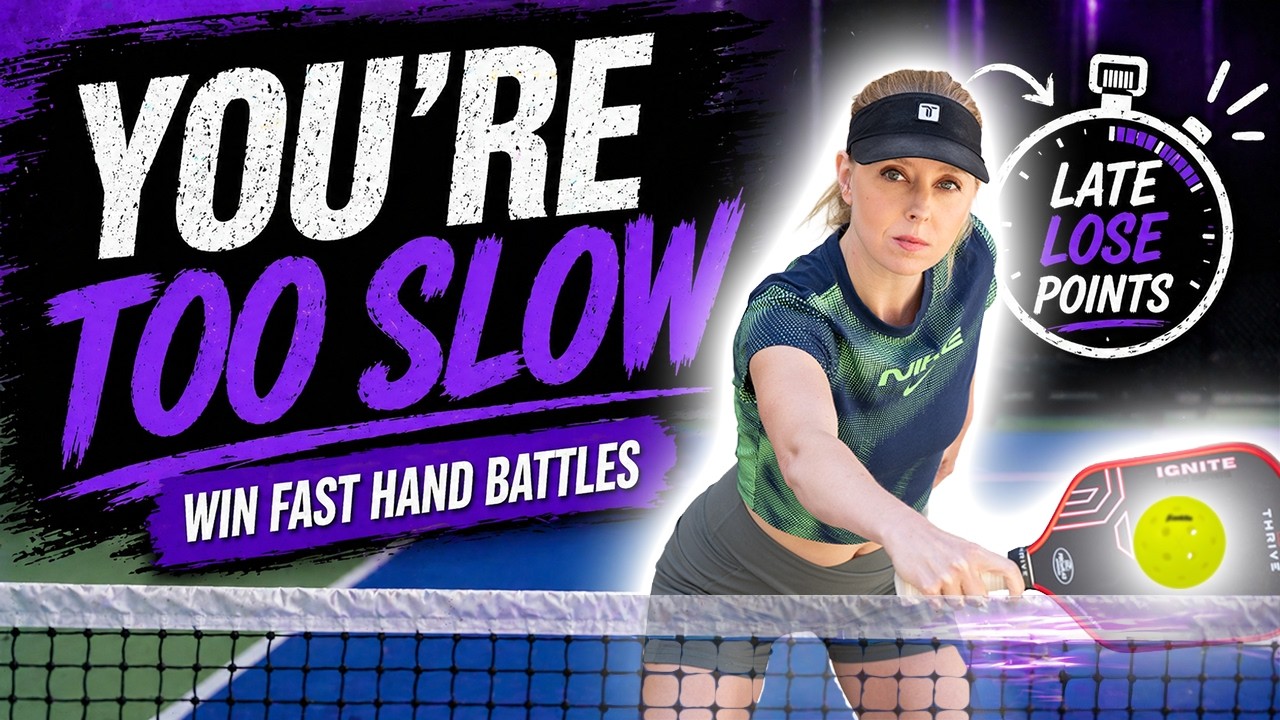
For a broader look at hands at the net, see how to win a pickleball hands battle every time.
Frequently Asked Questions
What is a punch volley in pickleball?
A punch volley is a compact, firm volley where you push the paddle forward through the ball to send it deep. It is different from a block, which absorbs pace and drops the ball into the kitchen.
When should I use a punch volley instead of a block volley?
Use the punch volley when the ball is coming a little slower than full speed and you have time to set your paddle. Use the block when the ball is moving fast and you need to take pace off it.
Where should a punch volley land?
Aim for about four feet from the baseline. A deep landing spot pushes the hard hitter back and takes away their easy attacking angles near the net.
Do I need two hands for a punch volley?
No. A two-handed backhand can add stability, but you can hit it one-handed as long as your off arm stays out to the side for balance.
Why do my volleys keep popping up against hard hitters?
Usually it is a tall stance, a tilted paddle face, or a loose wrist. Widen your feet, keep your weight forward, and hold the paddle face square through contact.


Love Pickleball? Join 100k+ readers for free weekly tips, news & gear deals.
Subscribe to The Dink