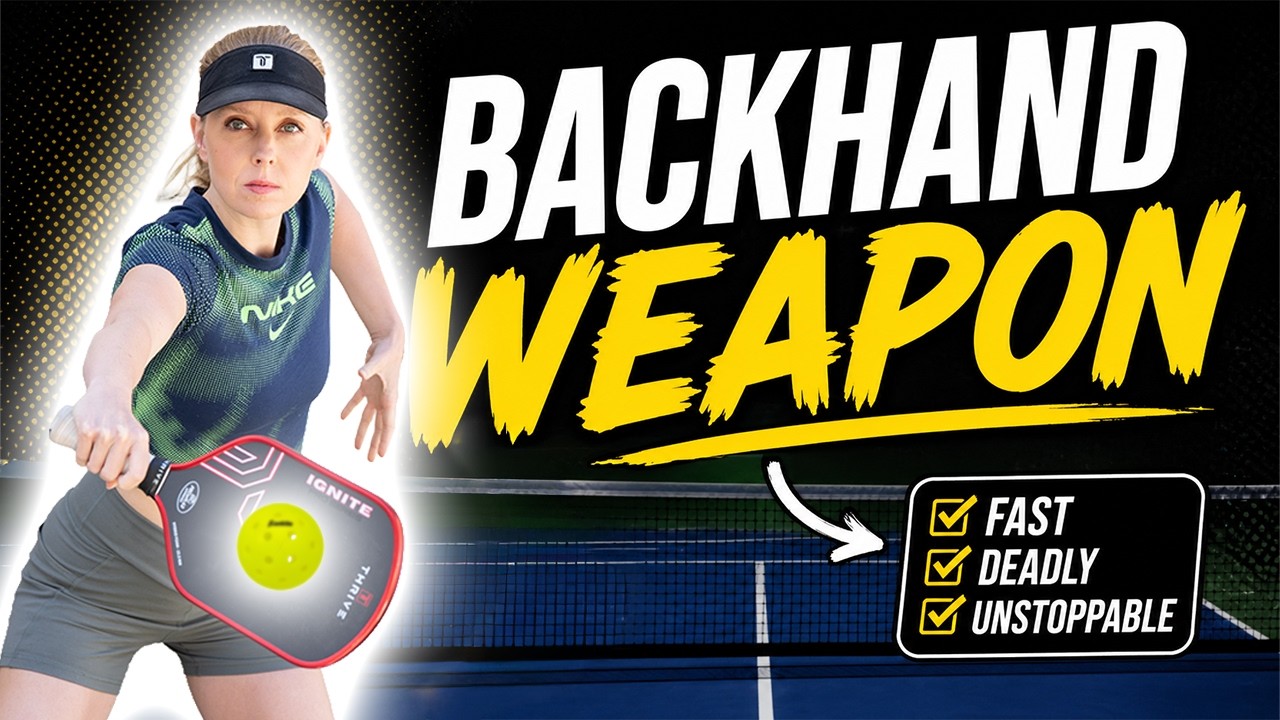
The backhand punch volley is one of the most underrated shots in pickleball, but when executed correctly, it becomes a devastating attacking weapon at the kitchen line. Cori Elliott breaks down the exact mechanics and adjustments that turn defensive resets into offensive pressure.
Here's the thing about the backhand punch volley: most players treat it like a safety valve.
When a ball comes at them, they poke it back over the net and hope for the best. But that's not what the shot is supposed to do.
According to coaching from Cori Elliott of The Dink Pickleball, the backhand punch volley should be your primary weapon for taking control at the kitchen line and putting real pressure on your opponents.
The problem isn't that players can't hit a backhand punch volley. The problem is they're not hitting it aggressively.
They're settling for resets when they should be attacking. And that's costing them points.
Love pickleball? Then you'll love our free newsletter. We send the latest news, tips, and highlights for free each week.
What's Actually Holding Back Your Backhand Punch Volley?
When Cori Elliott worked with Brooke on her backhand punch volley, the issues were immediately clear.
She had the fundamentals down, but her execution was sabotaging her game. Her biggest problems were
- Settling for resets instead of attacking.
- Breaking her wrist on contact.
- Letting her elbow drift out.
- Turning her body sideways instead of staying square.
Sound familiar? These aren't rare mistakes. They're the exact same things holding back most intermediate players.
The real issue is that players don't understand the purpose of the backhand punch volley.
It's not a defensive reset. It's an attacking shot designed to put your opponent on their heels and win the point outright.
Once you shift that mindset, everything changes.
The Mechanics That Transform Your Backhand Punch Volley
So what does a proper backhand punch volley actually look like? It starts with a stable paddle face. No wrist breakdown. No flipping.
Your wrist stays firm throughout the entire shot, which means the paddle face stays square to your target.
Setting Up the Perfect Backhand Punch Volley Stance
Next, you need to stay square and balanced. This is where most players go wrong.
They rotate their shoulders and turn sideways, which kills their ability to generate forward pressure.
Instead, keep your shoulders facing the net and your feet planted.
Your power comes from a compact, forward punch motion, not from rotating your body.
Why Directional Control Defines a Great Backhand Punch Volley
The backhand punch volley is all about directional control and placement.
You're targeting down at your opponent's feet, forcing them to hit up and giving you the advantage.
This is what separates an attacking backhand punch volley from a defensive poke.
Why Does Wrist Stability Matter So Much?
Here's what happens when your wrist breaks on contact:
- The paddle face opens up.
- The ball floats.
- Your opponent gets an easy put-away.
A stable paddle face keeps the ball low and controlled, which is exactly what you need when you're attacking at the kitchen. Wrist stability isn't optional on this shot. It's the whole point.
Think of your wrist like a shock absorber. It should absorb the impact of the ball without collapsing.
Your forearm, wrist, and paddle should form a straight line from elbow to paddle tip.
When you maintain that alignment, you control where the ball goes.
 The Dink Media Team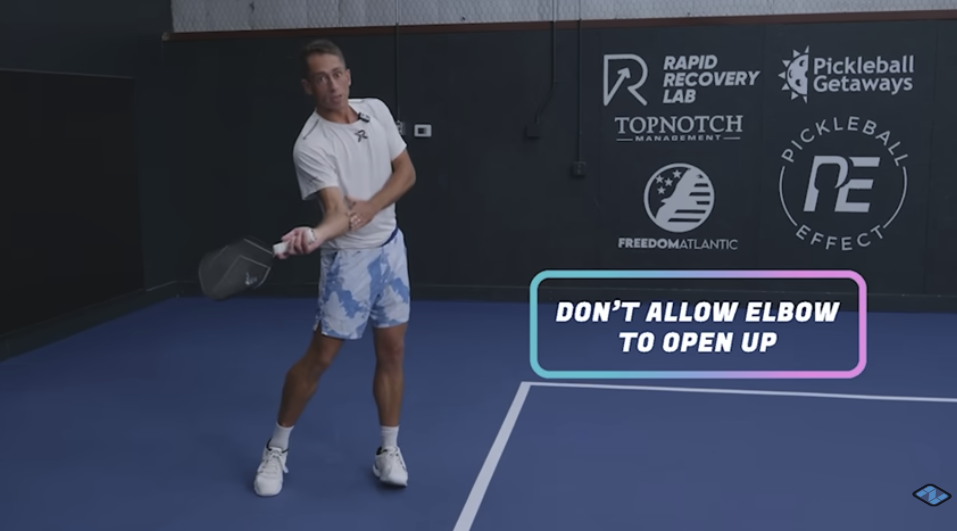
The Two Variations You Need to Master
Not every backhand punch volley looks the same.
Cori Elliott emphasized two key variations that come up constantly in real matches.
The first is the shoulder-high punch volley. When the ball comes in at shoulder height, you need to adjust your mechanics slightly.
Your elbow stays in, your compact punch stays tight, and you're still driving forward. The height of the ball doesn't change the fundamental principle:
- Stay square
- Keep your wrist stable
- Attack downward
The second variation is when the ball comes directly at your body. This is where most players panic and either back up or flail at the ball.
Instead, you need to cover your body with a compact punch.
Your paddle comes up to protect your midsection while still maintaining that forward pressure.
It's a defensive position that still allows you to be aggressive.
Alex E. Weaver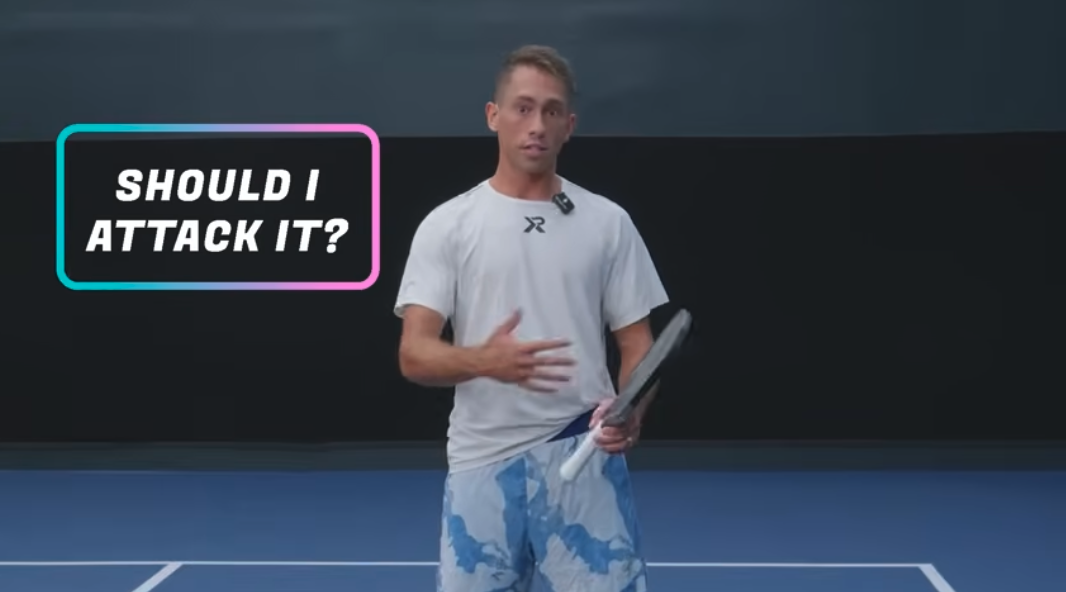
How to Stop Settling for Resets
The mental shift is just as important as the mechanical one.
When you're at the kitchen line and a ball comes to your backhand, your instinct might be to just get it back. But that's not winning pickleball.
Winning pickleball means recognizing when you have an opportunity to attack and taking it. Every ball at the kitchen is either a chance to reset or a chance to punish. Learn the difference.
A backhand punch volley is an attacking opportunity. Every time you hit one, you should be thinking about putting pressure on your opponent.
That means targeting their feet, keeping the ball low, and forcing them to react.
Once Brooke made this adjustment, her volleys became more controlled, more aggressive, and way more effective in hand battles.
She stopped thinking about resets and started thinking about winners.
That's the transformation that happens when you truly understand what the backhand punch volley is supposed to do.
The Bigger Picture: Kitchen Control Wins Matches
The kitchen is where pickleball matches are won and lost. If you can't control the kitchen, you can't control the match.
And if you can't execute an attacking backhand punch volley, you're giving up one of your most valuable weapons.
This isn't just about one shot. It's about understanding that every ball at the kitchen line is an opportunity.
Some opportunities are defensive, sure. But most of them are chances to take control and put your opponent in a tough spot.
The backhand punch volley is how you capitalize on those chances. Mastering this attacking volley means mastering kitchen control.
The Dink Media Team
Frequently Asked Questions
What is a backhand punch volley in pickleball?
A backhand punch volley is an attacking shot hit at the kitchen line before the ball bounces, using a compact forward punch motion with a firm wrist and square stance. Unlike a reset, the intent is to apply pressure, target your opponent's feet, and force a weak return. It is one of the most effective weapons in advanced kitchen line play.
What's the difference between a backhand punch volley and a backhand reset?
A reset is a defensive shot designed to neutralize an aggressive ball and keep the rally going, while a backhand punch volley is an attacking shot built to win the point. The mechanics are similar, but the intent is completely different: a reset is soft and high, while an effective attacking volley is firm, low, and forward.
Why does my wrist keep breaking on my backhand punch volley?
Your wrist is likely breaking because you're generating power from your wrist instead of from forward momentum and a stable forearm. Keep your wrist locked in a neutral position, let your forearm and paddle form a straight line, and focus on a compact punch motion rather than any wrist snap. Wrist stability is the single biggest factor separating a controlled backhand punch volley from a floated ball.
How do I know when to attack versus when to reset?
If the incoming ball is low and slow, you have a clear opportunity to execute a backhand punch volley and apply pressure. If the ball is fast, high, or out of position, a reset is the smarter play. As your kitchen control improves, recognizing those attacking windows becomes instinct.
What should I do if the ball comes directly at my body?
Cover your body with a compact backhand punch volley by bringing your paddle up to protect your midsection while still driving forward through contact. Don't back away from the ball or let your elbow drift out. Stay square, keep your wrist stable, and punch through the shot with control rather than panic.
How can I practice my backhand punch volley?
Have a partner feed balls at the kitchen line and practice driving each one down at their feet with a firm, compact punch and a stable paddle face. Start with slower feeds to lock in your mechanics, then gradually increase the speed and variety. Focus on wrist stability and square stance before worrying about power.

Love Pickleball? Join 100k+ readers for free weekly tips, news & gear deals.
Subscribe to The Dink