Feeling Stuck? The 5 Golden Rules for a Pickleball Strategy Reset
Everyone experiences a pickleball plateau – instead of overthinking it, here are some simple strategies to play your way to that next level
We have all been there. You spend weeks drilling a specific wrist flick or a perfect dink angle, only to find your game falling apart during a real match.
This can feel frustrating, but you're not alone. Trust us.
Pro coach John Cincola suggests that when you feel lost in the weeds, it is time for a hard reset to focus on the fundamentals that actually move the needle. Understanding what your pickleball strategy should actually look like at different stages of a rally is what separates improvers from players who spin their wheels.
Here are his five golden rules to get out of your head and tackle 2026 right.
Love pickleball? Then you'll love our email newsletter. We send the latest news, tips, and highlights for free each week.
1. The Kitchen Is Your Real Office: The First Rule of Pickleball Strategy
Many players make the mistake of trying to blast winners from the baseline. John Cincola argues that your mindset should be different: every shot from the back is just a tool to get you to the kitchen line.
If your drive or drop happens to be a winner, consider it a nice bonus rather than the primary goal. Once you reach the non-volley zone, you can finally switch your brain into attack mode to finish the point.
This shift in thinking alone changes everything about how you play.
2. When in Doubt, Reset It Out
When things get messy and the ball gets behind you, the instinct is often to try a high-risk lob or a desperate drive. Instead, the most reliable move is to reset the ball into the kitchen and force a bounce.
The kitchen exists to neutralize aggression, so use it to your advantage.
The pickleball reset is widely considered one of the most underrated skills in the game, and mastering it is what separates 3.5 players from 5.0s.
If you can execute a soft reset, there is almost nothing your opponents can do to stop your recovery.
 The Dink Media Team
3. Fast Feet and Calm Hands: The Pickleball Strategy Most Players Ignore
This is a technique mantra that helps players stay composed during chaotic rallies. A common error is letting your paddle speed match your running speed, which leads to pop-ups and unforced errors.
Instead, try this:
- Move your feet as quickly as possible to get into position.
- Keep your hands and paddle movement slow and controlled.
- Focus on a soft touch even when you are sprinting for a ball.
This is one of the most practical pickleball tips coaches repeat at every skill level. Mastering it is a core part of any solid game plan because fast feet and calm hands work together as a single system, not two separate thoughts. Stopping pop-ups starts with understanding how hand speed and paddle positioning interact.
 The Dink Media Team
4. Applying the Right Kind of Pressure: Advanced Pickleball Strategy
Consistency is great, but it is not always enough to win against high-level opponents. You need to figure out what specifically makes your rivals feel uncomfortable and exploit that weakness.
Pressure looks different for everyone. For some, it is a hard drive; for others, it is being forced to hit four backhand dinks in a row. Once you find that pressure point, keep hitting it until they break.
Knowing exactly where to attack your opponents is one of the most overlooked aspects of competitive pickleball strategy. It is also one of the fastest ways to level up.
5. Closing the Middle Gap: The Rule That Ends Free Points
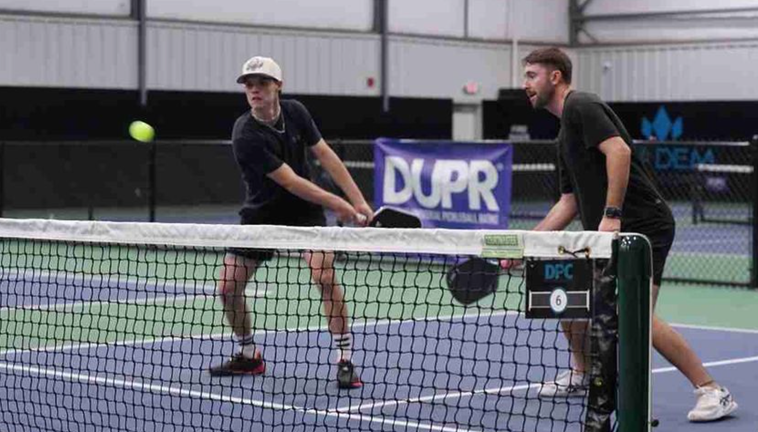
If you and your partner stand too far apart, you leave a hole in the middle big enough to drive a car through. Since the middle is the safest and easiest place for opponents to aim, you cannot leave it wide open.
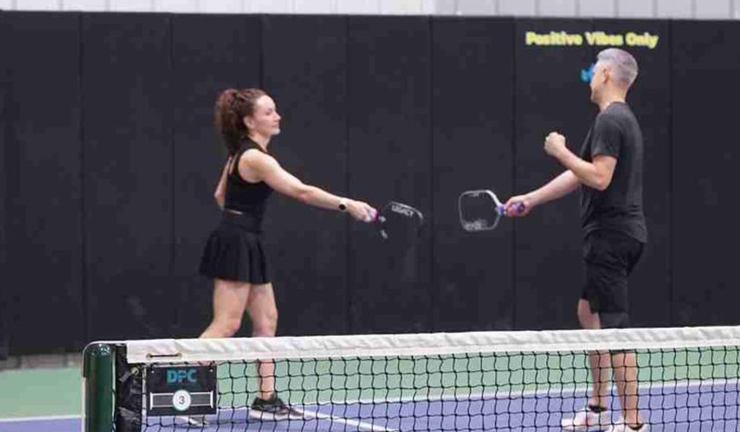
John Cincola suggests a simple rule: you should be close enough to comfortably touch paddles with your partner. Understanding court positioning in pickleball is fundamental to executing any doubles pickleball strategy effectively.
It is much better to give up a risky sideline shot than to hand over the easiest point on the court.
Heads up: hundreds of thousands of pickleballers read our free newsletter. Subscribe here for cutting edge strategy, insider news, pro analysis, the latest product innovations and more.
Frequently Asked Questions
What is the most important pickleball strategy for beginners?
Getting to the kitchen line as quickly as possible is the single most impactful pickleball strategy for beginners. Every shot from the baseline should serve that one purpose, whether it wins the rally outright or simply moves you forward.
What does it mean to reset in pickleball?
Resetting in pickleball means hitting a soft shot back into the kitchen to neutralize a difficult situation. Instead of going for a risky winner when you're off-balance, a reset forces the ball to bounce and slows the rally back down to a manageable pace.
How do fast feet help your pickleball strategy?
Fast feet get you into position early so your hands can stay slow and controlled. When your footwork is late, you rush your swing, which is the leading cause of pop-ups and unforced errors at every skill level.
How far apart should doubles partners stand in pickleball?
Close enough to comfortably touch paddles is the practical rule of thumb. Standing too far apart opens the middle of the court, which is statistically where most opponents aim because it creates confusion between partners.
How do you apply pressure in a pickleball match?
Find the specific discomfort your opponent hates most and repeat it. That might be a hard drive at the body, a run of backhand dinks, or a deep return. Consistent pressure at a single weak point is far more effective than spraying the ball around the court.

Love Pickleball? Join 100k+ readers for free weekly tips, news & gear deals.
Subscribe to The Dink