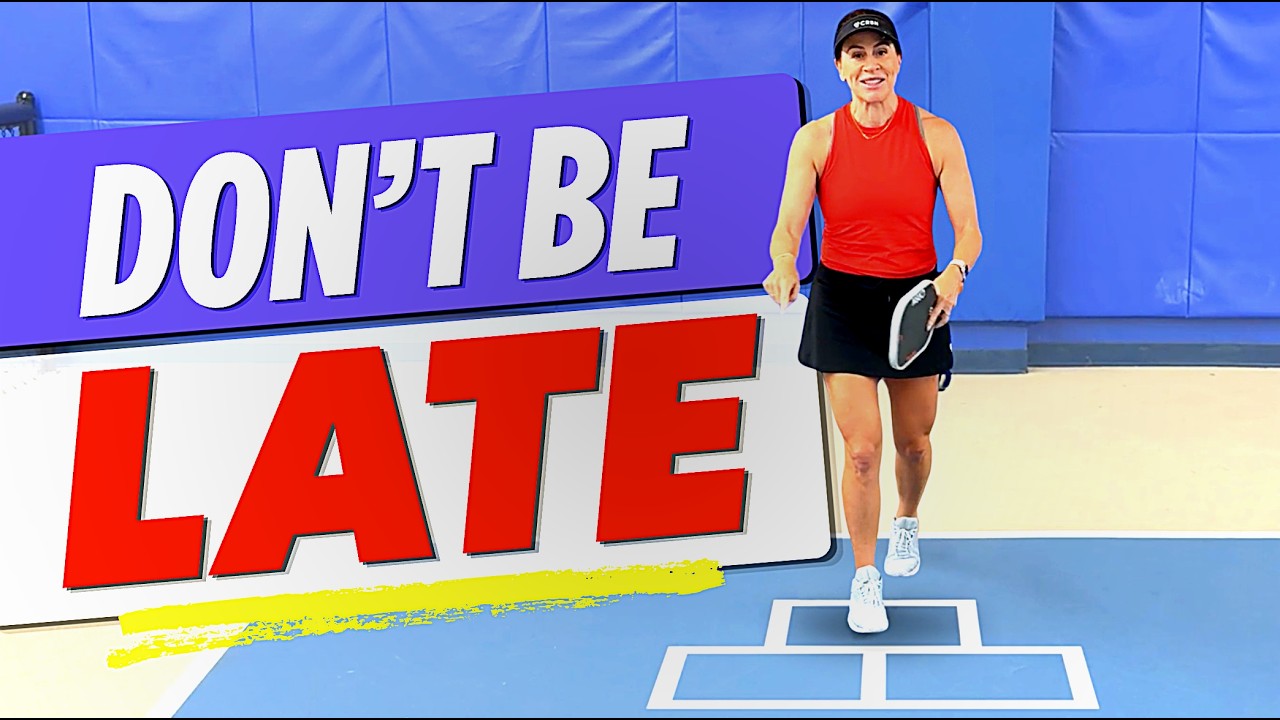
Your pickleball serve doesn't have to feel weak and unreliable. Coach Jess breaks down three simple fixes that transform your pickleball serve from inconsistent to weaponized, helping you start every point on your terms.
If your pickleball serve feels weak, inconsistent, or unreliable, you're not alone.
Thousands of players at the 3.0 to 4.0 level struggle with the same issues, and the frustrating part? The fixes are simpler than you think.
Coach Jess from Athena Pickleball, a former Division 1 tennis player and licensed psychotherapist, recently broke down three foundational fixes that can completely transform your serve in a matter of practice sessions.
These aren't complicated technical adjustments. They're straightforward changes that address the root causes of weak and inconsistent serves.
Love pickleball? Then you'll love our free newsletter. We send the latest news, tips, and highlights for free each week.
Fix #1: Master Your Toss (The Foundation of Everything)
Here's the thing about your pickleball serve:
- It's the only shot in the game where you have complete control.
- Nobody's hitting it at you.
- The ball isn't bouncing unpredictably.
- You get to decide exactly what happens.
So why does your toss look like a lottery ticket?
Coach Jess identifies an inconsistent toss as the number one culprit behind weak serves.
When your toss bounces all over the place, your contact point changes with every single attempt.
Sometimes you're reaching out to the right. Sometimes you're crowding the ball. This inconsistency cascades into everything else.
The fix is deceptively simple:
Make your toss land in the same spot every single time.
Imagine placing a quarter on the ground as your target. When you step up to serve, your goal is to drop the ball so it lands on that quarter (or close enough).
The spot should be in front of your body, positioned so you can move forward naturally while maintaining balance.
When your toss is uniform, something magical happens.
You could theoretically close your eyes and swing, knowing exactly where that ball will be. Your contact point becomes predictable.
Your swing becomes repeatable. And suddenly, your serve starts going where you actually want it to go.
Fix #2: Use Your Legs, Not Just Your Arm
This is where most recreational players leave power on the table.
Coach Jess watches countless players step up to the service line and do something that looks like this:
- They stand straight.
- Keep their lower body completely still.
- Just move their arm.
The result? The ball barely clears the net with no pace behind it.
Now watch what happens when you load into your back leg.
Sit back into your dominant leg (the right leg for forehand servers). Let it build tension. Then spring forward, using that leg drive to accelerate your arm.
The difference is night and day. Suddenly, you're generating real power without extra effort.
Here's the key insight:
Power comes from sequencing, not effort.
You're not trying to muscle the ball harder. You're using your body's natural mechanics to create acceleration.
The practical adjustment is straightforward. Turn your hips slightly so your body is lined up at an angle to the net.
This positioning allows you to sink back into that back leg, creating the load you need.
When you transfer your weight forward, you're not just moving your arm. You're moving your entire body in sequence.
This is why tennis players often transition to pickleball more smoothly than you'd expect.
They already understand weight transfer and sequencing from their tennis background.
 The Dink Media Team
Fix #3: Clean Up Your Swing Path (The Game-Changer)
The third fix ties everything together.
Your swing path is the invisible line your paddle travels along when you hit the ball.
If that line is clean and direct, you can control where the ball goes.
If it's curved, looping, or pulling around your body, you're creating unintended spin and direction changes.
Coach Jess uses a visual aid to explain this: imagine a tube running along your body from your shoulder down.
Your paddle should move along that lane, creating a straight line from point A (your loading position) to point B (your contact point).
When your swing path is clean, you have options.
You can aim the ball where you want it. You can add intentional spin if you choose.
But when your swing path is sloppy, you're at the mercy of whatever happens.
- Your paddle comes back too far to the right, forcing you to pull the ball around your body and creating an accidental slice that sends the ball out of bounds.
- Your toss drifts too far out, so you reach for it and hook the ball left instead of hitting it straight.
- You move your body around to find the ball instead of putting the ball in the same spot and moving your paddle to meet it.
The fix is less is more. Bring your paddle back to a comfortable position.
Keep your toss in that consistent spot from Fix #1. Then swing straight through the ball, finishing your paddle where you're aiming.
Thomas Shields
Why These Three Fixes Matter
When you combine all three fixes, something shifts.
- You're no longer just getting the ball in.
- You're starting to weaponize your serve.
Your pickleball serve becomes reliable.
- You can trust it under pressure.
- You can add pace without sacrificing accuracy.
- You can start points on your terms instead of hoping the ball lands in.
Coach Jess emphasizes that these aren't advanced techniques reserved for 5.0 players.
They're foundational concepts that work for anyone from 3.0 to 4.0 and beyond.
The players who master these three elements move from being adequate servers to being good servers, and that shift changes how opponents approach every rally.
The beauty of this approach is that you don't need to overhaul your entire serve. You're not learning a completely new motion.
You're refining what you already do by addressing the specific breakdowns that are holding you back.
The Dink Media Team
Putting It All Together
Start with your toss. Spend a few practice sessions just working on consistency. Get that landing spot dialed in.
Once your toss is reliable, layer in the weight transfer. Feel the load in your back leg. Experience how that creates power without extra effort.
Finally, clean up your swing path.
- Keep it simple.
- Keep it straight.
Let your body do the work instead of fighting against yourself.
The timeline for improvement varies, but most players see noticeable changes within a week of focused practice.
Your serves will go in more often. They'll have more pace. And you'll feel more confident stepping up to the line.
Frequently Asked Questions
How long does it take to fix a weak pickleball serve?
Most players see improvement within one to two weeks of focused practice on these three fixes. Consistency comes faster than you'd expect once you understand what you're working toward. The key is deliberate practice, not just hitting serves mindlessly.
Can tennis players apply these fixes to their pickleball serve?
Absolutely. Tennis players often have an advantage because they already understand weight transfer and sequencing. However, the pickleball serve is underhand, so the mechanics differ. These three fixes help tennis players adapt their existing knowledge to the pickleball motion.
What if my toss is still inconsistent after practicing?
Focus on a smaller target. Use a quarter, a coin, or even a piece of tape on the ground. The more specific your target, the easier it is to dial in consistency. Some players benefit from practicing the toss without the paddle first, just to build muscle memory.
Should I change my entire serve motion to implement these fixes?
No. These fixes address specific breakdowns without requiring a complete overhaul. You're refining what you already do by eliminating the weak points. If your serve motion is fundamentally sound, these adjustments layer on top of it naturally.
How do I know if I'm loading my back leg correctly?
You should feel tension building in your back leg before you spring forward. It's similar to a coiled spring. If you don't feel that load, you're probably not sitting back far enough. Practice the motion slowly at first, exaggerating the load until it becomes natural.

Love Pickleball? Join 100k+ readers for free weekly tips, news & gear deals.
Subscribe to The Dink