
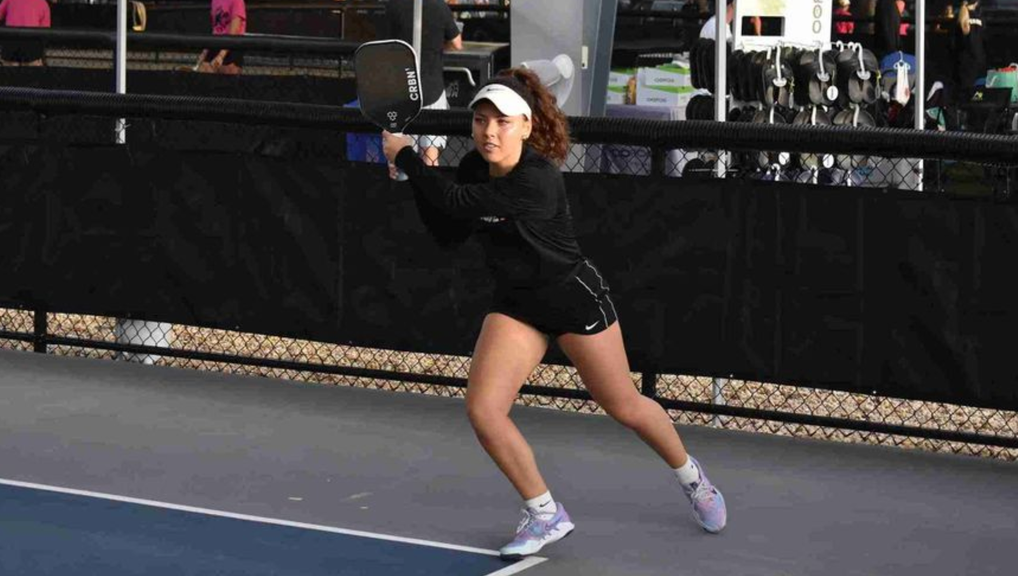
Pickleball Singles Strategy: Court Coverage, Serve Patterns and Fitness
A strong pickleball singles strategy separates players who grind out wins from those who run out of gas after two sets. This guide breaks down the court coverage principles, serve patterns, and fitness demands every singles player needs to compete.
Pickleball singles strategy is the most physically and mentally demanding version of the game, no partner to bail you out, no one to cover the angle you left open, no one to blame but yourself when the rally goes sideways.
It is just you, 44 feet of court, and a whole lot of footwork.
The format is growing fast. USA Pickleball has seen a steady rise in singles event registration at sanctioned tournaments, and pro singles draws are getting more competitive at every PPA and APP stop.
If you've been grinding doubles and wondering why your singles game feels like a different sport entirely, it kind of is.
Love pickleball? Then you'll love our free newsletter. We send the latest news, tips, and highlights for free each week.
What Makes Pickleball Singles Strategy Different From Doubles?
Singles pickleball strategy fundamentally differs from doubles because you own the entire court alone.
There is no stacking, no poaching, no partner to cover your wide forehand while you attack the middle.
Every positional decision is yours to live with, or scramble to fix.
In doubles, rallies often end at the kitchen in fast exchanges.
Singles play at the pro level looks more like a baseline battle, with players trading drives, using pace to push each other deep, and waiting for a short ball to punish.
The kitchen matters in singles, but getting there is a much more deliberate chess match.
The scoring format is also different under USA Pickleball singles rules.
Only the server can score, games go to 11 (win by 2), and there is no "second serve", you get one.
One fault and the rally is over. That changes serve strategy immediately.
Understanding this context is step one. Now let's build the actual singles strategy from the ground up.
Court Coverage: Where Do You Actually Stand?
The foundation of pickleball singles strategy is center-court baseline positioning.
After every shot, your default recovery position is the middle of the baseline. That single habit erases more unforced errors than any shot upgrade you could make.
Here's the thing. Most recreational singles players chase the ball and never reset.
They float wide, get pinned to the sideline, and watch the next ball sail past them into the open court they just vacated. Sound familiar? This is fixable.
The Two-Zone Model
Think of the court in two zones:
- Defensive zone (behind the baseline): Where you absorb pace, reset rallies, and buy time to recover position.
- Offensive zone (transition and kitchen): Where you close in to finish points when the short ball arrives.
The transition zone, roughly the area between the service line and the kitchen line, is your danger territory. You want to move through it decisively, not linger in it.
Getting caught mid-court invites a ball driven at your feet, which is the most common point-ender in rec singles play.
How to Recover to Center Court Fast
Recovery footwork starts before the ball leaves your paddle.
Push off the foot nearest your target, shuffle laterally, and stop with a split step as your opponent contacts the ball.
That split step, a small hop that loads both feet, is what physically prepares you to explode in either direction.
Split step mechanics are the single biggest footwork upgrade for singles players who are new to the format.
Research published in the Journal of Sports Sciences confirms that anticipatory footwork, moving before the ball arrives, based on reading your opponent's body position, is a primary differentiator between intermediate and advanced racquet sport players.
In plain terms: stop reacting, start reading.
 The Dink Media Team
Serve Patterns: Why Your Singles Serve Has to Work Harder
In pickleball singles strategy, the serve is an active offensive tool, not just a ball put in play.
Unlike doubles, where the serving team is typically at a disadvantage waiting for the third shot, in singles a big serve can immediately shift momentum.
You get one attempt. Use it.
Thomas Shields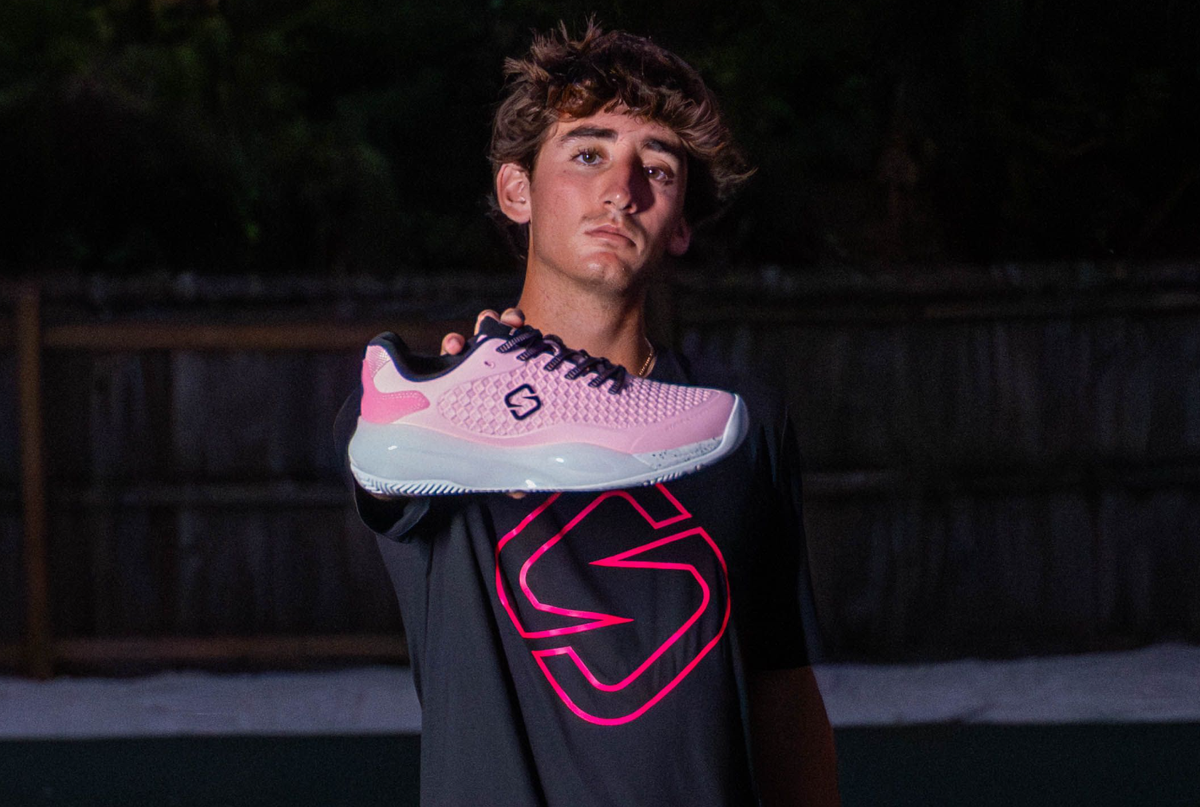
The Three Serve Patterns Every Singles Player Needs
1. Deep-wide to the backhand. This is the bread-and-butter singles serve. Push your opponent wide, force a weak return, and attack the open court with your third shot. Most recreational players have a shakier backhand return under pressure, which makes this pattern consistently effective.
2. Body serve. A serve aimed directly at the opponent's hip or dominant shoulder forces a rushed return and disrupts their swing path. Pro singles players use this to generate short, weak returns that invite a third-shot drive.
3. Deep-wide to the forehand. Most players expect the backhand serve. Mix in the forehand side, especially if your opponent is positioned centrally, to pull them out of position and create angle.
The goal is not to ace your opponent. The goal is to start each rally with a position advantage.
A serve that lands consistently in the last third of the service box, wide or at the body, does more for your singles game than a faster serve that lands in the middle.
Heads up: hundreds of thousands of pickleballers read our free newsletter. Subscribe here for cutting edge strategy, insider news, pro analysis, the latest product innovations and more.
Does Spin Help in Singles?
Absolutely. Topspin serves that kick up into the backhand shoulder, or heavy slice serves that stay low and skid wide, create timing problems that pace alone cannot.
Zane Navratil built his early singles success in part on a serve that moved unpredictably after the bounce. Study your serve like you study your shots.
The Dink Media Team
Does Third Shot Strategy Change in Singles?
Yes, in pickleball singles strategy, the drive is the primary third shot, not the drop.
In doubles, the third shot drop is almost universal because you need to buy time for both players to transition to the kitchen.
In singles, you are already one player, which means the equation is different.
Driving the third shot in singles accomplishes two things: it keeps pace in the rally (where fitness and footwork become weapons), and it limits your opponent's reset angles because there is no partner to cover the cross-court reset.
A well-placed drive to the hip or down the line often forces a pop-up you can finish at the kitchen.
That said, the drop is still in your toolkit.
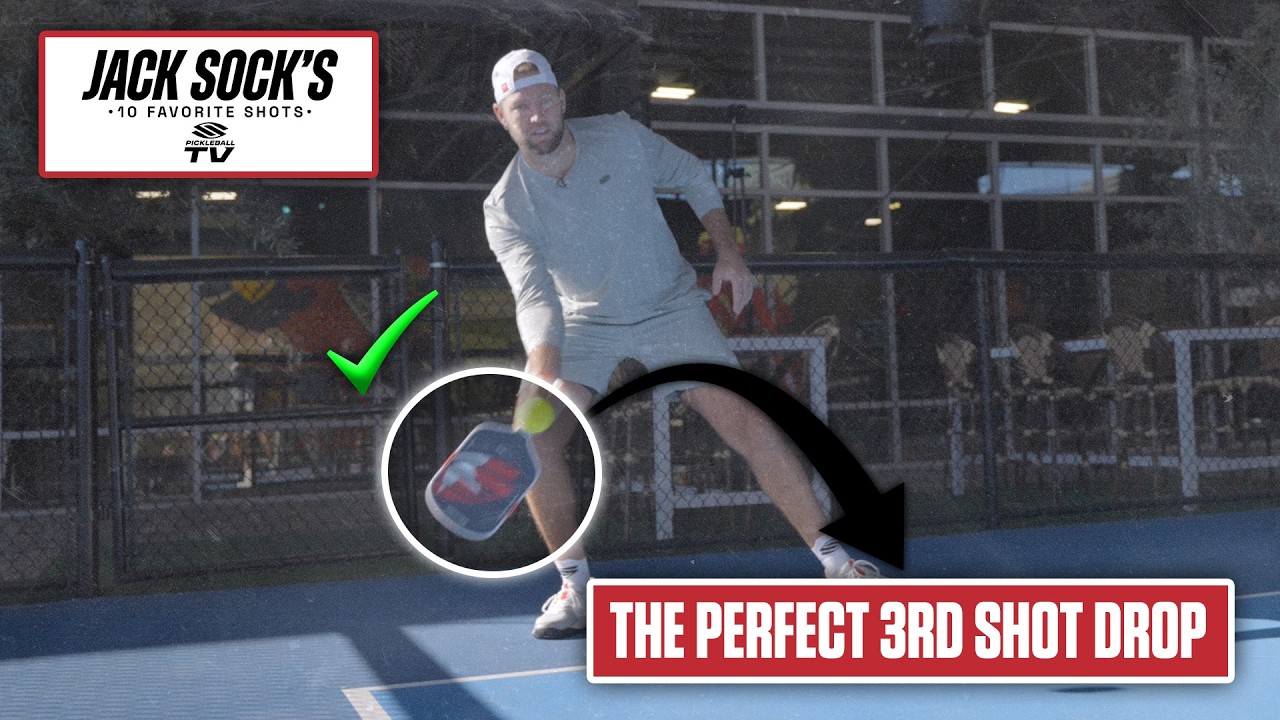
When your opponent is pressuring you with pace and you need to slow the rally, a third shot drop that dies in the kitchen buys you the time to advance and reset.
Knowing when to drop versus drive is what separates reactive players from tactical ones.
The Dink Media Team
What Does Fitness Actually Mean for Singles Pickleball?
Pickleball singles strategy collapses without the physical capacity to execute it for an entire match.
This is the part most players underestimate. Doubles players often coast into singles play assuming the smaller court means less running.
They find out quickly: they are very wrong.
According to research on racquet sport metabolic demands published through NIH/PubMed, singles racquet sports require significant aerobic and anaerobic output, particularly given the lateral movement patterns and repeated acceleration/deceleration involved.
Pickleball singles is no different. A competitive singles match can run 45 to 90 minutes of active play.
The Dink Media Team
The Three Fitness Pillars for Singles Players
- Lateral speed. Most points in singles are won or lost on your ability to get to a wide ball and recover. Lateral shuffle drills, side-to-side band walks, and short-burst agility ladders directly translate to court performance. Court positioning only helps if you can physically get there.
- Aerobic base. Singles rallies run longer than doubles rallies when players are evenly matched. Your ability to stay mentally sharp and mechanically consistent in a 25-shot rally at 8-8 is an aerobic issue. Zone 2 cardio, a pace where you can hold a conversation but feel the effort, is the most underused training tool for pickleball players. The American Heart Association recommends at least 150 minutes of moderate aerobic activity per week for general health. Singles players should treat that as a floor, not a ceiling.
- Explosive recovery. The split step is only useful if you can repeat it 80 times in a match. Plyometric work, box jumps, broad jumps, lateral bounds, builds the explosive capacity your legs need to keep generating good recoveries deep into a match. Bulletproofing your knees is essential before stacking this kind of training load.
The Dink Media Team
How Do You Win Points in Singles? The Shot Selection Framework
The most effective pickleball singles strategy is to move your opponent laterally, generate a weak mid-court ball, and finish decisively.
It is not complicated. Most rec players overcomplicate it with low-percentage hero shots when the smarter play is patience.
Here is a practical framework:
- Serve + return deep and central: Start with pressure on position, not pace.
- Drive toward the hip and the open court: Force them to move and reply under physical discomfort.
- Watch for the short ball: This is your green light to close and finish. Mid-court tips are worth drilling specifically for this scenario.
- Reset when you are out of position: A clean reset shot that buys you recovery time is worth more than a low-percentage attack.
- Attack the backhand under pressure: Most players under pressure default to a pushier, shorter backhand. That is your window.
One more thing worth naming: shot deception.
The ability to look one way and send the ball another, or to vary pace without changing your swing path, is a massive edge in singles, where your opponent has no partner reading your body language.
Work it into your game deliberately.
The Dink Media Team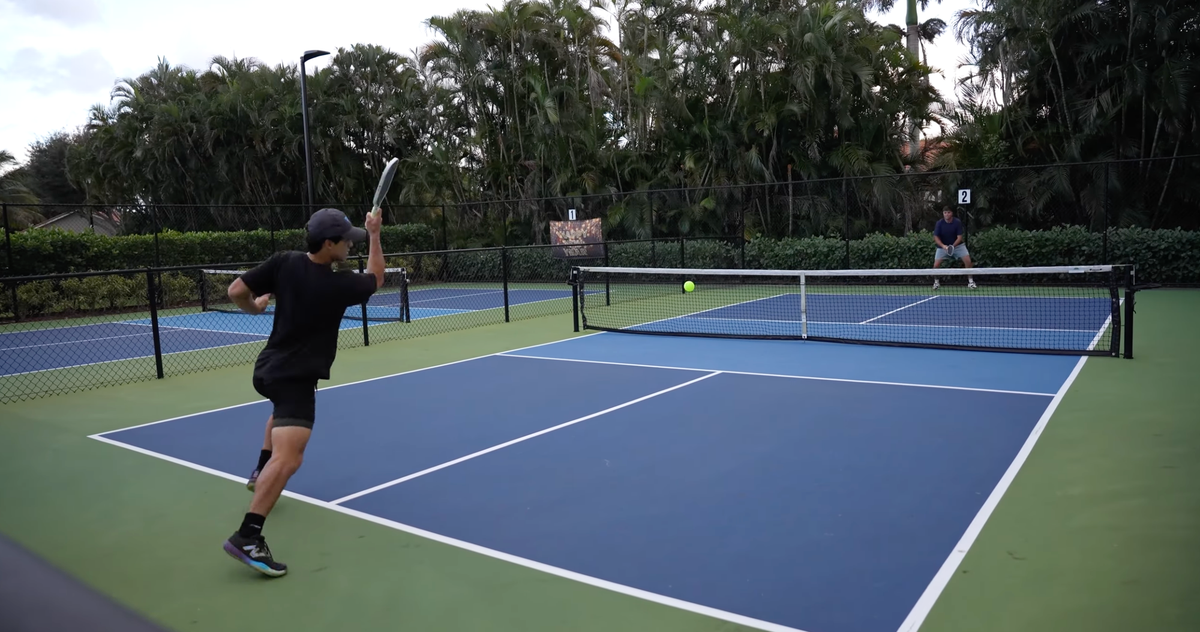
The Mental Game in Singles: It's Just You
Unlike doubles, where the mental burden is shared, singles pickleball strategy includes managing your own emotional state for the entire match.
There are no timeouts with a partner, no one to refocus you when you go down 8-3. It is your job.
A champion mindset in singles means building a consistent between-point routine. Bounce the ball before serving. Reset your breath.
Decide on your serve pattern before you step to the line. These micro-habits prevent the kind of mental scramble that turns an 8-8 game into an 11-8 loss.
Playing the percentages also takes on outsized importance in singles. When you are tired at 9-9, your brain will tell you to go for the winner.
The right move is usually the safe ball to the backhand and let the rally continue, because your opponent is tired too.
The Dink Media Team
Key Takeaways: Pickleball Singles Strategy
- Own the center baseline as your home position after every shot
- Use serve patterns (wide-backhand, body, wide-forehand) to start rallies with a positional advantage
- Drive the third shot more than you drop, save the drop for when you need to slow things down
- Build your fitness base: lateral speed, aerobic endurance, explosive recovery
- Move your opponent laterally, generate short balls, and finish decisively
- Manage your mental game with between-point routines and percentage play
Frequently Asked Questions
What is the best pickleball singles strategy for beginners?
The best pickleball singles strategy for beginners starts with two habits: always recover to center court after each shot, and serve deep to the backhand. These two adjustments alone eliminate most of the easy errors that cost points at the beginner level. Build consistency and court position before worrying about spin serves or shot selection frameworks.
How is pickleball singles scoring different from doubles?
In pickleball singles, only the server can score points, just like in doubles, but there is no second serve. If you fault on the serve, the rally ends and your opponent becomes the server. Games are played to 11 points, win by 2. Under USA Pickleball rules, the server's score determines which side of the court they serve from: even score serves from the right, odd score from the left.
Should I drive or drop the third shot in singles?
Drive the third shot more often than you drop in singles. Without a partner, the drop is harder to complete as an offensive transition tool. A well-placed drive to the hip or open court forces a weak reply and puts pressure on your opponent immediately. Use the drop as a defensive reset when you are out of position or being pushed back behind the baseline.
How fit do you need to be for competitive pickleball singles?
Significantly fitter than doubles play requires. Competitive singles demands lateral agility, aerobic endurance for rallies that run longer and matches that last 45 to 90 minutes, and explosive recovery ability to keep resetting your court position. Players who invest in zone 2 cardio training and lateral footwork drills see measurable improvement in their singles results within weeks.
What are the most common mistakes in pickleball singles?
The three most common mistakes are: floating mid-court without a plan, serving weakly to the middle of the box, and trying to end rallies early with low-percentage shots. The winning formula in singles pickleball strategy is patience, move your opponent, wait for the short ball, and finish when the opening is clear.

Love Pickleball? Join 100k+ readers for free weekly tips, news & gear deals.
Subscribe to The Dink