Pickleball Singles: 7 Essential Pro Tips to Dominate Solo Play
Here's the high note: depth and consistency matter more than pace and power, all day long.
Pickleball doubles gets all the attention. It's the format that dominates tournaments, fills courts, and keeps most recreational players coming back week after week. But pickleball singles is a different beast entirely, and it demands a completely different skill set.
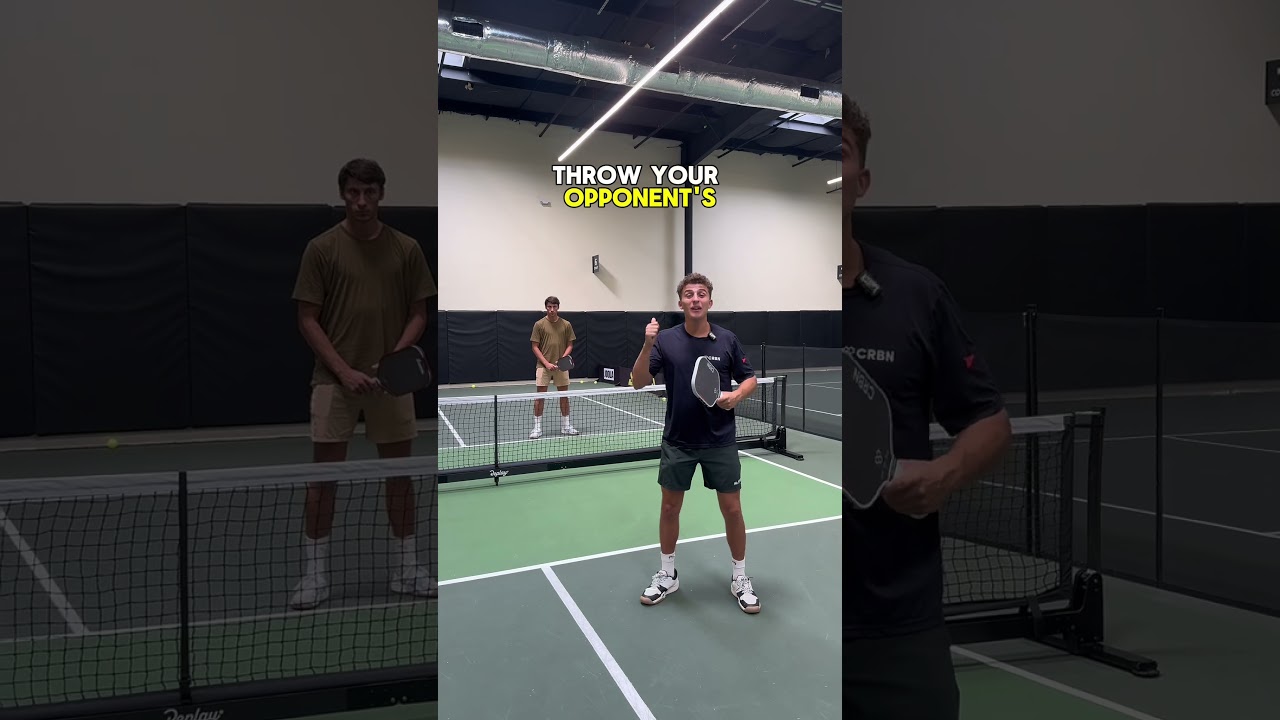
Ryan Fu recently broke down what actually matters when you're out there alone on the court. Here are his seven essential tips to dominate any singles court.
Love pickleball? Then you'll love our free newsletter. We send the latest news, tips, and highlights for free each week.
1. The Depth Game Changes Everything in Pickleball Singles
Here's the thing about pickleball singles that most players get wrong: they obsess over pace. But Fu cuts right through that misconception in his video, emphasizing that depth matters infinitely more than speed.
"Serve and returns have to be deep," Fu explains.
"The pace doesn't really matter as much as the depth, right? We want to keep them back and away from approaching the net."
When you're playing pickleball singles, you're covering the entire court by yourself. That's exhausting. So forcing your opponent deep keeps them away from the net, which is where they want to be.
2. The 50-60% Rule That Changes Your Game
Fu drops another counterintuitive gem here: the best players in the world aren't swinging at full power on most of their drives. They're hitting around 50 to 60% pace, then moving to the next spot where they anticipate the ball will go.
"If you're just out there slapping the ball as hard as you can, it's not going to be as consistent as you need to win a full match," Fu says.
Consistency beats power. Every single time. Hitting at 50-60% pace lets you maintain that consistency across multiple games without gassing out. Plus, it gives you time to position yourself for the next shot. It's not lazy play; it's smart play.
 The Dink Media Team
3. Court Positioning: The V-Shape Strategy in Pickleball Singles
One of the more technical points Fu covers involves how to approach the net. Most players think they should run straight to the line and then move parallel to it. That's actually backward.
Instead, Fu recommends splitting your step in the center of the court when you're approaching, then moving diagonally to cut off the ball. This creates what he calls a "V" shape, which closes off the court and limits your opponent's angles.
You're cutting off more of the court with less movement. You're being efficient.
4. The Middle Return Advantage
It might sound counterintuitive, but in solo play, returning down the middle is better than returning wide.
"Approaching middle is actually a really good option and returning middle because then you can cut off the angles," Fu says. "If you return wide, you're actually giving them more angles to work with."
When you return wide, you're essentially giving your opponent the entire court. They can hit angles you can't reach.
But when you return middle, you're controlling the court's geometry. You're forcing them to hit through you or around you, both of which are harder shots. This is one of the foundational ideas explored further in the 4 essential pickleball return targets to play like a pro.
 Alex E. Weaver
5. The Dipping Shot Over the Line Drive in Pickleball Singles
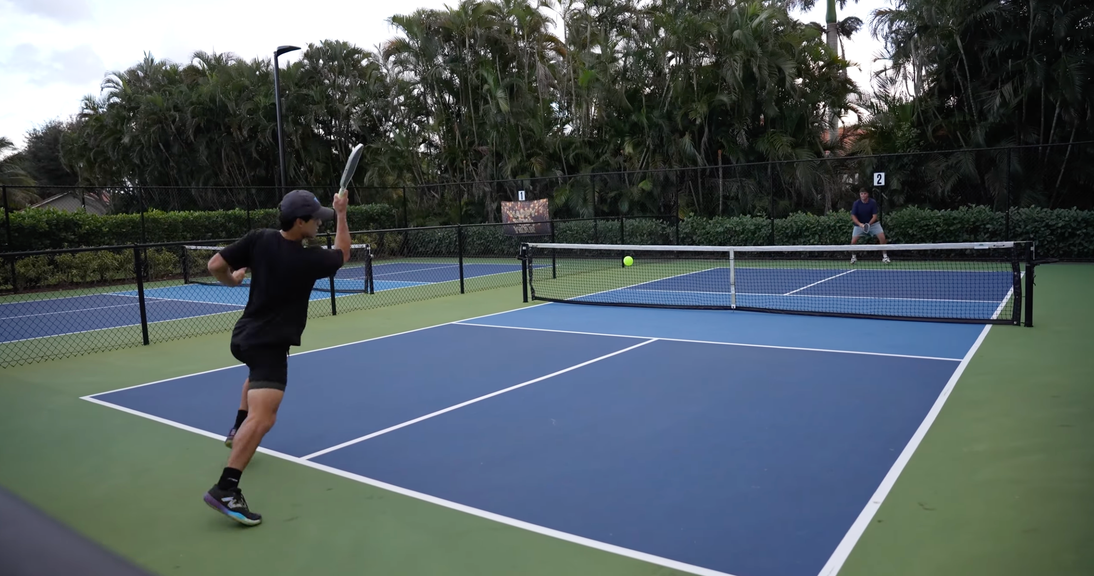
Fu demonstrates something crucial about passing shots: most of them should be dipping shots, not line drives.
"Most of the passing shots that we hit were not line drives like we talked about before. They were mostly dipping shots. So, we want to dip the ball if someone's approaching at about 50% pace and we're not just slapping it," Fu explains.
A dipping shot is harder to attack. It forces your opponent to hit up on the ball, which puts them in a defensive position. A line drive, by contrast, is sitting right there for them to put away.
You can sharpen this shot with the subtle trick for cleaner passing shots in pickleball that many intermediate players overlook.
 The Dink Media Team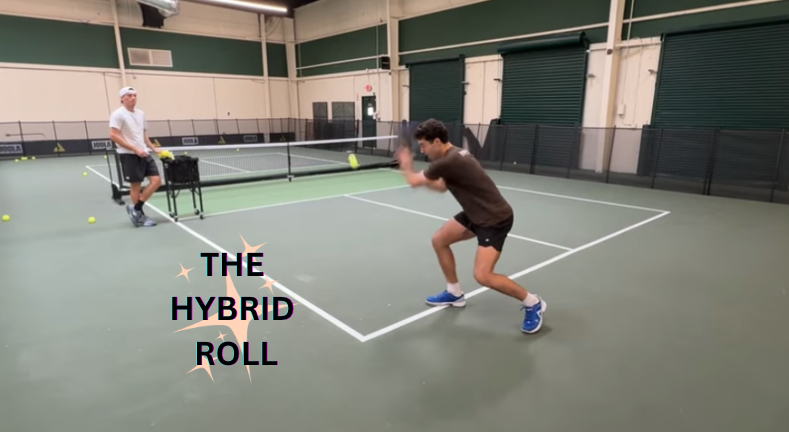
6. Getting Low: The Foundation of Everything
Fu emphasizes the importance of a low base when you're hitting drives. After a deep serve, if your opponent pops it up, you're not just pushing it back. You're going for it with margin, but with acceleration.
"Getting a low base when you're hitting the drive" is crucial, Fu says. "So, after a deep serve, if he pops it up, I'm not just pushing that ball back. I'm going to really try and go for it with margin, but it's going to be a lot of acceleration."
This connects back to the consistency theme. When you're low, you have better control. You can generate power from your legs instead of your arms, which is more stable and repeatable.
 The Dink Media Team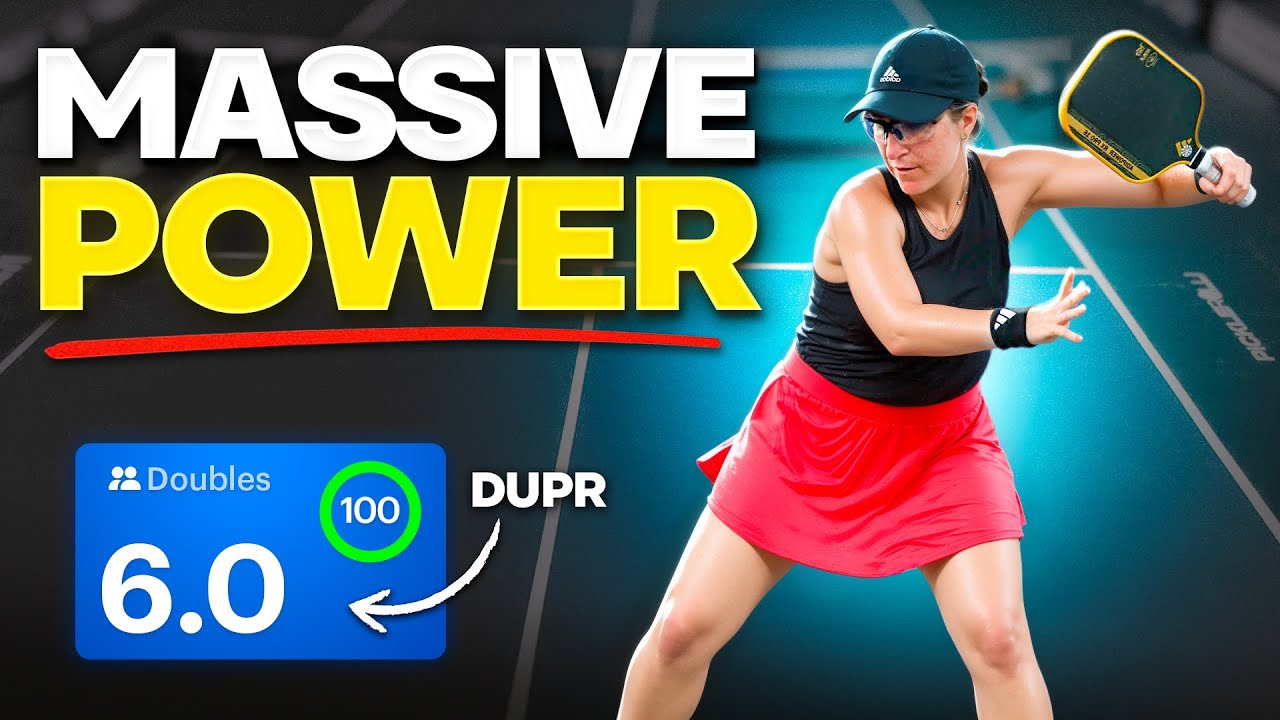
7. The Net Advantage Is Real in Pickleball Singles
One of Fu's key observations from the actual match footage is that whoever gets to the net more often wins more points. It's not revolutionary, but it's worth stating clearly: net position matters in solo play just like it does in doubles.
As CBS Sports has covered in their breakdown of pickleball growth, strategy and a soft touch are usually more important than raw power, a principle that applies even more directly when you're alone on the court.
"The person that was getting to the net more often was actually winning more of the points cuz we're putting the opponent on defense," Fu notes. "That doesn't mean you want to go in on any ball, but if you get a short ball and you can approach the net, you want to get up there and cut off the angles."
The qualifier here is important. You don't want to approach on every ball. But when you get a short ball, that's your opportunity. Take it.
Deep Serves Win Free Points in Pickleball Singles
Finally, Fu circles back to something he mentioned early on: deep serves are your best friend in solo pickleball.
"If you can hit the ball deep on the serve, chances are you're going to get a lot of free points. Even if they don't miss the return and it's short, that puts you in a good position," Fu explains. "About a foot inside the line is the best."
This is the foundation of singles strategy. A deep serve either forces a weak return or an outright miss.
Either way, you're starting the point from a position of strength.
Understanding how to hit the perfect pickleball serve every time is the single most important technical skill you can develop for the solo format. And if you want to understand why the serve matters more than most players think, the reasoning will sharpen every point you start.
As ESPN's profile of pro player Meg Charity highlights, elite singles specialists understand that court coverage and decision-making separate recreational players from competitive ones. In pickleball singles, there is no partner to bail you out. Every choice is yours alone.
Whether you're just getting started or looking to sharpen your competitive edge, the beginner's guide to pickleball fundamentals and the 7 simple pickleball tips that will actually change your game are both worth bookmarking alongside these solo-focused strategies.
Frequently Asked Questions
What is the most important skill in pickleball singles?
Depth control is the most critical skill in pickleball singles. Keeping your opponent pinned deep with your serve and return removes their ability to attack the net and gives you control of the point from the start.
How does pickleball singles differ from doubles strategy?
In pickleball singles, you cover the entire court alone, which means court geometry, energy management, and positioning efficiency matter far more than in doubles. There is no partner to cover your mistakes, so every shot decision carries higher stakes.
Should I hit harder in pickleball singles to win more points?
No. Hitting at around 50 to 60% of your maximum pace is actually the winning approach in solo pickleball. Consistency across a full match beats power every time, and controlled drives give you the time needed to move into better court positions.
Is net position important in pickleball singles?
Absolutely, net position is one of the biggest factors in winning pickleball singles points. Players who approach the net on short balls consistently put their opponents on defense and limit the angles available for passing shots.
What is the V-shape strategy in pickleball singles?
The V-shape strategy refers to approaching the net diagonally from the center of the court rather than running straight to the line. This technique cuts off more court angles with less movement, making it harder for opponents to hit clean passing shots.
Love Pickleball? Join 100k+ readers for free weekly tips, news & gear deals.
Subscribe to The Dink