
Why This 5.5+ Pickleball Match Looks Completely Different From Every Other Game
Pro coach Jordan Briones breaks down the advanced tactics, pressure points, and decision-making that separate championship-level pickleball from the rest.
Here's the thing: at the 5.5 level, the game isn't about hitting harder or running faster. It's about pressure and positioning.
In recreational pickleball, players often get away with mistakes because their opponents can't capitalize on them.
A dink that's slightly too high? No problem. A reset that's a little loose? You'll probably still win the point.
At the 5.5 level, those same mistakes are death sentences.
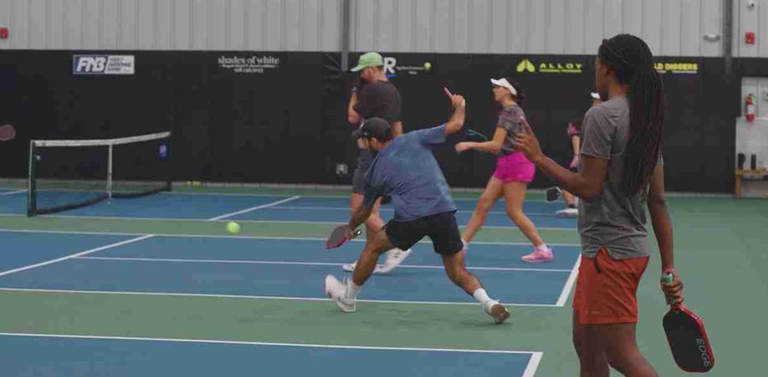
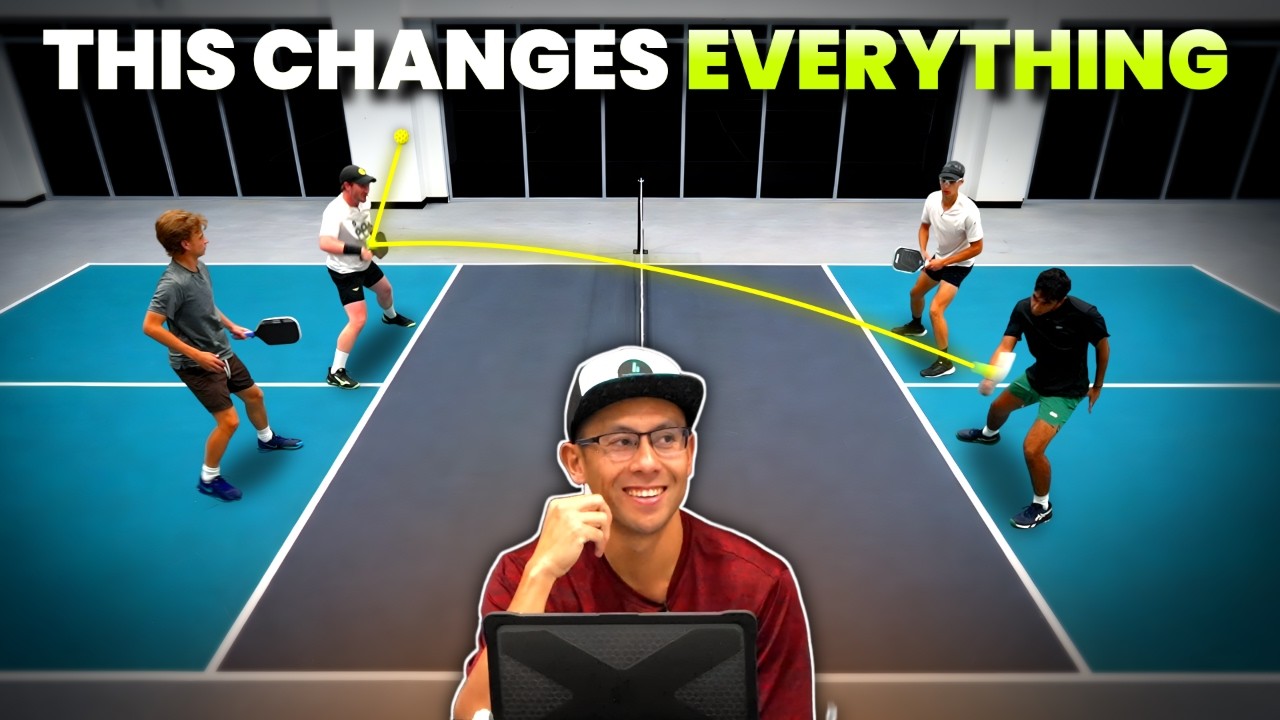
Nick, Grayson, Ellie, and Arman are all preparing for PPA Mesa qualifiers, which means they're operating at a level where every inch matters.
According to Briones, "margins at this level are super super small." The difference between a winning dink and a losing one isn't about power.
It's about whether the ball bounces or sits up.
This is why the 5.5+ pickleball match feels so different to watch. Players aren't trying to hit winners.
They're trying to create situations where their opponents have no choice but to make a mistake.
Love pickleball? Then you'll love our free newsletter. We send the latest news, tips, and highlights for free each week.
The Dink: Where Elite Pickleball Actually Gets Won
If you want to understand why a 5.5+ pickleball match looks different, start with the dink.
At lower levels, the dink is a reset tool. You hit it to slow the point down and get back to neutral. At the 5.5 level, the dink is a weapon.
Throughout the match, Briones emphasizes one principle over and over: keep the ball low. But it's not just about height. It's about bounce.
A dink that lands at the opponent's feet and doesn't bounce is nearly impossible to attack. A dink that bounces even slightly gives them an opening.
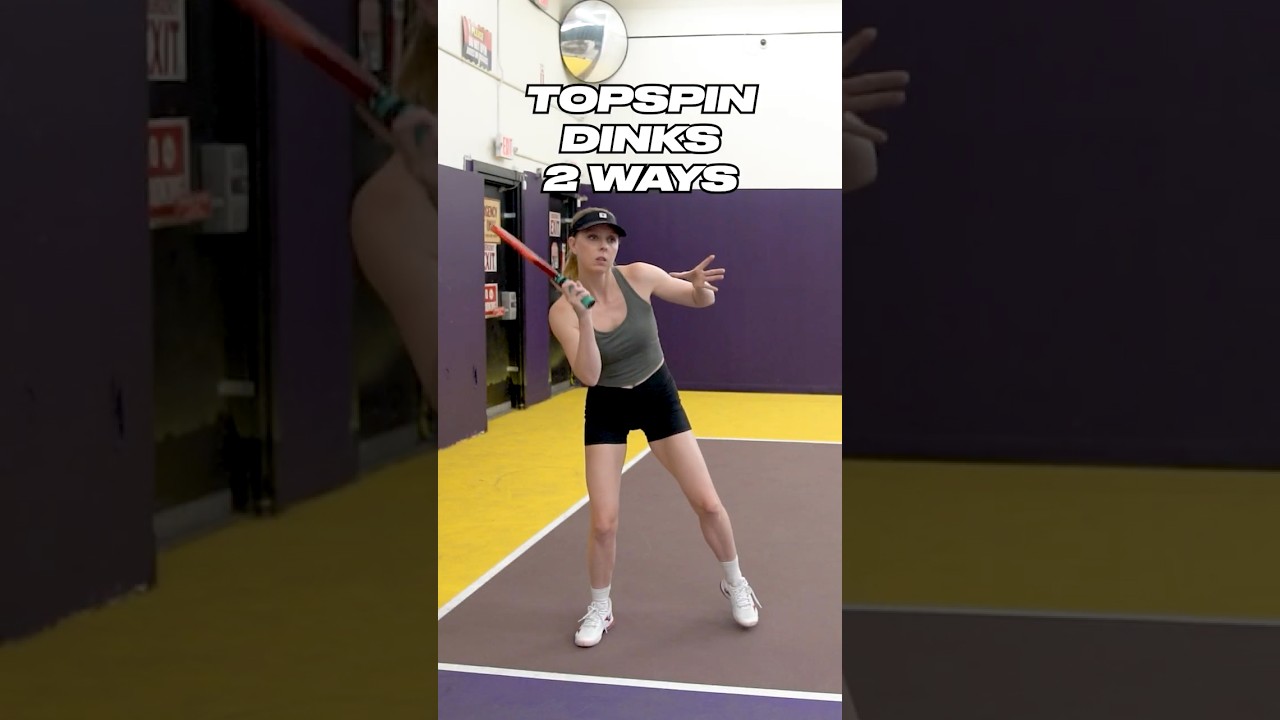
"Getting her dinks to bounce is the most important thing," Briones says, highlighting how Ellie and Arman are using topspin dinks to create problems for their opponents.
These aren't casual dinks. They're dinks with purpose, designed to land in a specific spot and behave in a specific way.
The 5.5+ pickleball match is essentially a dinking war.
The team that can maintain better dinking patterns, keep the ball lower, and force their opponents into higher contact points will win most of the points.
Why Transition Play Separates the Elite From Everyone Else
Here's where things get really interesting.
In the match, Nick makes several aggressive plays from the transition zone, and Briones has a specific observation: "usually attacking from transition isn't the best off the bounce, but Nick is finding really good spots and setting himself up."
This is a hallmark of 5.5+ pickleball match play.
Elite players don't just react to what's happening. They're three shots ahead, setting up their next opportunity.
When Nick gets a ball in transition, he's not just trying to hit it hard.
He's evaluating whether he can attack, whether he should reset, and whether the court position allows him to take a risk.
That decision-making happens in a fraction of a second, but it's the difference between a point won and a point lost.
Grayson demonstrates this too, particularly with his developing lefty drive.
Briones notes that Grayson is "a natural righty" but has been working on his left-handed attacking shot.
At the 5.5 level, having multiple attacking options from different positions isn't a luxury. It's a necessity.
The Speed-Up: When Patience Becomes a Liability
One of the most revealing moments in the 5.5+ pickleball match comes when Briones discusses the speed-up shot.
"That speed up there to Elliot usually isn't a good idea," he says, "but Nick almost went full bag there and caught Elliot a little late on that."
The speed-up is a high-risk, high-reward shot.
At lower levels, it's often a panic move.
At the 5.5 level, it's a calculated decision based on court position, opponent positioning, and the specific moment in the rally.
What makes this 5.5+ pickleball match so instructive is that you can see both the successful speed-ups and the ones that don't work.
The difference isn't always obvious to the casual viewer, but Briones breaks it down: timing, location, and the opponent's readiness all factor into whether the shot succeeds.
 The Dink Media Team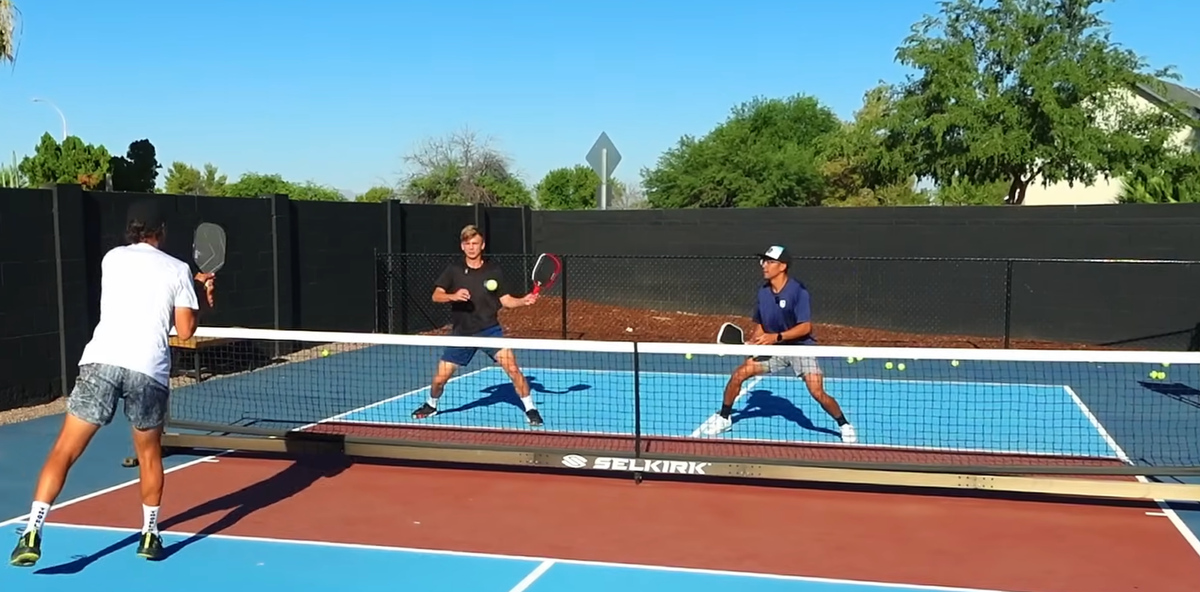
The Flick: A Shot That Defines Modern 5.5+ Pickleball
If there's one shot that defines modern 5.5+ pickleball match play, it's the flick.
Briones makes this explicit: "with this level players, right-handed players on that left side, the flick has become such a predominant shot in this game.
You got to get those bare foot down bounce."
The flick is a low-to-high motion that gets the ball over the net from below the net line.
It's technically a volley, but it's executed with a quick wrist snap rather than a full swing.
At the 5.5 level, players are using the flick to attack balls that would normally be reset at lower levels.
Arman, who just flew in from Ontario to prepare for PPA Mesa, demonstrates excellent flick technique throughout the match.
But here's what's important: the flick only works if you can get your feet set and your paddle in the right position.
That requires anticipation, footwork, and court awareness.
This is why the 5.5+ pickleball match demands so much more than raw athleticism.
It demands precision, timing, and an almost chess-like understanding of court positioning.
The Dink Media Team
Pressure Points: How Elite Players Control the Kitchen
Throughout the match, Briones keeps coming back to one concept: pressure.
"A lot of you might be watching this and like see this and oh, he just missed the easy dink there," he explains.
"Again, these guys are putting a ton of pressure. They have arm lines. Good. Putting pressure in."
At the 5.5 level, the kitchen line isn't just a boundary. It's a pressure cooker.
Elite players are constantly trying to move their opponents back, force them into higher contact points, and create situations where mistakes are inevitable.
The 5.5+ pickleball match is won by the team that can maintain better kitchen line position and force their opponents to hit from uncomfortable positions.
This is why footwork is so critical. If your feet aren't set, you can't hit a clean dink. If you can't hit a clean dink, you're giving your opponents an opportunity to attack.
The Dink Media Team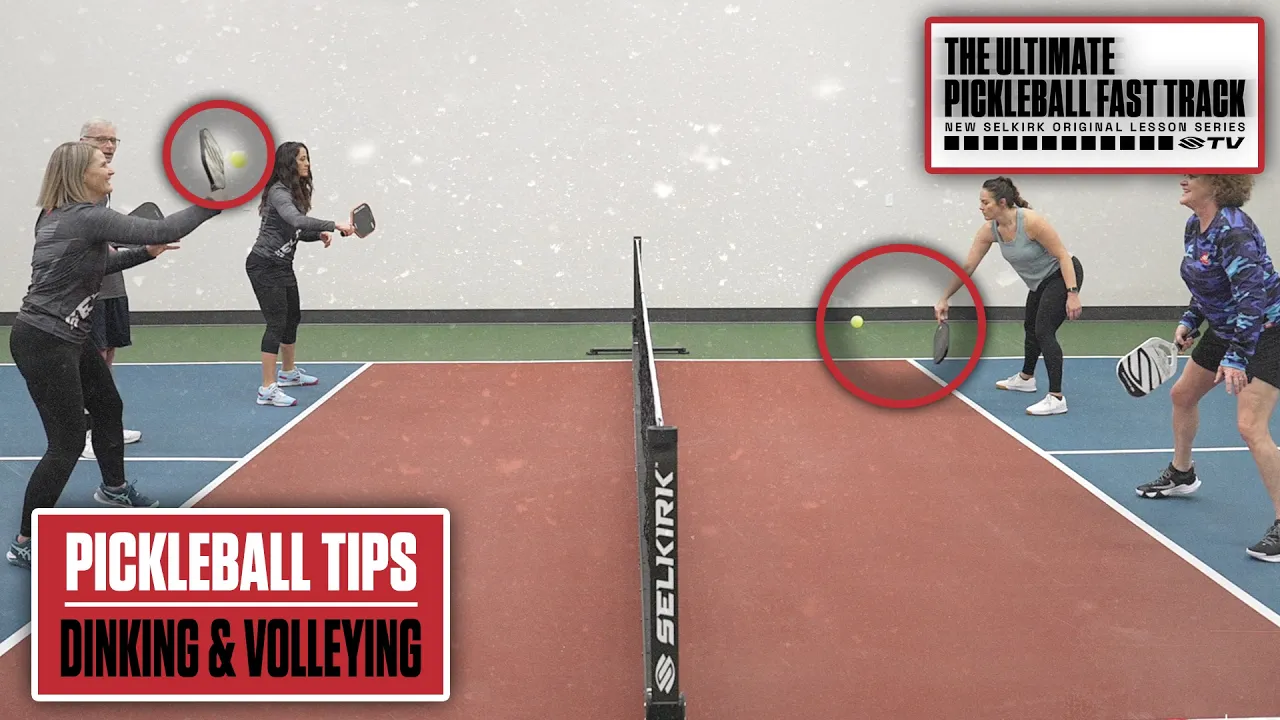
What Recreational Players Can Learn From Elite Play
So what's the takeaway for players who aren't yet at the 5.5 level?
The 5.5+ pickleball match reveals that pickleball isn't about hitting harder. It's about hitting smarter.
It's about understanding court position, anticipating your opponent's next move, and executing shots with precision rather than power.
If you want to improve, focus on three things:
- Your dinking consistency.
- Your footwork in transition.
- Your ability to recognize when to attack versus when to reset.
These are the fundamentals that separate elite players from everyone else.
The match also shows that preparation matters. Nick, Grayson, Ellie, and Arman are all training specifically for PPA Mesa qualifiers.
They're not just playing casually. They're working on specific shots, specific patterns, and specific strategies.
That level of intentionality is what separates a 5.5+ pickleball match from recreational play.
Frequently Asked Questions
What does a 5.5 rating mean in pickleball?
A 5.5 rating indicates an advanced player who has mastered the fundamentals and can execute advanced shots consistently. Players at this level have excellent court awareness, strong footwork, and the ability to hit with both power and precision. They understand strategy and can adapt their game based on their opponents' strengths and weaknesses.
Why is dinking so important at the 5.5 level?
Dinking is important because it's the foundation of point construction at the 5.5 level. Elite players use dinking to control the kitchen line, force their opponents into uncomfortable positions, and create opportunities to attack. A well-executed dink can be just as effective as a hard-hit winner.
What's the difference between a 5.5 match and a 3.5 match?
The main differences are consistency, precision, and decision-making. At the 5.5 level, players make fewer unforced errors, execute shots with greater accuracy, and make smarter tactical decisions. The pace of play is also faster, and the margins for error are much smaller.
How can I improve my game to reach the 5.5 level?
Focus on consistency first. Work on your dinking, your third shot drop, and your footwork. Play against better players whenever possible, and be intentional about what you're practicing. Watch matches at the 5.5 level to understand the tactics and strategies that elite players use.
What role does footwork play in 5.5+ pickleball?
Footwork is critical because it determines your ability to hit clean shots from any position on the court. Good footwork allows you to get your feet set, maintain balance, and execute shots with precision. Poor footwork leads to off-balance shots and unforced errors, which elite opponents will punish immediately.

Love Pickleball? Join 100k+ readers for free weekly tips, news & gear deals.
Subscribe to The Dink