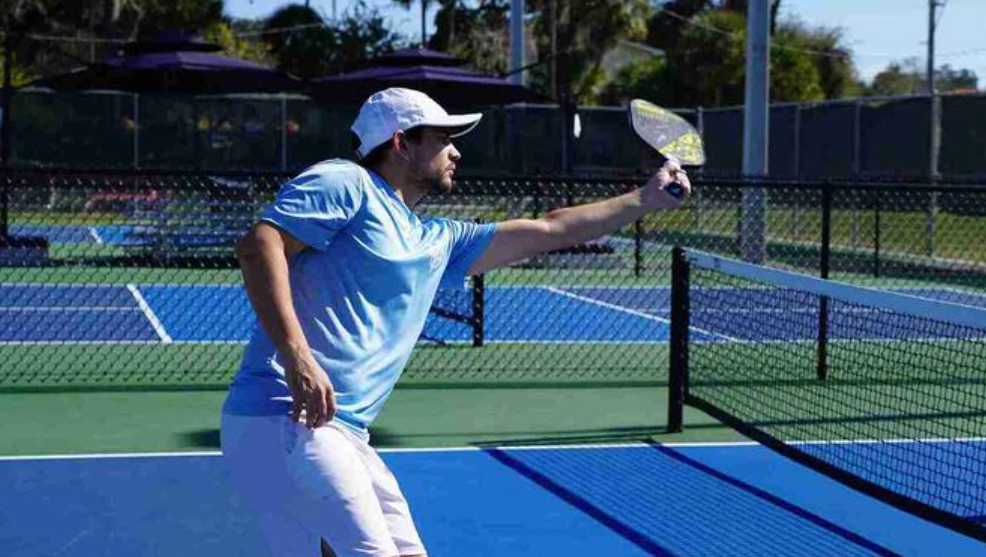
How to Volley in Pickleball: Win the Fast Hands Battle at the Net
Fast hands battles aren't won by the player who swings hardest. Here's how to volley in pickleball using compact blocks, a chest-height ready position, and speed-ups aimed at the right target.
If you want to learn how to volley in pickleball when the ball is coming back at you every half second, start with this: the player who wins a fast hands battle is almost never the one swinging hardest.
It's the one whose paddle was already in the right place.
Hands battles look like chaos from the sideline, but they're decided by tiny, boring decisions made before the ball ever speeds up.
Paddle height. Contact point. Whether you moved your feet or just reached.
Get those three right and you'll start winning exchanges against people who hit harder than you, which is the most satisfying feeling this sport offers.
Love pickleball? Then you'll love our free newsletter. We send the latest news, tips, and highlights for free each week.
What Counts as a Volley, and What Counts as a Hands Battle?
A volley is a ball you hit out of the air before it bounces. That's it.
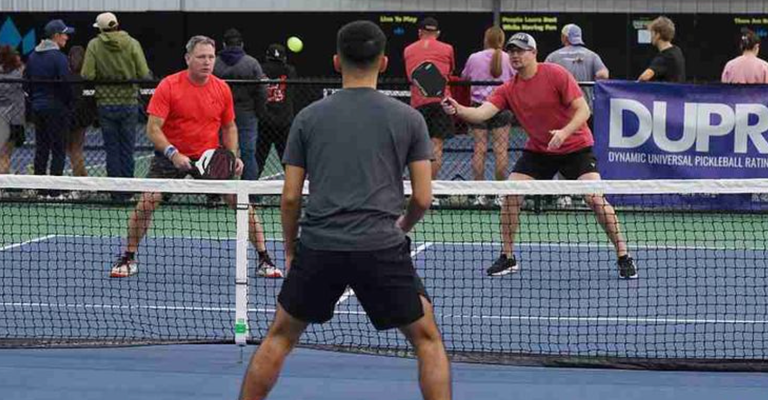
USA Pickleball defines it exactly that way, and a fast hands battle is just a string of them: both teams standing at the kitchen line, trading volleys until somebody pops one up or misses.
Two rules shape everything. The two-bounce rule means the serve and the return both have to bounce, so no hands battle can start until the fourth shot.
And the non-volley zone is seven feet deep on each side. You can't volley while touching it, and you fault if your momentum carries you in afterward.
That last part matters more than most rec players think. Leaning forward into a hot ball is how you win the point and lose it at the same time.
Your feet have to stay honest even when your hands are working.
Quick definition: a dink is a soft shot hit after a bounce from inside the kitchen. A volley is hit out of the air. People use the words loosely at open play, but they're different shots with different rules attached.
How to Volley in Pickleball Without Popping the Ball Up
The short answer: block, don't swing.
USA Pickleball's own technical guidance recommends a compact motion with little or no backswing, a mostly square paddle face, and contact out in front of your body.
That alone erases most volley mistakes.
When you learn how to volley in pickleball correctly, you're borrowing your opponent's pace instead of generating your own, which is why smaller players can beat bangers in these exchanges all the time.
Most pop-ups come from one of three things. You took a backswing. You let the ball get behind you.
Or your paddle face opened at contact because your wrist collapsed.
That's most of how to volley in pickleball cleanly, right there. Fix those and your pop-up problem mostly disappears.
Here's the thing about contact point: in front is not a suggestion. If the ball arrives even with your hip, you've already lost the shot.
You're now catching it with an open face and no control, and the ball floats up into your opponent's putaway zone.
How to Volley in Pickleball With Your Feet, Not Your Arms
Move your feet, don't reach. That's the whole idea, and it's the one USA Pickleball repeats constantly.
Reaching stretches your arm, opens your paddle face, and drops your contact point behind your body all at once.
Small adjustment steps beat one big lunge. Shuffle a few inches so the ball arrives in your strike zone, then block it.
When you're pulled wide, a neutral, seated posture keeps your elbow from flying out and turning every counter into a chicken wing.
Where Should Your Paddle Live Between Shots?
Chest height, out front, tip up.
Your ready position is the single biggest predictor of whether you survive the first two balls of an exchange, and most rec players carry the paddle too low and too close to their body.
Think of it this way. A speed-up travels roughly 14 feet at the kitchen line. You don't have time to lift the paddle and then hit.
The paddle has to already be there. Players who dominate hands battles aren't faster humans, they just skipped a step you're still doing.
Grip pressure matters too. Squeeze at maybe a 4 out of 10 between shots, then firm up at contact.
A death grip kills your reaction time and sends every block sailing long.
If you've never thought about how you hold the paddle at the net, that's a free win sitting there.
 The Dink Media Team
How to Volley in Pickleball When You're the One Under Fire
When you're defending, absorb first and attack second. The instinct is to fire back immediately, and that instinct loses points.
Learning how to volley in pickleball defensively means accepting that your first job is simply keeping the ball low, not winning the rally on shot one.
A soft block takes pace off and drops the ball at their feet. That's a push block, and it's the most underrated shot in the sport.
You're not resetting to be passive. You're resetting so the next ball comes back slower and you get to be the aggressor.
The real skill is knowing when to block and when to counter. Ball below net height, block it. Ball at chest or above and slightly late, counter it.
Ball above your shoulder, it's probably out, so let it go and take the free point.
How to Volley in Pickleball From the Backhand Side
Most hands battles get decided on the backhand, so live there.
Set your ready position with the paddle face slightly favoring your backhand, because your backhand block covers more of your body than your forehand does and requires less rotation to execute.
If you play with two hands, a two-handed defensive block gives you a more stable face against hard drives.
One hand is fine too, but you'll want a firmer wrist and a shorter motion. Either way, the backhand side is where points are won.
 The Dink Media Team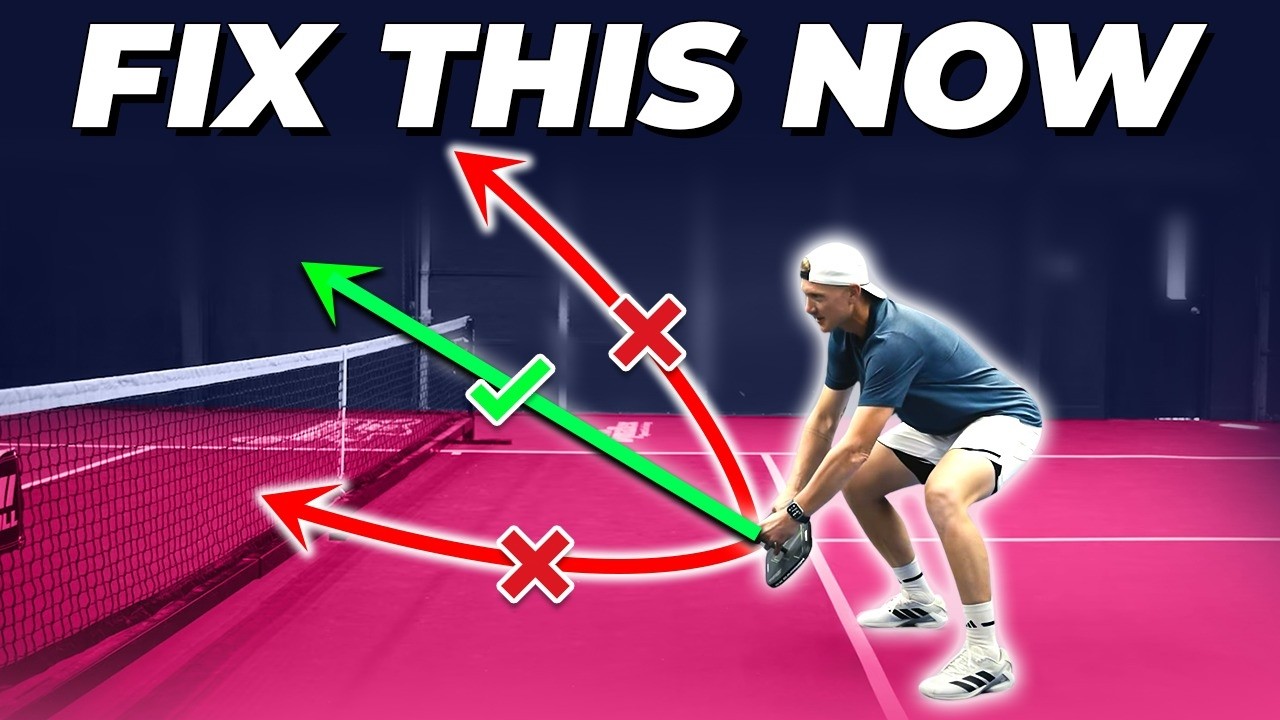
Who Actually Starts These Exchanges, and Where Should They Aim?
The player who starts the hands battle wins it far more often, so be the one who initiates.
But start it off the right ball. Speeding up a ball below net height is how you hand over free points.
Target the right shoulder of a right-handed player, or the hip on their dominant side. Those are the spots where the paddle has nowhere good to go.
A cleanly placed speed-up at the shoulder beats a harder one aimed at open court almost every time.
Honestly, most failed speed-ups aren't failures of power. They're failures of patience.
Players attack off a low dink because they're bored, and boredom is expensive. Better dink placement creates the high ball for you, so you don't have to force one.
Crosscourt is your friend here.
USA Pickleball notes that crosscourt angles give you a lower net trajectory and pull your opponent off the court, which is exactly the setup you want before you pull the trigger.
 The Dink Media Team
Three Drills That Build Real Hands Speed
Reaction speed is trainable, but only with the right reps.
Elite mixed-doubles rallies average about 10.6 seconds, so your drilling should match that kind of burst length rather than long, lazy exchanges.
- Wall volleys. Stand seven feet from a wall and volley continuously without letting the ball bounce. Thirty seconds on, thirty off. Wall work builds contact point discipline faster than anything else.
- Hands battles from a feed. Partner feeds an attackable ball at the kitchen line and you play it out, live. No resets allowed. This is the closest thing to match reps you can manufacture.
- Block only. Partner drives at your body from mid-court. You may only block, never counter. Boring, effective, and it fixes paddle positioning permanently.
Ten focused minutes of practicing how to volley in pickleball under pressure beats an hour of casual dinking.
That's the whole drilling philosophy in one sentence.
 The Dink Media Team
Key Takeaways
- A volley is any ball hit before it bounces, and a fast hands battle is a rapid string of them at the kitchen line.
- Block, don't swing. Compact motion, no backswing, square face, contact in front of your body.
- Move your feet instead of reaching. Reaching opens your paddle face and causes pop-ups.
- Keep the paddle at chest height with the tip up and grip pressure around 4 out of 10.
- Defend first, attack second. Ball below net height gets blocked, ball above net height gets countered.
- Start hands battles off attackable balls and aim at the dominant shoulder or hip, not open court.
Frequently Asked Questions
How do you win a fast hands battle in pickleball?
Win it before it starts. Keep your paddle at chest height in front of your body, block with a compact motion instead of swinging, and take contact out in front. The player who has to lift or reach on the first ball loses most of these exchanges, regardless of raw hand speed.
Can you volley while standing in the kitchen?
No. Volleying while standing in the non-volley zone or touching its line is a fault, and it's also a fault if your momentum carries you in after the shot. You can legally stand in the kitchen and play a ball that has already bounced, which is what dinking is.
Should you use a forehand or backhand volley at the net?
Favor the backhand. It covers more of your body, requires less rotation, and is faster to deploy when a ball comes at your chest. Set your ready position slightly toward the backhand side and let the forehand be the shot you rotate into when there's time.
Why do my volleys keep popping up?
Almost always one of three causes: you took a backswing, the ball got behind you, or your wrist collapsed and opened the paddle face. Shorten the motion, move your feet so contact happens in front, and firm up your wrist at the moment of impact.
How long does it take to get faster hands?
Most players see noticeable improvement within two to three weeks of consistent block-only and wall drilling, because you're not actually building reaction speed so much as removing wasted movement. The gains come from a better starting position, not faster reflexes.

Love Pickleball? Join 100k+ readers for free weekly tips, news & gear deals.
Subscribe to The Dink