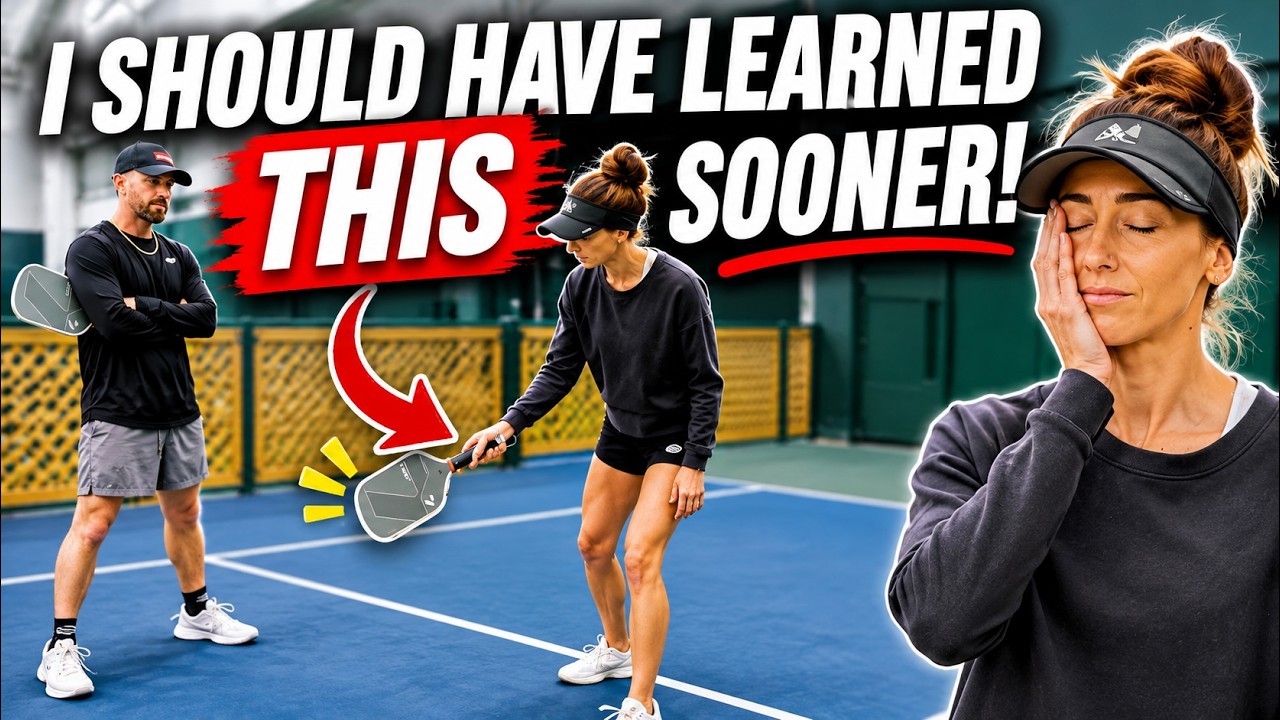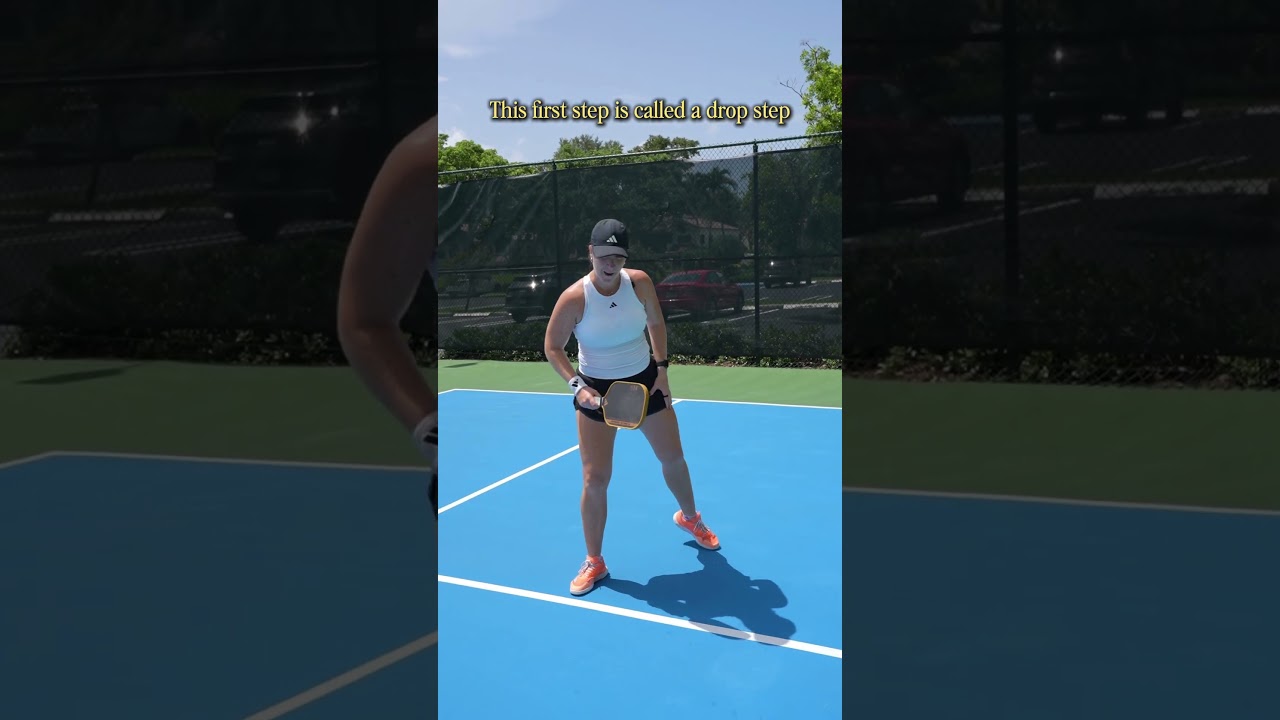


A better overhead smash starts with how you load the paddle, where you aim, and what you do when the ball is not perfect. These three tips help you finish points instead of giving your opponent another chance.
You finally get the high ball you have been waiting for, wind up, swing, and watch your overhead smash sail back at you like a gift.
It is one of the most frustrating moments in pickleball because the point was yours. The fix is simpler than most players think.
These three tips come from tanner.pickleball on YouTube, who breaks down how to hit an overhead that finishes the point in under 60 seconds.
We will cover how to generate real power, where to aim, and what to do when the ball is not a perfect setup.
Love pickleball? Then you'll love our free newsletter. We send the latest news, tips, and highlights for free each week.
Why Does Your Overhead Smash Lack Power?
Your overhead smash lacks power because you start with the paddle up high and swing straight through, which gives you no way to build force.
Think about what happens when you hold the paddle above your head and just push it forward.
There is no runway for the paddle to accelerate, so all you get is a slap with your arm.
Most amateurs do exactly this. They see the ball coming, raise the paddle early, and then try to muscle the shot with arm strength alone.
Power in an overhead smash comes from sequence, not effort. You need a loaded position that lets the paddle travel a long path before contact.
Tip 1: Throw It Like a Baseball
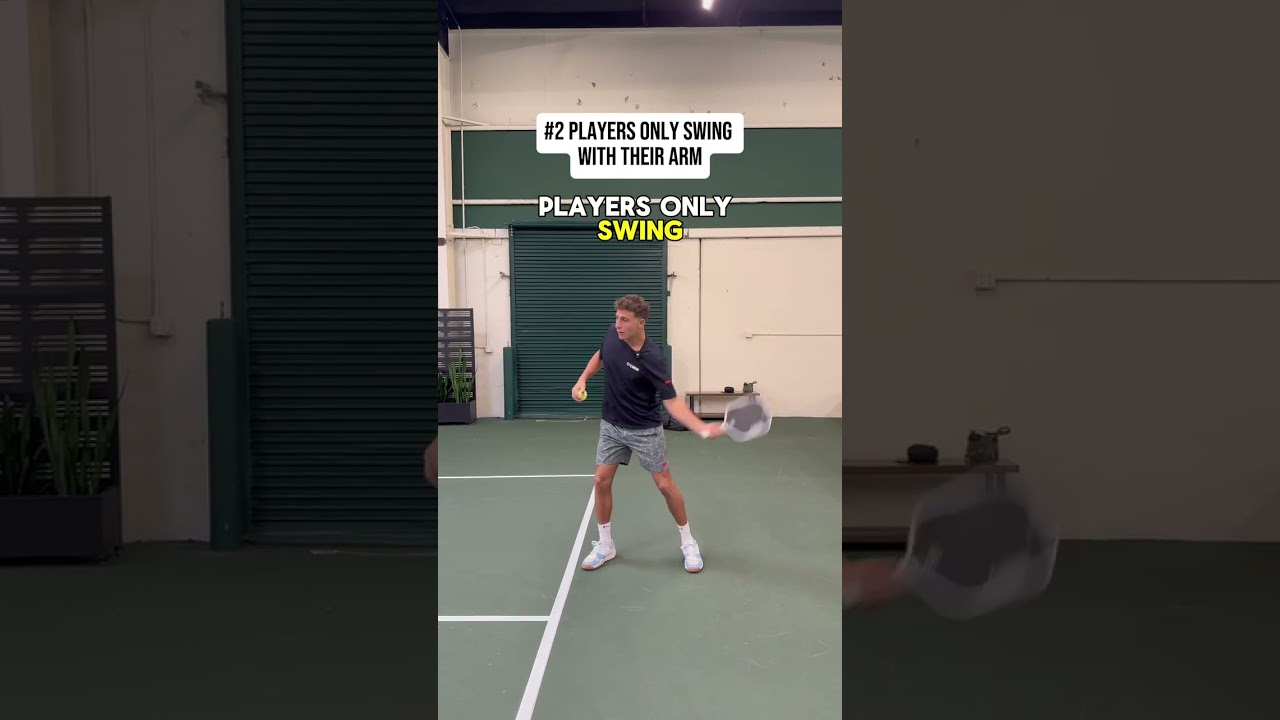
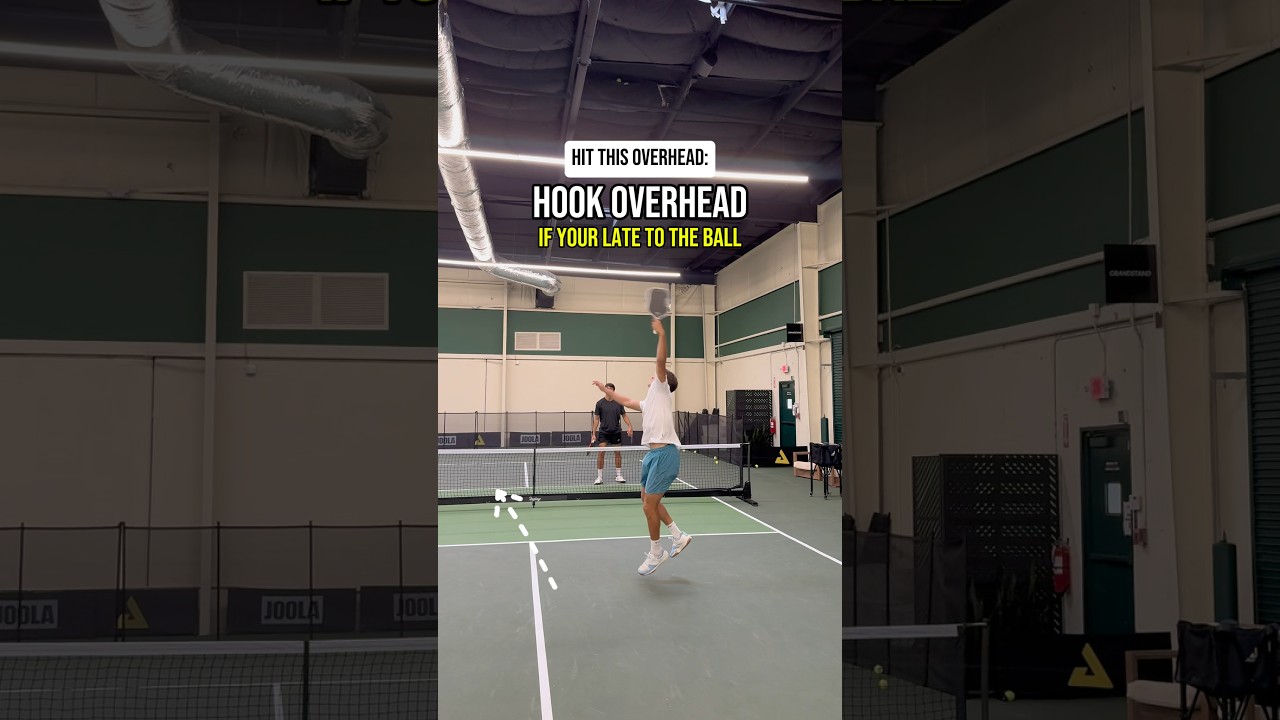
The best way to generate force on an overhead is to treat it like you are throwing a baseball: paddle behind your head, then extend through the ball.
That backward position is what creates the whip.
When the paddle drops behind you and then fires forward, it travels farther and faster than a paddle that never left the top of your swing.
Here is how to build that motion:
- Turn sideways as the ball rises, with your non-paddle hand pointing at the ball like a target.
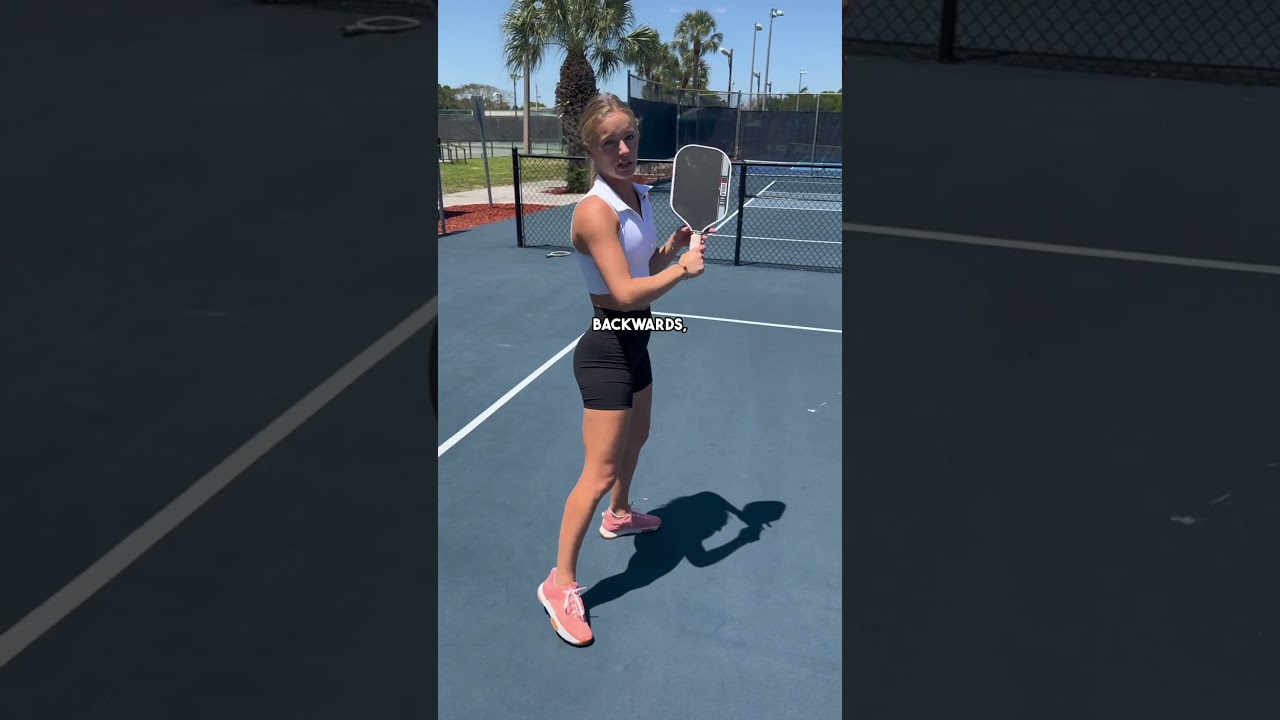
- Drop the paddle behind your head so your elbow stays high and the paddle face points toward the back fence.
- Extend up and through the ball, reaching for contact at the highest point you can comfortably get to.
- Finish across your body so the paddle follows through instead of stopping at contact.
If you have ever thrown a baseball or a football, you already know this feeling. Your body knows how to create power overhead, so let it.
The 3-part motion breaks the same sequence down even further. Footwork matters here too, since you cannot throw well off the wrong foot.
If you tend to get caught flat footed on lobs, the pickleball footwork fixes on our site will help you get behind the ball.
Tip 2: Hit Through the Court, Not Shallow
To make the ball never come back, aim for a bounce within 3 feet of the baseline instead of landing it short near the kitchen line.
- A smash that bounces near the kitchen gives your opponent a ball they can reach, block, or even counter.
- A smash that bounces deep and then jumps up and over their head is almost impossible to return.
This is the mistake that costs players the most points on overheads.
They swing hard but angle the shot downward too steeply, and the ball dies in the middle of the court.
Aim through the court. Picture the ball landing near the back line and then rocketing toward the fence.
Here is a quick checklist for depth:
- Contact the ball out in front of your body, not above or behind your head.
- Keep your paddle face slightly open so the ball travels forward instead of straight down.
- Pick a target about 3 feet inside the baseline and commit to it.
- Follow through toward that spot instead of chopping down on the ball.
This same idea applies to other aggressive shots.
If you struggle with drives that sit up or sail long, the tips in 5 tips for a harder pickleball drive that stays in pair well with this depth target.
 The Dink Media Team
Tip 3: What Do You Do When the Ball Is Not Perfect?
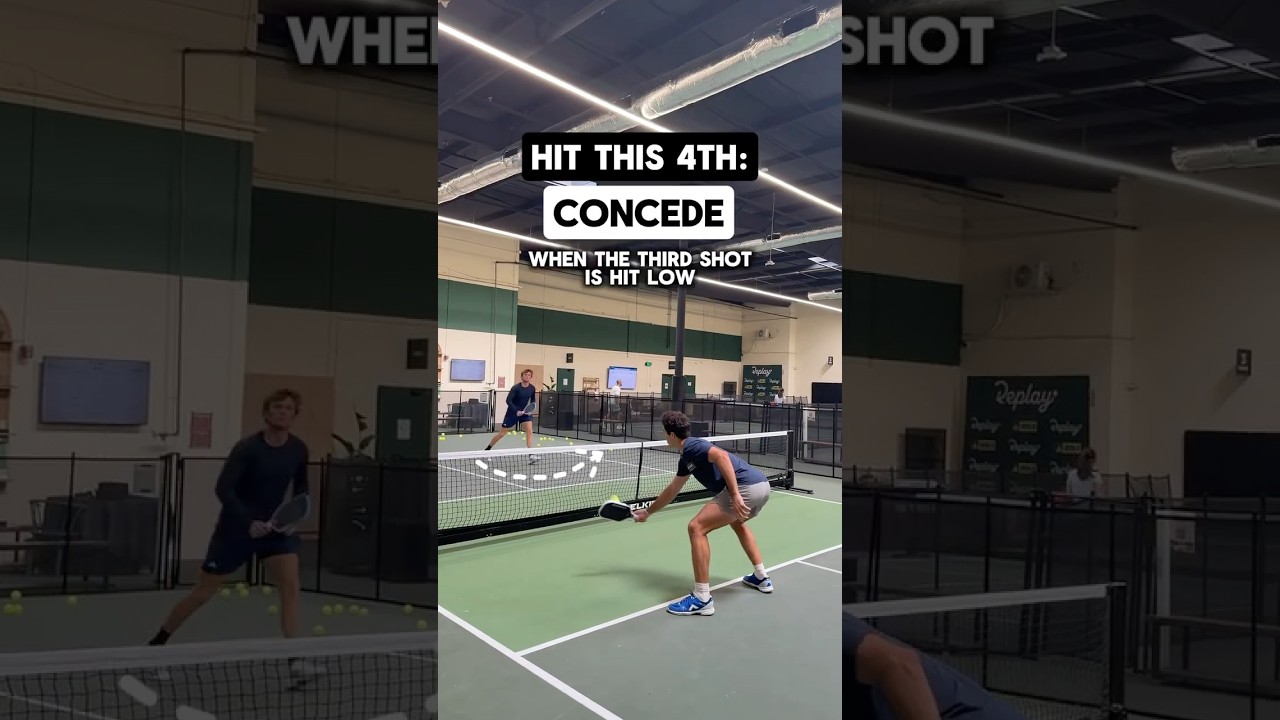
When you do not have a perfect high ball to put away, use angles to pull your opponent off the court and set up an easier next ball.
Not every overhead is a clean finisher. Sometimes the lob is lower, farther behind you, or you are off balance.
In those moments, forcing a power smash is how you make errors. Instead, think about movement: drag your opponent wide and open up the court.
An angled overhead does two things:
- It stretches the defender out of position, which opens the middle or the opposite sideline.
- It gives you an easier follow-up because the next ball is usually weaker and shorter.
This is the patient version of the overhead. You are not trying to win the point with one swing, you are trying to win it with two.
If you tend to force winners when they are not there, having more than one overhead shot in your bag is the smarter way to think about it.
 The Dink Media Team
What Is an Overhead Smash in Pickleball?
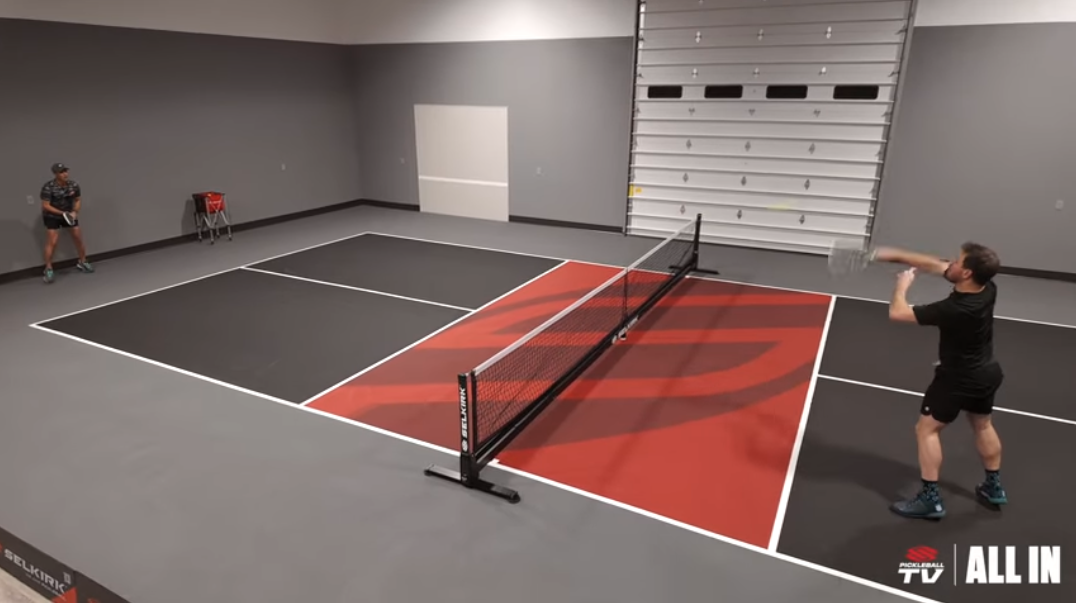
An overhead smash is an aggressive downward or forward shot hit out of the air above your head, usually in response to a lob or a high, floating ball.
It is the pickleball version of a tennis smash. The goal is to hit the ball with enough pace and depth that your opponent cannot return it.
Beginners often confuse it with a regular volley.
The difference is the contact point: an overhead is struck high with a full swing, while a volley is a compact punch at chest height or lower.
 Alex E. Weaver
How Do You Set Up for a Better Overhead?
You set up for a better overhead by tracking the ball early, moving your feet behind it, and getting your paddle into the loaded position before the ball arrives.
Most missed overheads are footwork problems, not swing problems.
If you are caught underneath or in front of the ball, no amount of technique will save the shot.
Use these habits every time a lob goes up:
- Turn and shuffle back instead of backpedaling straight, which keeps your hips open.
- Keep your eyes on the ball until contact, which our watch the ball tips cover in detail.
- Call for it early with your partner so you do not collide or hesitate.
- Stay balanced so you can recover and cover the next shot.
Learning how to defend a lob in pickleball helps too, and our guide to lobbing shows what the point looks like from the other side of the net.
 The Dink Media Team
Common Overhead Mistakes to Avoid
The most common overhead mistakes are starting with the paddle too high, landing the ball short, and forcing a winner on a bad ball.
Each one has a clear fix, and they all connect back to the three tips above.
- Paddle starts high: drop it behind your head so you can whip through.
- Ball lands near the kitchen: aim for a bounce within 3 feet of the baseline.
- Forcing a bad ball: use an angle to pull your opponent wide instead.
- Tight grip and arm: relax your hand so the paddle can accelerate.
Tension is a quiet killer on overheads.
A white-knuckle grip kills the whip you just worked to create, and a 2025 study in the Journal of Functional Morphology and Kinesiology found that players who held a tight baseline grip were roughly 2.7 times more likely to suffer an acute upper extremity injury.
Stay loose until contact.
If your shots tighten up under pressure, slowing down the pace of play will help you stay smooth, and these fixes for popping the ball up take care of the rest.
 The Dink Media Team
How Do You Practice the Overhead?
You practice by feeding yourself or having a partner lob balls so you can rep the baseball throw motion and aim for the back third of the court.
Start slow. Focus only on the loaded position behind your head and a smooth extension through the ball.
Once the motion feels natural, add a target. Place a towel or cone about 3 feet inside the baseline and try to bounce the ball on it.
Then add movement. Have your partner mix in lobs that force you to shuffle back, and run the survivor drill so you learn both sides of the shot.
If you want to build this into a full session, our 12 drills give you a framework to work from.
 The Dink Media Team
Putting It All Together
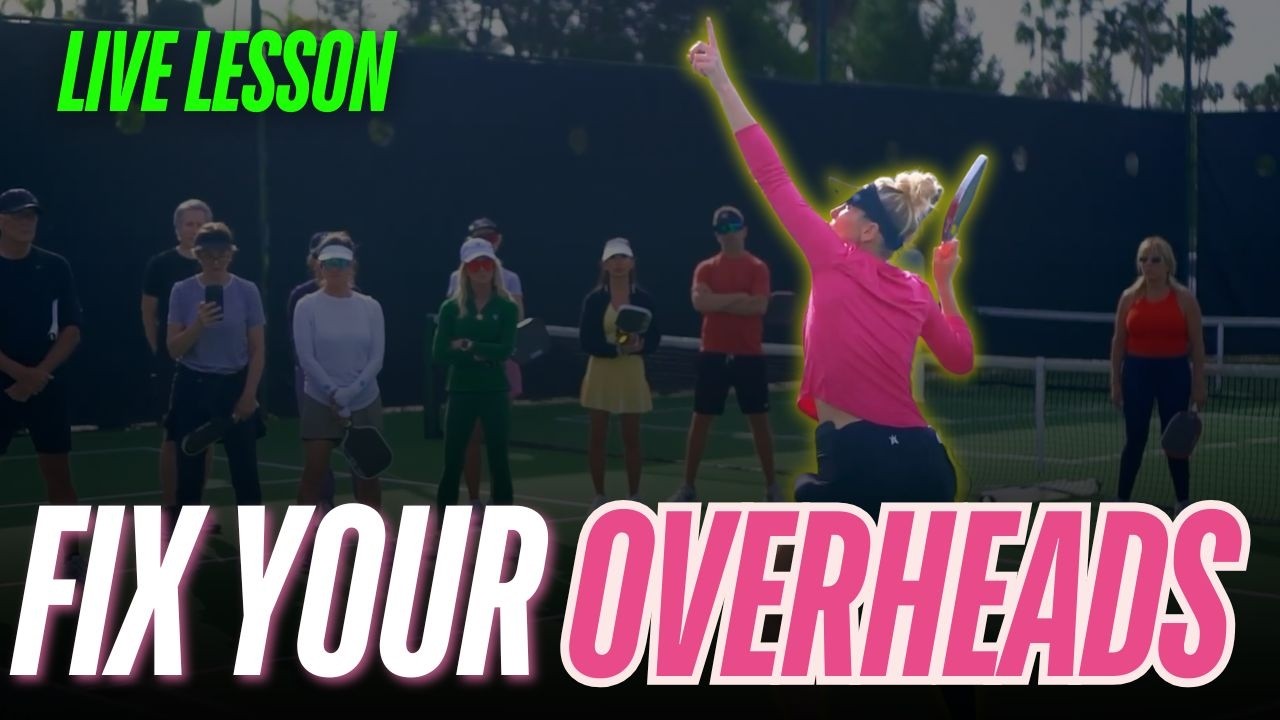
A great overhead smash is built on three habits: load the paddle behind your head, hit deep through the court, and use angles when the ball is not perfect.
None of these require elite athleticism. They require a better plan and a little repetition.
Next time a high ball floats your way, resist the urge to just swing hard. Turn, load, extend, and aim for the back fence.
Do that consistently and the ball will stop coming back. For more ways to tighten up your game, check out 7 ways to stop missing in pickleball fast.
Frequently Asked Questions
How do you hit a powerful overhead in pickleball?
Treat it like throwing a baseball by dropping the paddle behind your head and extending through the ball. This creates a whip that generates far more power than swinging from a paddle held up high.
Where should you aim an overhead smash?
Aim for a bounce within about 3 feet of the baseline. Hitting deep makes the ball jump past your opponent, while a short smash near the kitchen line is easy to return.
What should you do if you do not have a perfect overhead ball?
Use an angle to pull your opponent off the court instead of forcing a power shot. This sets up an easier next ball and keeps you from making an unforced error.
Why does my overhead keep popping up or coming back?
Usually you are landing the ball short or swinging with a paddle that starts too high. Load the paddle behind your head and aim deep through the court to keep the ball from sitting up.
Is an overhead the same as a volley?
No. An overhead is a full swing at a high ball above your head, while a volley is a compact punch at chest height or lower.


Love Pickleball? Join 100k+ readers for free weekly tips, news & gear deals.
Subscribe to The Dink