

Your backhand roll keeps landing in the net because you get on top of the ball and hit it too close to your body. Three simple fixes will get you under the ball and add the spin that keeps it down on the other side.
Your backhand roll feels aggressive in your head, but the ball keeps clipping the top of the net.
You know the feeling: a dink pops up just enough, you swing with intent, and the ball dies in the tape.
It happens to almost every amateur, and it usually comes down to the same three mistakes.
These fixes come from Richard Pickleball on YouTube, who boils the whole shot down to three simple steps.
Below, we break each one down, explain why it works, and show you how to drill it.
Love pickleball? Then you'll love our free newsletter. We send the latest news, tips, and highlights for free each week.
Why Does Your Backhand Roll Keep Hitting the Net?
Your backhand roll hits the net because you get on top of the ball and make contact too close to your body.
When contact happens near your hip, your arm has no room to extend. Your paddle face ends up closed or flat, and the only direction left is down and into the tape.
Most players blame their swing speed, so they swing harder. That makes it worse, because more speed with a closed face just drives the ball into the net faster.
The fix is not more effort.
The fix is better geometry: a better wrist position, a lower body, and a contact point that gives you room to brush up the back of the ball.
What Is a Backhand Roll in Pickleball?
A backhand roll is an offensive shot where you brush up and over the ball on your backhand side to create topspin, which pulls the ball down into the court after it clears the net.
It sits between a dink and a full drive. You are not trying to blast the ball past anyone.
You are trying to hit it with enough pace and spin to keep your opponent on their heels.
The spin is what lets you swing aggressively while still landing the ball in.
If you want to see how the shot fits into a full attacking sequence, check out these fixes for an aggressive fourth shot.
And if you mix up the terms, the difference between a topspin dink and a roll dink is worth knowing.
The Three Steps to a Better Backhand Roll
The shot comes down to three steps done in order: turn your wrist back, get low, and make contact far in front.
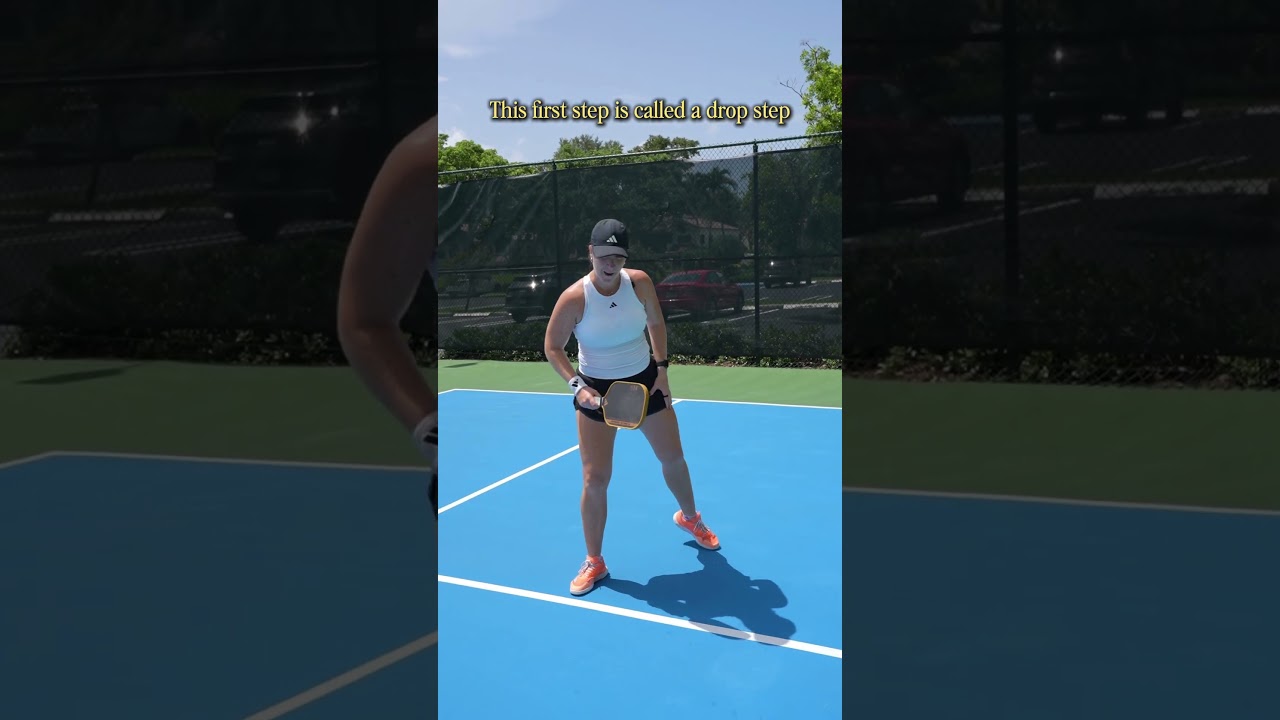
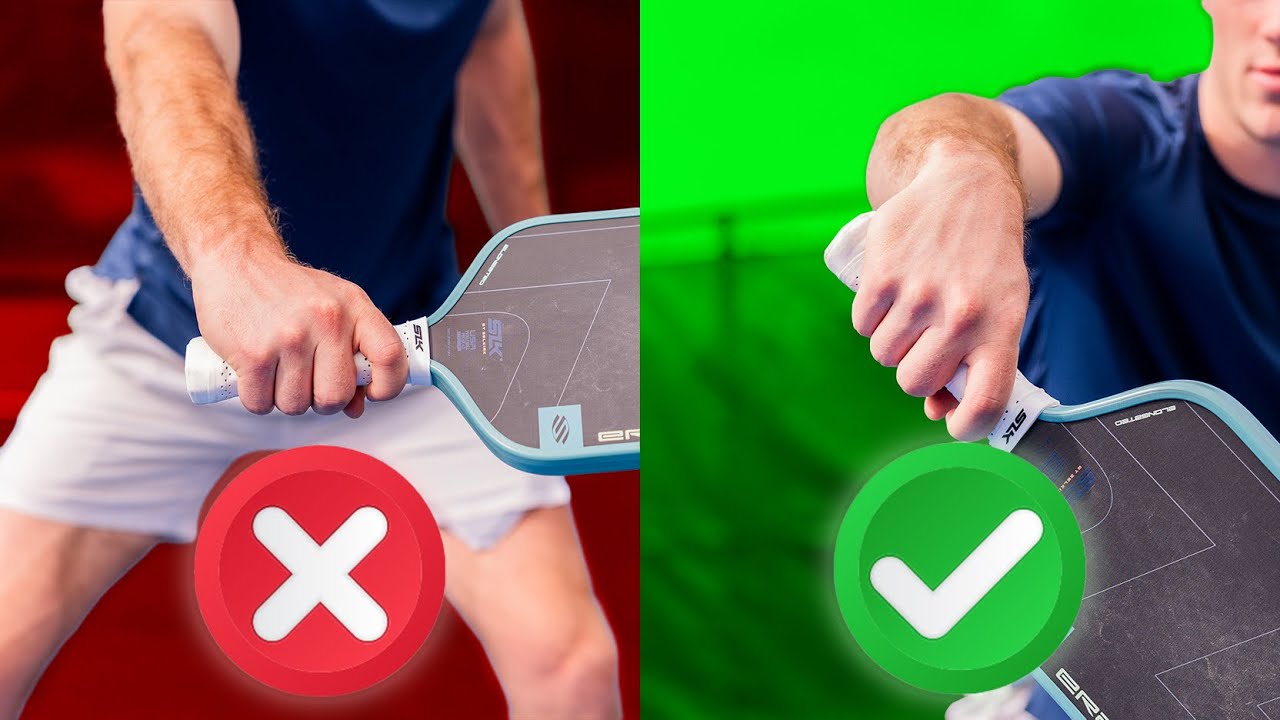
- Turn your wrist back. Cock the wrist so the paddle head sits behind your hand.
- Get low. Bend your knees and drop your hips so the paddle can travel upward.
- Make contact far in front. Meet the ball well out in front of your body, not beside it.
Each step solves a specific problem. Skip one and the other two cannot fully save the shot.
Step 1: Turn Your Wrist Back
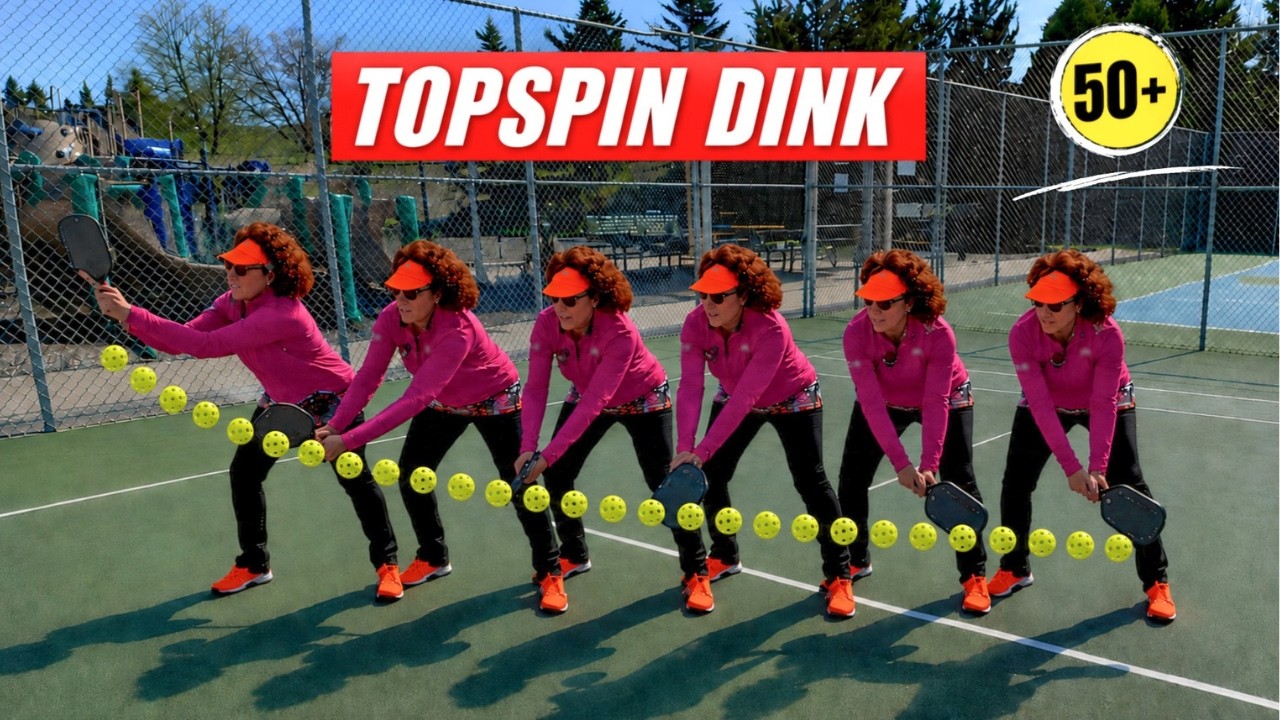
Turning your wrist back loads the paddle head behind your hand so you can accelerate up and through the ball.
Think of it like cocking a hammer. From that cocked position, the paddle has somewhere to go, and the swing path naturally travels low to high.
Players who keep a flat, neutral wrist have no room to brush the ball. They end up pushing it forward, which produces a flat shot with almost no spin.
The wrist matters more than most rec players think.
According to a 2025 study in the Journal of Sports Sciences, high-level pickleball players kept continuous wrist motion through and after contact, while beginners did not.
Practice the position in slow motion without a ball first.
Hold the cocked position, then let the paddle head release upward as you swing, the same way you would build wrist lag for power and spin.
Step 2: Get Low
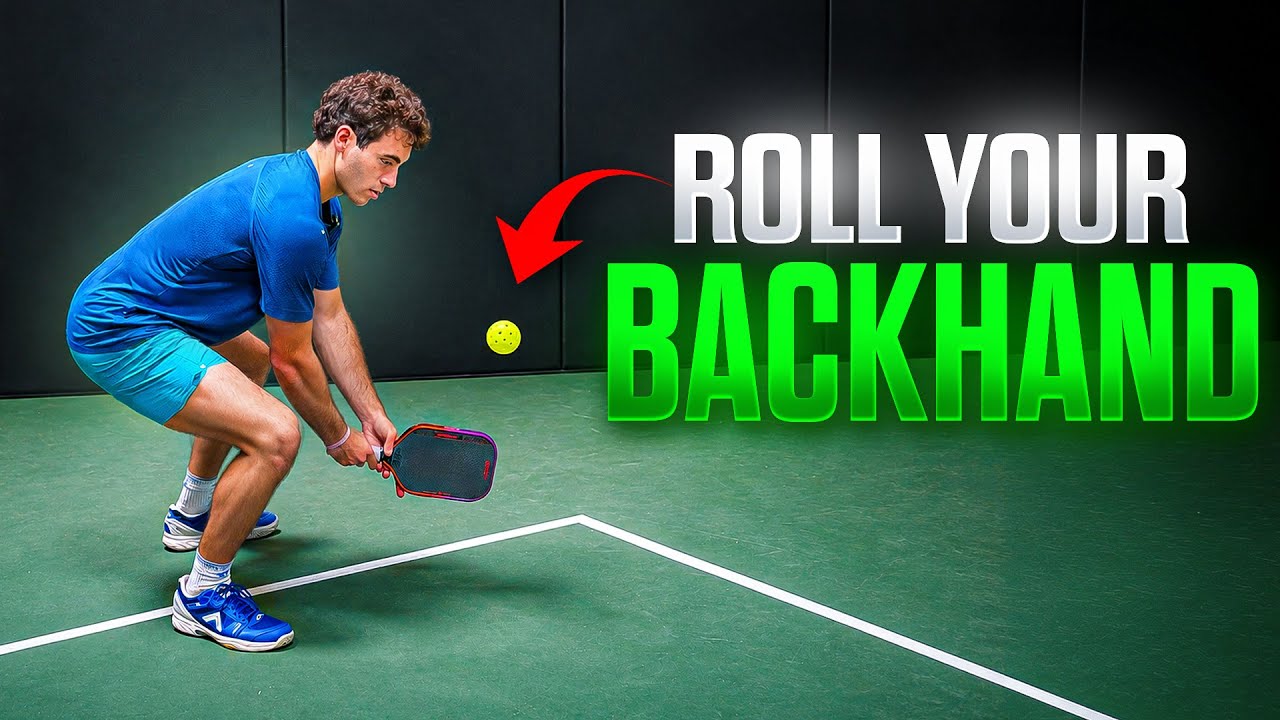
Getting low lets your paddle travel upward through the ball instead of chopping down on top of it.
When you stay tall and the ball is near net height, you are forced to swing flat or downward. That is exactly how you end up on top of the ball.
Bend your knees and sink your hips, not your back. Your chest should stay fairly upright while your legs do the lowering.
That same study found high-level players used significantly more femur flexion on their shots at the kitchen.
If your base feels sloppy on the backhand side, dialing in your posture and balance will help you set up lower.
Step 3: Make Contact Far in Front
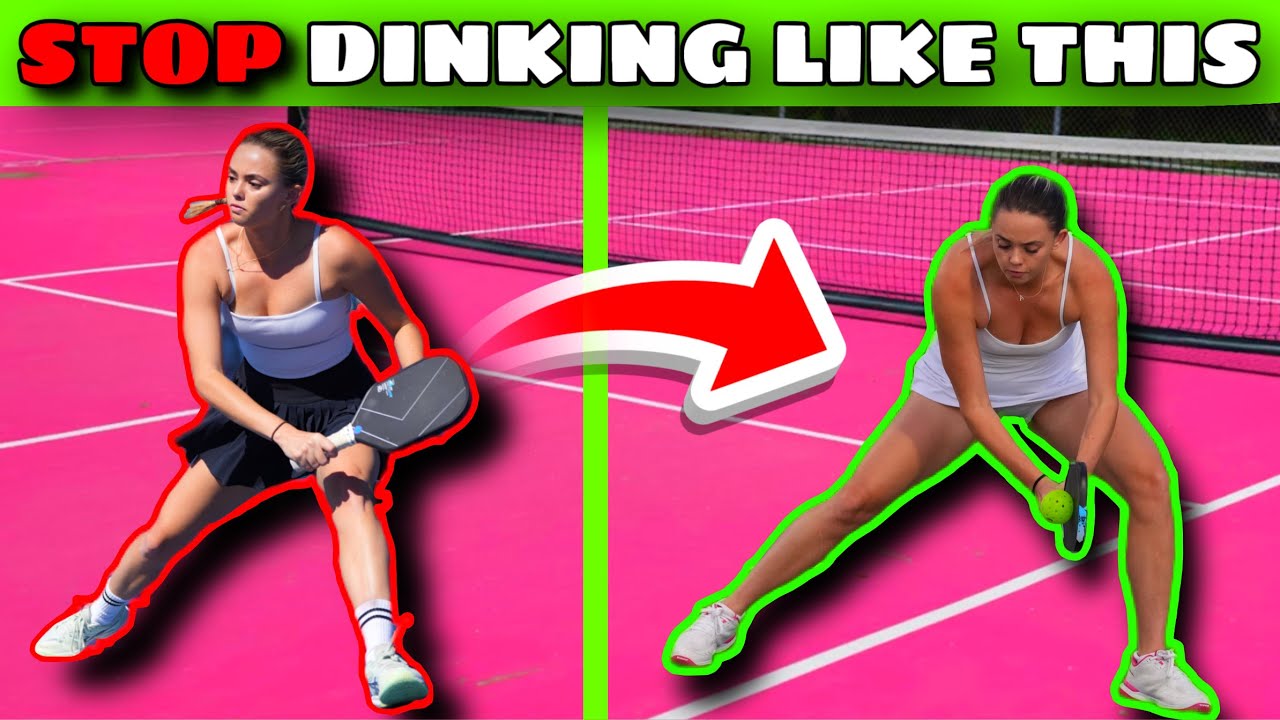
Contact far in front of your body is what lets you get under the ball and generate spin that keeps it down on the other side.
This is the biggest difference between a roll that lands and a roll that dies in the net.
When you stay out in front, your arm is extended and the paddle face is open enough to brush up the back of the ball.
When contact drifts back toward your hip, your elbow jams and the face closes. That is the ball in the net, almost every time.
A good cue is to imagine you are meeting the ball a full paddle length ahead of your front foot.
 The Dink Media Team
How Do You Know If You Are Getting on Top of the Ball?
You are getting on top of the ball if your shots die in the net, skid low, or feel flat with no spin coming off the paddle.
Here are the common signs:
- The ball clips the tape even when you feel like you swung hard.
- Your contact feels beside or behind your hip.
- Your paddle finishes pointing down at the court instead of out and up.
- You stand tall through the shot rather than sinking into it.
If two or more of those sound familiar, you are almost certainly collapsing the shot before contact. Fix the contact point first, since it influences everything else.
 The Dink Media Team
A Simple Drill to Groove Your Backhand Roll
The best way to build this shot is a controlled feed drill where you only focus on one step at a time.
Have a partner feed you slightly elevated balls to your backhand from about the kitchen line.
Hit ten rolls focusing only on wrist position, then ten on staying low, then ten on contact in front.
Isolating each step keeps your brain from juggling three things at once.
Once each piece feels natural, play a few points where you must roll any ball above the net on your backhand.
Pairing this with a solid attack read helps, too. These topspin techniques reinforce the same low-to-high path you want on the roll.
 The Dink Media Team
When Should You Hit a Backhand Roll Instead of Resetting?
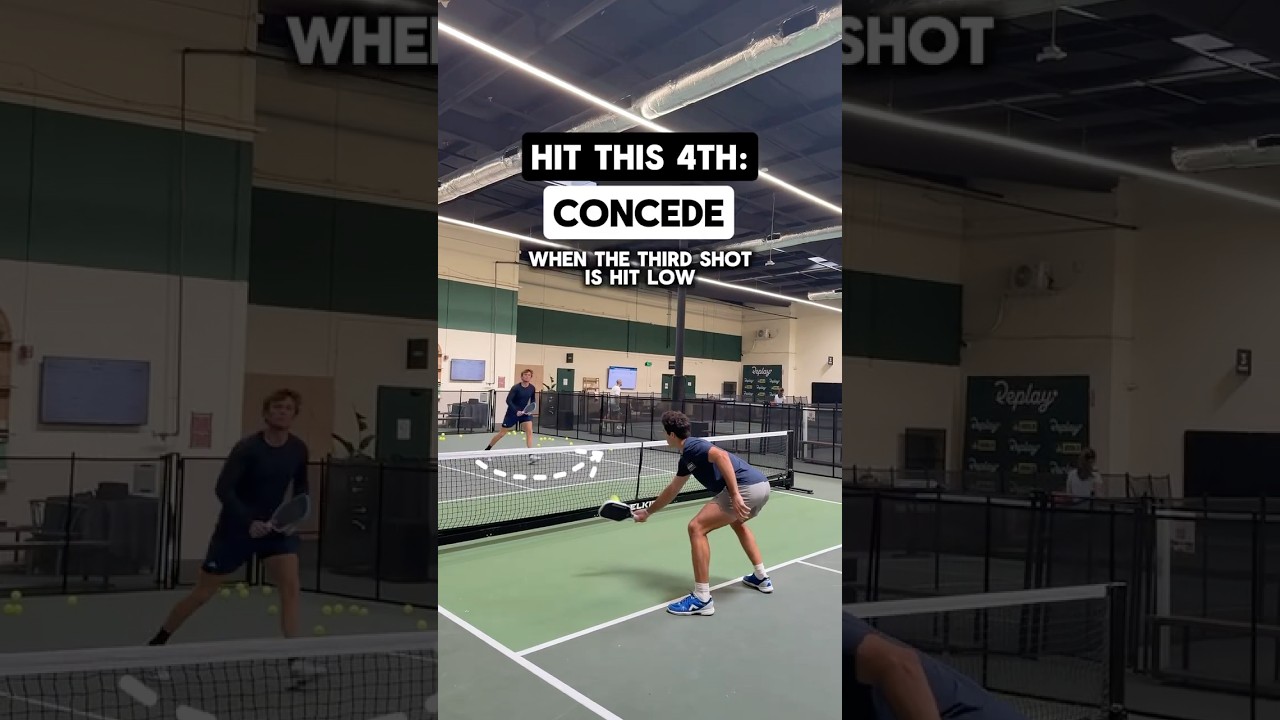
Hit the backhand roll when the ball sits at or above net height and your opponent is not set to counter.
If the ball is below the net and you are stretched, a reset is the smarter play. Rolling a low ball is how you feed the net or pop it up into a counterattack.
Knowing when to attack is half the shot, and this guide on how to attack a dink out of the air covers the decision in more detail.
When you do not trust the roll yet, reset techniques that beat hard attacks give you a safe fallback.
 The Dink Media Team
How Do Pros Keep the Roll Consistent?
Pros keep the roll consistent by repeating the same body position and contact point on every swing, not by hitting harder.
Watch Ben Johns on the backhand side and you will notice how low he gets and how far out in front he meets the ball.
The motion looks effortless because the setup does the work. You do not need his speed to copy the structure. Low base, loaded wrist, contact out front.
If you want to see how advanced players decide when to turn a dink into offense, read about the 3 keys pros use before every speed-up.
 The Dink Media Team
Common Mistakes That Ruin the Backhand Roll
The most common mistakes are swinging too hard, standing too tall, and letting the ball get too close to your body.
- Swinging harder to compensate: More speed with a closed face means the ball goes into the net faster.
- Staying tall: A high body forces a flat or downward swing path.
- Letting the ball get too close: Crowding yourself kills your extension and your paddle angle.
- Ignoring the wrist: A stiff, flat wrist removes the low-to-high brush you need for spin.
Notice that none of these are about power.
Every one is about positioning and setup, which is why fixing the setup fixes most common pickleball mistakes at once.
Equipment rarely solves a netting problem on its own. If you want more help from your gear, these paddles built for long-lasting spin are a good place to start.
 The Dink Media Team
Putting It All Together in a Match
In a match, the backhand roll works best when you commit to the setup early and trust the spin to bring the ball down.
As the dink comes toward your backhand, load the wrist, drop your hips, and step out to meet the ball in front. Do not wait for it to arrive at your body.
Aim for the opponent’s feet or a gap between the two players rather than trying to hit a winner.
A well-placed roll forces a weak response, and that is where you finish the point.
For more on building an attacking game that holds up under pressure, these pickleball speed-up patterns from a pro lesson pair nicely with this shot.
Frequently Asked Questions
Why does my backhand roll always go into the net?
You are likely getting on top of the ball and making contact too close to your body. Turn your wrist back, get lower, and meet the ball farther out in front so you can brush up and over it.
What is the difference between a backhand roll and a backhand dink?
A dink is a soft, controlled shot meant to land in the kitchen. A roll adds topspin and more pace so the ball travels deeper and bounces forward, putting your opponent under pressure.
How low should I get on a backhand roll?
Bend your knees and drop your hips until your paddle can travel upward through the ball. Keep your chest fairly upright so the legs do the work rather than rounding your back.
Where should I make contact on a backhand roll?
Make contact well out in front of your body, roughly a paddle length ahead of your front foot. This extension lets you open the paddle face and get under the ball.
Can I hit a backhand roll off a low ball?
It is risky. If the ball is below net height and you are stretched, a reset is usually the smarter play, since rolling a low ball often leads to the net or a pop-up.


Love Pickleball? Join 100k+ readers for free weekly tips, news & gear deals.
Subscribe to The Dink