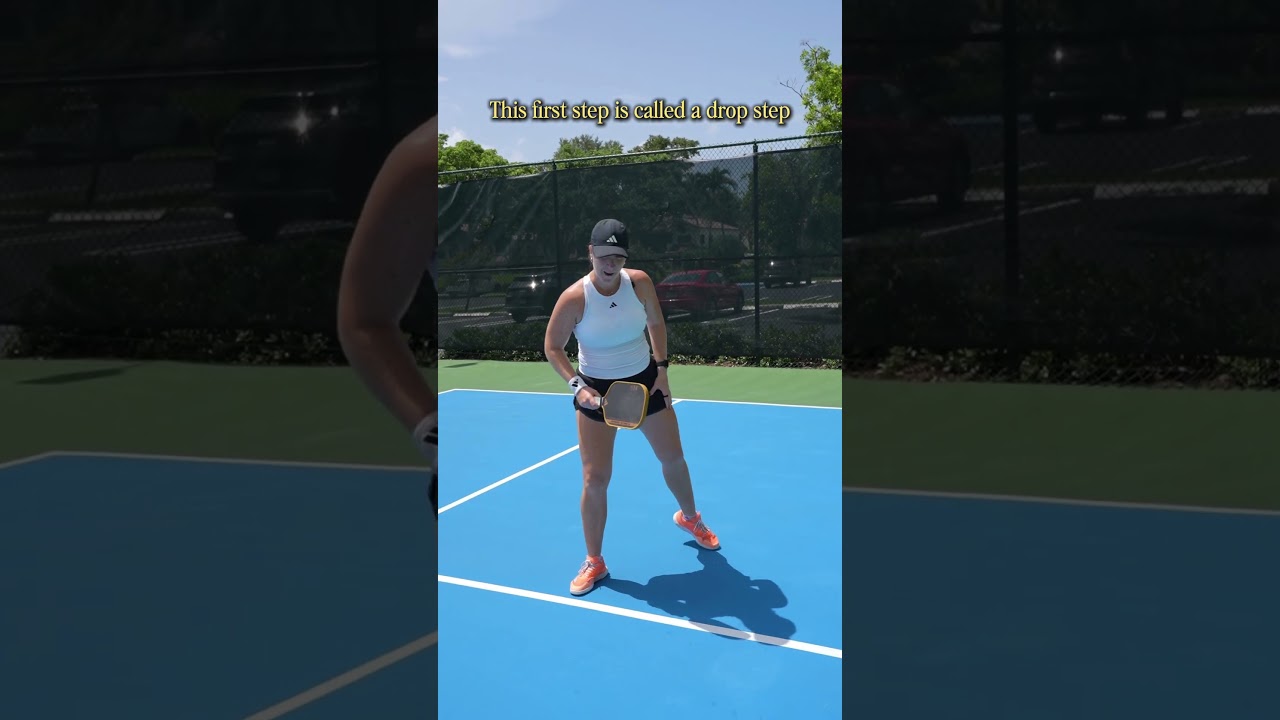


3 Pickleball Tips I Wish I Learned Sooner (Geometry, Transition, Kitchen Line)
One pickleball tip can save you years of frustration, and these three cover court geometry, the transition zone, and the kitchen line. Learn what to cover, how to move, and when to step back or lean in.
Every great pickleball tip fixes something you did not even know was costing you points.
You hit a solid third shot drop, sprint toward the kitchen, and get caught flat-footed when the ball comes back at your shoelaces.
Or you guard the wrong line while your opponent calmly puts the ball somewhere you never expected.
These three lessons come from tanner.pickleball on YouTube, who boiled down what he wishes someone had told him early in his playing career.
We will break each one down, add drills, and show you how to apply them in your next game.
Love pickleball? Then you'll love our free newsletter. We send the latest news, tips, and highlights for free each week.
What Is Court Geometry in Pickleball?
Court geometry is the idea that where the ball sits on your opponent's side determines which angles they can actually hit, and therefore which angles you need to cover.
It sounds technical, but it is the simplest way to stop guessing. Instead of defending the whole court, you only defend what is physically possible.
Here is the example from the video.
If your opponent has a ball in the middle of the court, they cannot speed it up toward the sideline on that side, because the ball would sail out.
That means you only need to worry about your body. The angle is gone, so you can stop protecting the line and start protecting your center.
How to Read the Angles
Think of it like a cone coming off your opponent's paddle. The farther the ball sits from a sideline, the narrower the cone gets in that direction.
Here is how to apply it on every ball:
- Ball in the middle: Your opponent cannot go cross-court sharply either way, so cover your body and the middle.
- Ball near a sideline: They can angle back to the center, so shift your paddle slightly toward the middle.
- Ball low and off to one side: Expect a reset or a dink, not a hard attack.
This pairs well with the thinking in playing the body, not the lines, which is a smarter plan against most opponents.
Why Geometry Saves You Energy
Players who ignore geometry guard everything and end up reacting late to everything. Players who use it relax their shoulders and let the court do half the work.
If you want to see this thinking applied to attacking patterns, check out these seven speed up patterns from a pro lesson.
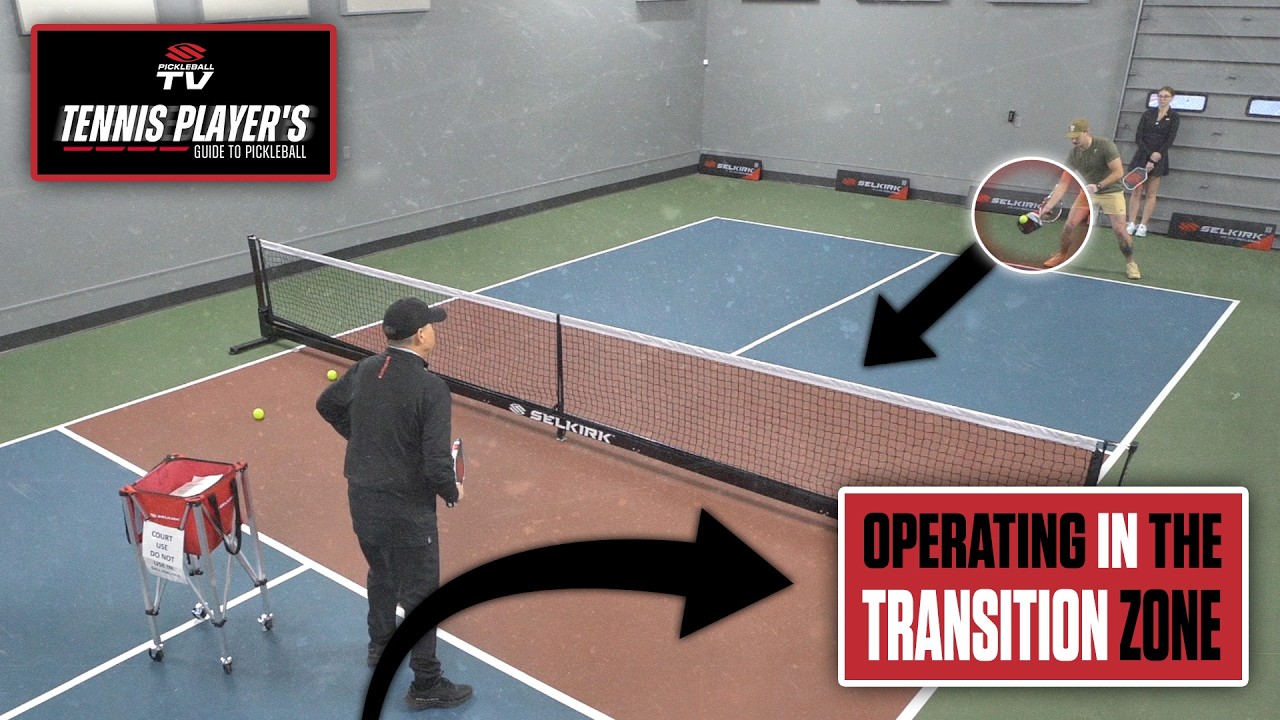
How Do You Move Through the Transition Zone?
You move through the transition zone by crab walking forward after your third shot drop, not by sprinting and then stopping short.
The transition zone is the area between the baseline and the kitchen line, and it is where most points get lost.
The ball bounces at your feet, you are off balance, and you pop it up.
The fix in the video is simple. After you hit your third shot drop, crab walk your way up to the line with small, controlled side steps.
Do not make the mistake of hitting your shot, running, and then having to jump down real fast. It never works.
The Crab Walk Checklist
- Finish the drop first. Hold your follow through for a split second so you do not rush the shot.
- Take small, wide steps. Stay low with your knees bent and your weight on the balls of your feet.
- Split step when the opponent hits. This is your landing, not a hop for show.
- Keep moving forward after each ball. If you get a good look, push up another step.
- Stop at the line. Do not crowd it yet, because the next section covers how to adjust.
If your third shot drop keeps popping up or getting attacked, the cause is almost always your feet, not your hands.
When you sprint and plant late, your feet are still moving when the ball arrives.
Your paddle gets rushed, your contact point drops, and you are popping the ball up before you know it.
The crab walk keeps your body quiet while still gaining ground. It is slower than sprinting but far more reliable, and reliable wins more points.
For a deeper breakdown of when to press and when to hold, read when to play safe versus when to attack in the transition zone.
Why Running Fails
When you sprint and plant late, your feet are still moving when the ball arrives. Your paddle gets rushed and your contact point drops.
The crab walk keeps your body quiet while still gaining ground. It is slower than sprinting but far more reliable, and reliable wins more points.
 The Dink Media Team
Where Should You Stand at the Kitchen Line?
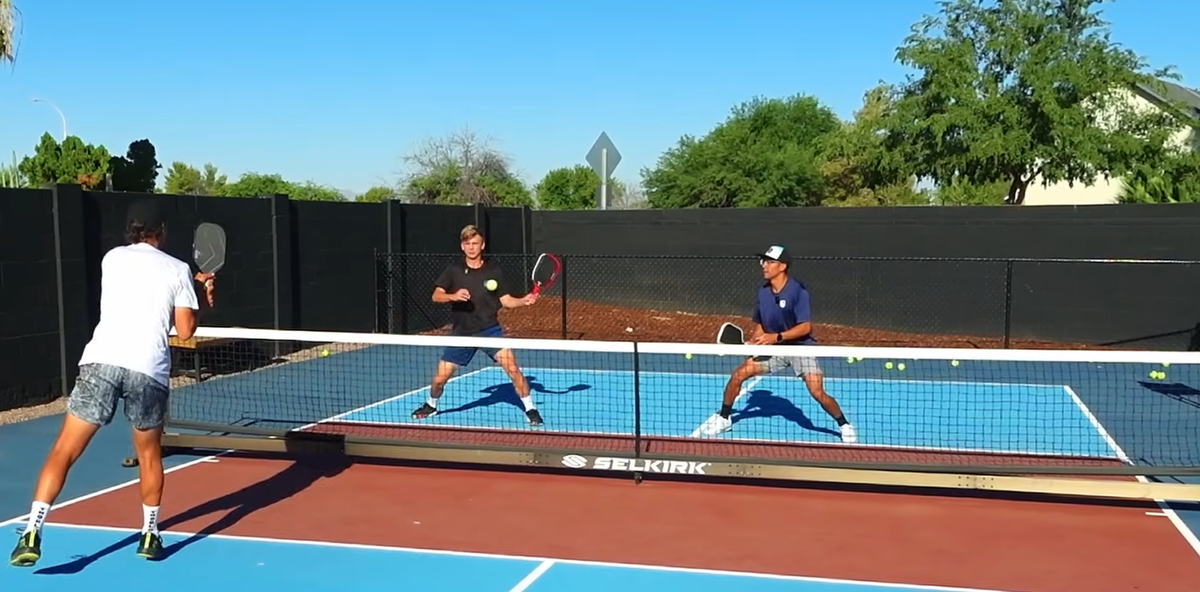
You should stand wherever the pressure tells you to: step back when you are on defense, and lean in when you are on offense.
The video calls this dancing along the kitchen line, and it is one of the most underrated skills in the game. Your position is not fixed, it changes every shot.
When to Step Back
If you are on defense or feeling pressure, take a step back to give yourself more time. An extra foot of space can turn a rushed block into a controlled reset.
Staying low helps here too, and perfecting your posture is the foundation for the balance this move requires.
When to Lean In
If you are on offense and putting the pressure on them, lean in and shrink the court. Standing closer cuts off angles and forces your opponents to hit up.
Tyra Black and Anna Leigh Waters are great examples. Watch how they crowd the line when they have the upper hand and ease back when they are stretched, then steal the offensive tactics they use once they get there.
A Simple Rule for Dancing
Ask yourself one question before every ball: who has the advantage right now? If you do, move in. If they do, back up.
That one question will fix more positioning mistakes than any footwork drill. For a deeper look at this concept, read pickleball kitchen strategy: 7 principles to win dinks.
 The Dink Media Team
How Do These Three Tips Work Together?
These three tips work as a chain: geometry tells you what to cover, the crab walk gets you into position, and the kitchen line dance keeps you balanced once you arrive.
Skip one and the other two fall apart. Great geometry does nothing if you are late to the line, and a perfect crab walk does not help if you stand in the wrong spot.
A Sample Point Walkthrough
You hit a third shot drop and crab walk forward. As you move, you notice your opponent has a low ball in the middle of the court.
Geometry tells you they cannot speed it up sharply to either side, so you protect your body.
You are close to the line but a little off balance, so you take a half step back to buy time.
Your opponent dinks, you recover, and now you have the advantage. You lean in and shrink the court on the next ball.
Common Mistakes to Avoid
- Guarding the line out of habit: Check where the ball is before you decide what to cover.
- Running after the third shot: Sprinting leaves you stuck mid-step when the ball comes back.
- Standing frozen at the kitchen line: Your spot should shift with the pressure on every ball.
- Crowding the line when you are stretched: Give yourself room when you are on defense.
If you tend to rush these moments, this positioning fix that improves every shot is a good companion read.
 The Dink Media Team
How Can You Practice These Skills?
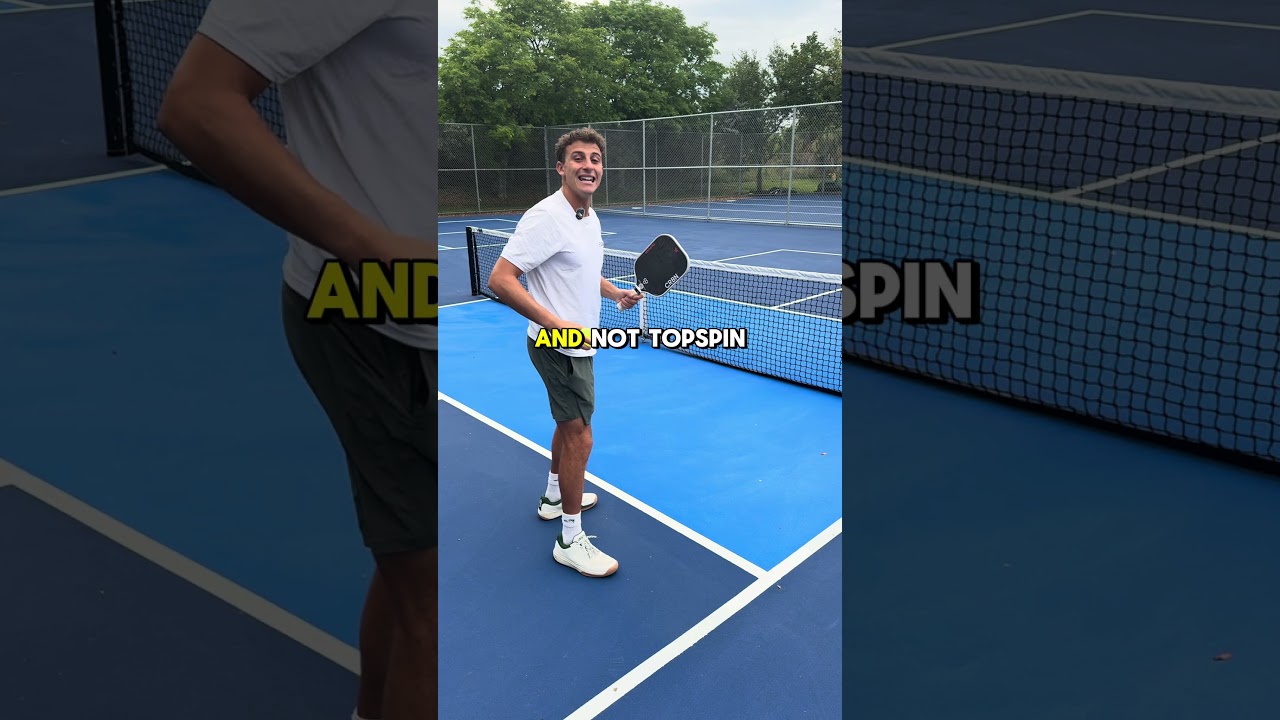
You can practice all three skills with short, focused drills that you can add to any warm up.
Three Quick Drills
- Geometry check drill: Have a partner feed balls to different spots and call out which angles are possible before they hit.
- Crab walk third shot drill: Hit a drop from the baseline, then crab walk up and stop at the line with a split step every time.
- Step back, lean in drill: Dink with a partner and move one step back or forward based on who has the advantage.
Change of direction work is worth the time.
According to a 2025 study published in Healthcare, a 10-week program built around strength, balance, and change of direction drills improved physical performance in senior pickleball players.
No partner? Simple wall drills will sharpen your hands while you work on transition zone footwork on your own.
 The Dink Media Team
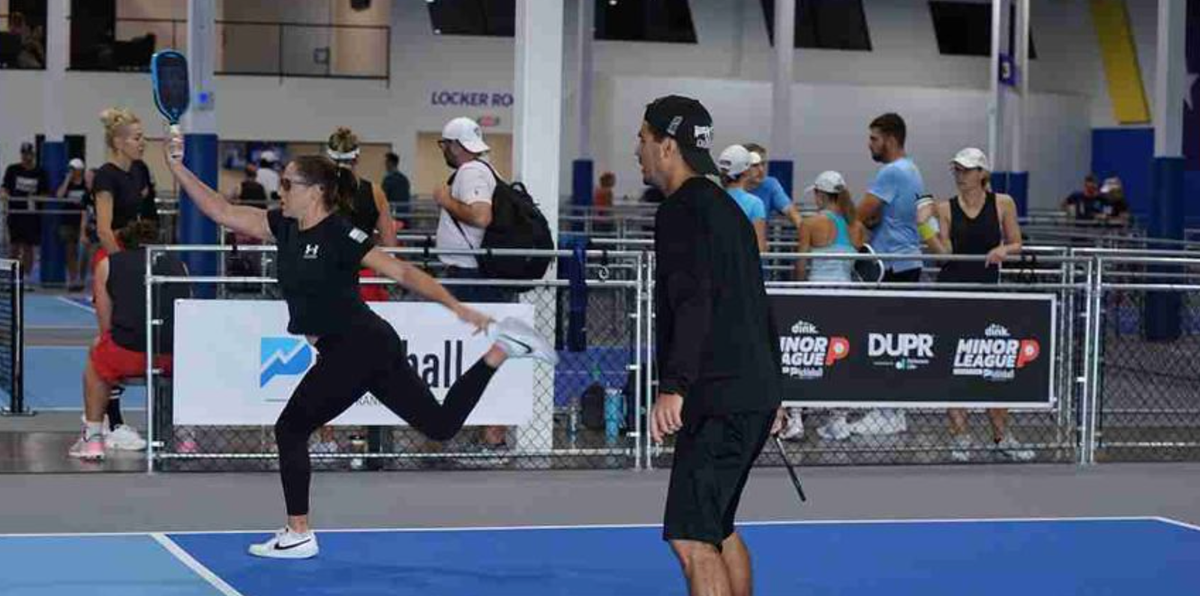
Why Do These Simple Tips Make Such a Big Difference?
They fix the habits that cost you points before you ever hit a hard shot.
Most players chase more power or a better paddle when their real gap is pickleball court positioning and movement.
According to SFIA’s participation research, 24.3 million Americans played pickleball in 2025, up from 4.2 million in 2020, so the player pool around you is getting deeper every season.
That matters because better opponents punish lazy positioning.
If you are stuck in place, the common trap rec players fall into explains why good players stall out, and the simple reason 95% of players plateau is worth reading right after.
The fastest improvement usually comes from the basics done better.
Frequently Asked Questions
What is the transition zone in pickleball?
The transition zone is the area between the baseline and the kitchen line, where players move forward after the serve or return. It is the hardest place to hit from because the ball often bounces at your feet.
How do I stop getting attacked after my third shot drop?
Crab walk forward with small, controlled steps instead of sprinting. Split step when your opponent makes contact, and stop at a balanced spot before the next ball arrives.
Why should I step back from the kitchen line?
Stepping back gives you more time to react when you are on defense or under pressure. An extra step can turn a rushed block into a clean reset.
What does court geometry mean in pickleball?
Court geometry means using the ball's location on your opponent's side to predict which angles they can hit. A ball in the middle, for example, cannot be sped up sharply to the sideline without going out.
How close should I stand to the kitchen line?
Stand close when you are on offense and the pressure is on your opponents, and back up when you are on defense. Your position should change from shot to shot based on who has the advantage.

Love Pickleball? Join 100k+ readers for free weekly tips, news & gear deals.
Subscribe to The Dink