

7 Pickleball Kitchen Strategy Principles That Control Every Dink Rally
Good pickleball kitchen strategy comes down to controlling space, taking time away, and moving with your partner. This simple framework shows you how to do all three.
You win a few dinks, lose a few, and somehow never feel like you are actually steering the point.
That is the problem with playing the kitchen without a plan, and it is exactly where good pickleball kitchen strategy changes everything.
The framework below comes from Briones Pickleball Academy on YouTube, where coach Jordan Briones breaks down the exact system he teaches players around the world.
He has coached some of the top pros and thousands of amateurs out of his academy in Gilbert, Arizona.
This article walks through the seven principles that matter most: why we dink, the three spaces on the court, the middle, footwork, the dinking tier list, when to attack, and the ones and twos.
Keep it simple and you can use all of it in your next game.
Love pickleball? Then you'll love our free newsletter. We send the latest news, tips, and highlights for free each week.
Why Do Pros Dink Instead of Just Speeding Up?
Pros dink to set up a more attackable ball, not to win the point with the dink itself. A dink is a setup shot.
Speed up at a random moment against strong players and they have great counters waiting.
So the first job of the dink is to open up the court and keep the ball low until someone gives you something better to hit.
This is not theory. According to a 2025 notational analysis published in the Journal of Functional Morphology and Kinesiology, men finished 50.7 percent of their points in the zone right around the non-volley zone.
Sound pickleball kitchen strategy is about controlling the point.
You do that by placing the ball so your opponents are uncomfortable and by taking time away from them.
Our guide to dinking with intention shows how to earn your attacks instead of forcing them, and our speed up breakdown covers what happens after.
What Are the Three Spaces on the Court?
The three spaces are the gaps between each player and the sidelines, plus the gap between the two opponents.
Picture the space between your opponent's sideline and their near foot, the space between the two opponents, and the space between the far opponent and their sideline.
These spaces change size every time the ball moves, because your opponents shift to follow it.
When the ball is on one side, the down the line space is the smallest, the middle is second smallest, and the crosscourt space is the biggest.
That is why the highest percentage plays are almost always the middle and the crosscourt.
This is also why you rarely see strong players force the tiny down the line gap when they are stretched out wide.
The key is to recheck the spaces on every shot. Wherever the ball goes, the map of open court rewrites itself.
Where Exactly Is "The Middle" in Pickleball?
The middle is the space between your opponents’ inside feet, not the painted center line.
That definition is worth memorizing, because it moves as they shade left and right.
The kitchen itself never moves. USA Pickleball defines the non-volley zone as the seven feet of court on each side of the net, and that boundary is fixed.
The middle is not. If the opposing team slides over to cover a crosscourt ball, the middle slides with them.
A ball on the center line might now be sitting right in one player’s strike zone.
Hitting to the true middle is one of the most underused shots in the game.
When your opponent is stretched or in trouble, it keeps their next ball in front of them and gives them fewer angles to attack from.
For more on this piece of pickleball kitchen strategy, read targeting the middle in pickleball and own the middle dink.
 The Dink Media Team
Why Does Footwork Decide Your Kitchen Game?
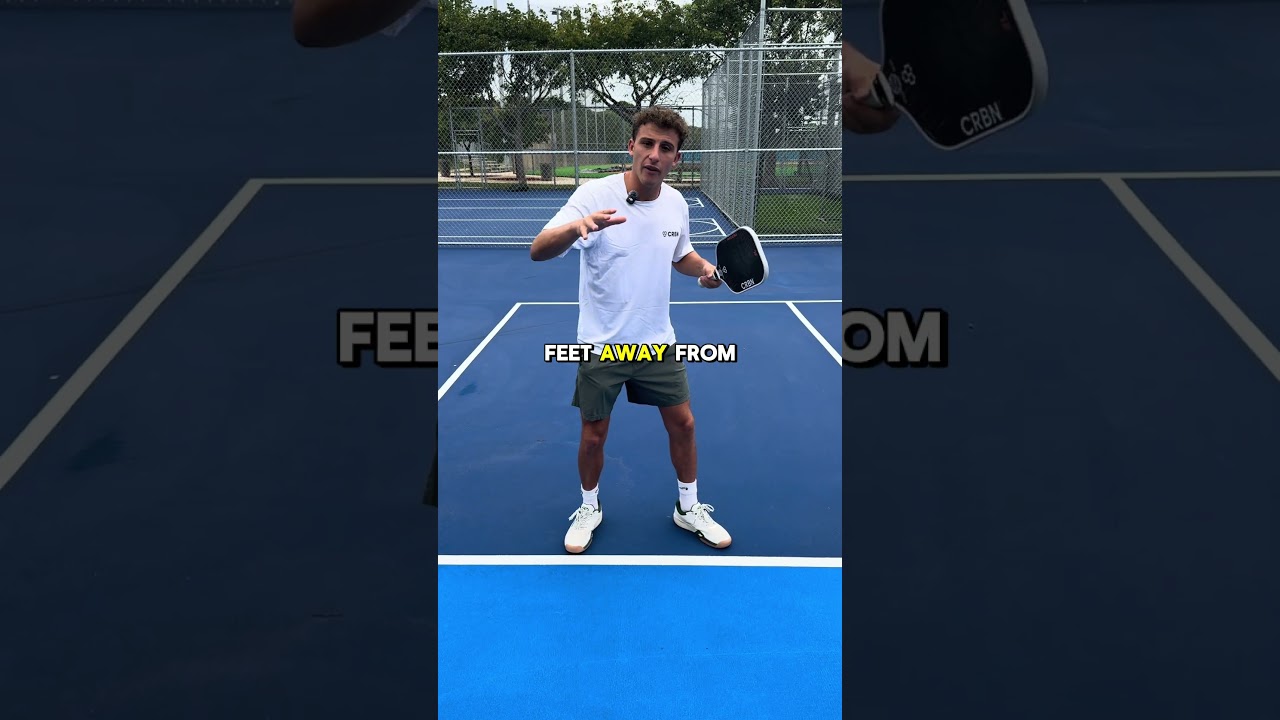
Footwork decides whether you can hit clean, balanced contact, and clean contact is what lets you attack or neutralize.
Without it, even a perfect plan falls apart.
At the kitchen line you rely on three movements: the shuffle step, the angled shuffle step, and the drop step.
Each one creates the space you need to meet the ball properly.
On offense, good feet set you up to hit aggressively on the balls you can attack.
On defense, they let you hit neutralizing shots so you can get back to a neutral position.
Jordan offers a free footwork resource at fixmyfootwork.com if you want drills for all three patterns.
Our breakdown of five pickleball footwork fixes pairs well with it, because no pickleball kitchen strategy survives bad balance.
 The Dink Media Team
What Is the Dinking Tier List?
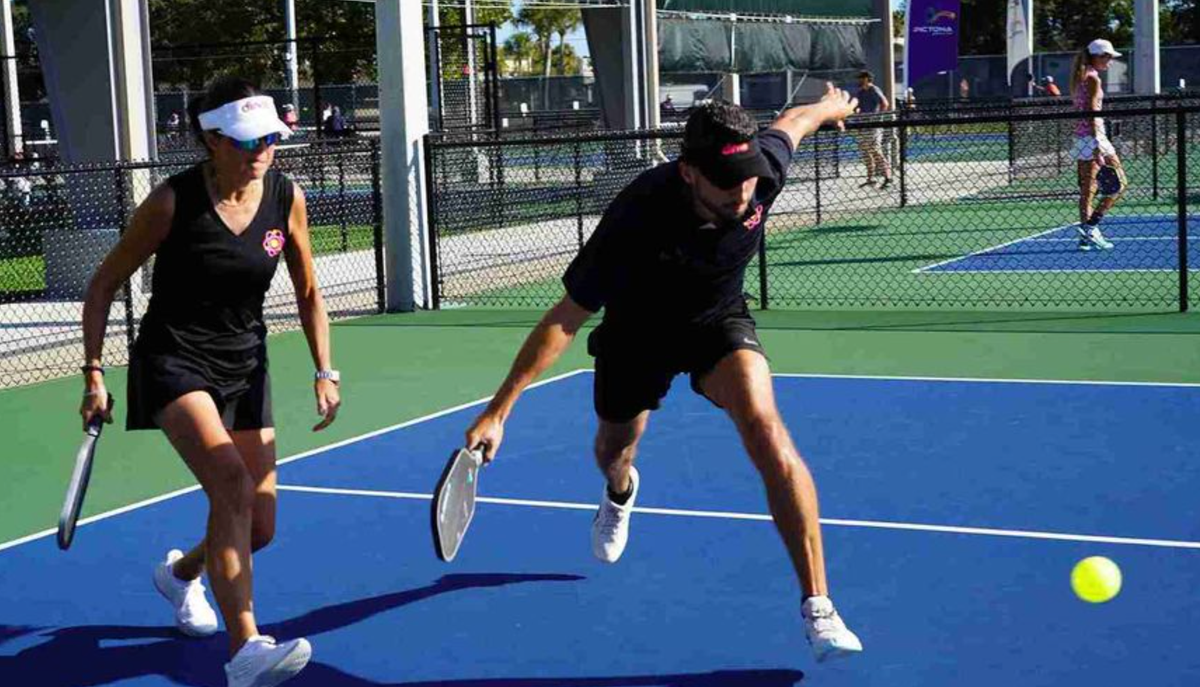
The dinking tier list ranks your three contact options from best to worst, and you should always aim for the highest one you can reach on balance. Here is the order.
- Take it out of the air. If you can reach it around thigh level or higher and stay balanced, volley it. This takes time away and holds your position.
- Hit it at the apex. If you cannot volley it, shuffle your feet so you strike the ball at the top of the bounce. This gives you the most control and placement.
- Take it as a short hop or on the rise. Taking it on the rise gives you the fewest attacking options, so treat it as a last resort.
If the ball is down near your knees, let it bounce rather than reaching for a volley, because reaching low while off balance is how you pop the ball up.
See the full progression in how to attack a dink out of the air.
 The Dink Media Team
Which Balls Should You Attack and Which Should You Dink?
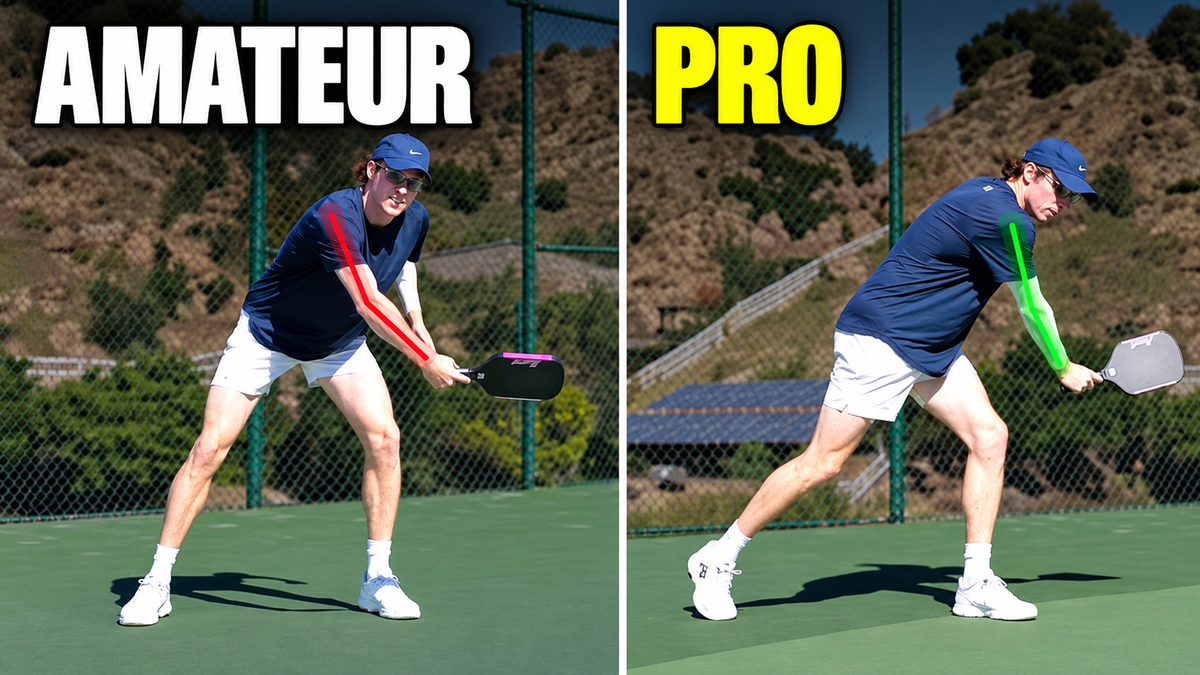
Attack balls at net height or higher, and dink balls that are below your knees.
Higher level players can attack from lower, but this is a reliable general rule for any kitchen line strategy.
At shin level, you might volley dink to take time away, but you probably should not attack.
Attacking from that low sends the ball upward, which lets your opponents come down on it.
Below the knee, take time away by making the ball bounce.
If you take time away out of the air and do not make the ball bounce, your opponents get the time back and the pressure flips onto you.
Thigh level or net level and higher is where you initiate.
Our piece on why your aggressive dink fails explains the most common reasons these attacks miss, and our ball height checklist turns it into a two second read.
 The Dink Media Team
What Are the Ones and Twos of Dinking?
The ones and twos are two simple offensive dinks you hit when you are balanced and the ball is in front of you.
They replace a confusing pile of patterns with two clear choices, which is why they anchor this whole pickleball kitchen strategy.
- Your One: The Crosscourt Dink: Your one is the crosscourt dink. You aim for the corner to pull your opponents out wide, using slice, shovel, or topspin. It is high percentage because you are crossing the longest part of the net with plenty of margin. Jordan likes a two-handed backhand with a little topspin for his one.
- Your Two: The Dink Between Them: Your two goes inside, between your opponents. From the right side, aim near the inside foot of the crosscourt player. A good two pushes them off the line or forces a short hop, and the best part is that you still take the next ball out of the air. Both shots work the same on the left side.
Here is how to use them:
- Hit a one: move over and lean toward the middle, because your coverage just changed.
- Hit a two: apply pressure out of the air, but you do not need to squeeze the middle as hard since your opponent has fewer angles.
- Always make it bounce: if your dink does not bounce, your opponent takes time away from you.
For more shot variety, check out four dink types that win more points and seven topspin dink techniques.
 The Dink Media Team
How Do You and Your Partner Cover the Court Together?
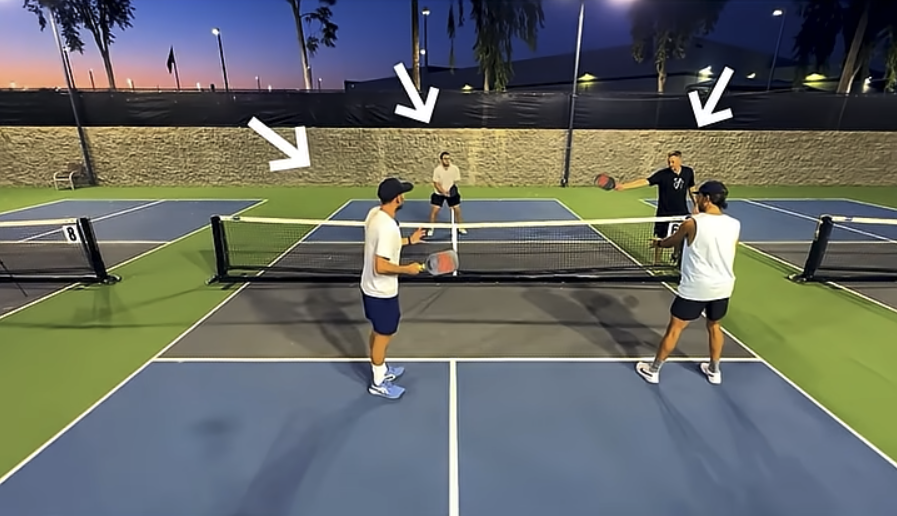
Move as a team by following the ball, and split the coverage so the line and the middle are both protected.
Hitting a great shot means nothing if it leaves a gap behind you.
Here is the rule. If you are crosscourt from the ball, you own the middle, and your partner owns the line.
Say you hit your one and pull the opponent wide. Your partner has to cover the down the line space with their backhand, which means you must cover the middle.
Your partner cannot cover the line and the middle at the same time.
That is your job, and the only open area left is the one your opponent has to hit a slow dink into, which lets you reset to neutral.
Court coverage is the part of pickleball kitchen strategy you build together.
Read building chemistry with a new doubles partner for ways to make that automatic, then layer in offensive dinks once the movement is clean.
 The Dink Media Team
The Quick Recap You Can Take to the Court
Pickleball kitchen strategy is not complicated when you boil it down. Here is the whole system in one place.
- Dinks are setup shots. Use them to create a higher contact point you can attack.
- Check the three spaces every shot, and favor the crosscourt and the middle.
- Define the middle by your opponents’ inside feet, not the center line.
- Work your footwork so you can hit balanced, clean contact.
- Follow the dinking tier list: out of the air, then apex, then short hop.
- Attack at net height or above, and make low balls bounce.
- Use your ones and twos, and cover the middle and line as a team.
If you want to keep building, how to win a dink battle is a strong next read, and the kitchen line skill most rec players skip is worth ten minutes.
When you are ready to turn this into reps, try five pickleball practice drills for any skill level.
Frequently Asked Questions
What is the best pickleball kitchen strategy for beginners?
Start with crosscourt dinks and aim for the space between your opponents. These two choices are high percentage and give you plenty of margin. Add footwork and the habit of taking balls out of the air as you improve.
Why do pickleball pros dink so much?
Pros dink to set up an attackable ball, not because they are afraid to speed up. Against strong opponents, a random speed up gets countered, so they use dinks to move the ball around and wait for a pop up.
Should I take dinks out of the air or let them bounce?
Take them out of the air when you can reach them at thigh level or higher and stay balanced. That takes time away from your opponent. If the ball is below your knees, let it bounce.
Who covers the middle after a crosscourt dink?
The player who hit the crosscourt dink covers the middle, and their partner covers the down the line space. A player cannot protect both areas alone, so splitting them keeps the court closed.
When should I attack a dink instead of dinking back?
Attack when the ball is at net height or higher and you are balanced. Below the knees, attacking sends the ball upward and lets your opponents come down on it, so make it bounce instead.

Love Pickleball? Join 100k+ readers for free weekly tips, news & gear deals.
Subscribe to The Dink