Pickleball Net Height: Official Measurements & How It Affects Every Shot
The official pickleball net height measurement is 36 inches at the sideline posts and 34 inches at the center, and those two inches make a bigger difference to your game than you might think. Understanding exactly how the net is set up helps you hit smarter shots, reduce errors, and read the court like a veteran.
The official pickleball net height measurement is something every serious player needs locked in: 36 inches at the posts, 34 inches at the center. Those two inches between the sidelines and the middle change everything about how you approach every shot you hit.
This isn't just trivia. It's geometry that wins points.
Love pickleball? Then you'll love our free newsletter. We send the latest news, tips, and highlights for free each week.
What Is the Official Pickleball Net Height Measurement?
The official pickleball net height measurement is 36 inches at the two sideline posts and 34 inches at the center of the net.
According to the USA Pickleball Official Rulebook (2025), the net must be suspended between two posts that are exactly 22 feet apart, with the top of the net sitting at 36 inches on each end.
The natural sag of the net brings the center down to 34 inches.
That's a 2-inch difference that most recreational players never consciously exploit, but every pro player absolutely does.
The net itself must be at least 20 feet wide to extend past the sidelines on both sides.
Net posts are placed 1 foot outside the court sidelines, which is why they sit at that 22-foot spread while the court's width is just 20 feet.
Understanding pickleball court dimensions is the first step to understanding why pickleball net height matters as much as it does.

How Does Pickleball Net Height Compare to Tennis?
Pickleball net height is shorter than tennis in a meaningful way.
A standard tennis net sits at 36 inches at the posts and 42 inches at the center, the opposite profile from pickleball.
Tennis nets belly up in the middle; pickleball nets sag down. That difference flips your court geometry entirely.
In tennis, you have more clearance at the sidelines. In pickleball, you have more clearance in the middle.
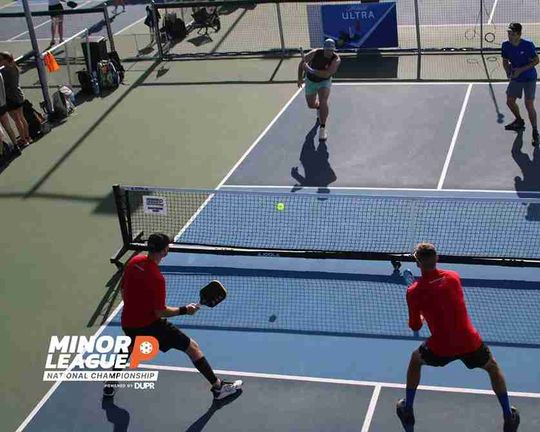
That's why cross-court dink angles are such a weapon in the kitchen, you're sending the ball over the lowest point of the net while forcing your opponent to deal with a sharper angle.
The net post height and the sag profile together create the strategic map every smart player reads before stepping up to the kitchen line. Knowing the difference isn't just academic.
It reshapes how you aim. How tall is a pickleball net: the definitive answer gives you a quick reference for this pickleball net height comparison whenever you need it.
Why the 2-Inch Sag Is the Most Important Number in Pickleball Net Height
Here's the thing: that 2-inch drop at the center is the single most tactically important measurement in the game.
It's why pros obsessively redirect shots toward the middle of the net. It's why the cross-court dink is safer than the straight dink.
And it's why the third shot drop targets the center of the court more often than anything else.
When you aim cross-court, you're working with two advantages at once: a longer diagonal distance that gives your ball more time to drop, and the lowest point of the net sitting right in your flight path.
A ball that would clip the net on a straight shot often clears it cleanly on a cross-court trajectory.
This is why coaches at every level drill the cross-court dink before anything else. The pickleball net height at the center, just 34 inches, is your best friend. Use it.
How to hit a crosscourt dink in pickleball shows you the paddle positioning and footwork fundamentals that put this net geometry to work for you every rally.
 The Dink Media Team
How to Set Up a Pickleball Net to Regulation Height
Getting your net to the correct pickleball net height measurement matters for both practice quality and legal play. Here's the exact setup process:
- Place the posts 22 feet apart (1 foot outside each sideline).
- Attach the net so that it extends a minimum of 20 feet across, overlapping the sidelines.
- Use a net height gauge or measuring tape to confirm 36 inches at each post before play begins.
- Check the center, it should naturally sag to 34 inches. If it doesn't, the net is either too tight or too loose.
- Adjust tension using the center strap, which is designed to hold the middle of the net at exactly 34 inches.
The center strap is non-negotiable in regulation play. Per the USA Pickleball rulebook, the strap must be white and no more than 2 inches wide.
It anchors the net to the court at the centerline and prevents any sagging beyond the legal 34-inch measurement.
For recreational and backyard setups, a portable net measuring tool runs about $10 at most sporting goods stores. No excuses for playing on an out-of-spec net.
The Dink Media Team
Does Pickleball Net Height Change in Singles vs. Doubles?
No. The pickleball net height measurement is identical for singles and doubles, 36 inches at the posts, 34 inches at the center.
The court dimensions and net specs stay exactly the same regardless of the format. What changes is your positioning strategy around that net.
In singles, you cover the full 20-foot width on your own, which makes the lower center of the net even more valuable.
Cross-court placement pushes your opponent wide while keeping your shot over the lowest part of the net.
That's a double penalty for them and a free lunch for you. Singles strategy in pickleball is built almost entirely around net geometry.
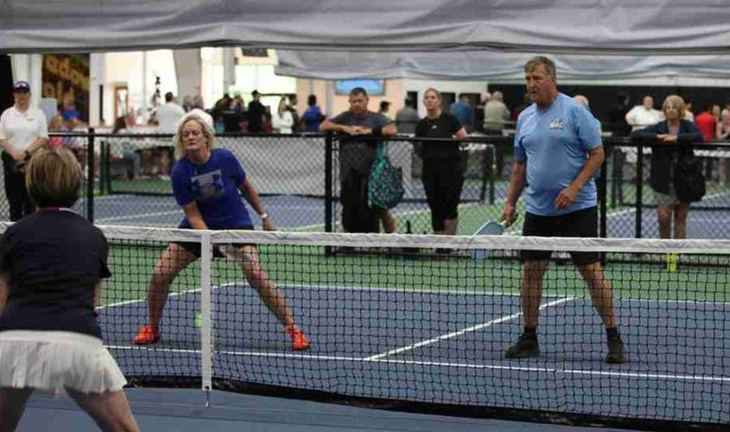
In doubles, the net height stays the same, but your angle options multiply because your partner covers half the court.
Working the middle of the net as a doubles team is one of the highest-percentage plays in the game because you're targeting the lowest pickleball net height point while splitting two defenders. How to control the middle court in pickleball is the tactical playbook for turning that geometry into real points.
The Dink Media Team
How Pickleball Net Height Shapes Shot Selection
This is where the measurement stops being abstract and starts costing or winning you points.
The pickleball net height measurement directly determines what shots are safe, what shots are risky, and what shots are flat-out wrong given your position on the court.
- From the baseline: The net is 34 inches at center and you're 22 feet away from it. A ball hit at a low trajectory has a long way to travel before it clears the net, which is exactly why the third shot drop works. You're lobbing the ball with enough arc to clear the net and land softly in the kitchen. Miss the arc calculation by even a few inches, and you're in the net. Understanding how the drive vs. drop decision plays out comes directly from respecting those pickleball net height measurements at each zone of the court.
- From the transition zone: You're between 10 and 18 feet from the net. Balls hit hard tend to catch the net at 36 inches on the sides. That's why shoulder-height contact on volleys is tricky here, you need to punch down, but you also need enough angle to clear the net while keeping the ball in bounds.
- At the kitchen line: You're 7 feet from the net (the non-volley zone is 7 feet deep on each side). Dink shots travel a short distance and need to clear just 34 inches at the center. This is the highest-margin shot in pickleball, which is exactly why positioning yourself correctly at the kitchen changes your entire dinking game.
The Dink Media Team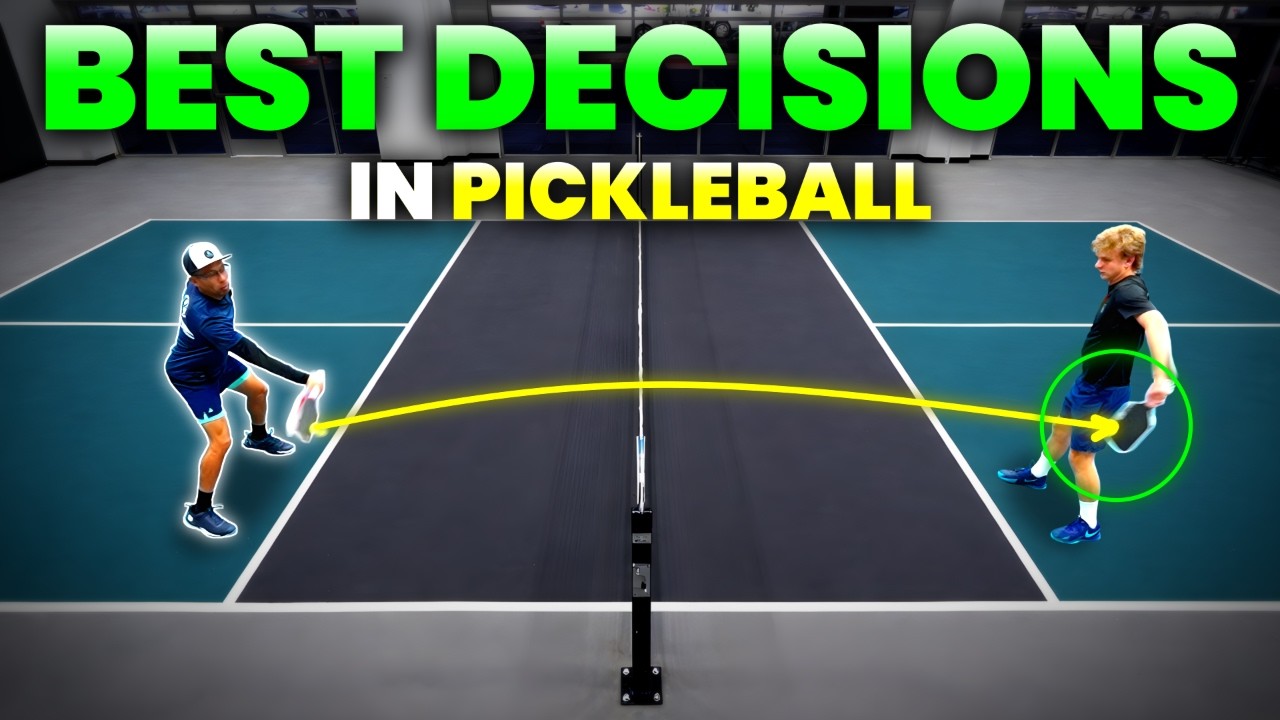
What Happens If the Net Height Is Wrong?
Playing on a net that's too high or too low is more than an inconvenience, it actively corrupts your muscle memory.
If your home net runs 2 inches too tall, you'll start adding extra arc to every shot to compensate.
Take that habit to a regulation court and you're popping balls up all day.
- Too-high nets cause players to overshoot. Your dinks float. Your third shot drops sail long. Your mind calibrates to a forgiving net and punishes you the moment it's correct.
- Too-low nets are worse for muscle memory because they create false confidence. Balls you think are sharp winners are actually going into the net on a regulation setup. Then you wonder why your game breaks down in tournament play.
This is why avoiding the mistakes you don't know you're making in pickleball starts with your equipment setup, specifically making sure your pickleball net height is correct before every session.
Always verify net height before practicing, especially if you play on multiple courts.
The Dink Media Team
Key Takeaways
- The official pickleball net height is 36 inches at the posts and 34 inches at the center.
- The 2-inch sag in the middle is intentional and strategically significant, it's the lowest clearance point on the court.
- Pickleball nets are lower at center than tennis nets, which are higher in the middle, the opposite geometry.
- A center strap anchors the net to exactly 34 inches and is required in all regulation play per USA Pickleball rules.
- Net height stays the same for both singles and doubles formats.
- Playing on an incorrect net height corrupts your shot mechanics and muscle memory over time.
- Cross-court shots over the center of the net are strategically superior because they use the lowest point of the net while creating sharper angles.
Frequently Asked Questions
What is the standard pickleball net height measurement?
The standard pickleball net height measurement is 36 inches at the sideline posts and 34 inches at the center of the net. This measurement is set by USA Pickleball and applies to all sanctioned recreational and professional play. The center strap keeps the net anchored at exactly 34 inches throughout the match.
Is pickleball net height the same as tennis net height?
No. A pickleball net sits at 36 inches at the posts and sags to 34 inches at the center. A tennis net sits at 42 inches at the posts and sags to 36 inches at the center. The profiles are opposite: pickleball nets are lower in the middle, while tennis nets are higher in the middle. This creates completely different shot geometries between the two sports.
Alex E. Weaver
Why does the pickleball net sag in the middle?
The sag is a natural result of the net's own weight combined with the physics of suspension between two posts. USA Pickleball rules account for this by requiring a center strap that holds the middle of the net at exactly 34 inches. Without the center strap, the net would sag unevenly and the legal measurement could not be maintained.
How do I check if my pickleball net is the right height?
Use a measuring tape or a dedicated net height gauge at three points: the left post, the center strap, and the right post. The posts should read 36 inches and the center should read 34 inches. If the center reads higher than 34 inches, loosen the center strap. If it reads lower, tighten it. Always check before practice sessions, especially on portable nets.
Does net height affect how I should serve in pickleball?
Yes, directly. Since the pickleball serve must land in the opposite diagonal service box, you're typically aiming cross-court, which means your serve travels over or near the center of the net at 34 inches. Serves aimed toward the sidelines have to clear 36 inches and travel a shorter diagonal distance, leaving less margin for error. Most strategic serves target the center of the court for this reason, maximizing net clearance while minimizing reaction time for the returner.

Love Pickleball? Join 100k+ readers for free weekly tips, news & gear deals.
Subscribe to The Dink