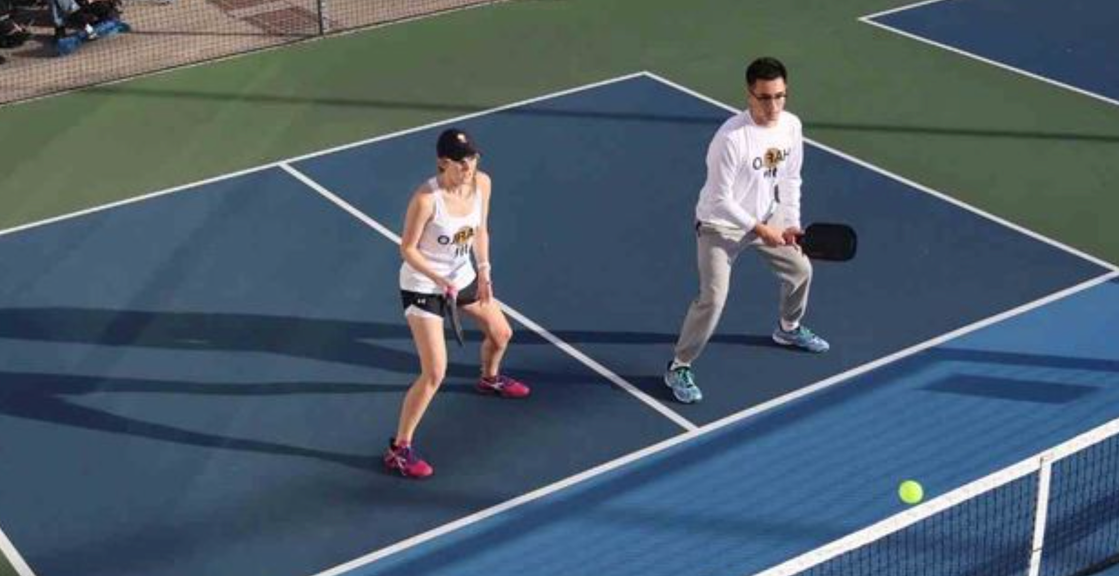
Handling pressure at 10-10 is less about courage and more about having a plan you can repeat when your hands get shaky. These three habits keep your shot selection simple and your errors low when the game is on the line.
Handling pressure at 10-10 is the one skill almost nobody practices and every player eventually needs. You've drilled your drops. You've grooved your serve.
Then the score hits 10-10, somebody calls it out loud, and suddenly your paddle feels like a frying pan.
Here's the thing: the shot didn't get harder. Your nervous system just got louder.
Love pickleball? Then you'll love our free newsletter. We send the latest news, tips, and highlights for free each week.
Why Does 10-10 Feel So Different From 4-4?
Because the math changes.
At 10-10 in traditional sideout scoring, you need two straight points to close it, which means the win-by-two rule can stretch a game three, four, five more rallies than anybody planned.
Every error is now reversible for your opponent and expensive for you.
That's the real pressure. Not the number on the scoreboard, but the sudden awareness that a single sloppy swing undoes twenty minutes of good work.
Which is why handling pressure at 10-10 is a tactical problem first and an emotional one second.
Quick definition: choking isn't a character flaw.
Sport psychologists describe it as a sharp drop in performance driven by rising anxiety and a loss of perceived control, which usually shows up as players consciously micromanaging a motion they've hit thousands of times on autopilot.
The opposite response, often called clutch, is the same pressure met with deliberate, task-focused attention.
Same situation, different appraisal.
That distinction comes from a 2026 position statement on performance under pressure from Exercise and Sports Science Australia.
So the fix isn't "be tougher." The fix is giving your brain a smaller, simpler job.
That's what the three habits below do, and they're the backbone of staying calm under pressure at any level.
Way One: Handling Pressure at 10-10 Starts With Boring Shot Selection
The fastest way to lose a big point is trying to win it. Pick the highest-percentage shot you own and hit that instead.
This isn't soft advice, it's arithmetic.
In notational analysis of pro pickleball, unforced errors account for roughly 63.7% of point endings, and that share climbs higher at recreational levels.
Most points are lost, not won. At 10-10, the player who stops donating is usually the player who wins.
In practice that means your third shot becomes a drop or a safe roll, never a hero drive into the net tape.
Go review the three fixes for missed third shot drops if that shot is the one that wobbles. It means your return goes deep and middle, not inches from a sideline.
And it means that when you get pulled off balance, you reset instead of counterattacking.
Pick your one go-to shot before the game ever reaches 10-10. Handling pressure at 10-10 gets a lot easier when that decision is already made.
Mine is a crosscourt dink to the backhand. It wins nothing. It also loses nothing, and at 10-10 that's a better trade than it sounds.
If you need a framework for the attack-or-hold choice, this decision matrix is a clean place to start.
Honestly, this is the whole argument for boring pickleball. Boring is undefeated at deuce.
Players who understand how playing the percentages works tend to collect a lot of cheap wins from opponents trying to hit highlight reels.
Way Two: Build a 10-Second Routine You Run Every Single Time
Give yourself the same ten seconds before every serve and return, no matter the score.
Routine is the thing that keeps 10-10 from feeling like a different sport.
Pre-performance routines have been shown to support performance under pressure across ages, genders, and skill levels, with the strongest evidence in self-paced skills like serving.
A pickleball serve qualifies. So does a return. Those are the two moments at 10-10 where you actually control the clock, so use them.
Here's a routine you can steal today:
- Turn your back to the net for two seconds. You stop staring at your opponents and you stop replaying the last error.
- Take one slow exhale, longer than the inhale. You're not meditating. You're just lowering your shoulders.
- Say your shot out loud or in your head. "Deep middle." "Drop, crosscourt." One instruction, not five. The players who always make the routine shots are the ones who keep their instructions this small.
- Bounce the ball the same number of times. Every time.
That's it. Four beats, ten seconds, identical at 2-1 and at 10-10.
Handling pressure at 10-10 shouldn't require a special version of you, just the normal one, on schedule.
The point isn't magic; it's that the routine occupies the part of your brain that otherwise narrates your anxiety.
Players who have found mental clarity before a match are usually running some version of this without calling it a routine.
One caveat worth knowing: research on breathing techniques suggests the benefits show up with consistent practice over weeks, not from one deep breath you try for the first time at 10-10.
Train the routine in rec play so it's automatic when it matters. The 70% rule for making practice stick applies here as much as it does to your backhand.
How Do You Recover From an Error While Handling Pressure at 10-10?
You give it a short, fixed expiration date. Say "next" or tap paddles with your partner, then go straight into your routine.
The error gets one beat of acknowledgment and zero beats of analysis. Dwelling is what turns one miss into three.
The six-second mental reset is a simple version of this, and it works because it caps the rumination instead of trying to eliminate it.
You will feel the miss. You just don't get to keep it.
 The Dink Media Team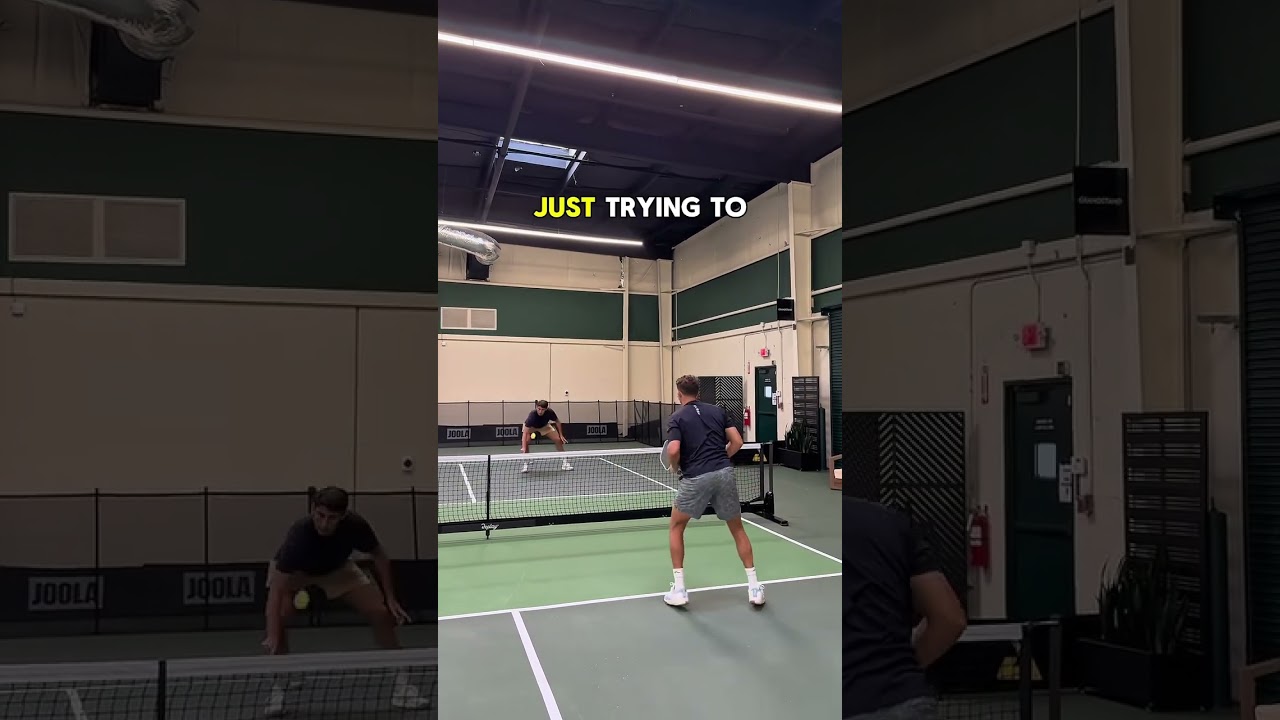
Way Three: Decide With Your Partner Before the Point Starts
Nobody should be improvising at 10-10.
Thirty seconds of planning, the kind that keeps you out of a rut all season, removes the worst kind of pressure, which is the kind where you and your partner both hesitate on the same ball.
Say it out loud before the serve, because handling pressure at 10-10 is a two-person job in doubles.
Who's taking the middle? Are we stacking? Are we targeting the weaker player's backhand, and does that change on this side?
Ambiguity in the middle is where big points go to die, and it shows up on the list of strategy mistakes killing your game more often than any technical flaw.
Asking your partner the right questions clears it up in ten seconds.
There's a tactical reason this matters more at 10-10 than at 3-3.
Over half of points in pro singles resolve at the kitchen line, and in doubles the transition zone is where most rallies end, usually on a volley.
Those are fast, crowded moments.
Fast crowded moments punish indecision, which is why winning the putaways at the kitchen line so often decides deuce games.
What Should You Actually Target When Handling Pressure at 10-10?
Target the opponent who just missed, or the one who has moved the least. Pressure is contagious, and the player already fighting it is the softer option.
Then keep the ball low and in front of them. Elite players describe thinking about height and position during every dink, not about winners.
Low balls can't be attacked. Unattackable balls make opponents force the issue, and forcing the issue at 10-10 is how most people hand over the game.
Avoid the trap of controlled aggression turning into plain aggression just because the score is tight. Same intensity, same patience.
 The Dink Media Team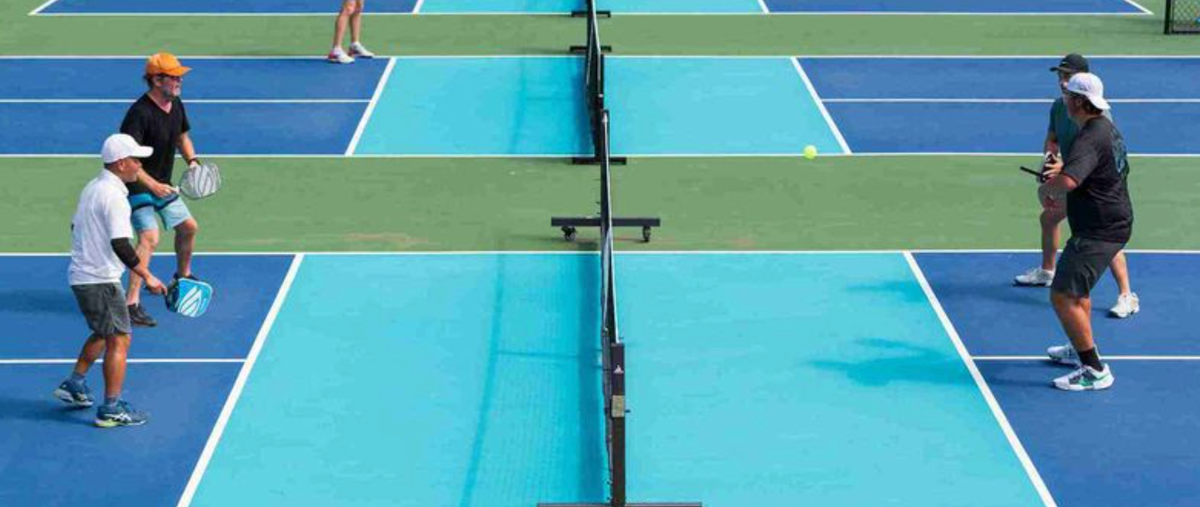
So What Does Handling Pressure at 10-10 Look Like in a Real Game?
It looks unremarkable. Handling pressure at 10-10 works best when the three habits stack: boring shot selection, a fixed routine, and a plan you spoke out loud.
Any one of them helps. All three together is what separates the player who closes from the player who tightens.
Want to train it? Start games at 8-8 when you drill, the same way you'd rehearse the move to the kitchen line.
It's the simplest form of pressure practice, and simulating high-stakes scenarios in training has shown a moderate benefit for performance under pressure across sports.
Ten minutes a week beats hoping you'll be brave on Saturday.
If your whole game feels stuck, these tips for more consistent pickleball pair well with everything above, and three tournament-winning strategies for 3.5 players will show you how this looks in bracket play.
Frequently Asked Questions
What is the best mindset for handling pressure at 10-10?
Focus on execution rather than outcome, the same mindset that gets players through mental and physical walls. Give yourself one clear instruction for the next shot, like "deep middle" or "low and crosscourt," instead of thinking about winning the game. Process-focused goals have been linked to better attentional focus and lower performance anxiety than outcome goals.
Should you play more aggressively or more conservatively at 10-10?
Lean conservative. Since unforced errors end the majority of pickleball points, the player who makes one fewer mistake usually wins the deuce game. Stay patient, hold your dinks, and let your opponent take the risk first.
How do I stop my hands from getting tight on big points?
Slow down between points and give yourself a physical cue, like a longer exhale or a set number of ball bounces. Tight hands usually come from rushing, and rushing is already costing you points at every score. Loosen your grip pressure slightly before you serve or return.
Can you practice pressure, or is it just something you're born with?
You can absolutely practice it. Start drill games at 8-8 or 9-9, play with a small consequence on the line, and run your pre-point routine every rep. Simulating high-stakes situations in training has shown measurable carryover to real performance in sport psychology research.
What's the most common mistake players make at 10-10?
Trying to end the point too early. Players go for a low-percentage winner instead of the shot they've hit a thousand times, and the game ends on a net cord. Reviewing the big mistakes most players repeat is a fast way to spot your own version of it.

Love Pickleball? Join 100k+ readers for free weekly tips, news & gear deals.
Subscribe to The Dink