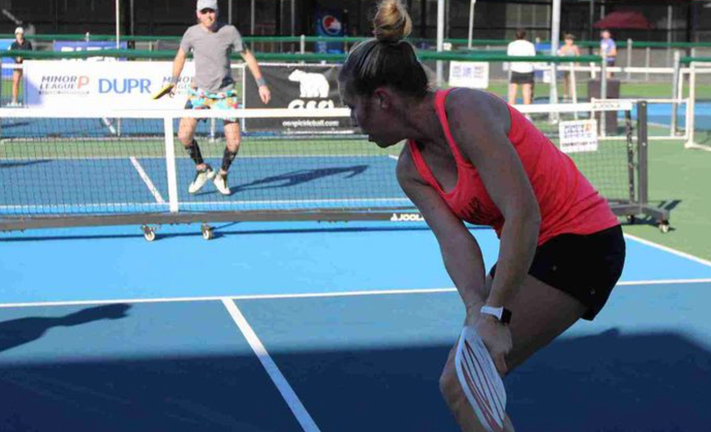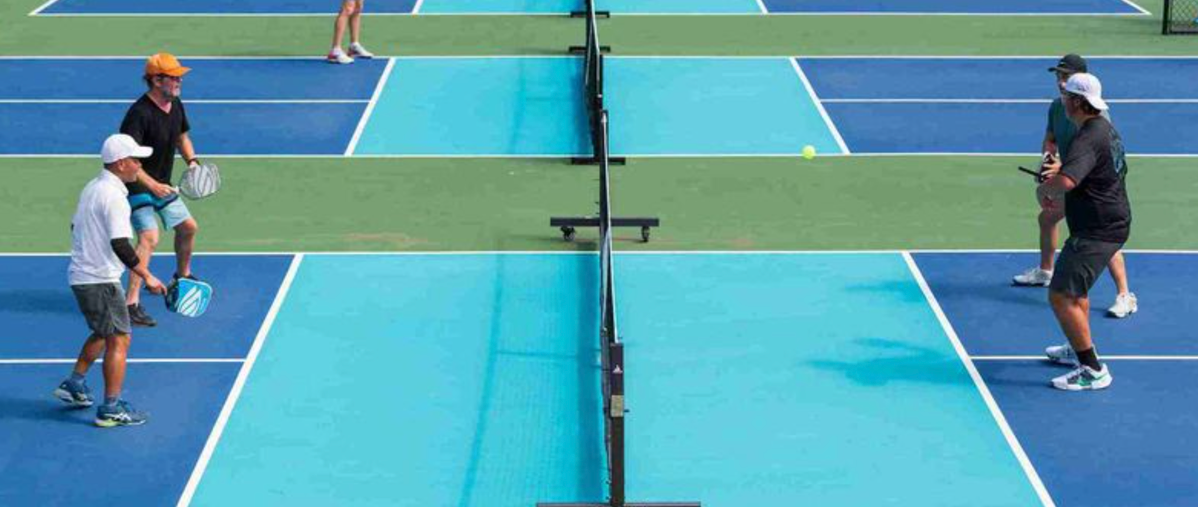
Knowing how to communicate with partner pickleball takes more than yelling "mine" at the right time. Here's the exact system of calls, signals, and mid-game habits that keep doubles teams from falling apart under pressure.
How to communicate with partner pickleball comes down to one uncomfortable truth: most teams never actually practice it.
They drill dinks, they drill drops, they drill serves. Then they lose a winnable game because both players watched the same ball sail past, untouched.
Here's the thing. Communication wins more points than paddle skill in doubles, especially once your DUPR rating climbs past 3.5.
Two solid players who talk get outworked by two average players who communicate.
This piece breaks down what to say, when to say it, and how to fix a partnership that's gone quiet.
Love pickleball? Then you'll love our free newsletter. We send the latest news, tips, and highlights for free each week.
How to Communicate With Your Pickleball Partner Before the Serve
The direct answer: talk through positioning, poach plans, and target selection before the ball is even served, not while it's in the air.
Waiting until the rally starts is how two good players end up watching the same ball bounce untouched.
Before every serve, a quick check-in should cover three things. Where are you standing? Who's taking the middle if it comes down the T?
And is either of you looking to poach? These aren't complicated conversations.
They're three seconds of eye contact and maybe a word or two, and they're the difference between a team that looks organized and one that looks like it met five minutes ago.
Once you've got the basics down, you can even sell a little deception by faking a poach call and running a different play entirely.
Teams that rethink how they play doubles treat this pre-point routine as non-negotiable.
It's not about calling every shot, just eliminating guesswork that turns a makeable ball into a collision.
How to Communicate When Your Partner Poaches
If your partner crosses into your side to poach, the call is simple: say "switch" when the paddle crosses the middle.
That word alone gets your partner moving into the open space instead of standing still.
Poach without a call and you get two players stuck in the same three feet while the other half sits wide open.
A clean poach depends on stacking and sideline positioning both players already understand, so the call is confirmation, not a surprise.
A 2025 review published in the Journal of Sports Sciences on communication patterns in racket-sport doubles teams found that verbal calls reduced hesitation time on contested balls by a measurable margin compared to teams relying on visual cues alone.
The Nonverbal Side of Doubles Communication
Not everything needs to be said out loud, and honestly, shouting every call gives your opponents a scouting report, especially in a pressure zone situation where every word gets noticed.
Pickleball doubles communication works best as a mix of short verbal calls and quiet nonverbal signals that only your partner is watching for, the same instincts that show up when you set up a well-placed slice dink without saying a word.
A paddle tap behind your back before the serve can signal a poach plan.
A nod toward the line can mean "I've got the lob."
Eye contact at the kitchen line, held for even half a second, tells your partner you're both locked onto the same target before you position yourself at the kitchen line for the next exchange.
 The Dink Media Team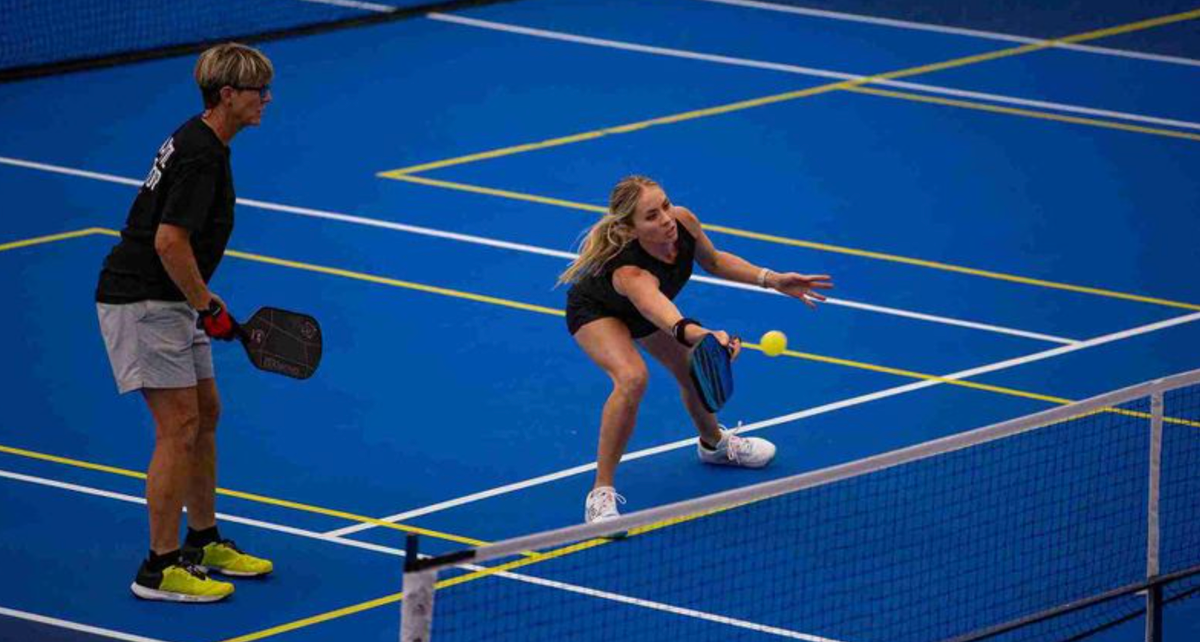
Why Eye Contact Beats a Shout at the Kitchen Line
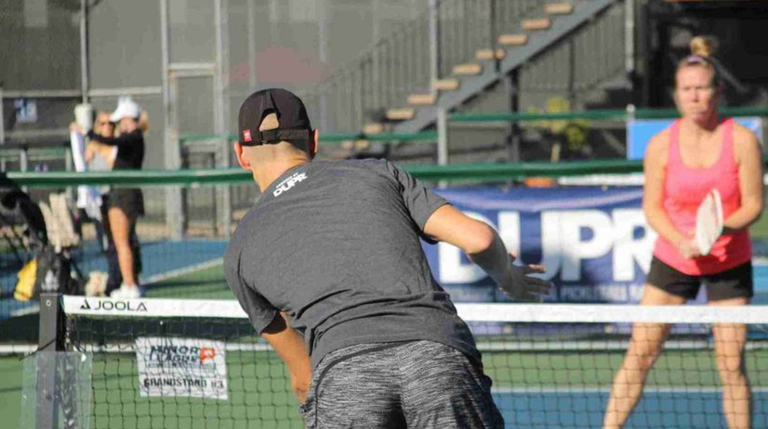
Once both players reach the non-volley zone line, sound communication gets harder.
The point is moving fast, the crowd's loud if you're at a tournament, and shouting "mine" a half-beat late is worse than saying nothing.
Eye contact and shoulder positioning become the primary language.
This is where mid-court decisions made earlier in the point start paying off.
If you've already agreed on who covers the middle at the kitchen, you don't need a verbal call at all. You just execute.
Teams that skip this step end up in the classic doubles disaster: both partners lunging for the same dink while a clean angle sits three feet away, untouched, instead of learning to focus on your strengths as a pair.
 The Dink Media Team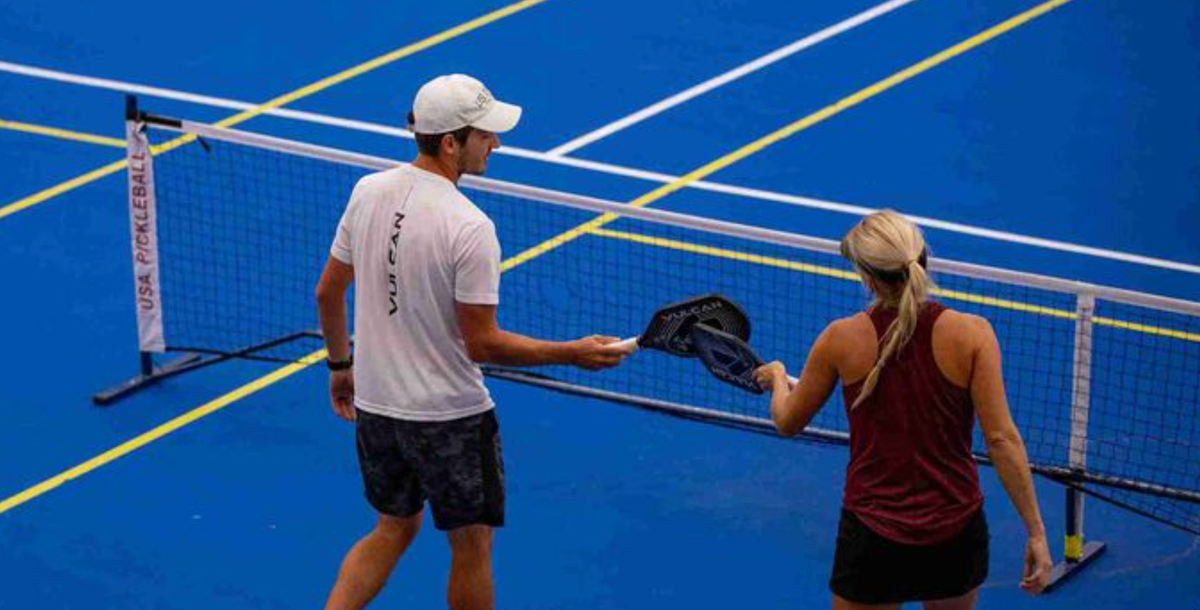
How to Communicate with Your Partner When the Wheels Fall Off
The direct answer here: stop between points, name the actual problem in one sentence, and fix one thing at a time instead of overhauling your whole game plan mid-match.
Panic conversations rarely work. Specific ones do.
If your partner is missing the same shot repeatedly, don't just say "come on, let's go."
Work on shot selection together instead of assigning blame. Say what you actually see: "You're rushing the third shot drop, take an extra half second."
That's a fixable, specific note instead of a vague pep talk.
It also keeps the tone constructive instead of frustrated, which matters more than people admit when a team is down 2-6.
If your team needs a way to practice this under pressure, a drill built around split-second calls forces both players to communicate while fatigued, which is exactly when habits tend to break.
 The Dink Media Team
When Should You Switch Sides in Pickleball?
Switching sides in pickleball means the two partners trade positions on the court, usually to get a stronger player matched up against a weaker opponent or to target your opponent's weaker side with a better angle on their forehand.
Under USA Pickleball's 2026 official rulebook, partners can switch sides between points at any time during a game, as long as both players agree and the switch doesn't slow down play.
The call to switch should be quick and mutual. "Let's flip" is enough.
If one partner is getting picked on repeatedly, maybe because of a shaky serve grip or a weaker backhand, that's usually the signal to make the move.
This decision alone can cover the court as a team far better than either player standing still and hoping.
 The Dink Media Team
Turning Communication Into Wins
How to communicate with partner pickleball ultimately shows up in the box score.
A 2025 player survey from DUPR on doubles performance found that players reporting frequent in-match communication self-assessed higher win consistency than those who called their communication "minimal."
You have to call the ball the instant you know the answer, not after you've already committed to the shot, whether that's a return call or a decision about who's getting the most from the return of serve.
"Mine," "yours," "bounce it," and "out" should be automatic.
Hesitation on a call is often worse than no call at all, since it sends your partner conflicting signals about court placement mid-swing.
Beyond the verbal basics, communication shows up in how a team turns a mediocre dink into a winner by agreeing, without a word, on who's attacking and who's resetting.
It shows up in power shot situations where one player needs to know their partner is ready to cover the counter.
And it shows up on the return, where knowing where to stand on the return prevents the awkward step-on-each-other's-toes moment that costs free points.
If your team wants to build this into practice sessions, start with the third shot drop since it's the shot most likely to produce confusion about who's moving forward and who's holding the baseline.
 Alex E. Weaver
Pair that with a figure 8 drill that forces both players to call shots out loud under fatigue, when communication habits tend to break down first.
Even players who mostly drill solo can build the calling habit by narrating shots out loud during reps, so it becomes automatic once a partner's on the court.
One more habit worth building: talk through serve placement near the kitchen before the match starts, not during it.
Deciding your serving strategy as a team ahead of time means fewer conversations you need to have once the score gets tight, and fewer moments where pickleball doubles communication breaks down because nobody wants to be the one calling a timeout at 8-8.
Whether you're a weekend 3.0 team or grinding DUPR points, how to communicate with partner pickleball is the one skill that transfers to every partner you'll ever play with.
Players who went from a 3.0 to a 3.5 almost always point to communication as one of the habits that made the difference. Paddles change. Partners change. The habit doesn't.
 The Dink Media Team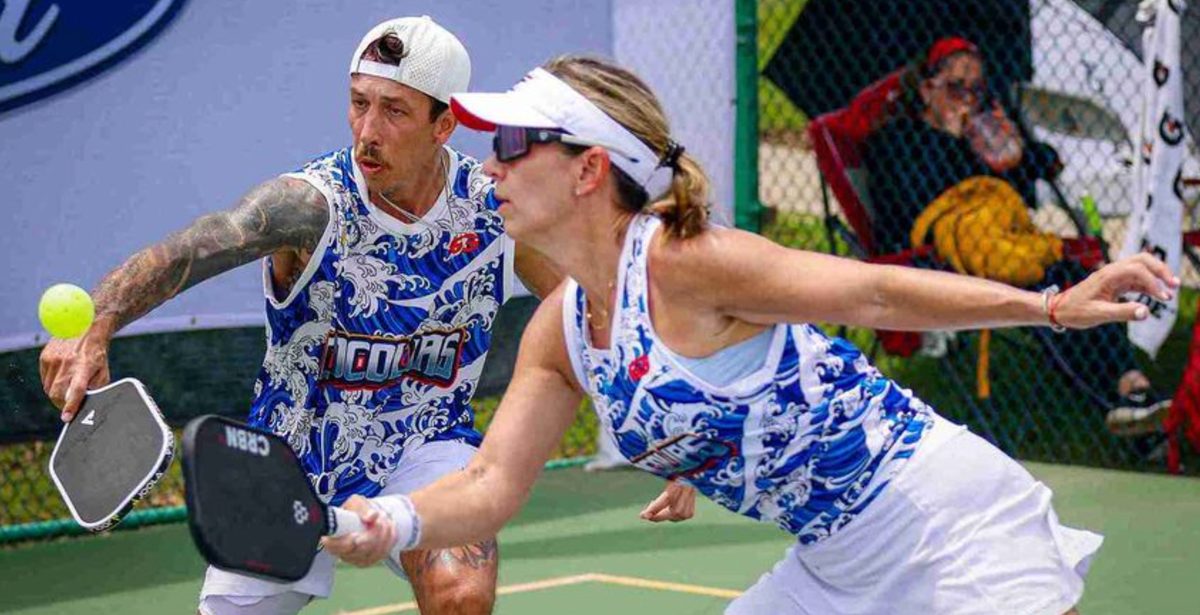
Key Takeaways
- Nonverbal signals like eye contact and paddle taps improve your teamwork without tipping off your opponents.
- How to communicate with partner pickleball starts before the point even begins, not after the ball is in the air.
- Verbal calls ("mine," "yours," "bounce it," "out") remove the split-second hesitation that costs points at every level. Learning to call the ball without hesitation is step one.
- Knowing when to switch sides in pickleball is part strategy, part communication, and it often comes down to a good shot or bad positioning read made in real time.
- A short, honest reset conversation mid-match fixes more problems than a mid-game tactical overhaul ever will.
Frequently Asked Questions
How to Communicate With Your Pickleball Partner Without Confusing Them
Keep calls short and consistent. "Mine," "yours," "bounce it," "out," and "switch" cover most situations, and using the same words every time removes guesswork. It's as much a champion mindset as it is a technical habit. Save longer conversations for between points, not mid-rally.
What should I say when my partner and I both go for the same ball?
Say the word the instant you decide, not after you've moved. If you both call it at the same time in a return, block, or smash situation, whoever's better positioned should take it and say "I got it" clearly so the other player pulls back immediately.
Is nonverbal communication really that important in pickleball doubles?
Yes. Eye contact, paddle position, and shoulder angle communicate faster than words once both players are at the kitchen line, and they don't give your opponents a heads up on what's coming next.
How often should partners switch sides in pickleball?
There's no fixed rule on frequency. Teams typically switch sides in pickleball when one player is being targeted repeatedly on a weaker side, or when playing the percentages calls for a different matchup, and the decision should be made between points with a quick, mutual call.
What's the biggest communication mistake doubles partners make?
Waiting until frustration builds up to say anything. Specific, in-the-moment feedback beats a vague comment after losing several points in a row, and it keeps the tone constructive instead of tense. Even the tips every beginner needs to know about staying calm still apply at any level.

Love Pickleball? Join 100k+ readers for free weekly tips, news & gear deals.
Subscribe to The Dink