
3 Pickleball Drop Shots Every Player Needs: Push, Slice, and Topspin
Most players have one drop. The best have three. Here is how to hit the push, slice, and topspin pickleball drop shot, and exactly when to use each.
The pickleball drop shot is the shot that decides whether you get to the kitchen or spend the rally stuck on defense.
Hit it well and you walk to the net on your terms. Miss it and you either pop it up for a putaway or dump it in the net.
Here is the problem: most players own exactly one drop, and they hit it in every situation whether it fits or not. The best players carry three.
They have a push drop, a slice drop, and a topspin drop, and they know which one the moment calls for before the ball even arrives.
This breakdown comes from Austin Hardy and Caleb at Pickleball Playbook.
Below you get the exact technique for all three, where to aim them, and the drills that make your drop automatic instead of hopeful.
Love pickleball? Then you'll love our free newsletter. We send the latest news, tips, and highlights for free each week.
Why One Pickleball Drop Shot Is Never Enough
A pickleball drop shot has one job: land soft in the kitchen so your opponent has to hit up, which buys you time to move forward.
Every drop you own should serve that single goal.
The reason you need three versions is that the incoming ball is never the same twice. Sometimes it is deep and heavy.
Sometimes it is short and low. Sometimes you want to add pace and margin.
One motion cannot answer all three situations, which is why a full drop shot technique guide starts with the push and builds out from there.
The Push Drop: Your Pickleball Drop Shot Bread and Butter
The push drop is the most common drop in pickleball and the one you should master first, and it holds up whether you play at 3.0 or 4.0.
It is a short, concise motion: you lift from the shoulder as you make contact and keep the swing quiet, with no big backswing to time.
Before you touch a paddle, build the feel with a tossing drill.
Lean in and toss the ball underhand into the back third of the kitchen, aiming for an arc that hits its apex right at the net so the ball is already dropping when it crosses.
 Alex E. Weaver
Austin recommends at least 100 tosses on both forehand and backhand before you pick up the paddle at all.
Aim for the back third of the kitchen. That depth forces your opponent to hit up off their shoelaces.
Land it shallow and they get to tee off on it instead.
When you add the paddle, use a handshake grip that sits around continental, keep the same lean, and let the shoulder do the lifting.
One sentence to tattoo on your brain: when in doubt, push. It is the most consistent drop you have, and consistency is what gets you to the kitchen.
The Slice Drop: For Balls That Are Short and Low
The slice drop is a bigger motion, and you save it for one specific situation: when the ball is short and low.
Reach for it any other time and you give up the consistency that makes the third shot drop work in the first place.
Think of the swing like scooping a bowl of ice cream.
You carve from high to low and back to high, cutting underneath the ball and contacting the back bottom of it, roughly 6 or 7 o'clock for a right handed player.
That underspin floats the ball and lets it die in the kitchen.
The slice earns its place because a low ball is hard to lift with a push. The carve gives you a way to get under it without popping it up.
Just remember the rule: short and low means slice, everything else means push.
 The Dink Media Team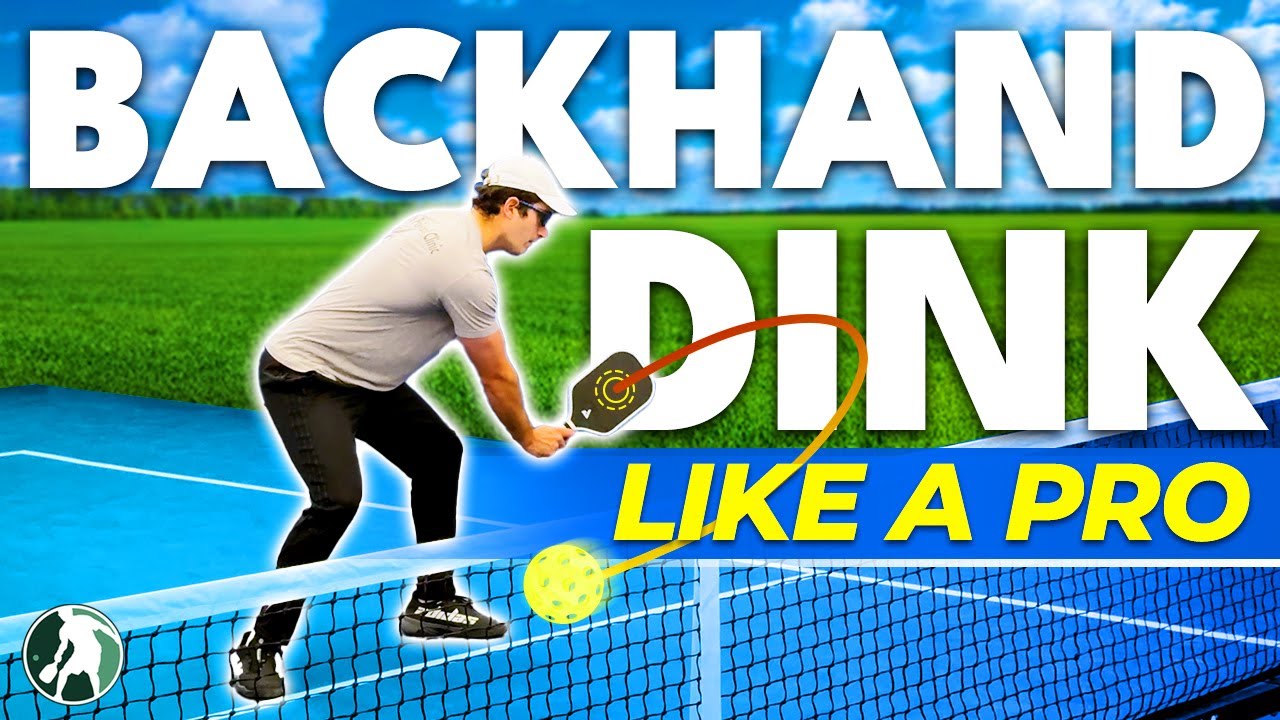
The Topspin Drop: Pace With a Safety Net
The topspin drop lets you hit with more pace while topspin drags the ball back down into the kitchen, and it is the piece behind an advanced third shot drop that separates advancing players from stuck ones.
It is also the one most people butcher, because they turn it into a giant loop.
The motion is a windshield wiper. Load early, start low near your knee, and brush up the back bottom of the ball, finishing out and up toward your target.
Contact the bottom back of the ball, not the pure back (that sends it straight down) and not straight under it (that sends it straight up).
The single most important cue is to hold your finish.
Freezing your follow-through out in front keeps the stroke compact and stops it from ballooning into the loopy, pop-up swing that gets punished.
If you want it to check low over the net, these keys to a topspin drop that stays low are worth drilling on their own.
Watch Ben Johns and you will notice his topspin third shot rarely climbs more than a foot or two above the net before it dives.
 The Dink Media Team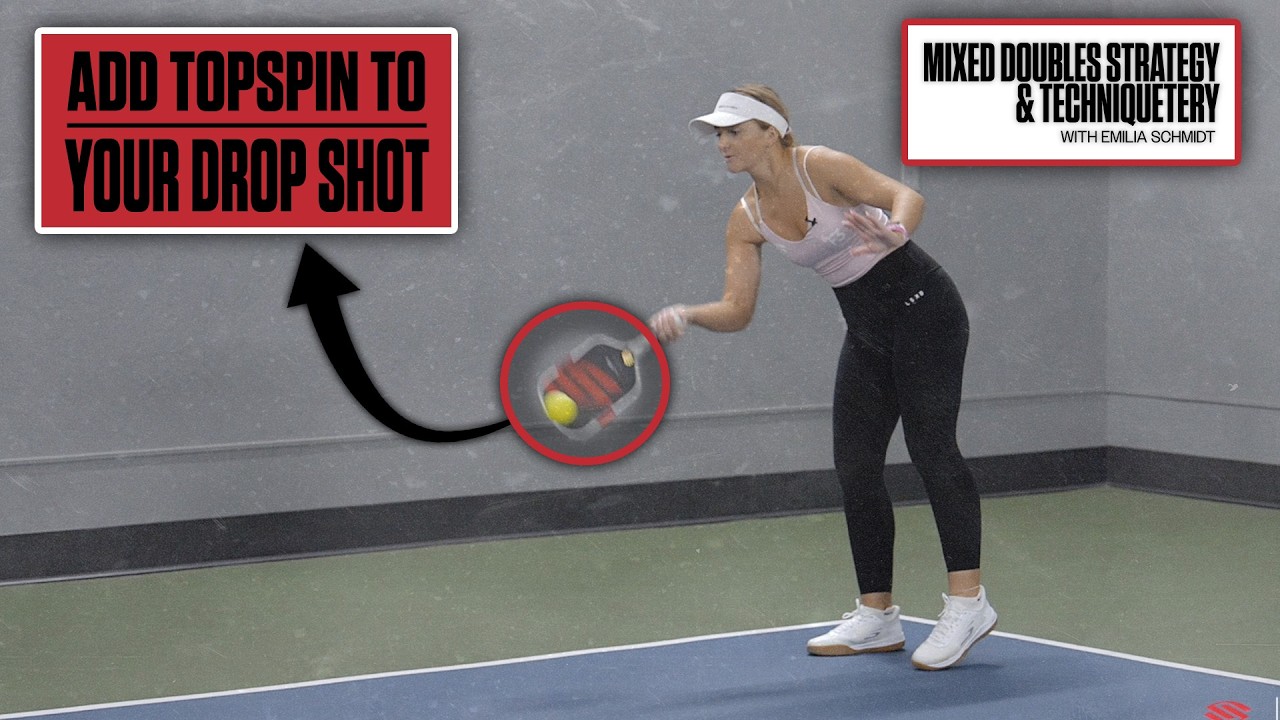
Where Should You Aim Your Drop Shot?
The worst place to aim your pickleball drop shot is straight down the line, because it invites two disasters at once.
- First, the sideline is right there, so you risk missing wide.
- Second, you feed the Ernie, where your opponent jumps the kitchen line and pounces on your soft ball before it ever lands.
Aim the majority of your pickleball drop shot attempts toward the middle or slightly cross court instead.
You get more court to work with, the net is lower in the center, and you take that sideline poach away.
Pair good targeting with the depth from your tossing drill and you turn a risky shot into a repeatable one.
Depth and direction matter more than raw softness on every pickleball drop shot.
A drop that lands in the back third of the kitchen toward the middle is safe even when it is a little high, because your opponent still has to hit up from a bad spot.
 The Dink Media Team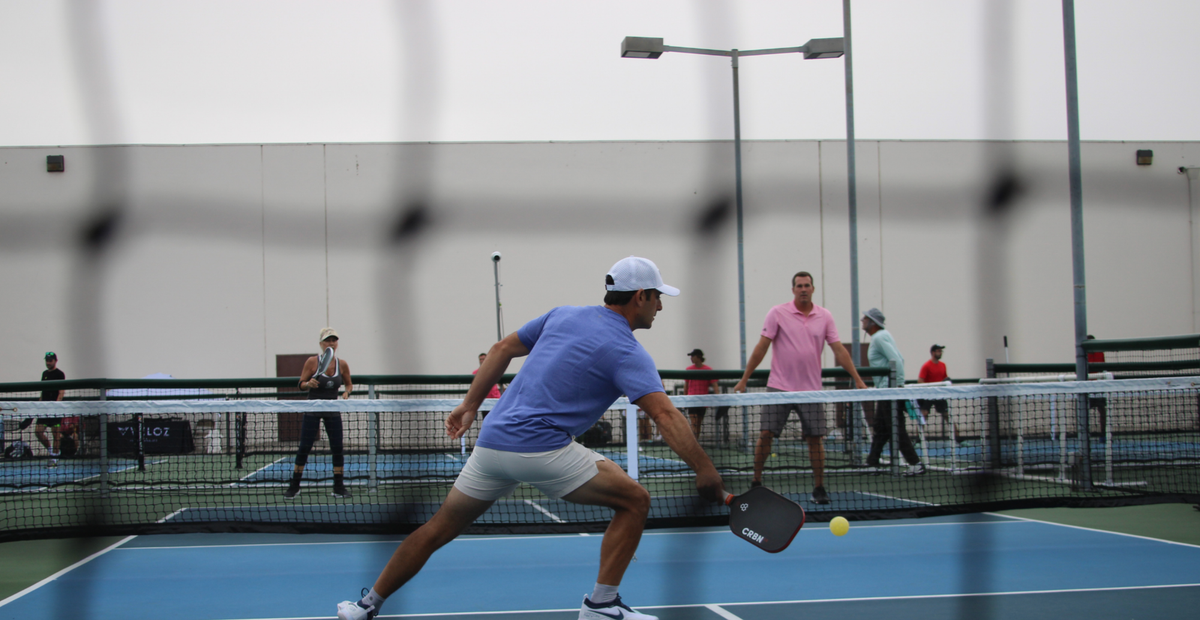
How Do You Actually Make Your Drop Automatic?
You make a pickleball drop shot automatic by drilling it live, under movement, the same way it shows up in a real point.
Static feeds build the stroke, but games are played on the move, and this is where the transition zone eats good intentions.
Here is the progression that ties it all together:
- The toss drill. At least 100 underhand tosses into the back third of the kitchen, forehand and backhand, before the paddle comes out. You are grooving the arc and the target, not the swing.
- Stationary drops. Feed yourself or a partner and hit push drops to the middle, holding your finish on every ball. Add slice only on the short low ones and topspin when you want more margin.
- The drive to drop transition. Have a partner feed a serve, drive the first ball at 50 to 70 percent, then hit your drop off the next one and read it.
That last drill is the gold. After your drop, you make a live decision: is the drop low? Move forward and crash the net.
Is it high? Stay back and reset. That read is exactly when you take your split step, and getting it early is what keeps you from getting stuck in no man's land.
Play it out as a live point so the drop, the read, and the movement all happen together.
If you want a full ladder of live ball drills, that is the fastest way to move a shot from the practice court into a match.
One more piece that quietly wrecks drops: soft hands. If your grip is tense, the ball jumps off the face and sails long.
Keep the same relaxed soft hands you use on your dinks, and you will stop dumping the ball into the net on the ones you rush.
Frequently Asked Questions
What is the difference between a drop and a drive in pickleball?
A pickleball drop shot is a soft shot that lands in your opponent's kitchen so they have to hit up, which lets you move forward to the net. A drive is a hard, flat shot meant to rush your opponent or force a pop up, and most players hit a drive on the first ball and a drop on the next to earn their way in.
What is the easiest drop shot for beginners?
The push drop is the easiest and most reliable pickleball drop shot to start with. It uses a short motion where you lift from the shoulder and keep the swing compact, so start there and only add the slice and topspin once it is dependable.
Where should I aim my third shot drop?
Aim toward the middle or slightly cross court, into the back third of the kitchen. The net is lower in the center, you have more margin, and you avoid the down the line Ernie, since straight down the line is the riskiest target and the easiest to poach.
Why does my drop shot keep popping up?
A pop up on your pickleball drop shot usually means your swing is too big or too loopy, especially on the topspin drop. Shorten the motion, brush up the back bottom of the ball, hold your finish out in front, and relax your grip since tense hands also cause pop ups.
How many reps does it take to make a drop automatic?
There is no fixed number, but it starts with at least 100 tosses before you even pick up the paddle, then progresses through stationary drops and live transition drills. The key is drilling it on the move, since a drop that only works standing still falls apart in a real point.

Love Pickleball? Join 100k+ readers for free weekly tips, news & gear deals.
Subscribe to The Dink