
How to Cover Your Partner on Lobs in Pickleball (3 Simple Steps)
When your partner gets lobbed, standing still is the worst thing you can do. This pickleball lob coverage system shows you exactly how to step in, drop back, and save the point.
Your partner gets lobbed, they scramble, reach for the ball, and pop it up.
You lose the point. And you do it again the next time the same thing happens, because nobody talked about what to do differently.
Pickleball lob coverage is one of the most overlooked parts of doubles strategy. Most players treat it as the lobbed player's problem. It is not.
It is a team problem, and you have more to do with solving it than you think.
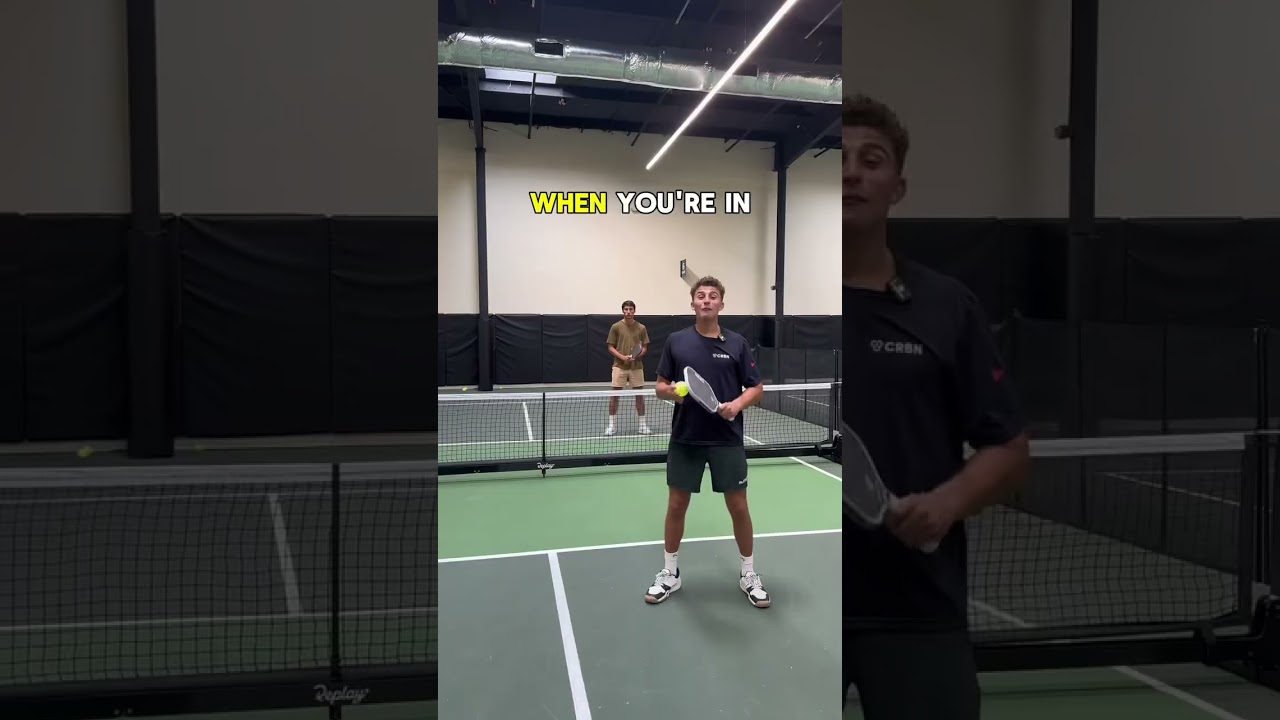
This breakdown comes from Richard Pickleball on YouTube, where he and partner Spencer walk through exactly how to read a lob, rotate back to cover it, and choose the right shot and positioning afterward.
Love pickleball? Then you'll love our free newsletter. We send the latest news, tips, and highlights for free each week.
Why Your Partner Keeps Getting Beat on Lobs
The problem usually is not bad overhead mechanics. It is that they read the ball late and arrive off-balance, reaching instead of setting up behind it.
When you reach for an overhead, you lose power, lose placement, and hand your opponents a free put-away.
The fix is not always making your partner better at the pickleball overhead smash. Sometimes the fix is you taking the ball.
Here is the key insight: you often have a better angle on the ball than your partner does.
If it is traveling over their head, you are watching it from the side, which means you read it earlier and move earlier.
This is where most teams leave points on the table. They watch the lobbed player struggle instead of taking responsibility for the ball.
What Should You Do When Your Partner Gets Lobbed?
Step in and take the ball yourself.
If you have the angle and can get behind it comfortably, that is almost always better than watching your partner flail at a ball above their shoulder.
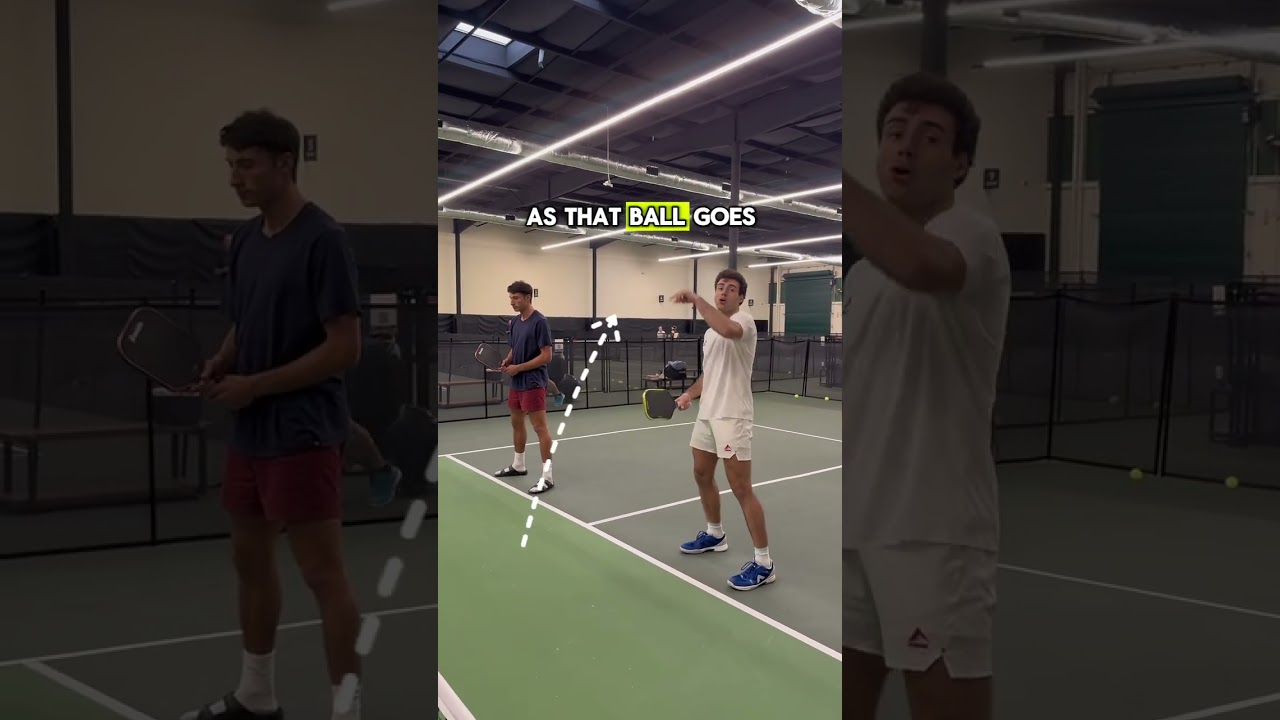
The movement pattern is simple. As the lob goes up, drop back diagonally, get behind the ball, and set up a real contact point out in front of you.
Richard turns this into a clear read.
If you are on the left and the pickleball lob sails over your partner on the right, your side angle puts you in the best position to handle it.
You run back, track it, and hit a drop to reset.
Check out this breakdown of where to aim your third shot drop every time so you are hitting the right target once you take over.
The Two-Option Framework After You Cover the Lob
Once you have tracked back and made contact, you face a decision. There are exactly two paths forward, and you need to call one of them out loud.
- Option 1: Stay in your original lanes. You hit a cross-court drop, your partner holds their position at the kitchen, and you move forward to rejoin them. The team stays on the same sides, and you re-establish the kitchen line together.
- Option 2: Switch sides. You tell your partner to move forward toward the kitchen, and you announce the switch. Now you end up on the opposite side from where you started, and your partner covers the position you just vacated.
The word that makes this work is simple: "Switch!" Call it loud and early.
If you wait until the ball is already in play, your partner will not have time to react and you will end up with two players in the wrong spots.
Richard demonstrates this with Spencer in real time. After covering the lob and hitting the drop, he calls Spencer forward and they swap sides cleanly.
The result is a team that is back in control at the kitchen instead of scrambling in no-man's land.
Understanding this simple pickleball strategy formula helps you understand why getting back to the kitchen is always the priority after a defensive situation.
 The Dink Media Team
How Do You Know Which Option to Choose?
Base it on your momentum and your position after the drop. If you are naturally moving back toward your original side after hitting the ball, stay.
If your momentum is carrying you across toward your partner's original side, switch.
Communication is the deciding factor. Do not silently figure it out. Say something, say it early, and commit to it.
Indecision in doubles kills more points than bad shots do.
Here is a quick breakdown of both options:
- Stay: You drop cross-court, move forward, rejoin your partner on your original side. Works when you can recover your position naturally.
- Switch: You call "switch," your partner drops forward, you end up on their side. Works when crossing is the easier path back to the kitchen.
Either way, the goal is the same: both players arrive at the kitchen line as fast as possible and reset into a neutral dinking position.
 The Dink Media Team
The Movement Mechanics That Make This Work
Tracking a lob is a skill that most recreational players underestimate. You cannot backpedal straight back and expect to arrive in a good position.
You need to drop step and turn, getting your body sideways so you can run toward the back corner instead of stumbling backward.
Think of it like a centerfielder in baseball going back on a fly ball. They do not backpedal. They open their hips, turn, and run.
The same logic applies on the pickleball court.
Once you are behind the ball, you have time to set up a real swing. That is when the drop becomes genuinely effective.
A drop hit while chasing, reaching, or off-balance is almost impossible to place accurately.
These six third shot drop techniques apply directly to the drop you are hitting from the back of the court after covering a lob.
Your footwork before contact determines everything about the shot quality after contact.
 The Dink Media Team
What Shot Should You Hit After Covering the Lob?
The answer is almost always a drop. From the baseline, after scrambling to cover your partner's lob, you are in a defensive position.
An aggressive drive from there is a low-percentage play that often gives your opponents exactly what they want.
A well-placed cross-court drop does three things: it travels the longest possible distance over the net (giving it more margin for error), it lands in the kitchen, and it buys you and your partner time to get back to the line.
Cross-court drops also move your opponents laterally, which can open up better positioning when you arrive at the kitchen.
Read more about cross-court strategy in pickleball to understand exactly why this angle is so powerful in defensive situations.
The drop is not a safe-and-sorry shot here. It is the highest percentage play that gives your team the best chance to get back in the point.
 The Dink Media Team
Why Most Doubles Teams Get This Wrong
The most common mistake is hesitation. One player waits to see if the other can get it. The other player waits to see if their partner is going to take it.
Both of them end up flat-footed, the ball bounces, and the point is over.
The second mistake is failing to communicate afterward.
Even if you cover the lob perfectly, if you do not call "stay" or "switch," you and your partner will collide coverage responsibilities on the next ball.
You might both drift to the same side or leave a huge gap in the middle.
Here is the full process in order:
- Read the lob early and decide immediately whether you can get behind it.
- Drop step and turn your hips to run toward the back corner.
- Set up behind the ball and execute a cross-court drop.
- Call "stay" or "switch" before you make contact if possible.
- Both players advance to the kitchen together.
If you are consistently getting beaten by opponents who lob well, the problem may be in your overall positioning and movement patterns.
These seven pickleball positioning mistakes cover the most common reasons players end up vulnerable to lobs in the first place.
Fixing your positioning reduces how often lobs hurt you. But even with great positioning, lobs will happen.
Knowing what to do when they do is what separates a functional doubles team from a scattered one.
 The Dink Media Team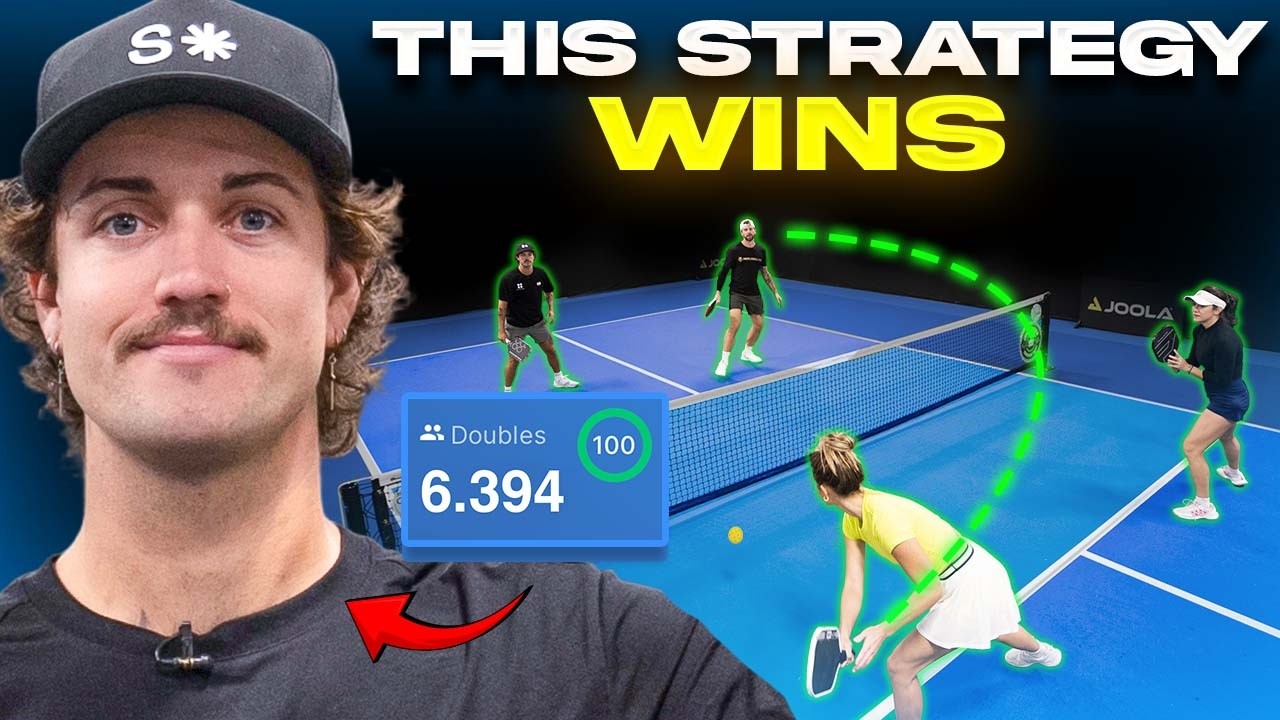
How Does This Apply to Senior Doubles Players?
For senior players, covering your partner's lob takes on added importance because overhead mobility decreases with age.
Protecting your partner from overheads they cannot hit cleanly is one of the highest-value adjustments a senior doubles team can make.
You do not have to sprint. Read the ball early, take your first step immediately, and use efficient footwork rather than raw speed.
Senior doubles strategy in pickleball addresses exactly how to protect each other's weaknesses and build a team approach that compensates for reduced mobility.
The drop-and-switch pattern Richard demonstrates works especially well for senior teams because it removes the overhead from the equation entirely.
Your partner does not have to chase anything. You take it, drop it, and call the switch. Clean, efficient, effective.
If your lateral movement needs work to make this system reliable, this pickleball lateral movement training is specifically designed to be easy on the knees while building the quickness you need to track down lobs before they become a problem.
 The Dink Media Team
Practice This Until It Is Automatic
You will not execute this in a match if you have never rehearsed it.
Have your practice partner feed lobs to your partner while you practice dropping back, tracking the ball, hitting a cross-court drop, and calling the switch.
Do it ten times per side.
The goal is to make the read-and-react automatic.
When you see a lob go up over your partner, your body should already be moving before your brain finishes processing the decision.
That is what team chemistry in doubles actually looks like. It is not just getting along.
It is knowing your role when things go sideways and executing it without hesitation.
Check out these drills a PPA pro still uses every practice for ways to build that automatic response through repetition.
Stop letting your partner get abused on lobs. Now you know exactly what to do about it.
Frequently Asked Questions
What is pickleball lob coverage in doubles?
Pickleball lob coverage is when one partner takes responsibility for a lob that was hit over the other partner, rotating back to track the ball and hit a drop rather than forcing the lobbed player to chase it. This keeps the team from losing court position and gives both players a path back to the kitchen line. It is a team defensive skill, not just an individual one.
Should I always cover my partner's lob in pickleball?
Cover your partner's lob when you have a better angle on the ball and can get behind it more cleanly than they can. If your partner is already tracking it well and setting up behind it, stay in your position and hold the kitchen. The rule is simple: whoever can get behind the ball in the best position should take it.
What shot should I hit after covering a lob from the baseline?
Hit a cross-court drop almost every time. It gives you the longest travel distance and the highest margin over the net, and it lands in the kitchen to neutralize the point. Driving from the baseline after scrambling to cover a lob is a low-percentage choice that usually results in a free attack for your opponents.
When should doubles partners switch sides after a lob?
Switch sides when the player covering the lob is naturally moving toward the other side of the court after hitting their drop. Call "switch" before or right at contact so your partner can respond immediately. If you can recover to your original side without crossing, stay and move forward together instead.
How do I stop my opponents from lobbing my partner repeatedly?
Adjust your kitchen positioning so neither player is inviting the lob by standing too far inside the court or reaching aggressively. Keeping your paddle up and staying balanced at the line removes some of the temptation for opponents to lob. You can also read more about pickleball defense mastery to build a more complete response when lobs keep coming.
Love Pickleball? Join 100k+ readers for free weekly tips, news & gear deals.
Subscribe to The Dink