

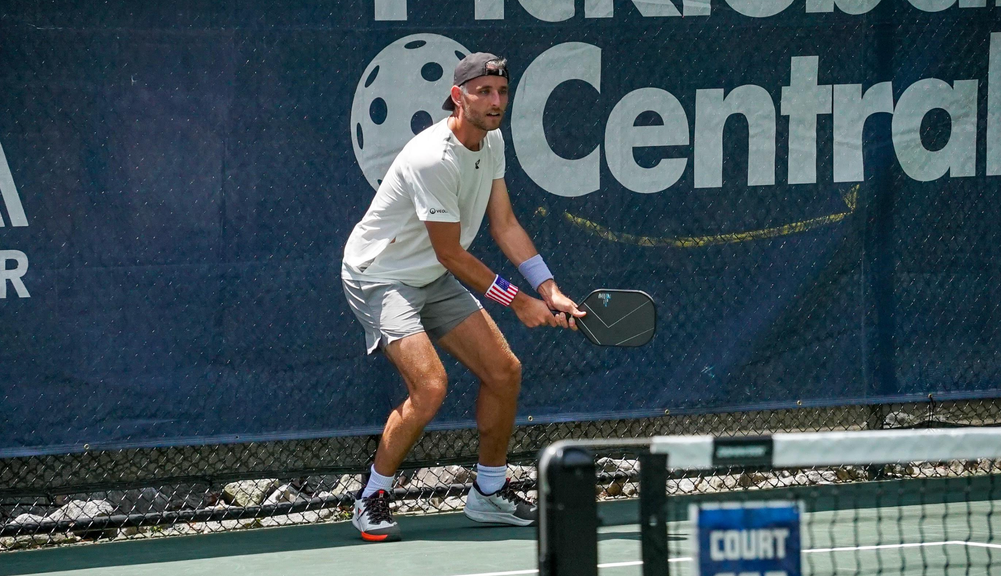
A well-struck pickleball lob can get you out of a tricky point or pour gasoline on a routine dink rally. It all comes down to deception, timing, and picking on the weaker opponent.
The first step in knowing when and where you should lob is identifying if the lob you are about to hit is offensive or defensive.
Understanding this is quite simple: Where are you positioned on the court? If you are on the baseline, your lob is going to be defensive (unless you are a touring pro — a few can hit offensive lobs from the baseline). If you are at the kitchen, odds are you are about to hit an offensive lob with the goal of forcing your opponents off the kitchen line to retreat back towards the baseline.
 Eric Roddy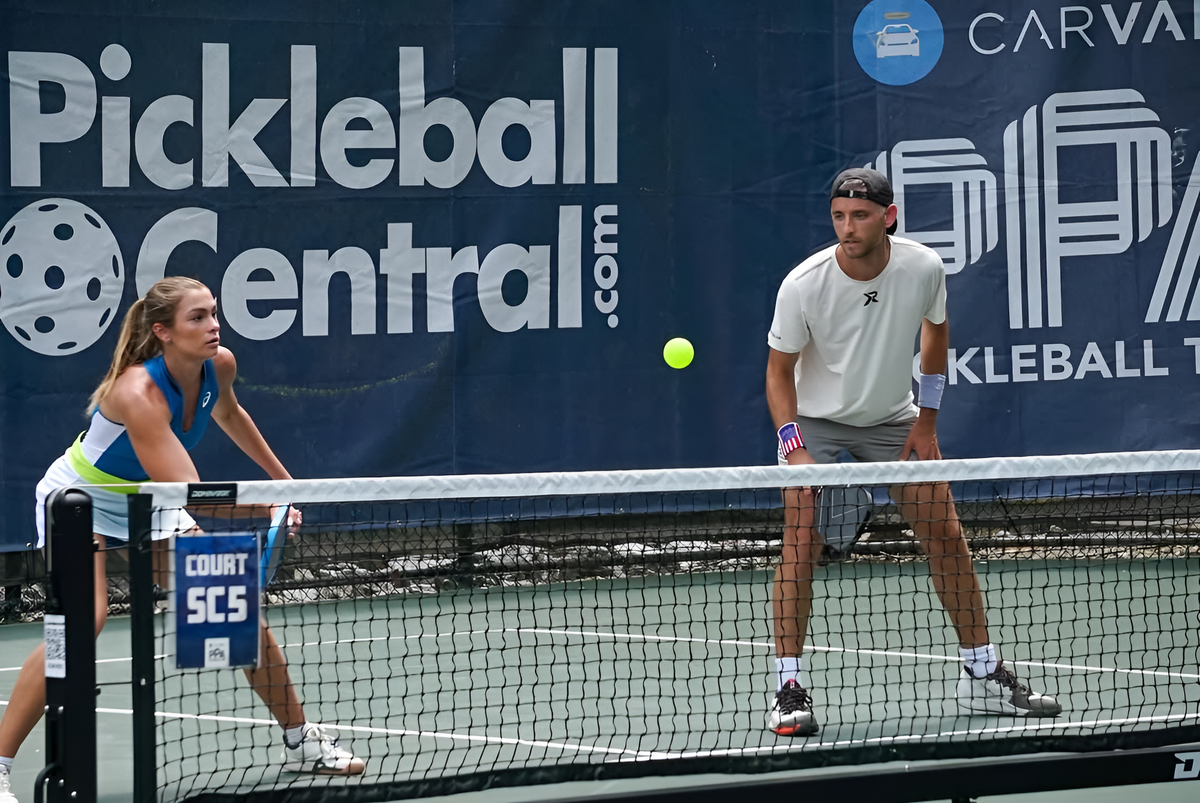
I do not recommend lobbing from the transition zone. Only rarely will you not be able to hit a reset and need to throw up a defensive lob to stay alive. Understanding the pickleball transition zone — when to play safe vs. when to attack is a skill all its own, and it directly affects how and when you reach for the lob.
To summarize: where you are on the court will determine if you should hit an offensive lob (aimed at getting the ball over your opponents' heads) or a defensive lob (throwing the ball up in the air to buy you and your partner time to get back in position and keep the point alive).
Offensive Lobs – Deception is Everything
I want you to think of a time when you played a known lobber. You know the exact person I am talking about. This person lobs relentlessly. They live to lob.
Unless you struggle to hit an overhead, these types of players should be easy to beat. Why? They are predictable. Unless the obvious lobber is able to hit a lob over your head perfectly, a few inches from the baseline on command (unlikely), you should be able to adjust and use their lobbing against them. Knowing a lob is coming is more than half the battle toward shutting it down.
That's why deception is everything when hitting an offensive lob. The best lobs aren't hit perfectly over the head of an opponent, landing somewhere 4–6 inches from the baseline. Those are low-percentage, once-in-a-blue-moon lobs. The best lobs come when the opposing team least expects it.
A Few Ways to Hit a Deceptive Lob
First, make your paddle face and grip look exactly like a dink or a speedup. If you have to dramatically change the way you hit the ball to hit a lob, it becomes predictable. Changing your grip or paddle face is a dead giveaway to your opponent. Struggling with this skill? Here's why your pickleball speedups fail and how to fix them like a pro, the same deceptive mechanics apply in reverse.
Disguising a lob by making it initially look like a dink or a speed-up will keep your opponent guessing, or even better, will make them have no idea a lob is even coming.
Second, hold or delay the motion as long as possible. If all four players are at the kitchen and the ball is coming to you, try to wait as long as possible before hitting the lob. This not only plays into deception, but it will keep your opponents on the kitchen line longer, preventing them from getting a head start at tracking down your lob.
Deception plus timing equals the perfect lob.
Now that you have a few keys to hitting an effective lob, let's discuss where you should hit an offensive lob when all four players are at the kitchen.
First, if you know one of your opponents struggles to move backwards or has a weak overhead, start by hitting the lob over them. Find the less athletic opponent and use them as a target, aiming to hit the lob over their backhand shoulder.
I have found that I don't have to hit as good of a lob in terms of quality if I can locate it over my opponent's backhand. Hitting a backhand overhead is way more difficult than hitting a traditional overhead. According to CBS Sports, pickleball's explosive growth has brought millions of recreational players onto the court — most of whom have never trained a backhand overhead in their lives, making this target more exploitable than ever.
If there isn't a weaker opponent, I like lobbing through the middle at a crosscourt angle. This will cause confusion between your opponents, and if you are on the right side, it will help get the ball over your right-side opponents' backhand shoulder.
Defensive Lobs – Depth and Height are Key
Most pickleball players, regardless of skill level, have a pretty solid defensive lob. A defensive lob is exactly what it sounds like and should be used when you lack other options and are trying to keep a point alive.
If you need a pro player to watch, check out Allyce Jones' tape. She is one of the best defensive lobbers in the game and will even go to the lob over trying to hit a mediocre reset.
Forcing your opponents to hit five, even ten overheads in a row in a point is not just physically draining, but mentally draining. Unlike tennis, it's much easier to defend overheads in pickleball and will often result in your opponents overplaying an overhead, resulting in unforced errors. Knowing how to master the overhead smash in pickleball from the other side of the equation will also sharpen your instincts as a lobber — you'll understand exactly what gives opponents trouble.
Force your opponents to have to wait on the ball. The deeper you can force them to retreat in the court to hit an overhead, the better the chance you and your partner have of returning it.
Pro doubles teams often use this exact tactic as a pattern — if you want to see how the best pairs coordinate under pressure, Sports Illustrated's deep dive on professional pickleball doubles strategy shows just how deliberate elite lob sequences can be.
Finally, aim to hit your lobs to the middle of the court. This will further increase the chance of your opponents miscommunicating and will also help cut out your opponents' ability to hit angle overheads. Lobbing to the middle removes the widest angles from their overhead arsenal and forces them into the lowest-percentage shot on the court.
Frequently Asked Questions
What is a pickleball lob and when should I use it?
A pickleball lob is a high, arching shot designed to travel over your opponents' heads and land deep in their court. You should use it either offensively — from the kitchen line to catch opponents off guard — or defensively when you're out of position and need time to reset. The key is reading your court position first: baseline lobs are almost always defensive, while kitchen lobs give you the best chance at an offensive advantage.
How do I make my pickleball lob harder to read?
The best way to disguise a pickleball lob is to mimic your dink or speed-up motion right up until the moment of contact. Avoid gripping up, dropping your shoulder, or dramatically opening your paddle face before you swing — those are all visual tells that experienced opponents will pick up immediately. The later you can delay the actual hitting motion, the less time your opponents have to react and start tracking the ball.
Where is the best place to target a lob in pickleball?
Aim your lob over the weaker or less mobile opponent, specifically targeting their backhand shoulder. A backhand overhead is significantly harder to execute cleanly than a forehand overhead, so even a slightly imperfect lob to the backhand side can generate errors. If neither opponent is clearly weaker, a crosscourt lob through the middle creates communication problems and removes your opponents' best angle options.
Why does lobbing from the transition zone usually backfire?
The transition zone is the worst place to attempt a lob because you're already in a vulnerable mid-court position with limited leverage on the ball. A lob hit from there tends to be shorter, flatter, and easier to put away — essentially setting up your opponent for a free overhead at close range. Save the lob for when you're at the kitchen (offensive) or back near the baseline (defensive), and use a reset instead when you're caught in the middle.
How is a defensive lob different from an offensive lob in pickleball?
An offensive lob is hit from the kitchen line with the intent to win or shift the point — it requires disguise and precise placement. A defensive lob is hit when you're scrambling, out of position, or under pressure, with the primary goal of keeping the point alive by buying time. The mechanics can be similar, but the intent, court position, and required precision are entirely different. Mastering both types makes the pickleball lob a genuine two-way weapon.

Eric Roddy
Eric is a PPA tour pro living in Charlotte, NC, sponsored by Paddletek. In addition to playing PPA events, he teaches pickleball 2-3 hours a week, enjoys golf, and listening to his favorite band Goose.
Love Pickleball? Join 100k+ readers for free weekly tips, news & gear deals.
Subscribe to The Dink