Off-Ball Positioning in Pickleball: How to Master Net Control
Most pickleball players think the point is decided by whoever hits the ball, but at higher levels, off-ball positioning is what actually controls the court. Master this skill and you'll transform how you play at the net.
The biggest misconception in pickleball is that the player hitting the ball controls the point. Off-ball positioning tells a completely different story.
According to APP pro Richard Livornese, the off-ball player at the net is often the one who actually dictates what happens next, creating pressure, closing space, and winning points before they even touch the paddle.
If you're standing at the net watching your partner dink and feeling lost, you're missing massive opportunities. The good news? This is entirely fixable.
Love pickleball? Then you'll love our free newsletter. We send the latest news, tips, and highlights for free each week.
What Does Off-Ball Positioning Actually Mean?
Off-ball positioning is where you stand and how you move when your partner is hitting the ball. It's not passive. It's not just watching.
It's active, intentional, and strategic.
Your job as the off-ball player is to anticipate what's coming, position yourself to handle multiple outcomes, and create pressure on your opponents without overcommitting.
Think of it this way: your partner is the one executing the shot, but you're the one controlling the geometry of the court.
You're either closing off passing lanes, forcing your opponents into uncomfortable positions, or preparing to attack the moment they give you an opening.
The Two Tracking Methods: Full Track vs. Half Track
Before you can position yourself correctly, you need to know how to read the ball.
Richard Pickleball breaks this down into two distinct tracking methods, each with its own advantages and trade-offs.
- Full tracking means you're literally watching the ball the entire time. Your head turns as the ball moves from your partner's paddle to your opponent's paddle. This gives you the clearest picture of what's happening and is the simplest way to stay focused. The downside? You might be slightly slower when the rally speeds up and your opponent hits a quick attack.
- Half tracking is the opposite approach. You watch the ball come to your partner, but as it travels to your opponent, you only turn your head partway. Your periphery vision handles the rest. This keeps your body and eyes already facing forward, ready for a speedup. The trade-off is that you're relying on peripheral vision, which means less detail, and if your opponent changes direction unexpectedly, you might lose the ball entirely.
Most players don't need to choose one method exclusively. Richard himself uses something closer to full tracking but adjusts based on the situation.
The key is experimenting to find what feels natural for your game.
The Core Principle: "He's In, I'm Out"
Here's the fundamental rule of off-ball positioning:
- When your partner is in the middle of the court applying pressure, you move out.
- When your partner is wide, you move in.
This simple concept prevents the most common mistake pickleball players make: double-covering the same area while leaving the rest of the court wide open.
When your partner is dinking from the middle of the court, they're already applying pressure to your opponents. Your job shifts to being a wall.
You position yourself slightly wider, ready to reach with your backhand (if you're on the left side) or forehand (if you're on the right side).
You're looking for your opponent to bail out with a flick, an Ernie, or a redirect. If they go down the line, you're ready to attack.
Conversely, when your partner is dinking from a wide position, they're not applying middle pressure. That's your job now.
You step one step toward the middle of the court and split the difference between covering the line and applying pressure to the middle.
This positioning allows you to reach either direction while keeping your opponents honest.
 The Dink Media Team
Finding Your Pressure Zone
The pressure zone is roughly one step from the middle of your box.
This is where you want to be when your partner is dinking wide and you're the pressure player.
From this position, you can take one step to cover the line and one step to close the middle.
You're applying real pressure to your opponents without leaving yourself vulnerable.
- If you're too far toward the line, you're leaving the middle wide open.
- If you're too far toward the middle, you're leaving the line exposed.
The pressure zone is the sweet spot that lets you do both.
Why Spacing With Your Partner Matters So Much
One of the biggest issues Richard sees on the court is improper spacing between partners.
- When both players are in the middle, you're double-covering the same area.
- When one is wide and the other is also wide, you're leaving a truck lane through the middle.
This is how teams lose points they should win.
Your positioning is directly tied to your partner's positioning. If your partner moves, you move. If your partner is applying pressure, you're being a wall.
If your partner is being defensive, you're being aggressive. This constant adjustment is what separates good teams from great ones.
The biggest thing to remember:
Never crowd your partner.
You need space between you to cover the court effectively.
If you're standing too close, you're limiting each other's reach and creating dead zones your opponents can exploit.
The Dink Media Team
Positioning Examples: Left Side vs. Right Side
Let's get specific. When your partner is dinking from the left side of the court (their left), they're in what Richard calls a defensive position.
Your job is to be the wall. You're positioned slightly wider, ready to reach with your backhand.
You're looking for opportunities to attack if your opponent flicks or goes down the line.
When your partner is dinking from the right side, the roles flip. You're now positioned to apply pressure in the middle.
You're one step from center, ready to split the difference. If your opponent speeds up, you're ready. If they go line, you can still reach it.
The key is that these positions aren't static. As the dink rally continues and the ball moves around, your position adjusts constantly.
You're not thinking about it consciously; it becomes instinctive with practice.
Eric Roddy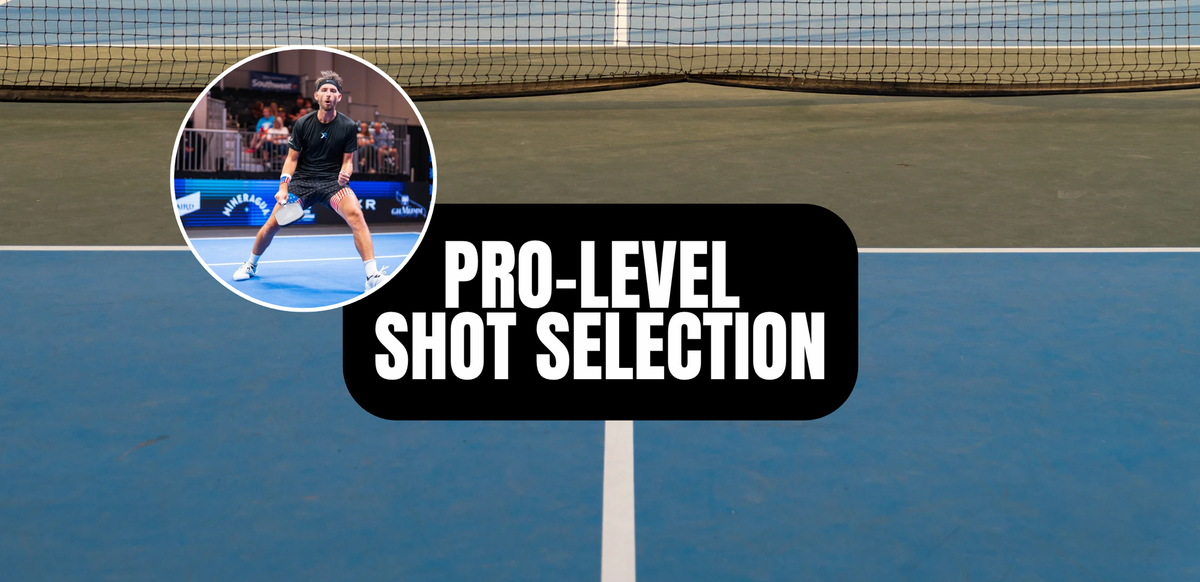
The Biggest Mistake: Crowding
Off-ball positioning breaks down when players crowd each other. You see this constantly at lower levels.
Both players drift toward the middle, both trying to cover everything, and suddenly there's a gap the size of a truck lane down the line.
Your opponents hit one ball down the line and it's a winner.
The solution is simple:
Trust your partner's positioning and adjust yours accordingly.
If your partner is in the middle, you go out. If your partner is wide, you go in.
This creates a complementary positioning system where you're always covering the court together, not against each other.
The Dink Media Team
How This Translates to Winning More Points
When you master off-ball positioning, several things happen.
- First, you create more pressure on your opponents without hitting harder or taking bigger swings.
- Second, you're in better position to attack when opportunities arise.
- Third, you make your partner's life easier because they know you've got their back.
Most importantly, you stop feeling like a dummy standing at the net.
You become an active participant in every point, even when you're not hitting the ball.
That's the difference between playing pickleball and playing it well.
Frequently Asked Questions
What's the difference between full tracking and half tracking?
Full tracking means watching the ball the entire time it's in play, giving you the clearest picture but potentially slower reactions to speedups. Half tracking keeps your eyes forward while using peripheral vision to watch your opponent, making you faster for attacks but less aware of direction changes. Most players use a hybrid approach based on the situation.
How do I know if I'm in the right position?
You're in the right position if you can reach both the line and the middle with one step in either direction. If you're too far one way and can't reach the other, you need to adjust. Practice will make this feel automatic.
What should I do if my partner keeps dinking from the same spot?
Adjust your positioning based on where they're dinking from. If they're consistently dinking wide, stay in your pressure zone. If they're dinking middle, move wider and prepare to be the wall. Your positioning should always respond to their positioning.
Can I use off-ball positioning at lower skill levels?
Absolutely. Off-ball positioning works at every level. In fact, it's often more impactful at lower levels because most players don't understand it. You'll gain a significant advantage by mastering this skill early.
How long does it take to develop good off-ball positioning?
With focused practice, you can develop solid fundamentals in a few weeks. True mastery takes longer, but you'll see immediate improvements in your game once you start thinking about positioning intentionally.

Love Pickleball? Join 100k+ readers for free weekly tips, news & gear deals.
Subscribe to The Dink