The Drop Step: 3 Footwork Moves That Fix Your Backward Movement
The drop step is the pickleball footwork move that stops you from getting beaten by lobs. Coach Ty Woody breaks down 3 movements to fix your backward movement and take control of the court.
The drop step is the pickleball footwork move that separates players who cover the whole court from players who get stuck flat-footed every time a ball goes over their head.
Moving backward is one of the hardest things you do in pickleball, and almost nobody practices it.
Think about the last lob that beat you. You probably backpedaled, felt off balance, and either popped up a weak reset or watched it land.
That is not a fitness problem. It is a footwork problem, and it starts with one move.
Coach Ty Woody breaks this down into three movements you can build in a single practice session.
Get them right and you stop retreating in a panic and start moving back with control.
Love pickleball? Then you'll love our free newsletter. We send the latest news, tips, and highlights for free each week.
What Is a Drop Step in Pickleball?
A drop step is a pivot where you turn your back foot and open your hips toward the direction you need to move, instead of shuffling straight backward while facing the net.
It is the same move a defensive back uses to flip his hips and run, scaled down for the court.
The payoff is momentum. When your hips open first, your body is already pointed where it needs to go, so your next step covers real ground.
When you backpedal square to the net, every step is short, slow, and tippy.
This is why the drop step is the foundation under almost every backward movement in improve your pickleball footwork.
It feeds two transitions: the drop step into a shuffle for shorter retreats, and the drop step into a crossover for longer ones.
Master the pivot and both transitions get easier. These are exactly the kinds of footwork mistakes that quietly cost you points at every level.
Pickleball Footwork Movement 1: The Drop Step on Its Own
Start by grooving the pivot before you add anything to it.
Stand at the kitchen line in your ready position, then drop one foot back and rotate your hips open in one motion.
The whole move is a single beat, not two.
You are not stepping back and then turning. You turn as you step. Drill it slowly to both sides until your hips open without you thinking about it.
Good pickleball footwork starts before you ever pick up a paddle, and the fundamentals here line up with what coaches teach about the pivot, shuffle, and crossover steps as the base of all court movement.
Get the pivot clean and the rest builds on top of it.
Pickleball Footwork Movement 2: The Drop Step Into a Shuffle
Use the drop step into a shuffle when a ball pushes you back a short distance, like a deep dink or a lob you can still reach with a couple of side steps.
You pivot open, then shuffle to the ball while staying low and balanced.
Understanding pickleball lob strategy will help you read which balls require a shuffle versus a full crossover run.
Most players butcher this transition in three predictable ways.
- Planting and then shuffling. They stop, reset their feet, and only then start moving. That extra beat is the difference between a clean reset and a ball at their ankles.
- Not opening the hips. They try to shuffle while still square to the net, which kills their range and leaves them reaching.
- Sitting on their heels. Once your weight drops onto your heels, you cannot push off, and you drift backward instead of moving with purpose.
Here is how Coach Ty Woody fixes each one.
- Pivot and push at the same time. The drop step and the first shuffle step are one continuous action. No pause between them.
- Get your hips parallel to the path you are traveling. Point your body down the line you want to move, not at the net, so every shuffle step covers ground.
- Stay on the balls of your feet. That keeps you loaded and ready to push off in any direction.
Watch Anna Leigh Waters reset off a deep ball and you will see all three of these working together.
Her hips open before her feet move, and she never lets her weight sink onto her heels.
That is why she looks calm retreating while her opponents look frantic.
If you want to build that same base, a lot of it comes from training court movement off the court so the movement is automatic when the point speeds up.
 The Dink Media Team
Pickleball Footwork Movement 3: The Drop Step Into a Crossover
When the ball is farther back, usually a lob over your backhand shoulder, a shuffle is too slow. This is where the drop step into a crossover takes over.
You pivot open, then cross your trail leg over and run to the ball like a sprinter, not a crab.
The crossover covers more court in fewer steps, which is exactly what you need when you are trying to recover after being pushed back from the kitchen.
It is also the move that fails most often, because the pickleball footwork pattern is less intuitive.
Why Does My Crossover Step Feel So Clumsy?
Usually it is one of these three mistakes.
- The back foot lands in front of the front foot. That crosses you up, narrows your base, and stops your momentum cold.
- Small, choppy steps. Tiny steps feel busy but cover almost no ground, so the ball gets behind you anyway.
- Running straight back. Backpedaling while facing the net is slow and dangerous, and it is how players fall and get hurt chasing lobs. Defending the lob requires turning and running, not retreating square.
The corrections are just as specific.
- Get the back foot behind the front foot. A true crossover passes your trail leg behind, opening your hips fully so you can run.
- Stay committed to the crossover. Once you turn and go, run to the spot. Half-turning back to the net mid-run is what gets you stuck in no man's land.
- Extend through your leg and hip. Drive a long first step from the hip instead of pittering with short ones. Length covers court.
This is the same controlled retreat you need when understanding the pickleball transition zone and defending a lob or an overhead.
Turn, run, get behind the ball, and reset. Ben Johns is the model here.
When he gets lobbed, he turns and runs rather than backpedaling, which lets him get fully behind the ball and send back a controlled reset instead of a desperate flick.
 The Dink Media Team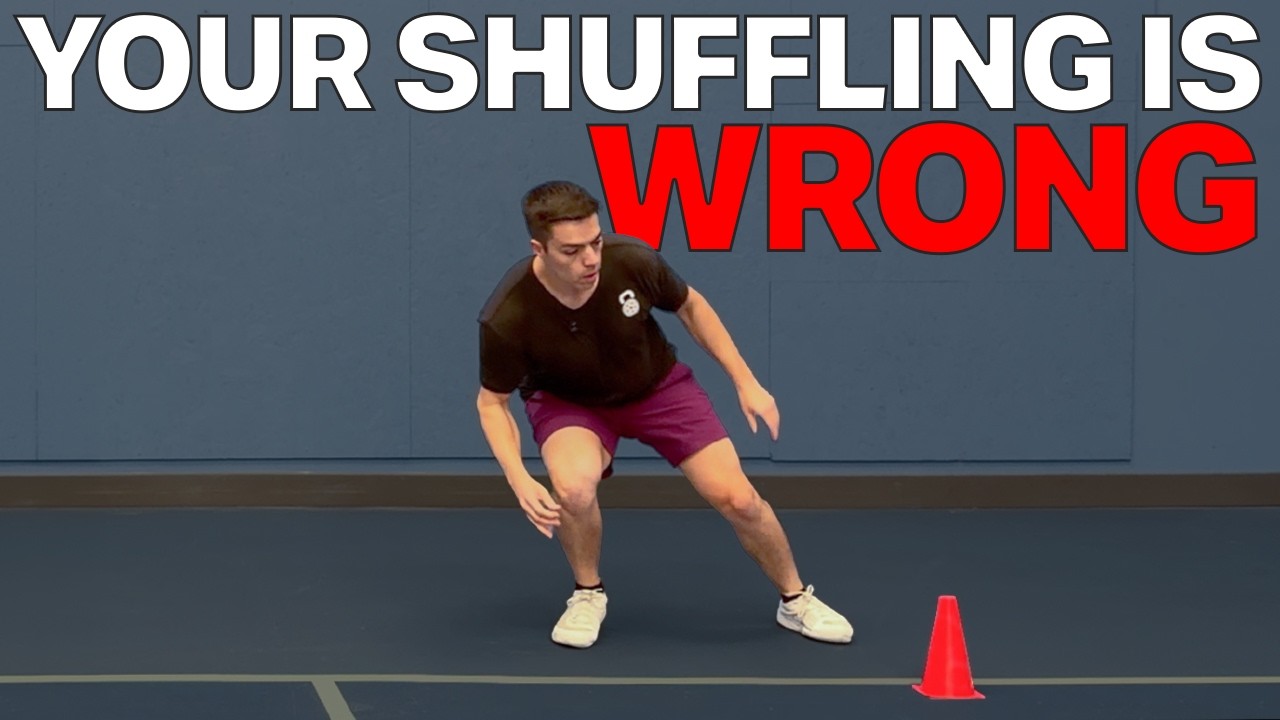
How to Practice the Drop Step and Build Better Pickleball Footwork
You do not need a partner to start. Shadow the three movements at home: pivot only, then pivot into a shuffle, then pivot into a crossover.
Slow and correct beats fast and sloppy every time.
When you add a partner, have them toss or feed balls to different depths so you choose the right transition on the fly.
A short ball gets a shuffle. A deep ball gets a crossover.
Reading depth quickly is its own skill, and it improves alongside your anticipation.
Warm up before you train movement hard. Cold hips do not open well, and backward sprints are exactly where players tweak something.
Perfecting pickleball posture before you drill goes a long way toward keeping your movement clean and injury-free.
Layer these into your other footwork drills rather than treating them as a separate project.
The drop step belongs in the same bucket as your split step and your transition zone movement.
Before you train any of it hard, settle into a low, balanced ready position so your first move is always a clean one.
 The Dink Media Team
Fix Your Court Movement Before Your Next Match
The fastest way to lock in this pickleball footwork pattern is to fix your feet in practice before the pressure of a live point forces a bad habit.
Pair that work with overhead smashes training so you are ready for every situation a lob creates.
For structured session planning, the 12 drills you need to play your best pickleball in 2026 is the place to start.
Frequently Asked Questions
What is a drop step in pickleball?
A drop step is a pivot where you drop one foot back and open your hips toward the direction you need to move, instead of shuffling backward while facing the net. It gives you momentum and lets you cover more court when a ball goes over your head.
When should I use a drop step instead of just shuffling back?
Use a plain shuffle only for very short adjustments. The moment a ball forces you back more than a step, lead with a drop step so your hips open first. For short retreats, drop step into a shuffle. For deeper balls and lobs, drop step into a crossover run.
Why do I keep losing my balance when I move backward?
Almost always because you are backpedaling square to the net and sitting on your heels. Both leave you off balance and slow. Opening your hips with a drop step and staying on the balls of your feet fixes the wobble and the speed at the same time.
How do I stop tripping during the crossover step?
Make sure your back foot passes behind your front foot, not in front of it. Landing the trail leg in front crosses your feet and kills your base. Commit to the turn, drive a long first step from the hip, and run to the ball rather than shuffling.
Can I practice pickleball footwork without a partner?
Yes. Shadow all three movements at home with no ball: the pivot alone, the pivot into a shuffle, and the pivot into a crossover. Reps build the pattern so it shows up automatically once you are in a live point.

Love Pickleball? Join 100k+ readers for free weekly tips, news & gear deals.
Subscribe to The Dink