Why 'Shoulder High Let It Fly' Is Actually Too High (And What to Do Instead)
Most players think shoulder height is the cutoff for letting hard shots go, but the real number is much lower. Here's the geometry that proves letting out balls go in pickleball should start at just 43 inches off the court.
Letting out balls go in pickleball sounds simple, but most players are still swinging at balls they should be dodging.
You know the feeling: a banger rips a hard drive at you, you panic, you swing, and the ball sails wide or into the net.
The old saying "shoulder high, let it fly" is a good starting point, but it sets the bar too high.
The real cutoff is significantly lower, and once you understand the geometry behind it, your entire approach to handling hard-hit shots will change.
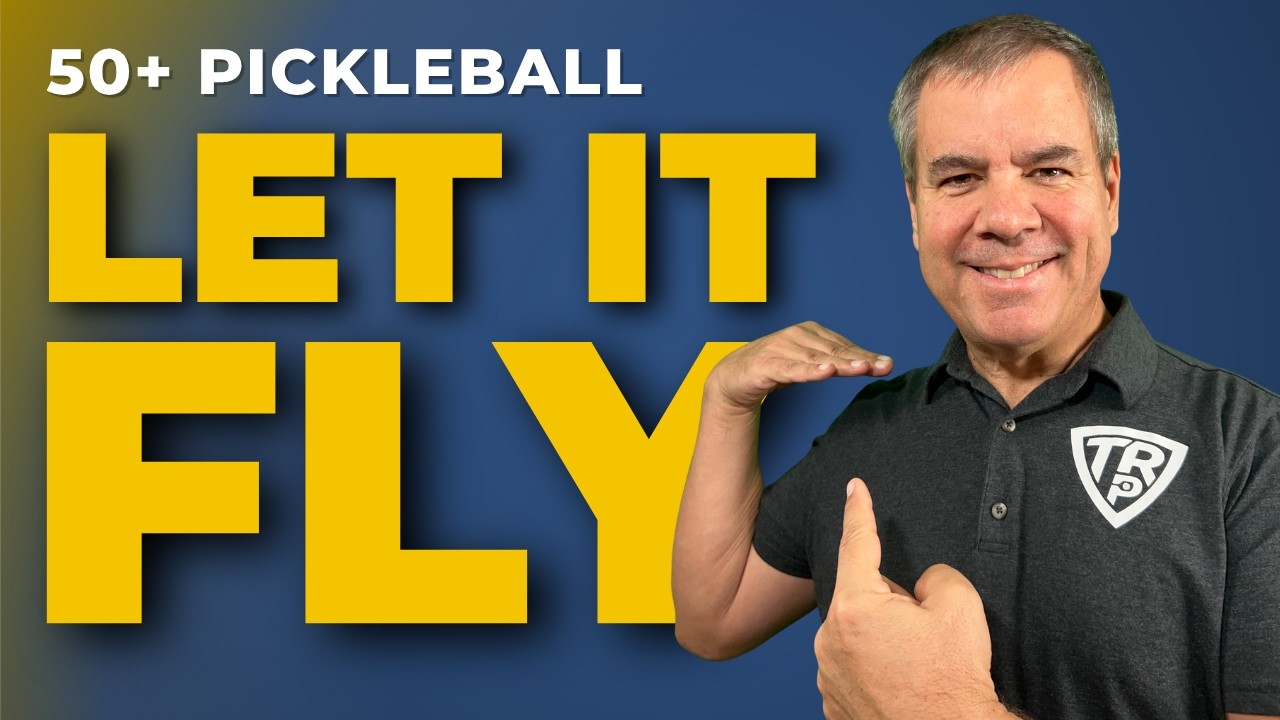
This breakdown comes from Tony Roig Pickleball (formerly In2Pickle) on YouTube, who took a measuring tape to the court and proved exactly where that cutoff sits with real numbers and real footage.
Love pickleball? Then you'll love our free newsletter. We send the latest news, tips, and highlights for free each week.
The "Shoulder High, Let It Fly" Rule Is a Floor, Not a Ceiling
The saying is accurate. If a hard ball reaches your shoulder height, you should absolutely let it go. That part is not up for debate.
The problem is that most players treat shoulder height as the lowest possible cutoff, when in reality it is just where good habits begin.
You can start letting balls go much, much earlier than that.
After testing on a real court with a measuring tape, the number that keeps coming up is 43 inches off the ground.
That is well below shoulder height for any adult player. And from the kitchen line, a ball traveling at 43 inches is almost certainly heading out of bounds.
Why Does Position on the Court Change Everything?
The geometry of a hard-hit shot changes dramatically depending on where the banger is standing.
When a player drives from the baseline, the ball has enough court to dip over the net and land inbounds. That math works in the banger's favor.
But here is where it falls apart for them: the closer a banger moves toward the net, the harder it becomes to keep that drive in the court.
The shot still has to clear a 34-inch net in the middle, but now there is almost no room for it to land before the baseline.
Think about a driver hitting from just 2 feet behind the kitchen line. The ball has to go up to clear the net, and then it has to come back down in a matter of feet.
The physics simply do not cooperate. Most players never understand why bangers at close range are actually less dangerous, not more.
What Is the 43-Inch Mark, and Why Does It Matter?
43 inches is roughly mid-chest height for a 6-foot player in an athletic stance. It is lower than your sternum and well below your shoulder.
Most players would instinctively try to attack or block a ball at that height, not step aside and watch it sail out.
Here is the key: when you are standing at the kitchen line and a banger at or near that line drives the ball at 43 inches, that ball is going out.
It does not matter how hard it is hit. The trajectory required to keep that ball in the court does not exist from that position.
To understand why your decisions at the kitchen line determine so much of your game, take a look at kitchen arrival percentage as a stat.
Getting to the line is only half the job. Knowing what to do when you get there is the other half.
 The Dink Media Team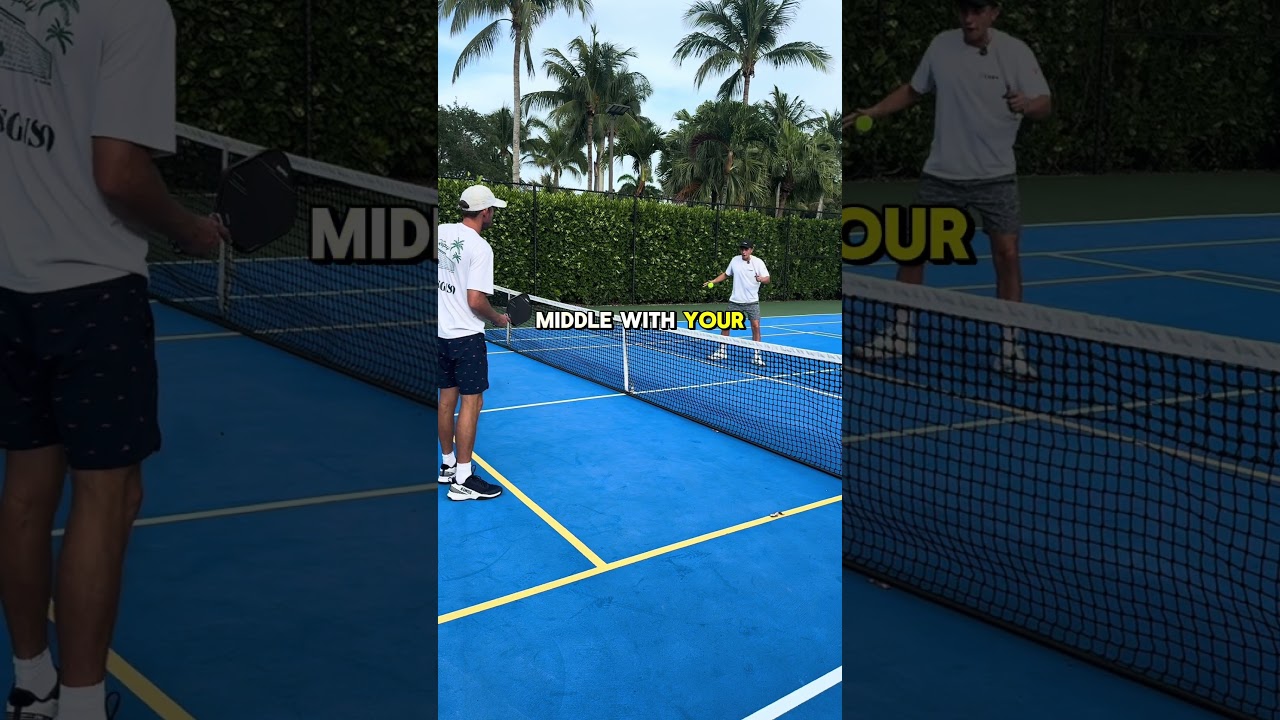
Where Should You Stand to Make This Work?
The ideal starting position is roughly halfway between the kitchen line and the baseline when you are first learning to let balls go.
From this spot, the geometry breaks down significantly for the banger.
From this position, almost any hard shot near or above that 43-inch mark is going out.
You do not need to make a split-second hero decision. The math is already working for you.
Once you are comfortable there, move closer to the kitchen line. The closer you get to the net, the lower the cutoff goes.
Stopping a banger in pickleball often comes down to this positioning decision more than any shot you hit back.
 The Dink Media Team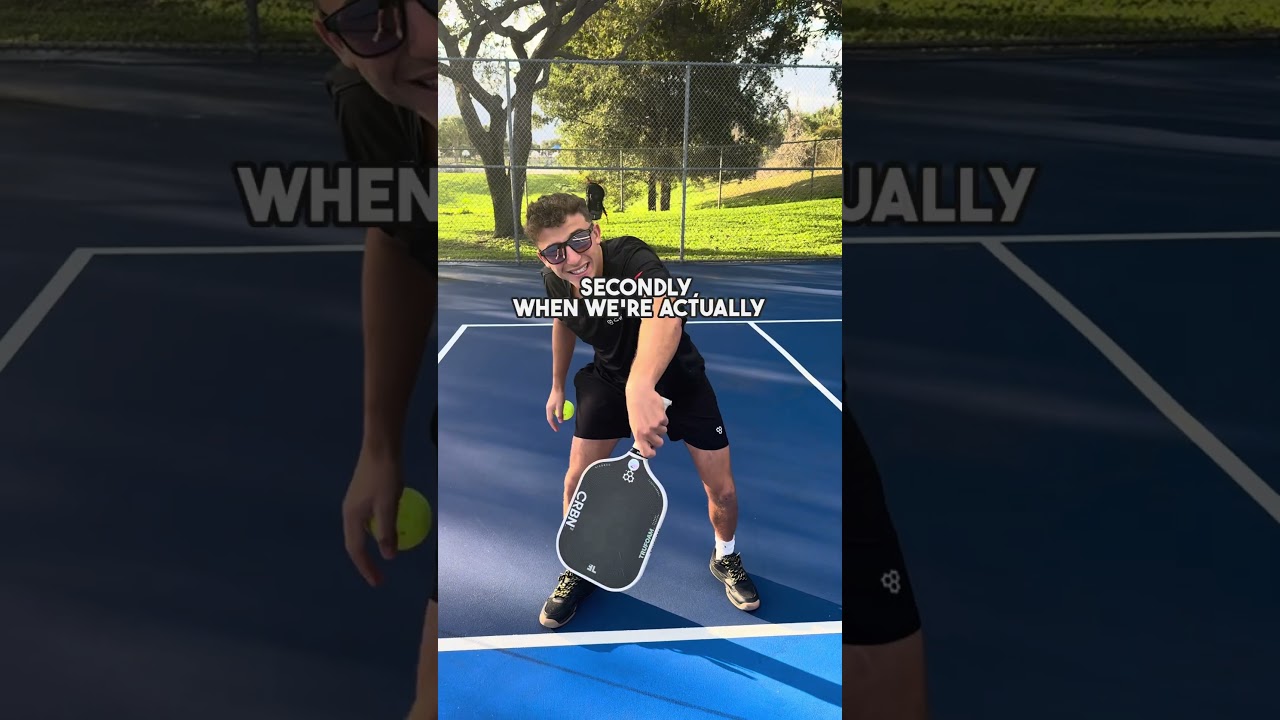
The Geometry Breakdown: Why the Banger's Shot Goes Out
Pickleball courts are significantly shorter than tennis courts, but the net heights are close: 34 inches in the middle for pickleball versus 36 inches for tennis.
That small difference in net height combined with a much shorter court creates a major problem for the banger.
When a drive is hit hard and flat from close range, the ball must clear the net and then land before the baseline.
The angle required is steep. The faster the shot, the harder it is to keep that ball in the court.
Here is what that looks like in practice, broken into the three most common banger positions:
- From the baseline: The banger has maximum court to work with. The ball can clear the net and still land inbounds. This is where their shot is most dangerous.
- From mid-court: The geometry starts to break down. Balls that feel threatening are frequently heading long. Your cutoff gets lower here.
- From 2 feet behind the kitchen line: The shot is nearly impossible to keep in. Even a ball traveling below the 43-inch mark often still lands out of bounds. Step aside and watch.
Understanding this shift is what separates reactive players from smart ones.
The mindset shift that stops you hitting out balls starts with trusting that the court geometry is on your side.
 The Dink Media Team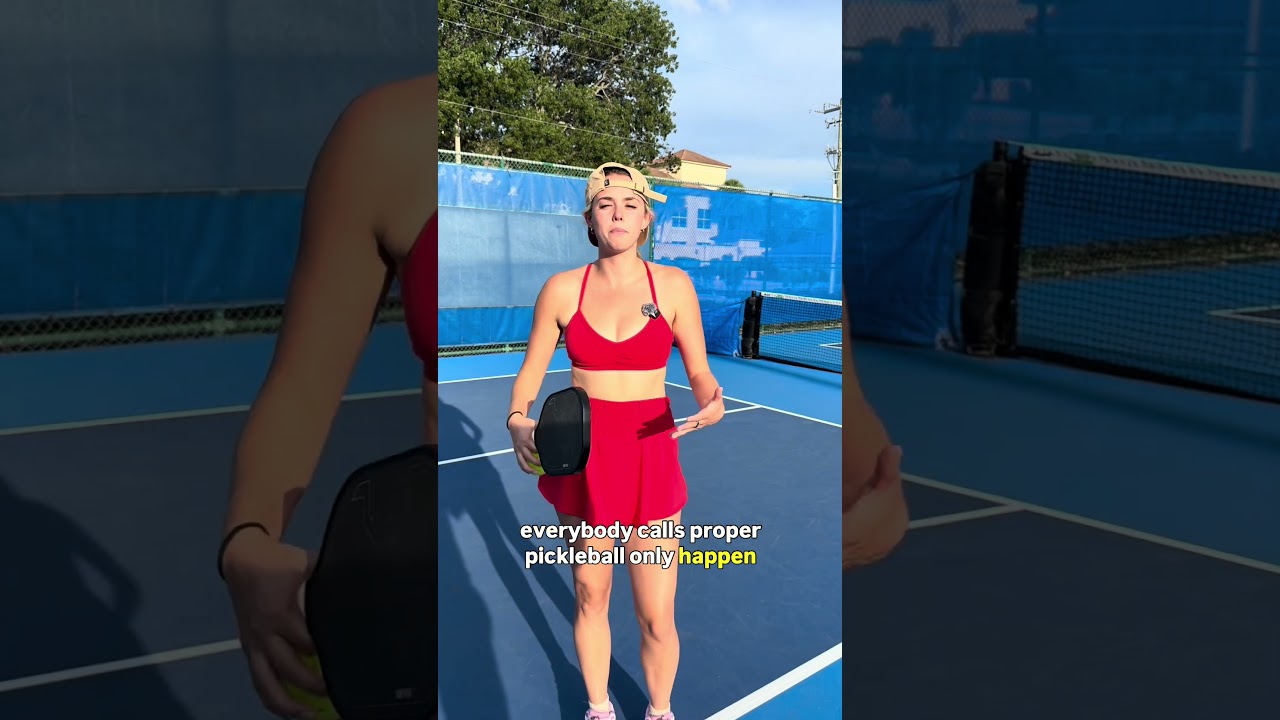
How Do You Train Your Brain to Actually Let Them Go?
Knowing the geometry is one thing. Trusting it in a fast rally is another. Your instinct is to swing.
Overriding that instinct takes real repetition.
Here is a simple progression to build that trust:
- Start at shoulder height. If you are still hitting everything, begin by committing to letting any shot at shoulder height go. No exceptions. Win that habit first.
- Drop to mid-chest. Once shoulder height feels natural, bring the cutoff down to roughly your sternum. Notice how many of those balls land out.
- Move to 43 inches. From the kitchen line, commit to the 43-inch standard. Track how often those balls miss the court without you touching them.
- Adjust by banger position. The closer the banger is to the net, the lower your cutoff can go. Let your positioning do the thinking.
If you want to sharpen your decision-making under pressure, the dodgeball drill for stopping out balls is one of the most practical tools available.
It trains your instincts without requiring a full match setting.
You can also build these habits off the court. Drilling at home without a court is a real option, especially for the mental reps that sharpen decision-making.
 The Dink Media Team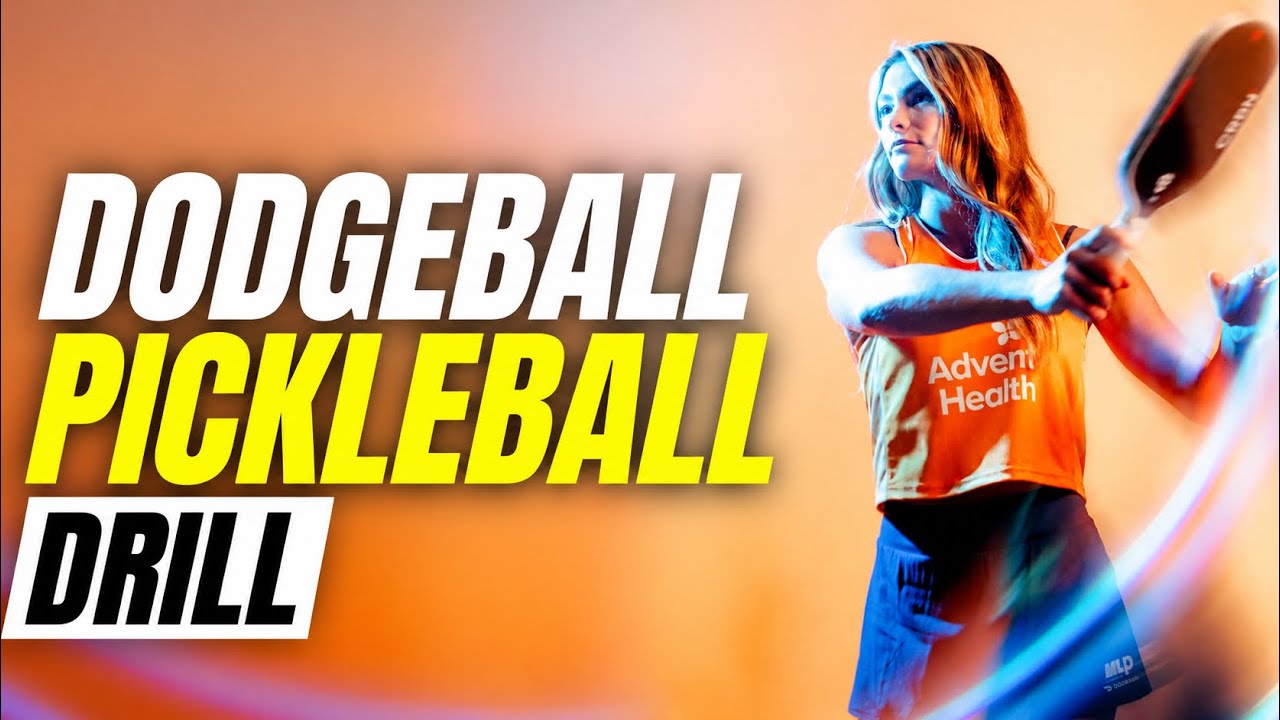
What Happens When You Get This Wrong?
The clip from real match footage in this video shows exactly what goes wrong when a player tries to engage a ball they should leave alone.
The ball is coming in hard at rib height from a player who has moved close to the net. Even a high-level athlete struggles to do anything useful with that ball.
The result: it glances off the paddle, the rally is lost. The correct play was to step back and let it sail.
This is not about being passive. It is about being smart.
Countering a banger in pickleball is mostly about refusing to do their dirty work for them by hitting their out balls back into play.
For more on the specific physical tools that help you handle these moments, blocking hard shots effectively is a skill worth developing alongside the decision to let go.
 The Dink Media Team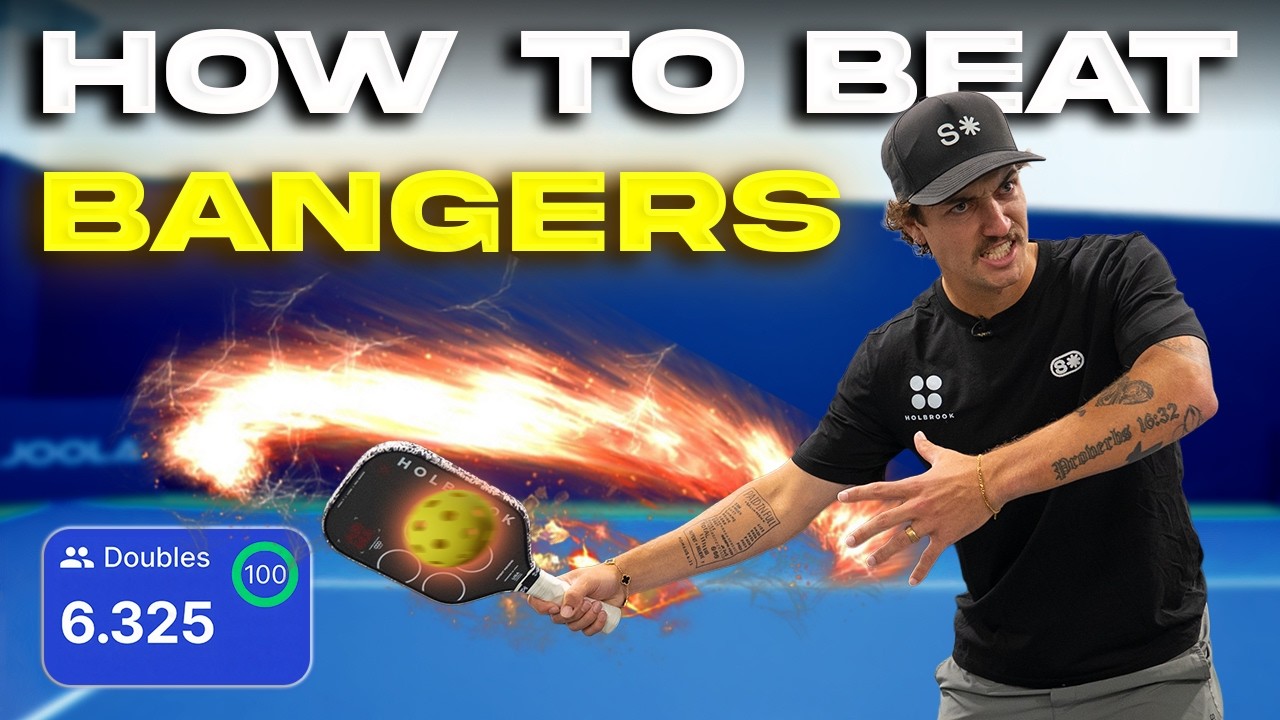
Does Height Matter If You Are Shorter or Taller?
This is a common question, and the answer might surprise you. Height does not change the core principle.
The geometry of the shot is determined by the net, the court length, and the banger's position, not by how tall you are.
A 5-foot player and a 6-foot player standing at the kitchen line are both looking at the same physical reality.
The ball still has to clear the net and land in the same court. What changes is where 43 inches falls on your body, not whether that height is an out ball.
Both players can use shoulder height as the starting habit. Both players can work their way down to 43 inches as confidence builds.
Building your pickleball defense around these principles works regardless of your physical size.
 The Dink Media Team
Putting It All Together
"Shoulder high, let it fly" is a great introduction to a concept that goes much deeper.
The real number, once you are comfortable at the kitchen line, is closer to 43 inches off the ground.
The banger's geometry falls apart as they move toward the net. You do not need to out-hit them.
You need to trust the court. Resetting against speed-ups and learning to step aside from out balls are two sides of the same defensive coin.
Start at shoulder height, build the habit, then work down.
Countering topspin drives and hard flat shots both become easier once you stop helping your opponent by hitting their out balls back into play.
Frequently Asked Questions
What does "shoulder high, let it fly" mean in pickleball?
"Shoulder high, let it fly" means that any hard-hit ball that reaches your shoulder height when you are at the kitchen line is almost certainly going out of bounds. You should step aside and let it go rather than swinging at it. It is a starting point for building the habit of recognizing out balls.
How low can I let a ball go before I should hit it?
When you are at the kitchen line and the banger is close to the net, balls at or above 43 inches off the ground are very likely heading out of bounds. That is well below shoulder height and roughly mid-chest for most players. As the banger moves closer to the net, the cutoff gets even lower.
Why does the banger's position on the court matter so much?
The closer a banger is to the net, the less court they have to work with after the ball clears the net. A drive from the baseline has room to arc and land inbounds, but a drive from 2 feet behind the kitchen line almost cannot stay in the court. The geometry simply does not cooperate for the banger at close range.
Does my height affect when I should let a ball go?
Your height changes where 43 inches falls on your body, but it does not change the underlying geometry of the shot. Both shorter and taller players can use the same cutoff principles because the court dimensions and net height stay the same. Start with shoulder height as your habit and work down from there.
How do I train myself to stop swinging at out balls?
Start by committing fully to one height, like shoulder height, and refusing to swing at anything above it regardless of outcome. Track how often those balls land out to build trust in the concept. Then gradually lower your cutoff as your confidence and recognition speed improve.

Love Pickleball? Join 100k+ readers for free weekly tips, news & gear deals.
Subscribe to The Dink