

Why You Keep Getting Burned by Hard Shots (And How to Stop It)
Hard shots in pickleball don't have to catch you off guard. Learn how to anticipate attacks before they happen and the three best ways to respond when they do.
Getting hit by hard shots in pickleball is one of the most frustrating feelings in the game, especially when you never saw it coming.
The good news is that most hard shots are predictable.
Your opponent is giving you signals before they ever swing, and once you know what to look for, you can be ready before the ball even leaves their paddle.
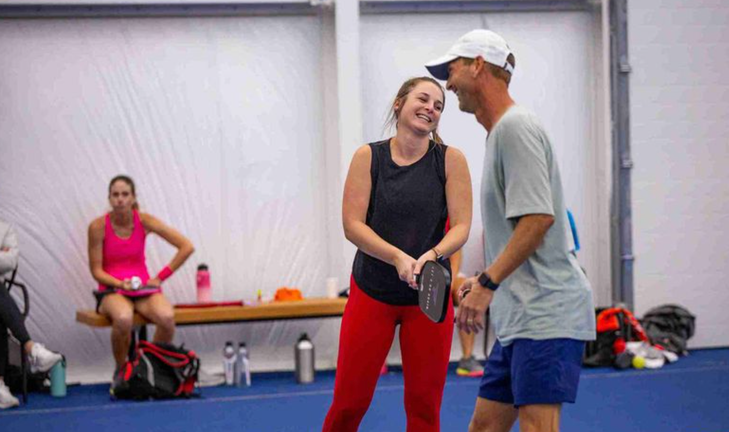
This breakdown comes from Tony Roig Pickleball (formerly In2Pickle) on YouTube, where he and Coach Kylen walk through exactly how to anticipate attacks and respond to them with three specific techniques.
Here is what you need to know.
Love pickleball? Then you'll love our free newsletter. We send the latest news, tips, and highlights for free each week.
Why Anticipation Is the Real Skill Here
Most players think defending a hard shot in pickleball is about reaction speed. It is not. It is about reading your opponent before the attack happens.
By the time the ball is flying at you, you are already behind.
The players who handle pace well are not faster, they are earlier.
They have already decided what is coming.
There are five key signals that tell you a hard shot in pickleball is coming. Learn these and you will stop being surprised.
How to Know When an Attack Is Coming
Are You Playing a Banger?
The simplest read in pickleball: if your opponent is a banger, they are going to bang almost every attackable ball. Full stop.
You do not need to think about it. Every ball inside the court that sits up at all should trigger your defensive ready position.
Playing a banger actually simplifies your life because their behavior is consistent.
Stop trying to outthink them and just be ready for pace on every rally.
Know Your Opponent's Preferred Side
For more sophisticated players, you need to pay attention to their preferred attack side. Not everyone attacks from both sides equally.
Tony is a left-handed player who almost never speeds up from his backhand side off the bounce.
If you are playing against someone like him, a ball to the backhand is a much safer dink than one to the forehand.
Get specific about which side your opponent attacks from, and bias your defensive readiness accordingly.
This kind of opponent scouting takes almost no extra effort and pays off every single rally.
Ball Quality Changes Everything
A neutral or dead ball sitting up in the kitchen is far more likely to get attacked than a ball that pushes your opponent wide or low.
This is not a reason to stop hitting dead dinks when you need to.
If a dead dink is the right shot because you are in trouble, hit it. Just be ready for the response. The goal of understanding ball quality is not to avoid certain shots.
It is to adjust your defensive posture based on what you gave your opponent to work with.
Understanding what a dead dink is and why it gets attacked is worth studying if this concept is new to you.
Watch the Body
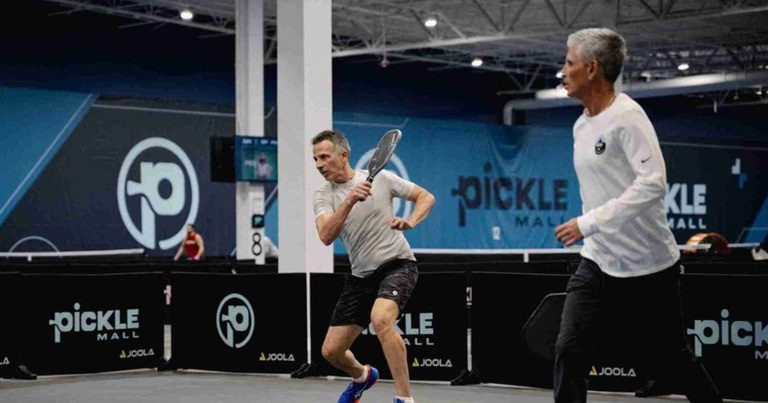
Your opponent's body rotation is one of the clearest signs that a speed-up is coming.
When someone is dinking comfortably, their body stays relatively square and compact.
When they are loading to attack, they turn. They coil. The shoulder drops back, the hips rotate, and the whole setup looks different from a casual dink.
This is especially visible in players who have not trained to disguise their attacks.
Make it a habit to watch your opponent's torso, not just the paddle. You will be surprised how early you can see the attack coming.
Watch the Paddle Backswing
The most reliable tell of all is paddle position. A dink has almost no backswing. The paddle stays in front of the body, and the motion is short and controlled.
An attack requires a backswing. When your opponent pulls the paddle behind their hip or shoulder, they are loading up.
Many recreational players take such a big backswing that you have a full half-second to read it before the ball even leaves their paddle.
That half-second is enough to get set.
 The Dink Media Team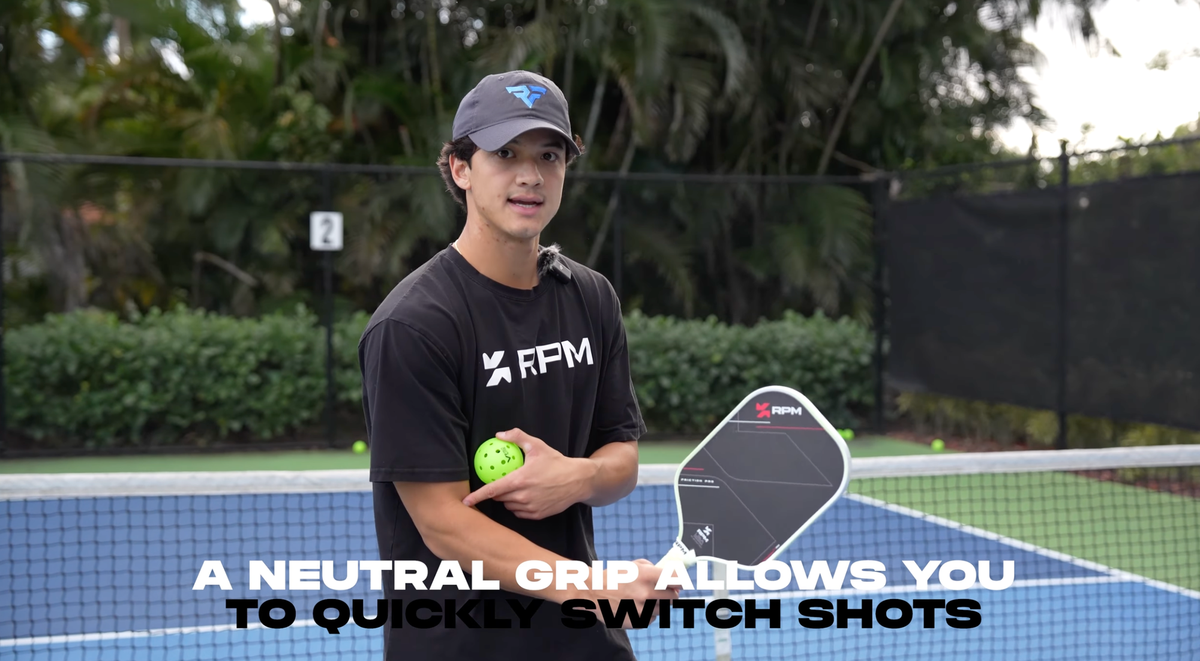
What to Do When the Hard Shot Is Coming
Once you have read the attack, you have three options. Each one has its place, and knowing when to use which one matters as much as the technique itself.
Get Your Paddle Ready on Your Preferred Side
Before anything else, your paddle position and stance need to be dialed in before the ball gets to you.
Coach Kylen demonstrates this in the video by setting up with her paddle favoring her backhand because that is her stronger side for handling pace.
If you prefer your backhand, slide slightly to your dominant side and open that angle up. If your forehand is your weapon, adjust the other way.
You are not guessing where the ball is going.
You are setting up to handle the most likely shot with your best tool.
You can also use a drop step to give yourself a little more time and space.
Taking one step back when you see the loading motion gives the ball more time to travel, which means more time to react.
Once you reset the point, move back up to the kitchen line immediately.
 Alex E. Weaver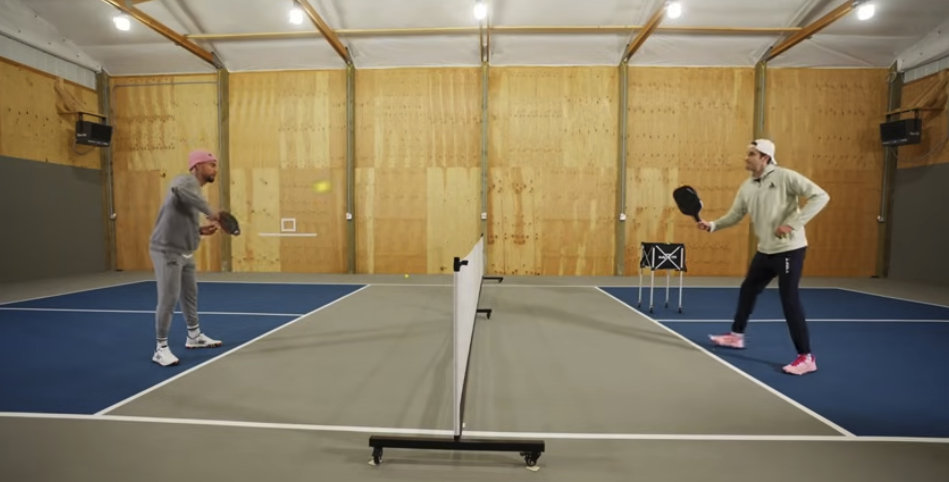
Option 1: The Block Volley Reset
The block volley is your most reliable tool against pace. You are not trying to hit through the ball. You are absorbing it.
Think of your paddle as a wall. Soft hands, firm wrist, minimal swing.
The goal is to redirect the ball back over the net with enough control to neutralize the rally and reset the point into a dinking exchange.
Most players make the mistake of swinging at hard shots. That is how pop-ups happen.
If your reset keeps popping up, you are using too much swing and not enough absorption.
Option 2: The Counter Attack
The counter is the high-risk, high-reward response. When your opponent speeds up at you, you speed it right back.
Coach Kylen demonstrates a two-handed backhand counter in the video, which gives more stability and power when absorbing pace and redirecting it.
This is a legitimate weapon, but it requires timing and confidence to pull off consistently.
Do not try to build your defense around the counter until your block volley is solid. The counter is a finishing move, not a foundation.
Check out resources on backhand counter fixes before relying on this as your primary response.
Knowing when to speed up in pickleball is a separate skill worth studying on its own.
 The Dink Media Team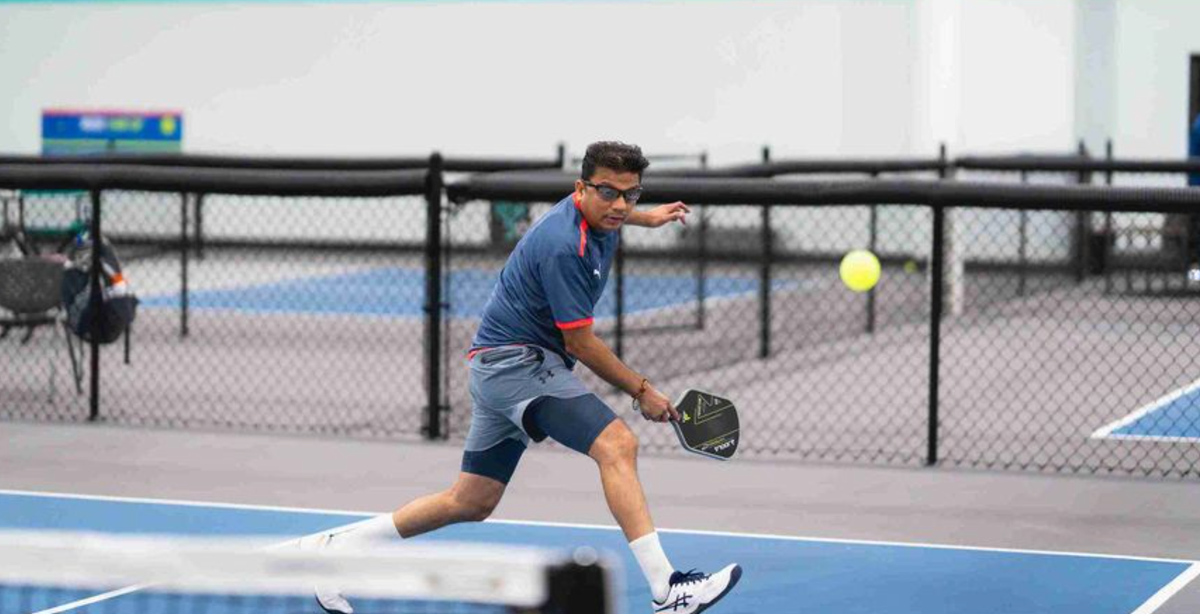
Option 3: Get Out of the Way
This is the one most players refuse to use, and it is the one Tony says will improve your game by at least 10 percent.
When a hard shot is clearly going out of bounds, do not hit it. Move out of the way and let it go.
In the video, the demonstration ball cleared the net by several feet and was heading four feet out.
The correct move is to step aside and watch it land out. That is a free point, and you just gave it away by trying to make a play on an unwinnable ball.
This requires discipline. Your instinct is to swing at anything that comes at you hard.
Overriding that instinct is a skill, and it pays off constantly in recreational play where bangers frequently over-hit.
 The Dink Media Team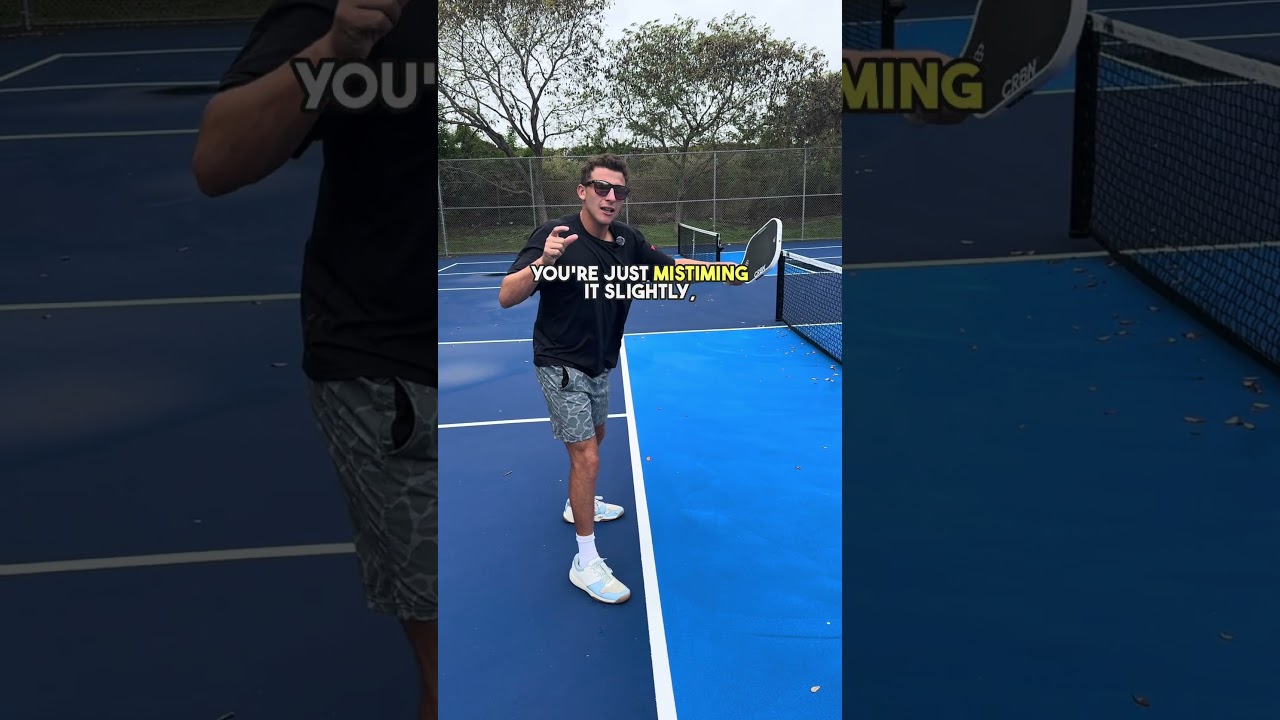
Putting It All Together in a Real Rally
Here is how these principles connect in sequence during a real point:
- Identify your opponent's attack tendencies before the rally even starts. Are they a banger? Which side do they prefer?
- Read the ball quality as the dinking exchange unfolds. Did you give them something attackable?
- Watch their body and paddle for loading signs. Coiled torso and a big backswing mean it is coming.
- Set your paddle on your preferred side and decide whether to stay at the line or take a step back.
- Choose your response in the moment: block and reset, counter, or get out of the way if it is going long.
None of this is about being faster. It is about being earlier.
The hard ball at your body is a specific scenario worth studying separately, because the mechanics shift when the ball is aimed at your torso rather than to a side.
The players who handle pace best are not reacting to the ball.
They are reacting to their opponent's setup, and that gives them the extra fraction of a second that makes all the difference.
If getting attacked at the kitchen is a consistent problem in your game, these anticipation cues are the first thing to fix before working on technique.
And if you find yourself dealing with power players regularly, understanding how to defend overhead smashes is the natural next step after mastering these basics.
Frequently Asked Questions
How do you defend against hard shots in pickleball?
The best defense against hard shots in pickleball starts with anticipation, reading your opponent's body rotation and paddle backswing before they swing. Once you see the attack coming, set your paddle on your stronger side and either block the ball softly back over the net, counter it, or step aside if it is going out. Most players focus on reaction when they should be focusing on reading the setup early.
Should you step back when defending a speed-up in pickleball?
Stepping back one pace when you see an attack loading is a legitimate technique that gives you more time to react. The key is to return to the kitchen line immediately after you have reset the point. Staying back after the reset puts you at a disadvantage for the next shot.
What is a block volley in pickleball?
A block volley is a defensive shot where you use a firm but relaxed paddle face to absorb an incoming hard shot and redirect it back over the net with minimal swing. The goal is neutralization, not power. If your block keeps popping up, you are using too much arm swing instead of letting the pace of the incoming ball do the work.
When should you let a hard shot go out in pickleball?
If a hard shot is clearly traveling well above net height and angled beyond the baseline, the correct move is to step out of the way and let it land out for a free point. This takes discipline because the instinct is always to swing. Bangers over-hit frequently, and learning to recognize those balls early is worth at least several free points per game.
How can you tell when an opponent is about to speed up the ball?
The two clearest signs are body coil and paddle backswing. A dink requires almost no backswing and keeps the body square. An attack involves a visible shoulder and hip rotation plus the paddle pulling back behind the body.
Once you train your eyes to watch the torso instead of just the ball, you will start reading attacks a full beat earlier than before.

Love Pickleball? Join 100k+ readers for free weekly tips, news & gear deals.
Subscribe to The Dink