

Most players don't lose points because they can't attack. They lose because they speed up in pickleball at the wrong moment, and this five factor system fixes that.
Knowing when to speed up in pickleball is the difference between winning the point and handing your opponent a free counterattack.
Most players don't lose points because they can't attack. They lose because they attack the wrong ball.
John Cincola, a professional player on the PPA Tour, breaks this decision down into a simple traffic light system: green light, yellow light, red light.
You run every potential attack through five quick checks, and the more green lights you see, the safer the speed up.
Here is the exact framework, factor by factor, so you know when to pull the trigger and when to keep dinking.
Love pickleball? Then you'll love our free newsletter. We send the latest news, tips, and highlights for free each week.
The Green, Yellow, Red Light System for Speeding Up in Pickleball
The green, yellow, red light system rates every ball you might attack on five factors, and the goal is to stack as many green lights as possible before you commit.
It is built on one idea: every shot you hit should have a reason.
As Cincola puts it, you should "have a reason for every decision you make." You don't dink just to dink. You don't speed up because you got impatient.
You don't reset because you got scared. You attack because the ball, your body, and the court all told you it was time.
If you want to build that kind of intentional game, a simple 4-step system to win more pickleball games in 2026 lays out the decision-making framework that elite players use before every rally.
One ball skips the system entirely. Anything you contact around shoulder height is an automatic green light, every time.
If the ball pops up that high, stop reading and go hard and down with it.
The five factors below are for every other ball, the ones that live in the gray area. Here are the five factors you weigh before you speed up:
- Ball height: how high you make contact
- Contact point: where the ball is relative to your body
- Balance: how much body control you have
- Opponent readiness: how prepared they are to counter
- Partner readiness: how prepared your partner is to clean up a redirect
How High Should the Ball Be Before You Speed Up in Pickleball?
Ball height is the first factor: a ball you contact around net height is a green light, the middle of the net up to the top is yellow, and anything at the middle of the net or below is a red light.
The higher the contact, the more margin you have to drive the ball down into the court.
Think of it in three bands. Green is right around the top of the net, where you can attack with confidence.
Yellow is a touch lower, where you will need other factors to fall into place.
Red is when the ball has dropped below the net, and pulling off a pickleball speed-up from down there takes something special.
Understanding why professional pickleball players abandoned the slice shot in 2025 shows how much pros obsess over contact height and ball trajectory in exactly this way.
This is exactly why patient dinking matters so much.
A controlled dink forces a pop up, and a pop up is what turns a red light into a green one.
If you want more height to work with, learn how to break 5.0 with the 5 pickleball shots you must master before 2026 the moment your opponent floats one.
Where Should Your Contact Point Be When You Attack?
Your contact point is a green light when you strike the ball out in front of your body, yellow when it drifts to your side, and red once it gets behind you.
You always have the most control when the ball is in front of you, and control is what makes an attack land.
Out front, your technique holds together and you can generate power cleanly. Off to the side, the swing breaks down and the ball gets harder to direct.
Behind your body, past that imaginary line at your hip, is the no-go zone where good attacks go to die.
Catching the ball out front is mostly a footwork and spacing problem.
If you are constantly reaching, fix your kitchen positioning first, because a great ball at a bad contact point is still a bad attack.
The 12 drills you need to play your best pickleball in 2026 include specific reps designed to train exactly this kind of contact-point awareness.
 The Dink Media Team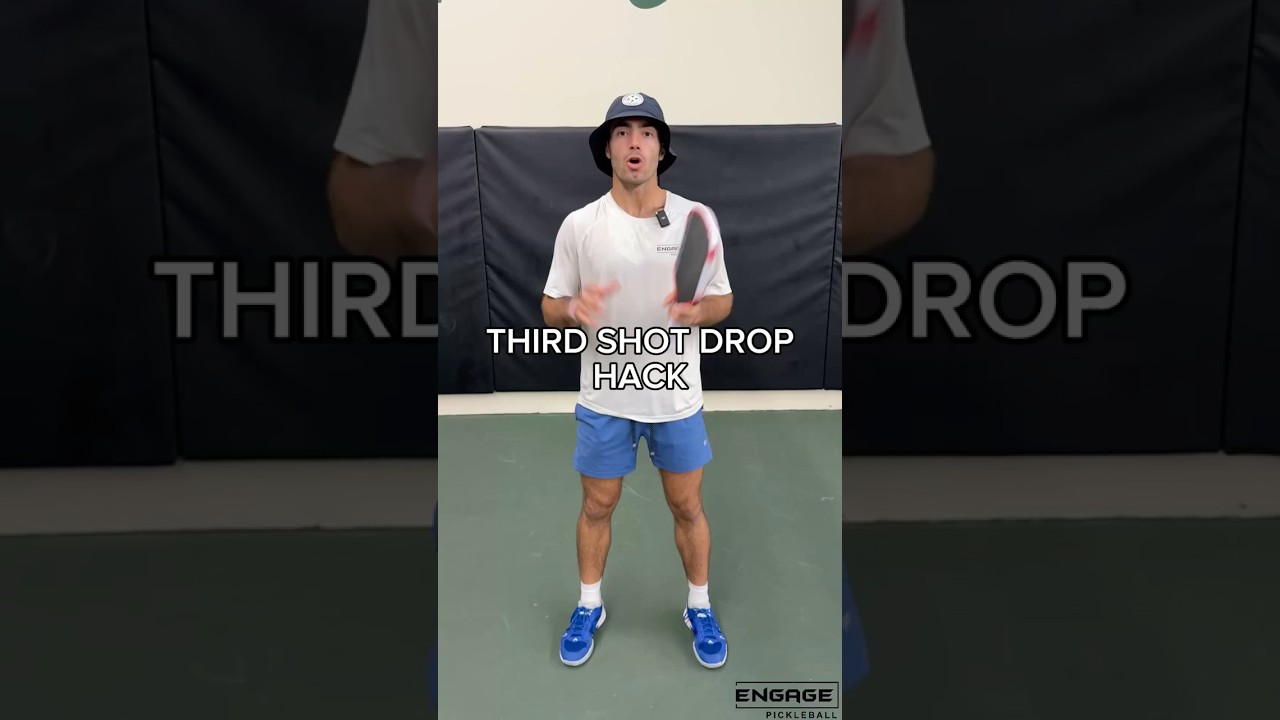
Why Balance Decides Whether Your Speed Up in Pickleball Lands
Balance is the third factor: if your body is under control, it is a green light, and if you are lunging or falling away, it is a red light no matter how tempting the ball looks.
You need good body control to execute a clean pickleball speed-up, full stop.
This factor sits right next to contact point, because the two usually fail together.
When you stretch to reach a ball off to your side, you lose your base, and a speed up hit off balance tends to float right into a counter.
When in doubt, reset and wait for a ball you can attack from a stable platform.
The modern pickleball strategies to win in 2026 reinforce this exact principle: controlled aggression beats reckless attacking every time.
If you keep losing the exchange that follows your attack, your hands may be the issue rather than your decision.
 The Dink Media Team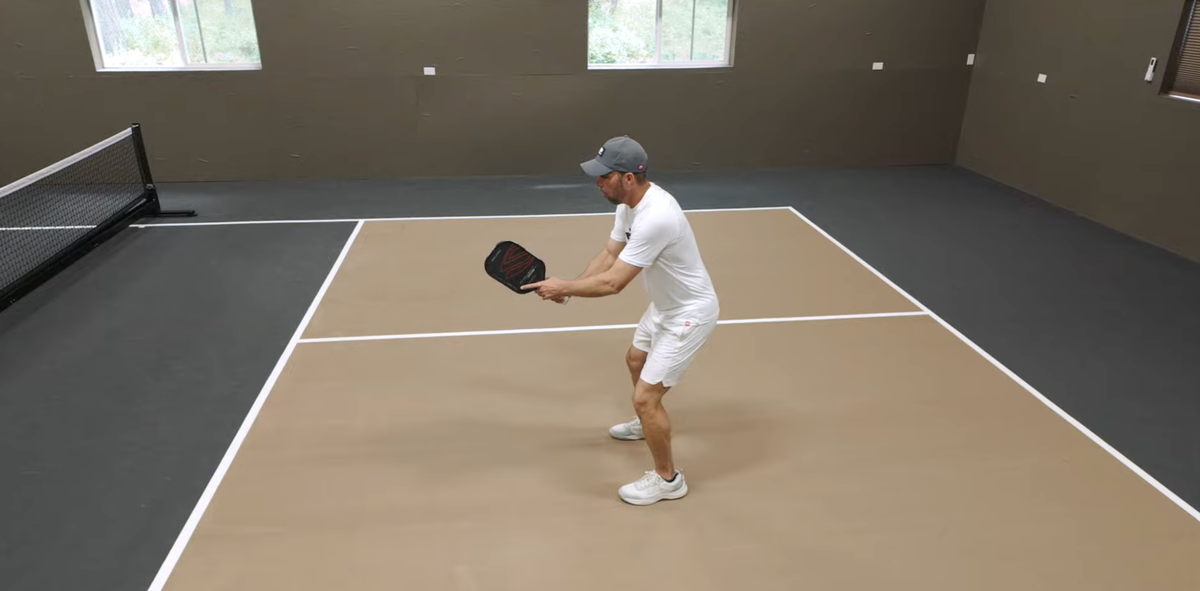
Is Your Opponent Ready to Counter Your Attack?
Opponent readiness is the fourth factor, and the more panicked or scrambling your opponent looks, the greener your light to speed up in pickleball.
A player who is balanced, set, and holding a perfect ready position is a red light, because beating that takes a near perfect attack.
Picture it from the other side. If your dink pulls your opponent off the court and they are still recovering, they cannot counter cleanly, so that is your green light.
If they are planted at the line with the paddle up, the odds tilt back toward them. This is what makes elite players so hard to attack.
Watch Anna Leigh Waters at the kitchen line and you will see she rarely gets caught out of position, which is exactly why speeding up on her so often backfires.
Reading those cues is a skill. The flip side is making sure you are never the easy target.
Learning the pickleball strategies you need to beat stronger players in 2025 helps you understand how top-level players position themselves to neutralize your best attacks before you even pull the trigger.
 The Dink Media Team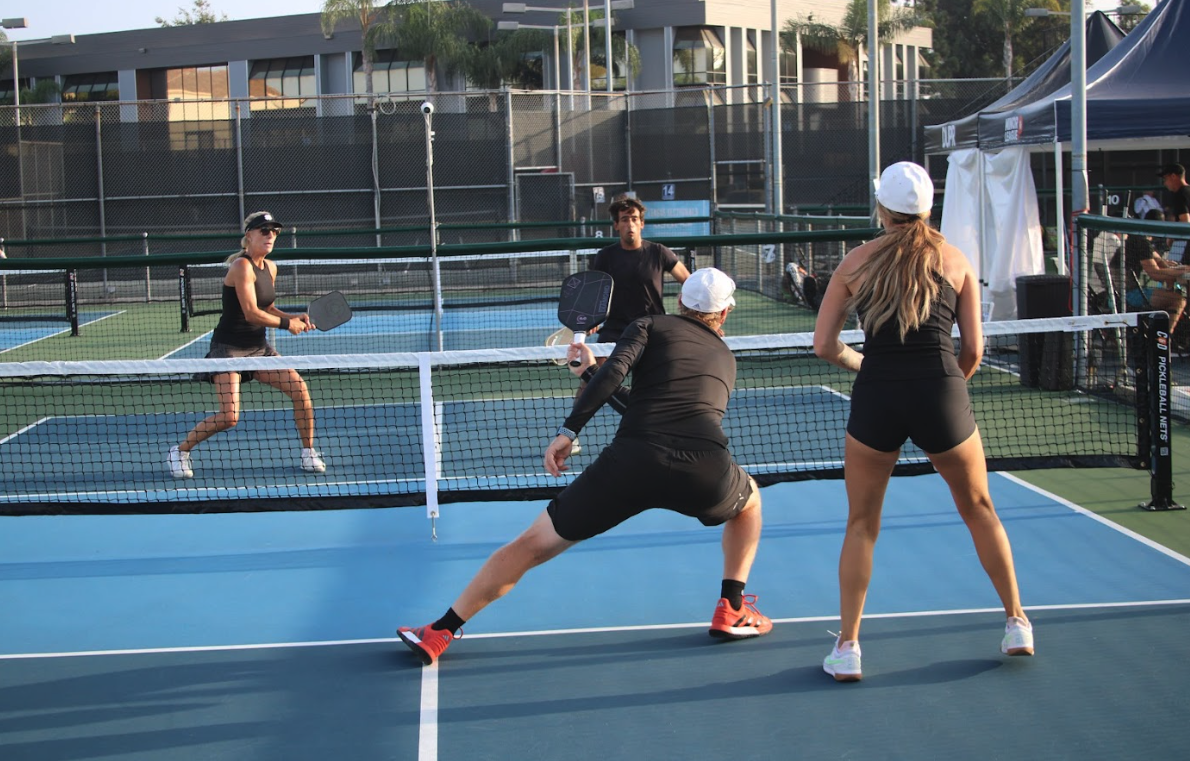
Don't Forget Your Partner When You Speed Up in Pickleball
Partner readiness is the fifth factor: speed up when your partner is set with their paddle ready, and hold off when they are still recovering or transitioning.
When you attack, there is a real chance the ball gets redirected at your partner, and you want them prepared to clean it up.
If your partner is locked in next to you at the line, that is a green light, because they can handle a redirect.
If they just hit a tough shot, or they are still moving up from the baseline or scrambling out of a recovery, speeding up puts them in a bad spot.
Good doubles teams talk about this constantly.
Strong attack fundamentals are a two-person job, and your partner's position is half the equation every time you consider a pickleball speed-up.
Studying who Ben Johns could play men's doubles with in 2025 is a masterclass in how elite duos communicate positioning before every single rally.
 The Dink Media Team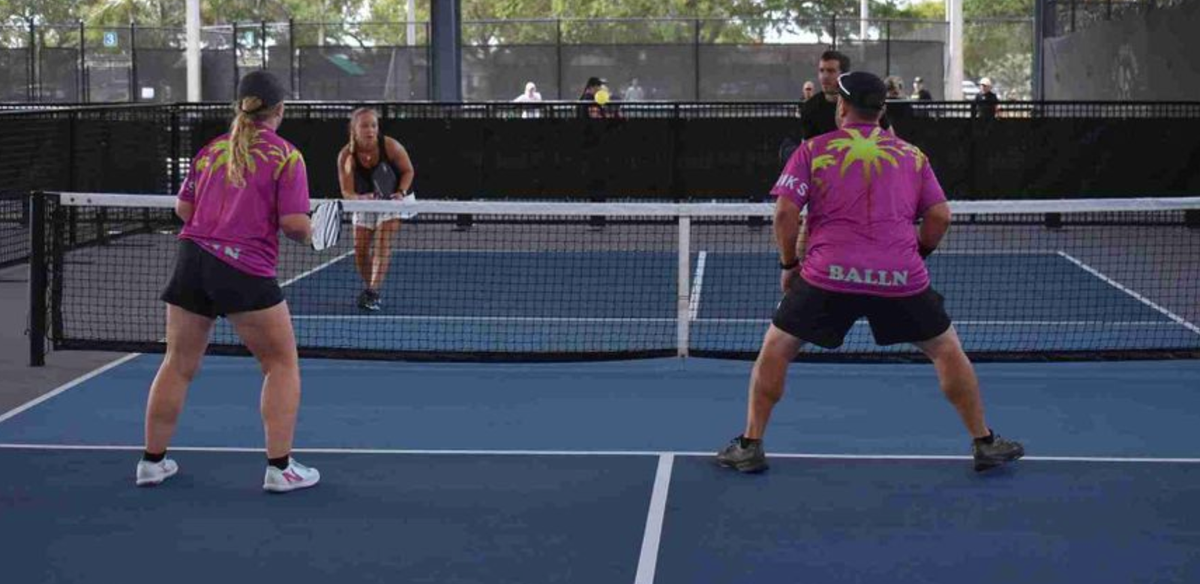
How to Add Up the Lights and Make the Speed Up Call
Add up the lights before every speed up in pickleball: five greens is an easy yes, and the more yellows and reds you stack, the worse your odds get over time.
One yellow or even one red can still work out, but multiple warning lights is where points start leaking away.
Here is the quick self-assessment to run on every attackable ball:
- Is the ball at net height or higher? (height)
- Am I making contact out in front of my body? (contact point)
- Am I balanced and in control? (balance)
- Is my opponent unsettled or scrambling? (opponent readiness)
- Is my partner set and ready for a redirect? (partner readiness)
Count your greens, yellows, and reds. All green is a clear go. A yellow or two means proceed with caution.
A pile of reds means keep dinking and wait for a better ball, because the percentages will punish you over a full match.
The smartest players do not just wait for this setup, they create it.
Dinking with intent forces the weak reply you are hunting for.
For more on the decision itself, the 5 pickleball shots you must master before 2026 go deeper on execution.
And remember the other side of the net: if you guess wrong, a sharp opponent can punish you hard.
Strengthen your own counterpunching by studying the 12 drills you need to play your best pickleball in 2026 so you can flip the exchange when the other team misreads their green light.
The more you run this checklist, the faster it gets, until weighing all five factors becomes second nature and you stop attacking the wrong ball for good.
Pair this system with 6 essential pickleball shots to master for 2026 and you will have both the decision-making framework and the shot library to back it up.
Frequently Asked Questions
When should you speed up in pickleball?
You should speed up in pickleball when most of the five factors are green: the ball is at net height or higher, your contact point is out in front, you are balanced, your opponent is unsettled, and your partner is ready for a redirect. The more of those that line up, the higher your chance of winning the point.
What is the easiest ball to attack in a pickleball speed-up?
The easiest ball to attack is anything around shoulder height, which is an automatic green light every time. Drive it hard and down with no hesitation, since the height gives you a steep angle into the court and almost no margin for the defender.
Why do my speed ups in pickleball keep getting countered?
Speed ups usually get countered for one of two reasons: you attacked from a poor contact point or off balance, or your opponent was set and ready to react. Check both before you pull the trigger, and favor balls you can hit out in front against an opponent who is scrambling.
Should you attack a ball below the net in pickleball?
Attacking a ball below the middle of the net is a red light, so avoid it unless everything else is strongly in your favor. A low contact forces you to hit up on the ball, which gives the defender an easy target to counter.
How do I know if my partner is ready for me to speed up?
Your partner is ready when they are set at the kitchen line in balance with their paddle up in front of them. If they just hit a difficult shot or are still moving up from the baseline, hold off, because a redirected ball could catch them out of position.
Love Pickleball? Join 100k+ readers for free weekly tips, news & gear deals.
Subscribe to The Dink