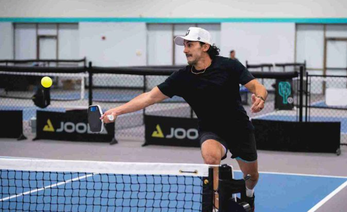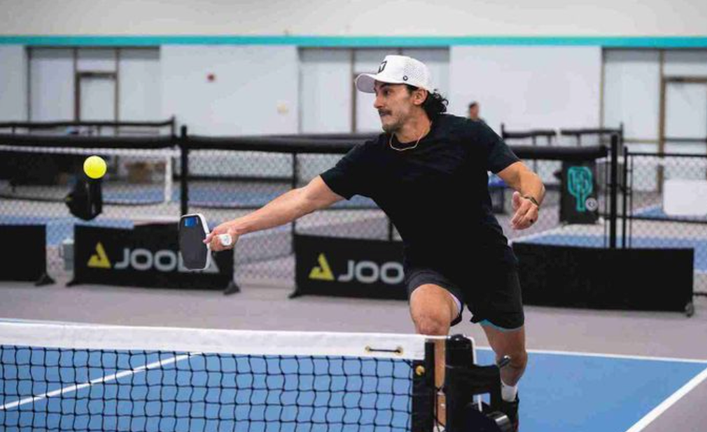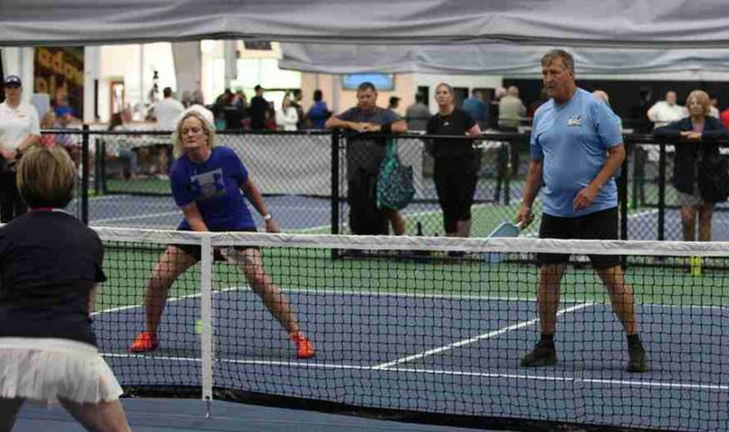

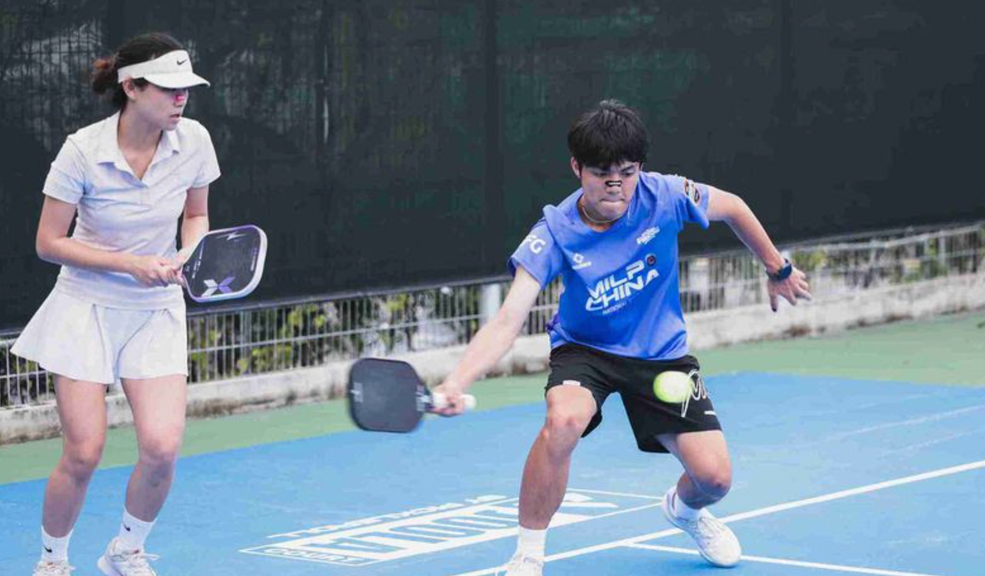
How to Return Topspin in Pickleball: 4 Ways to Counter a Heavy Topspin Player
Heavy topspin jumps off the court and shoves your contact point high into your chest, which is where points go to die. This guide covers how to return topspin in pickleball using four counters: taking the ball on the rise, retreating behind the baseline, blocking the pace, and opening your stance.
Nobody teaches you how to return topspin in pickleball until you've already lost to it.
You know the guy. He rips a forehand that looks long, it drops late, then it kicks off the court and you're playing a ball at eyebrow height.
You pop it up. He crushes it. Rinse, repeat. Same helpless feeling as a swing volley you never saw coming.
The spin isn't magic. It's physics, and physics has counters. Four of them, and each is a decision you make before the ball crosses the net.
Figuring out how to return topspin in pickleball is less about hands than about where you choose to stand.
Love pickleball? Then you'll love our free newsletter. We send the latest news, tips, and highlights for free each week.
What Is Topspin in Pickleball, Anyway?
Topspin is forward rotation that creates downward aerodynamic force, pulling the ball into the court faster than gravity alone would.
That's the Magnus effect, and it's the single most misunderstood thing in amateur shot-making.
Wind tunnel and video tracking work in tennis found that as spin rate climbs from 0 RPM past 1,400 RPM, total flight distance drops while the post-bounce angle steepens.
Translation: the ball drops, then explodes up and forward. Your opponent isn't hitting harder, he's hitting smarter.
He's hitting a ball that arrives somewhere your paddle hates, same reason a 1-2 punch works on you.
That's the whole problem. Heavy spin steals your strike zone, and learning how to return topspin in pickleball is learning to steal it back.
It starts where most pickleball drive technique fixes start: where you stand and when you swing.
Want to see what the guy across the net trains? Watch how players master the Topspin Pro. Knowing the mechanics makes reading the shot easier.
How to Return Topspin in Pickleball: The Four Counters That Actually Work
There are only four real answers, and they sort by timing.
Take the ball before it climbs, take it after it falls, take the speed off it, or change your body position so the swing still works.
Everything else is a variation, and how to return topspin in pickleball comes down to picking one fast enough.
Ranked by how often you'll actually use them:
- Take it on the rise for aggressive defense that keeps your court position
- Back off the baseline when you need time more than position
- Block or reset when the ball is already past your comfort zone
- Open your stance when you're stretched wide and can't step in
Which one you pick is a shot selection problem, not a technique problem.
Counter 1: How to Return Topspin in Pickleball by Taking the Ball on the Rise
Hit it before it gets up there.
Intercepting the ball as it ascends out of the bounce, rather than at its apex, keeps contact inside your waist-to-chest window and cuts your opponent's recovery time.
Here's the catch, and it's the part almost everyone gets backwards. Taking it early does not mean swinging bigger to fight the spin. It means the opposite.
A shortened, compact backswing plus a forward step into the court is what keeps your kinetic chain intact.
Long backswing, late contact, mishit, point over. Your stance sets it up.
If you've sharpened your return of serve, you own half this skill. Same compact motion, different incoming spin.
Standing wrong ruins it, though. Sort out where to return serve in pickleball first, because a bad starting position turns a rising ball into a shoulder-high one.
Counter 2: Back Off the Baseline and Let It Fall
Give the ball room to come back down to you.
Moving six to ten feet behind the baseline lets a high-kicking topspin ball drop into a comfortable waist-height contact point instead of forcing you to hit at shoulder level.
The trade is real. You've handed over time and position, so this is a survival play, not a strategy.
Use it when you're stretched or facing spin you can't handle early, the way you'd concede depth rather than force a low-percentage return.
Then get back. Immediately.
Retreating is a one-shot lease, not a new address, and knowing your three options from the baseline turns a defensive ball into a winnable rally.
In doubles, coordinate it with your partner using solid T and sideline positioning so the retreat doesn't open a lane.
 The Dink Media Team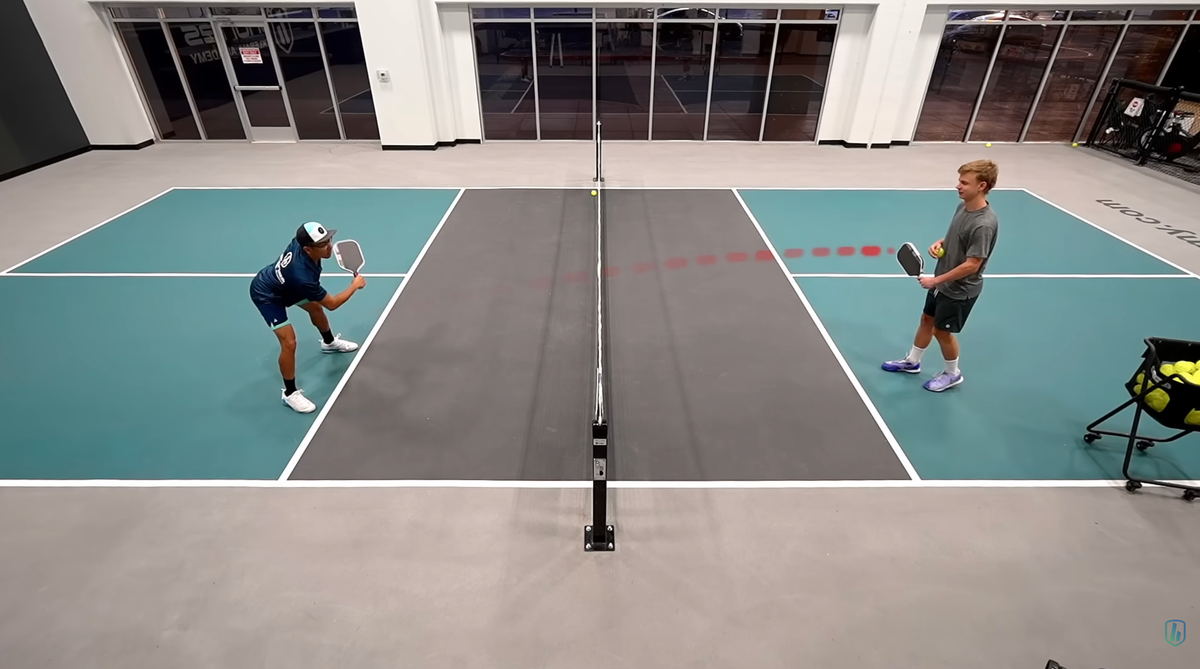
Counter 3: Take the Pace Off With a Block or a Reset
Absorb the spin instead of matching it. A soft paddle face with relaxed hands turns their topspin into your dead ball.
It's the highest-percentage answer once the ball climbs above your shoulders.
Why does this work so well? Spin needs pace to stay dangerous.
Kill the speed and the rotation has nothing left to feed on, which is how you become unattackable.
This is straight out of the return, block, smash playbook, and it's the same skill you build every time you practice how to reset better under pressure.
One tweak helps more than people expect: let the paddle do the work. Squeeze hard and the ball rockets off the face. Stay loose and it dies at your feet.
Honestly, if you only take one thing from this piece on how to return topspin in pickleball, make it soft hands.
It's the counter that works on your worst day, and it travels well into mid-court exchanges too.
Counter 4: Open Your Stance and Shorten Your Swing
When you can't step forward, rotate instead.
An open or semi-open stance lets hip and trunk rotation generate paddle head speed without a linear weight transfer, which matters when heavy spin has pushed you wide.
Sequencing is everything here. Hips uncoil first, shoulders follow.
Reverse that order and you break the chain, drain your power, and load your elbow in ways it will remember tomorrow.
This is the counter that pairs best with a clean backhand volley when the high ball lands on your off side.
It also sets up your fourth shot and court coverage, since a rotational block leaves you further from the kitchen than you'd like. A backhand clinic helps here.
 The Dink Media Team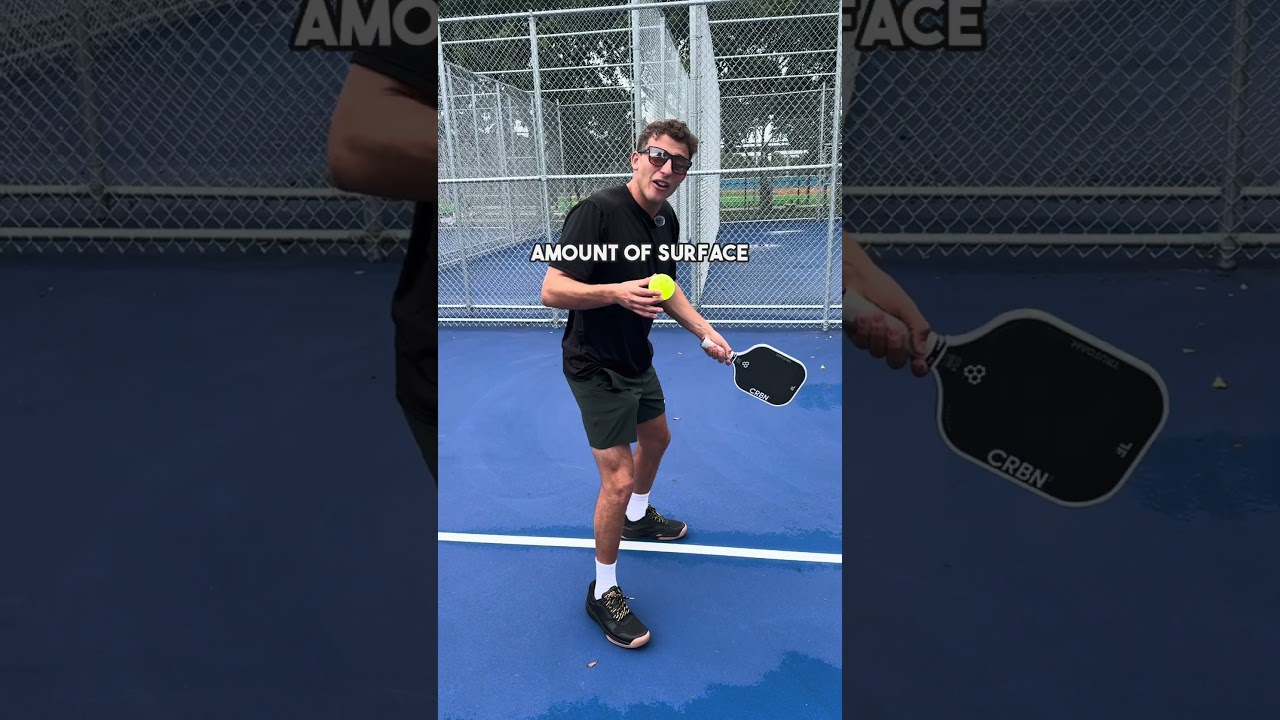
Does the Court Surface Change How to Return Topspin in Pickleball?
Yes, and more than most players account for.
Tennis testing found balls losing 35% to 40% of horizontal speed on clay while generating 20% to 25% higher RPM than on fast hard courts.
Pickleball has no clay, but it has surface variance.
A gritty outdoor court in July grabs the ball. Slick indoor court does not, and glare outdoors makes the kick harder to read.
Same opponent, same swing, two different bounce heights. That's why how to return topspin in pickleball is a per-court question, not a fixed technique.
So scout it in warmups. Hit three deep balls, watch the kick, and pick your counter before the first serve.
On slick surfaces take everything on the rise, provided your footwork is ready and your film study warned you.
On grippy outdoor courts, plan to back up more, and keep a slice return in your pocket for the ones that get above your head.
 The Dink Media Team
How Do You Drill This Without a Ball Machine?
Feed yourself high-bouncing balls and practice the contact point on purpose. You don't need a partner who hits heavy spin, though it helps.
Volume beats variety: drills, drills, drills.
Cheapest version: bounce the ball hard off the court, let it kick to shoulder height, block it into the kitchen with soft hands.
Twenty reps per side, and it's one of the five shots you need. Plenty of solo pickleball drills build the same feel without a second player.
Two Drills That Teach How to Return Topspin in Pickleball Fast
Start with the figure 8 drill to sharpen the compact swing path you need for taking balls early.
Then run the fridge and toaster drill, which forces you to control contact height instead of swinging at whatever shows up.
The goal isn't making you a spin expert. It's making the decision automatic, because you get roughly half a second.
That's the honest answer to how to return topspin in pickleball at speed: you're not solving it live, you're recalling a pattern you drilled.
What About Returning a Topspin Serve?
Same principles, less time.
A topspin serve gives you one bounce and a short window, so back up half a step and take it after the peak rather than fighting it on the rise.
Deep, soft, down the middle beats fancy every time, and it forces the harder shot back on them.
Want the offensive side? Weaponizing the pickleball serve shows what the server wants, and backspin technique gives you a slice option back.
Your grip matters here too.
 The Dink Media Team
Key Takeaways
- Topspin steals your strike zone. The Magnus effect drives the ball down, then kicks it up above shoulder height.
- Taking the ball on the rise is the best counter because it preserves court position, but it needs a shorter backswing, not a bigger one.
- Backing up six to ten feet buys time at the cost of position. Treat it as a one-shot solution.
- Blocking with soft hands neutralizes spin by removing the pace it depends on.
- Open-stance rotation saves you when you can't step forward, as long as hips lead and shoulders follow.
- Court surface matters. Grippier surfaces produce higher, spinnier bounces. Check it in warmups, and tell your partner what you saw.
Heavy topspin players win because their opponents never make a plan.
How to return topspin in pickleball isn't one shot, it's four, and picking correctly is the whole game.
Make one, and that forehand that used to end points starts feeding you shoulder-height balls you're ready for.
Then go work on making your third shot spicy so you're the one asking the questions.
Frequently Asked Questions
Is topspin legal in pickleball?
Yes. Topspin is legal on groundstrokes, drives, and serves, with one caveat. USA Pickleball rules prohibit imparting spin on the ball with your hand during the release before a volley serve. Spin generated by the paddle itself is legal, and worth drilling with a coach. [[VERIFY: JM to confirm current USA Pickleball rulebook section and year before publish]]
How do you return topspin in pickleball as a beginner?
Block it. Soft hands, paddle face slightly open, aim deep and down the middle. Beginners get in trouble counterattacking heavy spin with a full swing. Absorb first, attack later. Good positioning does most of the work. The hardest dinking drill builds that touch faster than anything else.
Why does topspin bounce so high?
Forward rotation creates downward aerodynamic force in flight, so the ball arrives at a steeper angle and with more grip on the surface. That combination converts forward speed into vertical bounce, which is why the ball seems to jump at you. Training on a Topspin Pro makes the rotation easier to read live.
Should you back up or step in against a heavy topspin player?
Step in when you can, back up when you must. Taking it early keeps court position and rushes your opponent, much like responding to a perfect drop. Retreating gives you a comfortable contact height but hands over the initiative. Choosing between a drive and a drop off that ball is the next decision.
Does paddle choice help against topspin?
A little. Softer cores and thicker paddles absorb pace, so blocking gets easier. Positioning and timing matter far more. Fix your contact point before you shop, and if your answer keeps being a defensive lift, see the lob doctor.

Love Pickleball? Join 100k+ readers for free weekly tips, news & gear deals.
Subscribe to The Dink