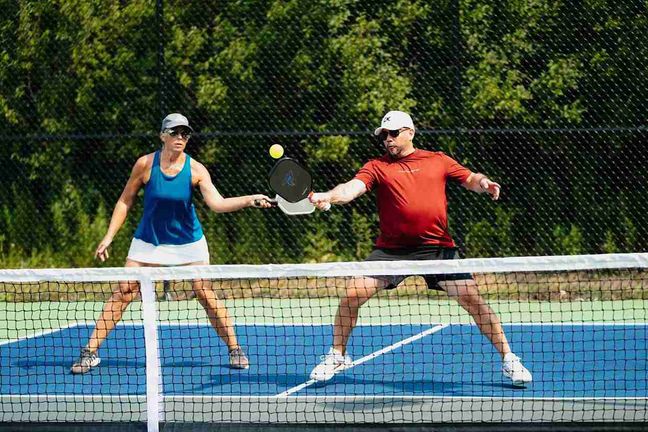
Most players speed the ball up hoping to end the point right there. Here are three pickleball speed up patterns that force a predictable response so you can finish on the very next shot.
A good pickleball speed up pattern does not start with the swing. It starts with knowing where the ball is coming back before you ever pull the trigger.
Most players think the goal of a speed up is to win the point right there. Hit it as hard as you can and hope for the best.
That works against weaker opponents. Against good players, it gets you countered and bagged.
The best 5.0 players speed the ball up for a different reason. They want to force a specific response, then finish on the next shot.
Here are three patterns that show up in high level play over and over, plus the drills that build them.
Love pickleball? Then you'll love our free newsletter. We send the latest news, tips, and highlights for free each week.
Why Speeding Up Without a Plan Keeps Backfiring
A speed up fails when it has no purpose beyond raw pace, because a good opponent simply resets it or counters it back at you.
Think about your last few speed ups that got punished. You probably picked a random ball, swung hard, and had no idea where the reply was going.
That is the difference between guessing and having a plan.
Speed matters, but timing and target matter more. If you want the full checklist on when to speed up in pickleball, we broke that down separately.
This article is about what happens after you commit.
What Is a Speed Up Pattern in Pickleball?
A speed up pattern is a planned attack where you accelerate the ball to a specific target to force a predictable reply, then finish with a shot you already have loaded.
The initial ball is not the winner. It is the setup.
You are trading a low percentage swing for a high percentage next ball, which is exactly how the best 5.0 players build offense.
Every pattern below follows the same logic: hit a target, read the likely response, and be ready to end the point one shot later.
Pattern 1: Forehand Speed Up to the Right Hip
The most reliable pattern is a forehand speed up at your opponent's right hip, because it jams them into a chicken wing and sends the ball straight back to your backhand nearly every time.
Here is why that location works. A ball at the right hip gives a right handed opponent no clean swing.
They either get caught in the chicken wing or reach across with the forehand.
As long as they get a paddle on it, the reply almost always comes back to your backhand side.
 Thomas Shields
So the moment you speed it up, switch your paddle from forehand to backhand and start hunting that next ball.
You are not trying to win with the first shot. You are creating a response you can attack.
From there you have two finishes. Take it with a two handed backhand, or if the ball sits up a touch, slide left and finish with a backhand punch.
This is the go to pattern when you are playing the right side, and it is the same shape you see from right side specialists like Gabe Tardio and Collin Johns.
Drill it: Have a partner stand in the middle and feed you a dink. Speed up at the imaginary right hip, then immediately move to your backhand and finish the counter they feed back. Reps here train the switch so it happens without thinking.
 The Dink Media Team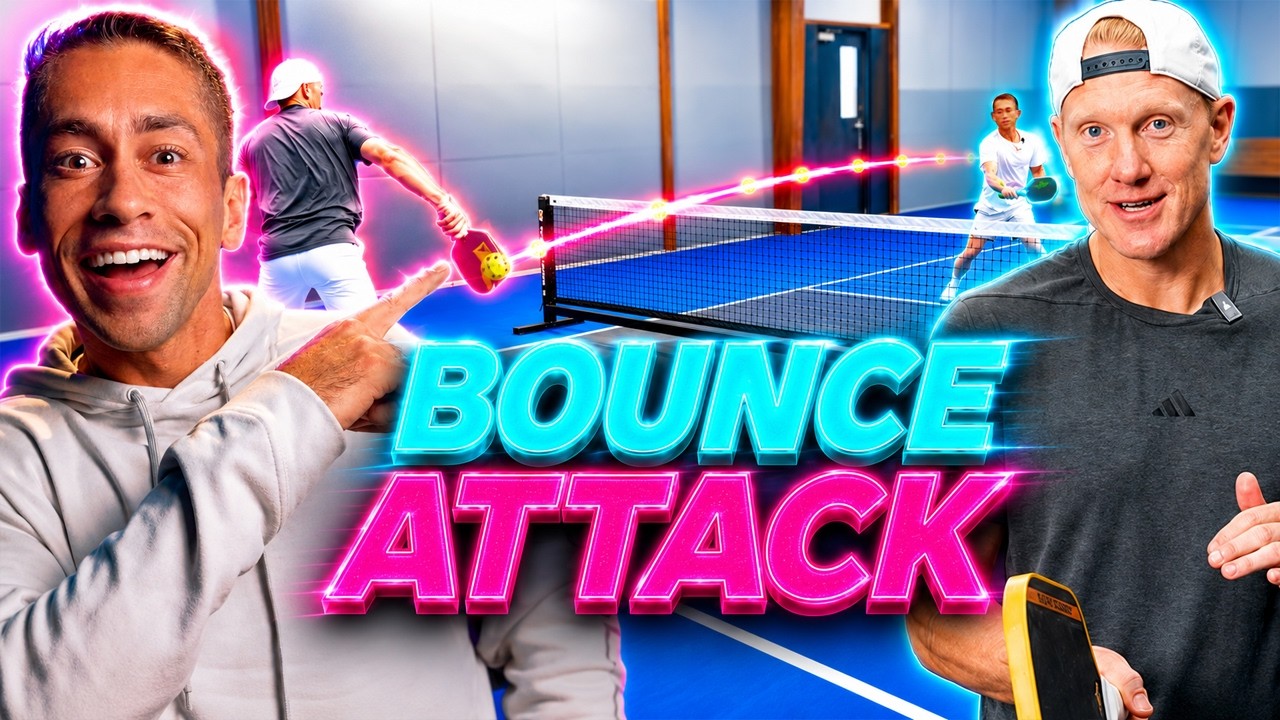
Pattern 2: Forehand Speed Up Down the Line
The second pattern is a forehand speed up down the line, and where it comes back depends entirely on how well your opponent reads it.
This one is trickier than the first.
If your opponent reads the speed up early and gets a good counter, that ball usually comes back toward the middle or your backhand.
If they are late and make contact behind their body, the paddle face sends it right back down the line to your forehand.
You go down the line because your opponent is often cheating toward the middle, leaving that line slightly open.
After you speed it up, slide the opposite way and look for the forehand finish while staying ready for the counter.
There is a bonus here: a down the line speed up can also set up your partner's forehand in the middle.
You are creating offense for the whole team, not just yourself. Reading these replies fast is the same skill that wins a hands battle at the kitchen.
Drill it: Partner tosses a ball into the kitchen, you speed up down the line with pace, slide left, and finish. Because the ball has pace, they tend to be late, which teaches you to expect the forehand reply and pounce on it.
 The Dink Media Team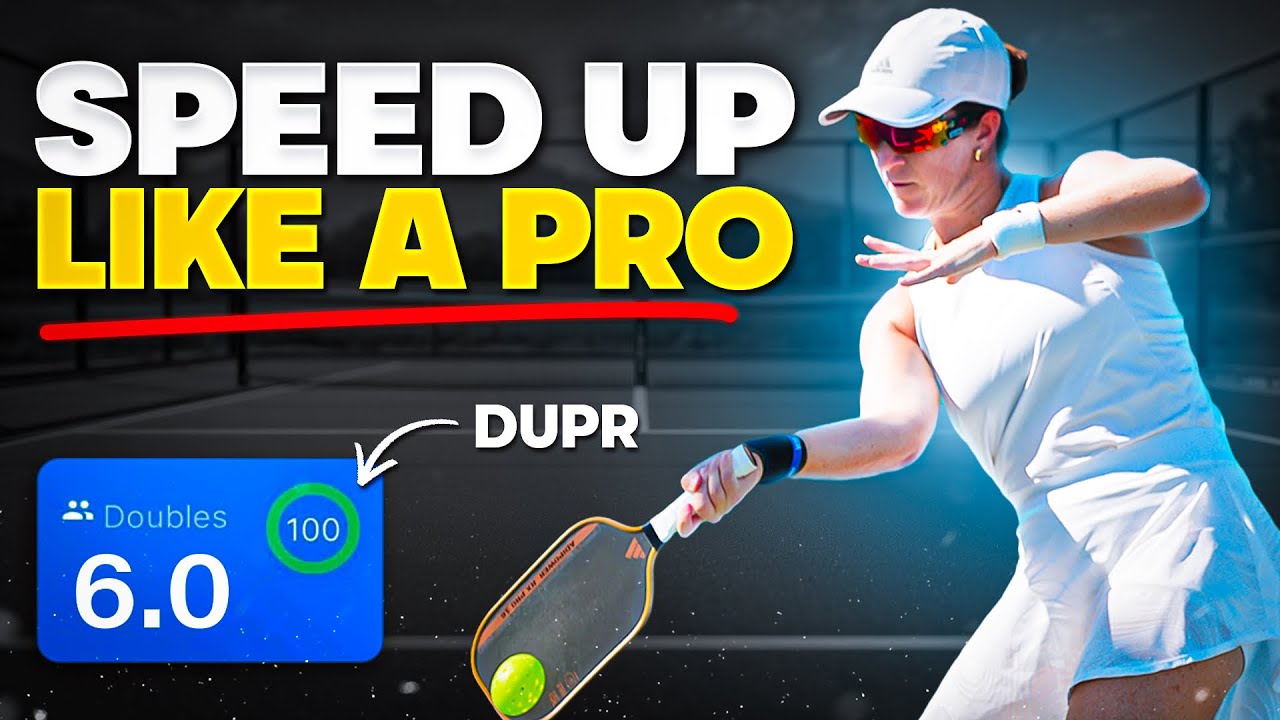
Pattern 3: Off Pace Forehand to the Body
The third speed up pattern is a slower forehand aimed at the body, kept low over the net, designed to draw a counter straight back at you so you can finish with a backhand punch.
This one surprises people because you take pace off on purpose.
A hard ball at the feet can be punched down.
A softer ball kept low forces your opponent to lift it, and most of the time they counter it right back toward your body.
Coaches who break down how to handle body shots make the same point: a low ball is far tougher to defend than one driven at the feet.
 Alex E. Weaver
That is exactly what you want. You are already sitting there, paddle up, ready for the hands exchange.
The goal, again, is not a clean winner off the speed up. It is a predictable reply you can attack.
Keeping that ball low is the whole trick. If it floats, you get smashed. If it stays under net height, they can only counter, and you finish.
Building that soft, controlled attack is closely tied to your ability to attack a dead dink without overhitting.
Drill it: Put your partner straight across from you feeding a dink. Speed up at the stomach with the pace taken off, then get ready right away for the backhand punch on the counter. This shows up constantly in men's doubles and mixed.
 The Dink Media Team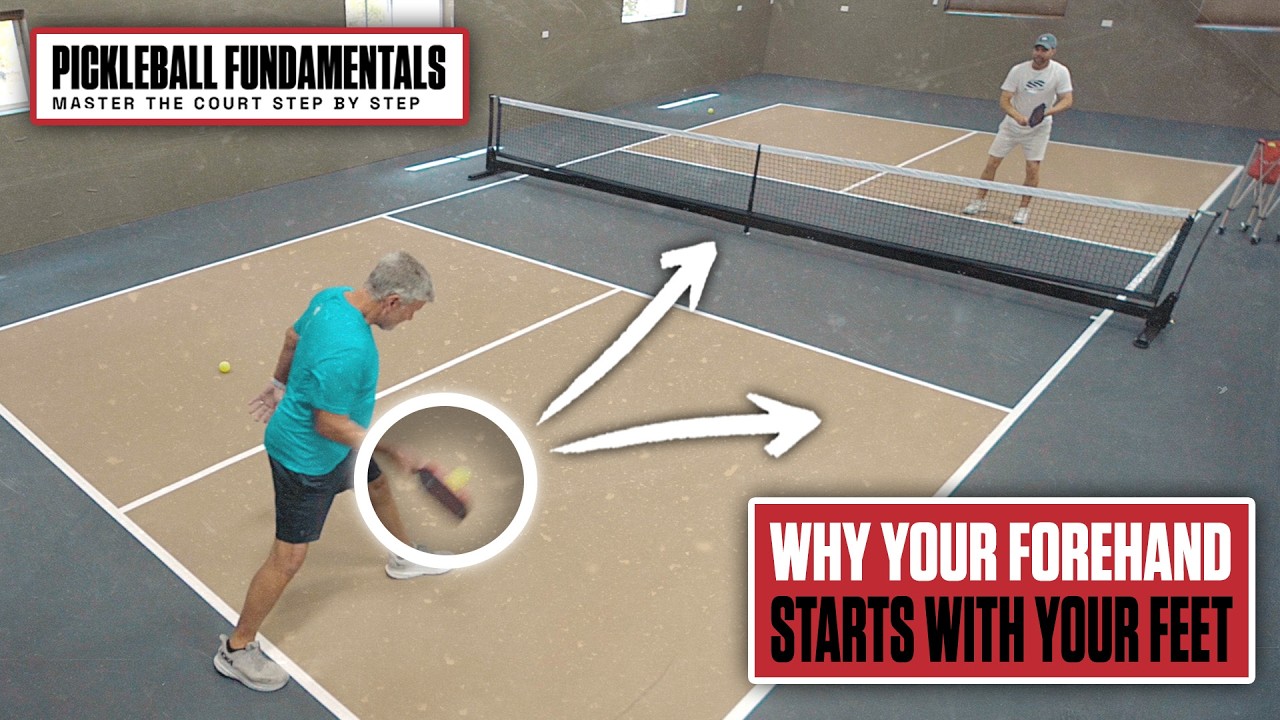
How Do You Actually Make These Patterns Automatic?
Patterns only help you if you drill them until the reads become instinct, because in a real rally you have no time to think through the options.
Knowing the pattern is step one. Getting the reps is what makes you recognize the situation mid point.
That is why every pattern above comes with a drill, and why our full set of speed up drills is built around live reactions, not dead feeds.
You can also build reaction time off court.
As Yahoo Sports coach Mary Barsaleau points out, wall drills for fast hands let you rehearse speed up and counter sequences with no partner at all.
Alternate forehand and backhand, keep the elbow down, and reset your paddle after every hit.
The next step in your development is learning to think one shot ahead.
Every time you speed the ball up, you should already have an idea of where it is most likely coming back.
That habit is what separates a hopeful swing from a real speed up with a plan.
 The Dink Media Team
Which Speed Up Pattern Should You Start With?
Start with the forehand to the right hip, because it produces the most predictable reply and works at every level from 3.5 to pro.
Once that switch to your backhand feels automatic, add the down the line pattern to punish opponents who cheat middle.
Save the off pace body attack for when you want to bait a hands exchange you are ready to win.
Layer them in one at a time. Trying to run all three at once is how you end up back where you started, speeding up for instant offense with no follow up plan.
Frequently Asked Questions
What is the best speed up in pickleball for beginners?
The forehand speed up to the opponent's right hip is the best starting point. It forces a chicken wing or a jammed forehand, and the reply almost always comes back to your backhand, so you know where to look next. Beginners get instant value because the response is so predictable.
Why do my pickleball speed ups keep getting countered?
Usually because you are trying to win the point with the speed up itself instead of setting up the next ball. If you swing hard with no target and no plan for the reply, a good opponent will simply block or counter it. Pick a target, expect the return, and be ready to finish one shot later.
Should you take pace off a speed up?
Sometimes, yes. An off pace ball kept low at the body is harder to punch down than a hard ball at the feet. It forces your opponent to lift a counter back toward you, which sets up a backhand punch. Pace is a tool, not the whole strategy.
Where does the ball come back after a speed up?
It depends on your target and their timing. A ball at the right hip comes back to your backhand. A down the line ball comes back down the line if they are late, or to the middle if they are early. Learning these tendencies is what lets you attack the next ball with confidence.
How do I practice speed up patterns without a partner?
Use a wall. Feed yourself a soft ball, speed it up, then react to the rebound with a reset or counter. Wall drills build the fast hands and paddle resets that every speed up pattern depends on, and you can do them in a garage or against any flat surface.

Love Pickleball? Join 100k+ readers for free weekly tips, news & gear deals.
Subscribe to The Dink