

A flat dink keeps the ball in play. A topspin dink makes your opponent uncomfortable. Here is how to build one that dips, kicks, and sets up your attack.
Your topspin dink should make the other team uncomfortable, and right now it probably does not.
Most players push the ball across the net flat, hope it lands, and wait for a mistake that never comes.
A flat dink keeps you in the point. A topspin dink takes the point somewhere.
The spin makes the ball dip down after it crosses, so it lands short and forces your opponent to lift, and that lift is the ball you get to attack.
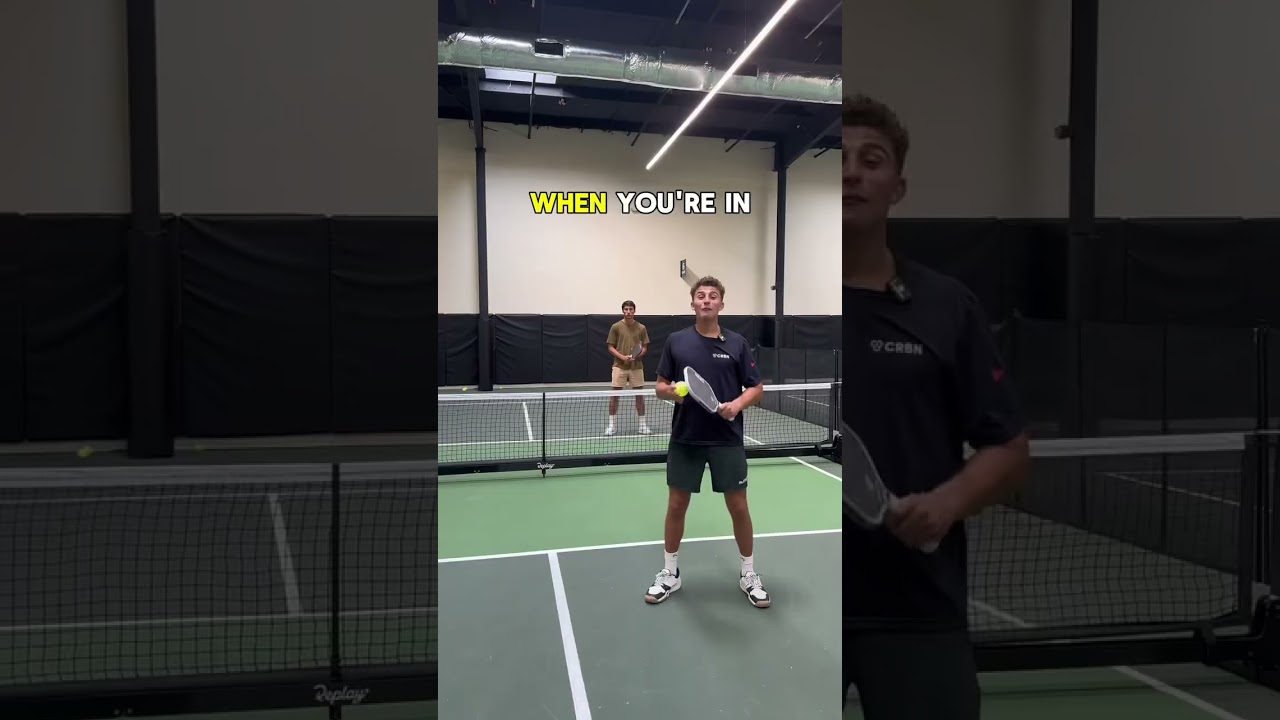
Coach Cori Elliott broke this down shot by shot while working with a student named Eric, and the fixes were small.
Here are the seven that matter, in the order you should build them.
Love pickleball? Then you'll love our free newsletter. We send the latest news, tips, and highlights for free each week.
What Actually Makes a Dink a Topspin Dink?
A topspin dink is a soft shot where the paddle brushes up the back of the ball at contact, so the ball rotates forward and drops fast on the other side of the net.
That forward rotation is the whole point: it pulls the ball down into the kitchen instead of letting it float.
If you are still landing your basic dink with soft hands and a low arc, that is the right foundation. The topspin version adds bite on top of it.
If the term itself is new, start with what a dink is and why it matters before you add spin.
1. The spin comes from your forearm, not your shoulder
Eric's first question was the right one: where does the motion come from, the shoulder, the elbow, or the forearm? Cori's answer was immediate.
"It is the forearm generating the motion."
Start with the paddle tip pointing down and let the forearm roll the face through the ball.
This is the mistake that keeps recreational players flat. They swing from the shoulder, which produces a push, not a brush.
Spin lives in the smaller, faster rotation of the forearm. Keep the big joints quiet and let the forearm work.
2. Start with a Continental Grip and a Slightly Closed Face
Use a continental grip, the same neutral grip you use for most touch shots.
If you are gripping the paddle a certain way for power, that is a separate conversation, and it is worth knowing why pros choke up on the grip for control.
From there, start the paddle face slightly closed rather than fully open.
When Cori made this one change with Eric, the result was instant: "Way better.
Way more spin and pace." A face that begins a touch closed lets you turn it over the ball through contact instead of scooping under it.
 The Dink Media Team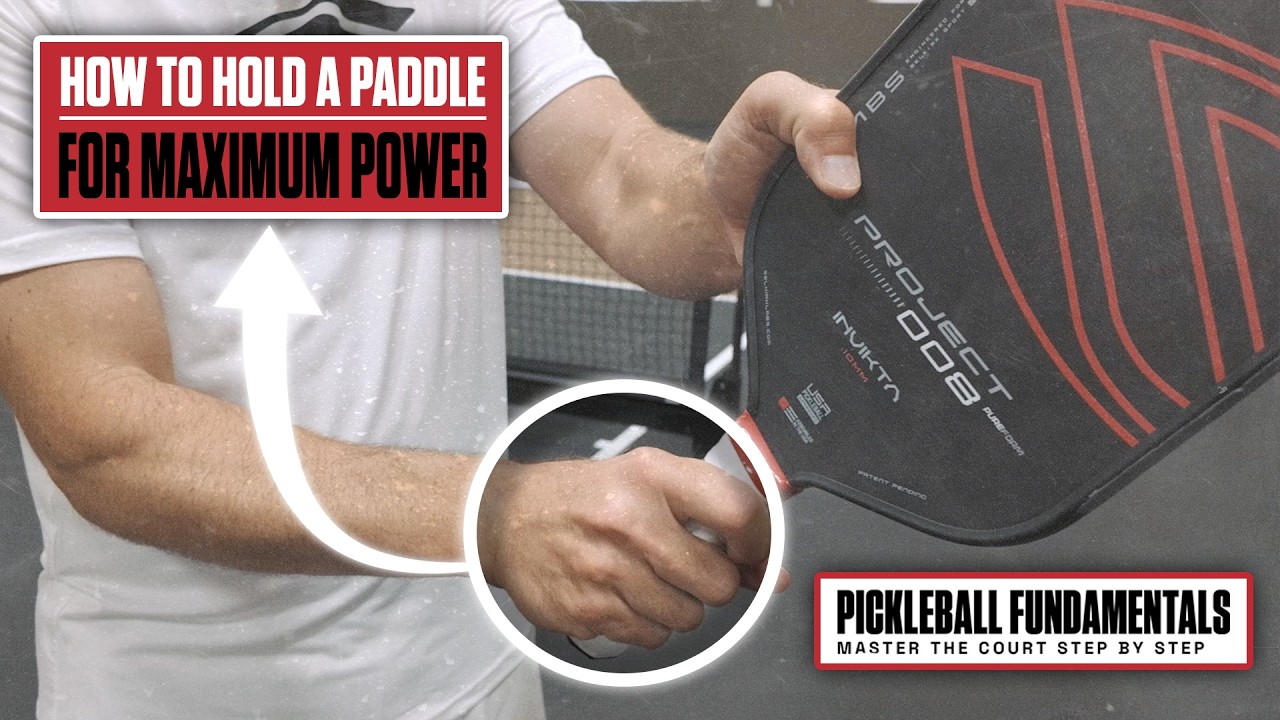
3. Contact the Ball Out in Front of Your Lead Knee
Cori wanted the paddle in front of the right knee, "a little bit further out," because the contact point is out in front, not beside the body.
When you catch the ball early and in front, you have room to drive forward through it.
Let the ball drift back toward your feet and you lose that room. The swing gets cramped, the forearm cannot roll, and the shot dies flat.
Meet it early, every time.
 The Dink Media Team
4. Drive Forward First, Then Come Up. Never Do Both at Once.
This was the single biggest fix in the session. "You don't want to hit and come up right at the same time," Cori told Eric.
If you lift and swing together, you pop the ball up and give away a free attack.
Instead, think of the path as a U shape: the paddle drops down in front, goes "forward and out," and only then brushes up toward your ear.
Forward creates the pace and direction. Up creates the spin. Do them in sequence, not together.
This is the same low to high feel that powers a backhand roll dink, just built on the forehand side.
 The Dink Media Team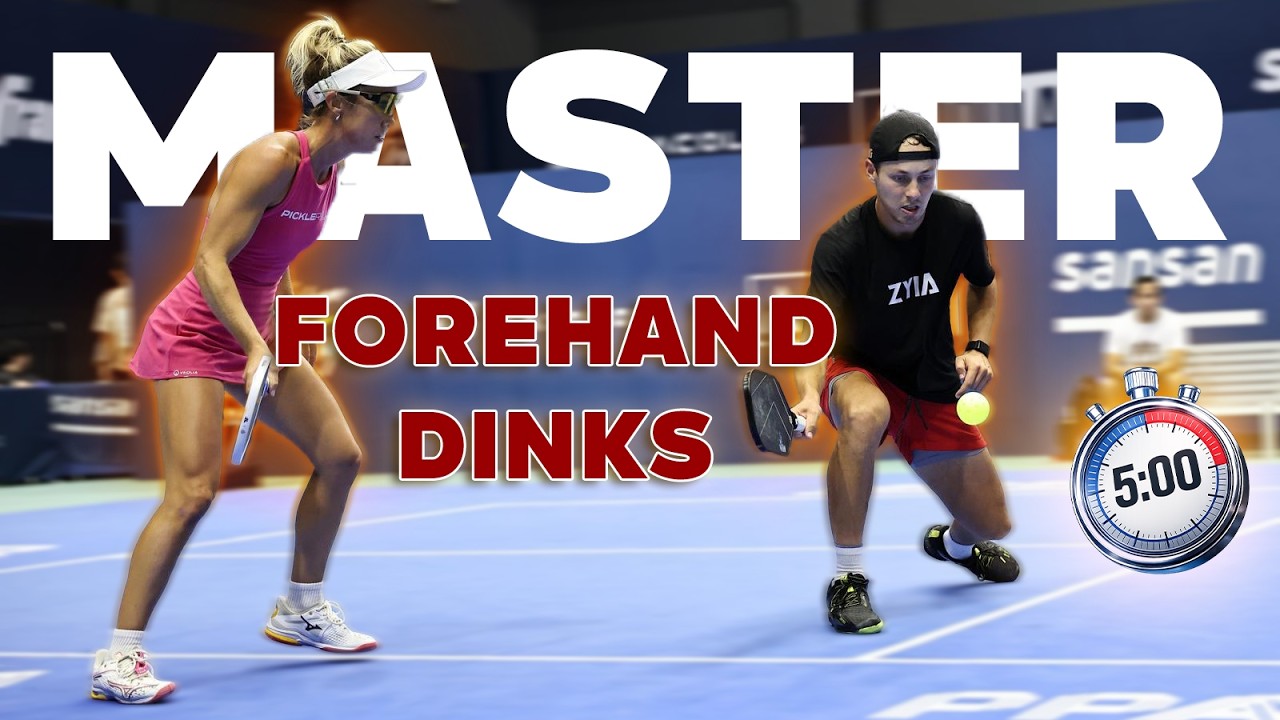
5. Match the Height of the Ball Before You Swing
Cori kept telling Eric not to stand tall over the shot: "match the height of the ball."
If the ball is low, you have to get low with it, because a topspin dink brushed from above the ball turns into a flat push.
Bend the knees and get your eyes closer to the contact point.
Standing upright is comfortable, but it forces a downward chop instead of the forward and up brush that creates spin.
Good kitchen control starts from a low, balanced base.
 Eric Roddy
6. Shift Your Weight Forward Through Contact
When Cori summed up Eric's session, weight was one of three fixes: "He also wasn't shifting his weight enough." A topspin dink is not an arm-only shot.
As the forearm rolls, your body should move forward into the ball.
That weight transfer is where the pace comes from. It also keeps you leaning in toward the net, ready to pounce, rather than rocking back on your heels.
Yahoo Sports made the same point in a tip on dinking with a plan: stay leaned in and set your feet early so you can speed the ball up the moment you get a short reply.
 The Dink Media Team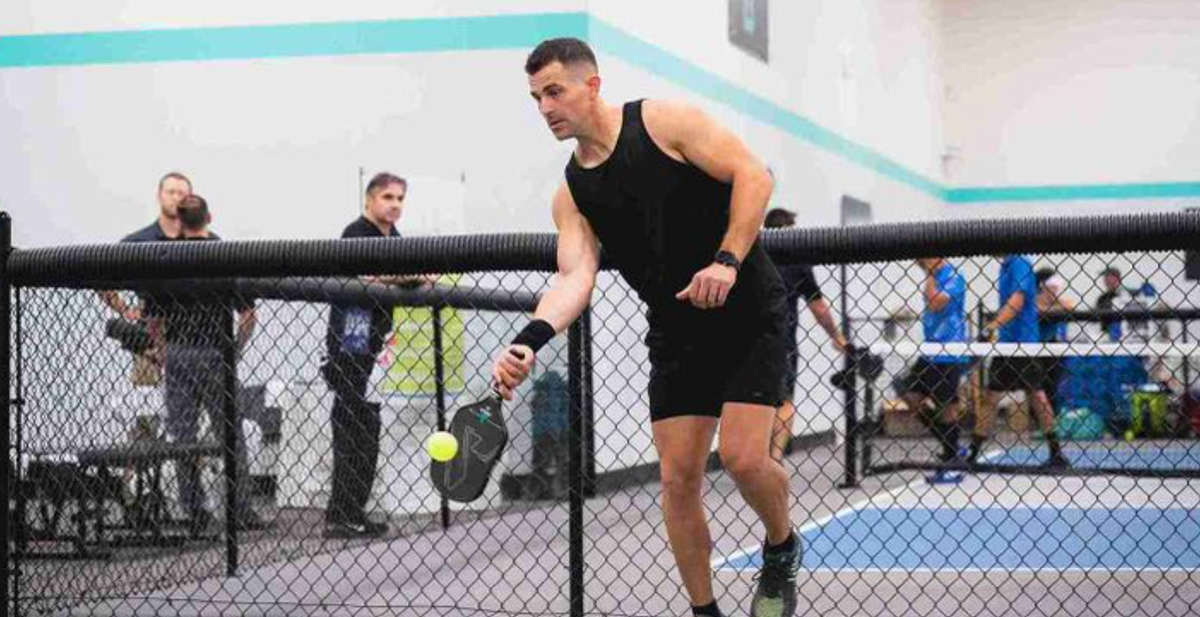
7. Give Yourself Room and Stop Crowding the Ball
The third fix in Cori's summary: "He was very close to the ball when he was making contact."
When the ball is on top of you, your arm jams and the swing has nowhere to go.
Cori's cue was blunt: "Back up a little." A step of space lets you extend into the shot and finish the brush.
Crowding the ball is one of the quiet habits that kills touch, and it shows up all over the kitchen, including on the backhand dink where reach is even tighter.
 The Dink Media Team
How Do You Know the Spin is Actually Working?
You will hear it and see it.
A true topspin dink comes off the paddle with a cleaner sound and dips sharply after the net, landing shorter than a flat dink from the same swing.
Cori's read on Eric's best reps said it plainly: "way more spin and pace."
Watch Anna Leigh Waters at the kitchen line and you see the finished product.
Her topspin roll dinks stay low, dive at the feet, and pull opponents forward into an awkward, rising reply.
That rising reply is exactly the dead dink you want to attack.
 The Dink Media Team
Why the Topspin Dink is Worth the Reps
A flat dink is a holding shot. A topspin dink is a pressure shot. Every rep you brush forward and up, you make the ball harder to read and harder to counter.
Done right it adds bite without overhitting, and it nudges the point toward creating offense instead of just surviving.
Spin is legal and encouraged off the bounce, even though hand-generated spin serves were banned back in 2023. So there is no reason to leave this shot on the table.
Build it in the order above, then groove it with dink drills that sharpen your game until the forward and up motion feels automatic.
Frequently Asked Questions
What is a topspin dink in pickleball?
A topspin dink is a soft shot hit from near the kitchen where the paddle brushes up the back of the ball, giving it forward rotation. That spin makes the ball dip quickly after the net and land short, which forces your opponent to hit up and gives you a ball to attack.
How do you generate topspin on a dink?
Generate topspin from your forearm, not your shoulder. Start with the paddle tip down and the face slightly closed, contact the ball out in front, drive forward, then brush up toward your ear. The forward then up sequence is what creates spin without popping the ball up.
Why does my topspin dink keep popping up?
You are almost certainly lifting and swinging at the same time. Drive the paddle forward through the ball first, and only add the upward brush after contact starts. Also check that you are not crowding the ball, since a jammed arm forces the paddle up too early.
What grip is best for a topspin dink?
A continental grip works best because it keeps the face neutral and lets you close it slightly through contact. Starting from a fully open face makes you scoop under the ball, which flattens the shot and removes the spin.
Is a topspin dink legal in pickleball?
Yes. Adding spin to a dink off the bounce is completely legal. The 2023 rule change only banned pre-serve spin generated by hand on the serve, and it does not affect groundstrokes or dinks during a rally.

Love Pickleball? Join 100k+ readers for free weekly tips, news & gear deals.
Subscribe to The Dink