Pro pickleball players aren't just gripping their paddles differently for show. Choking up on your pickleball grip lowers swing weight, increases hand speed, and improves control at the kitchen. Here's what you need to know.
If you've watched professional pickleball matches, you've probably noticed something odd: many of the best players in the world aren't holding their paddles the way you do.
Instead of gripping all the way at the bottom, they're sliding their hands up the handle. This isn't a quirk or a stylistic choice.
There's real physics and strategy behind why pro players choke up on their pickleball grip, and understanding it could transform your game.
Love pickleball? Then you'll love our free newsletter. We send the latest news, tips, and highlights for free each week.
What Does Choking Up on Your Pickleball Grip Actually Mean?
When we talk about choking up, we're talking about moving your hand higher up on the paddle handle instead of keeping it at the very bottom.
It's the same concept you'd use in baseball or tennis.
In pickleball, pro players typically do this with elongated paddles, which have longer grips and give them more room to slide their hand upward.
The beauty of this adjustment is that it requires zero changes to your actual pickleball grip technique.
- You're not learning a new grip style or retraining your muscle memory.
- You're literally just moving your hand up a few inches on the handle you already know how to use.
If you're still building your foundation, a beginner's guide to pickleball fundamentals is a great place to start before experimenting with pickleball grip adjustments. And if you want to go deeper on paddle grip position options, The Dink has a dedicated breakdown worth bookmarking.

The Physics Behind Lower Swing Weight
Here's where the real advantage kicks in: swing weight. This is different from the static weight of your paddle.
Swing weight measures how hard it is to move your paddle through the air, especially from the end of the handle.
A paddle can feel heavy without actually being heavy, and vice versa.
When you choke up on your pickleball grip, you're moving your hand closer to the end of the paddle.
 Alex E. Weaver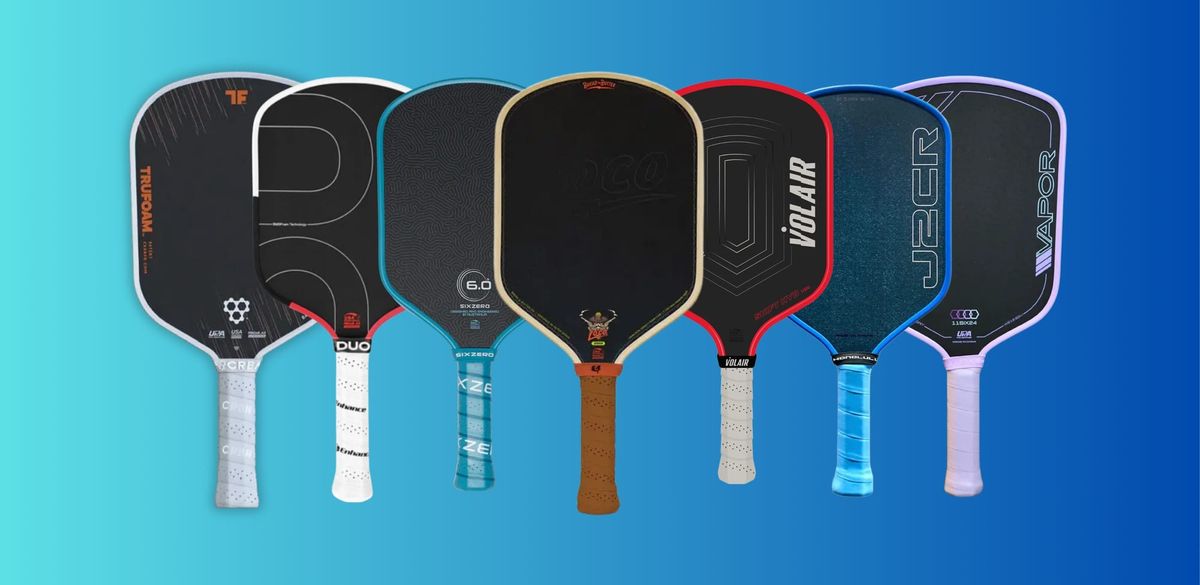
This gives you more leverage and makes the paddle feel significantly lighter in your hands.
- You're not changing the paddle's actual weight.
- You're changing how much effort it takes to move it.
Think of it like carrying a long stick versus a short stick. The longer the stick, the harder it is to maneuver.
Shorten it, and suddenly you've got control.
Understanding paddle shapes explained and what 14mm vs 16mm really mean will also help you see how paddle geometry interacts with pickleball grip position and swing weight.
It's all connected.
Why Hand Speed Matters at the Kitchen When You Choke Up
The kitchen is where pickleball is won and lost. It's where fast hands exchanges determine who gets the point.
When you're in a dinking rally and your opponent pops up a ball, you need to react instantly.
You need to prepare your paddle, accelerate, and attack before they can recover.
A lower swing weight from choking up on your pickleball grip makes all of this faster.
Your preparation speed improves because you're not fighting the weight of a long paddle.
Your acceleration speed improves because it's easier to flick harder and attack with more snap.
In high-level pickleball, these milliseconds matter. Pro players understand that the kitchen game isn't about power.
It's about speed and precision. Choking up gives them both.
The framework to develop faster hands in pickleball starts exactly here with pickleball grip position physics. And once you understand swing weight's role, stopping pop-ups with modern pickleball hand speed and paddle positioning becomes a lot more intuitive.
The Dink Media Team
How Choking Up Transforms Your Pickleball Grip Technique at the Kitchen Line
Beyond hand speed, there's another major advantage: control.
When you have a choked-up pickleball grip, you have less distance between your hand and the end of the paddle.
This shorter lever arm gives you more precision over your dinks, resets, and drops.
Imagine trying to paint a wall with a 10-foot brush versus a 2-foot brush.
The shorter tool gives you precision. The same principle applies to your soft game.
Pro players who choke up report feeling more confident with their touch shots, especially when they need to place the ball exactly where they want it.
This is particularly valuable when you're transitioning from the baseline to the kitchen.
You can maintain control while still having the hand speed to compete in fast exchanges.
Players looking to sharpen their touch at the net should also study the 2 essential pickleball techniques you're missing at the kitchen line.
Grip position and body mechanics work together to determine how clean your touch shots really are.
The Dink Media Team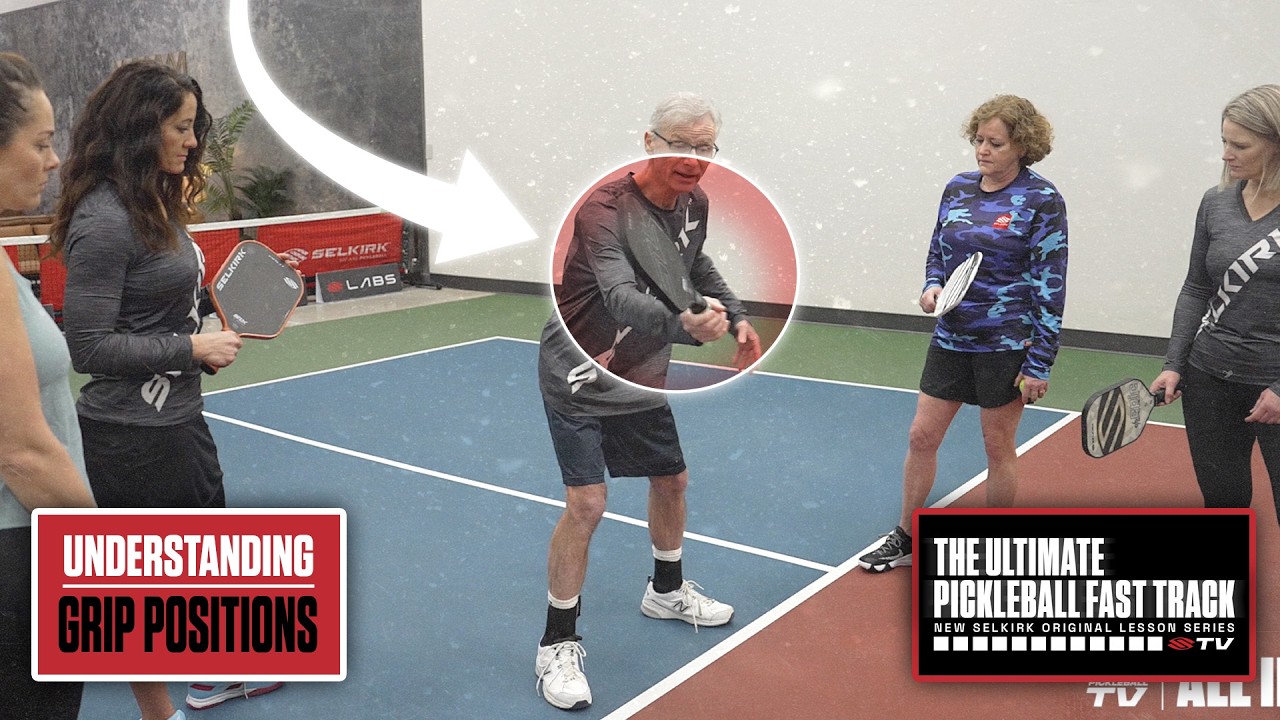
The Trade-Off: Less Power When You Choke Up on Your Pickleball Grip
There's no such thing as a free lunch in pickleball. Choking up on your pickleball grip comes with a real drawback: you lose power.
If you're hitting a forehand drive from the baseline, you'll generate less power with a choked-up grip than you would with your hand at the bottom of the paddle.
You lose the momentum that comes from the weight of the paddle. Your wrist lag decreases.
The paddle doesn't feel as "whippy" on your power shots. For players who rely on baseline power, this trade-off might not be worth it.
But here's the thing: most points in pickleball aren't won with power. They're won at the kitchen with speed and placement.
So for pro players, the trade-off makes sense.
If you want to maintain your baseline game while experimenting with pickleball grip position, the pickleball drive crash course: pro tips for powerful shots is worth reading. And for a smarter framework around when to use power at all, smart shot decisions beat power in advanced pickleball is required reading.
The Dink Media Team
Equipment Alternatives: Widebody and Hybrid Paddles as a Pickleball Grip Substitute
Not everyone wants to change their grip.
If you like holding your paddle at the bottom but want the benefits of a lower swing weight, there's another option: switch to a widebody paddle or hybrid paddle.
A widebody paddle is shorter and wider than an elongated paddle. By USAP rules, all paddles must be under 24 inches in combined length and width.
A widebody achieves this by being about half an inch shorter and half an inch wider than a standard elongated paddle.
The result? A lower swing weight without changing your pickleball grip at all.
It's essentially like choking up without actually choking up. You get faster hands and better control at the kitchen.
The trade-off is that you lose some of the feel that pro players prefer with elongated paddles.
Looking for the right paddle to support your game?
The pickleball paddle buying guide covers exactly how to evaluate shape, weight, and swing characteristics together. For the freshest options in the market, tracking all the new pro paddle deals in 2026 keeps you updated on what the pros are actually playing with.
The Dink Media Team
Why Pro Players Still Prefer Elongated Paddles and a Choked-Up Pickleball Grip
If widebody paddles give you the same swing weight benefits, why do so many pro players stick with elongated paddles and choke up instead?
The answer is feel.
The face of an elongated paddle is longer and narrower. The face of a widebody is shorter and wider.
Even though the swing weight might be similar, the paddle feels different in your hands.
Some pro players prefer the aggressive, attacking feel of an elongated paddle.
Others, like Anna Bright, the number two player in the world, prefer the larger sweet spot and stability of a widebody.
There's no objectively "best" option. It comes down to personal preference and what feels right for your game.
For context on how the pros approach their equipment choices, this pickleball grip is changing the game and the pros agree is one of the most relevant pieces The Dink has published on the topic. And if you want to understand the full range of pickleball grip styles before deciding, the three pickleball grips: when to use them covers continental, eastern, and western options in detail.
The Dink Media Team
Should You Choke Up on Your Pickleball Grip?
Here's the honest truth: you don't have to. Not every player benefits from choking up on their pickleball grip.
If you're comfortable with your current grip and your game is working, there's no reason to change.
But if you feel like you need faster hands at the kitchen or more control on your soft shots, choking up is worth experimenting with.
It takes almost no practice to implement.
You're not learning a new technique. You're just moving your hand up a few inches.
More than half of players will probably benefit from this adjustment, especially as your level increases and kitchen exchanges become more frequent.
But it's not a requirement. Try it, see how it feels, and if you don't like it, go back to what you were doing before.
Players serious about leveling up should also look at how to break 5.0: the 5 pickleball shots you must master before 2026. Pickleball grip optimization is one piece of a larger puzzle. And once you've dialed it in, the 12 drills you need to play your best pickleball in 2026 gives you the reps to make it stick.
The Dink Media Team
The Bottom Line on Pickleball Grip Position
Pro players choke up on their pickleball grip because it works.
- Lower swing weight means faster hands.
- Faster hands mean better kitchen exchanges.
- Better kitchen exchanges mean more points.
It's that simple.
Whether you choose to choke up, switch to a widebody, or stick with your current setup, the important thing is understanding the why behind what the best players in the world are doing.
Once you understand the physics and the strategy, you can make an informed decision about what's right for your game.
Want to take it further? The four pillars of fast hands in pickleball and 6 essential pickleball shots to master for 2026 are the two articles to read next.
Frequently Asked Questions
What is swing weight in pickleball?
Swing weight measures how hard it is to move your paddle through the air, especially from the end of the handle. It's different from the static weight of your paddle. A paddle can have low static weight but high swing weight, or vice versa. Swing weight is what you actually feel when you're playing on the court.
Does choking up on your pickleball grip work for all paddle types?
Choking up works best with elongated paddles because they have longer grips, giving you more room to move your hand up the handle. You can technically choke up on any paddle, but the benefit is most noticeable with elongated models. Widebody and hybrid paddles already have lower swing weights, so choking up provides less additional benefit with those shapes.
Will choking up hurt my power shots?
Yes, choking up will reduce the power you generate on baseline shots like forehand drives. You lose the momentum that comes from the full length of the paddle and your wrist lag decreases. However, most points in pickleball are won at the kitchen, not from the baseline, so this trade-off is often worth it for many players.
How much should I choke up on my pickleball grip?
There's no exact measurement. Most pro players who choke up move their hand up a few inches from the bottom of the handle. Start with a small adjustment and see how it feels. You can always move your hand higher or lower depending on what feels comfortable and gives you the results you want.
Can I switch between choking up and a full grip during a match?
Technically yes, but most pro players don't recommend it. It adds another variable to manage when you're already tracking shot selection, positioning, and opponent tendencies. Pick whether you like to choke up or not, and stick with that decision consistently throughout the match.

Love Pickleball? Join 100k+ readers for free weekly tips, news & gear deals.
Subscribe to The Dink