

The spin serve is one of the most devastating weapons in pickleball, capable of catching opponents off-guard at any level. Here's how to conquer it in three essential steps.
The spin serve is one of the most devastating weapons in pickleball, capable of catching opponents off-guard at any level.
Whether you're playing at the amateur or intermediate level, learning to execute this advanced serve can fundamentally change how your opponents approach the net.
The key isn't just hitting harder; it's understanding the mechanics that create that unpredictable movement.
Love pickleball? Then you'll love our free newsletter. We send the latest news, tips, and highlights for free each week.
According to Brandon, an NCCP pickleball coach featured in recent coaching content, the spin serve breaks down into three distinct components that work together to create maximum movement and confusion.
Each step builds on the previous one, and mastering them in sequence is crucial to developing consistency.
Step 1: The Non-Dominant Toss Sets Everything Up
The foundation of any effective spin serve starts with where you toss the ball. This is where most players make their first mistake.
Instead of tossing the ball directly in front of your body like you would for a standard serve, you need to position the toss closer to your non-dominant side.
Here's why this matters: a traditional serve requires the ball to be tossed in line with your arm and swing path.
But a spin serve demands something different.
By tossing the ball toward your non-dominant hand, you create the geometry needed to hit the exterior of the ball and generate that crucial sidespin.
Brandon emphasizes that your body position matters just as much as the toss itself.
Opening your stance (facing more toward the court rather than sideways) naturally creates the swing path you need for a sidespin serve.
Think of it like golf: if you want the ball to curve from left to right, you set up in an open stance. The same principle applies here.
There's also a practical rule to remember: pickleball requires a low-to-high motion on the serve, and you must contact the ball well below your waist.
By dropping the toss lower and positioning it to the side, you can satisfy these rules while still generating the spin you need.
It's a clever workaround that keeps your serve legal while maximizing effectiveness.
 Thomas Shields
Step 2: The Exterior Carve—What Does "Carving" Actually Mean?
The second step is where the magic happens.
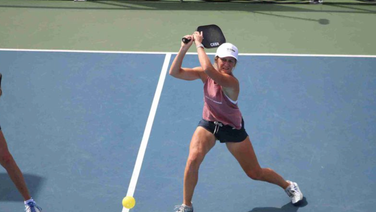
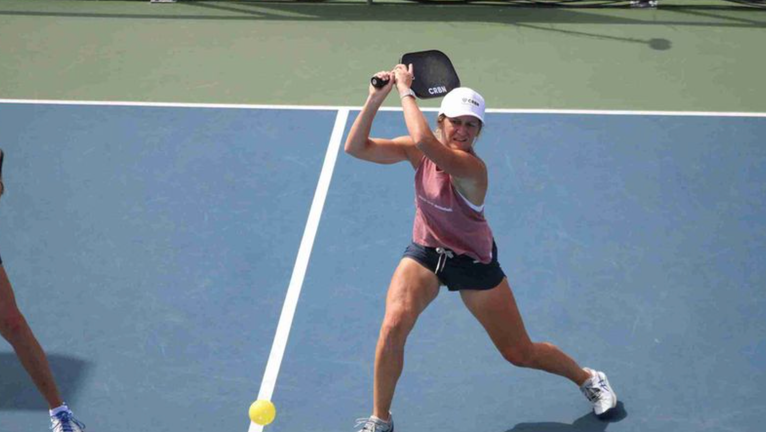
Brandon calls this the "exterior carve," and it's the feeling you need to develop to make the spin serve work.
Carving isn't about hitting through the ball; it's about hitting to the side of it.
Imagine holding a ball in your hand and hitting it sideways instead of up and down. As it drops, you'll see it start to spin off in a different direction.
That's the sensation you're chasing. The common mistake players make is trying to hit through the ball with power, which kills the spin.
Instead, you want to feel the texture of the ball as your paddle wraps around it.
Alex E. Weaver
The term "wrapping" comes up frequently in coaching circles, and it's essentially the same concept as carving.
When you wrap around the ball, you're extending your contact time on the paddle, which allows the ball to rotate more.
If you just slice it, the ball slides off without generating enough spin.
The extended contact is what creates that devastating movement.
Alex, the other coach in the video, points out that this wrapping sensation is familiar to players who come from other sports like badminton, golf, or table tennis.
In each of those sports, you're hitting the exterior of the object to create curve. Pickleball is no different; you're just applying that same principle to a serve.
The key is keeping your arm mostly fixed and using your body to help twist around the ball. This isn't a wrist-driven motion.
Your body rotation is what powers the wrap, not your wrist flicking.
Step 3: The Paddle Angle Changes Everything
Once you've nailed the toss and the carving motion, the third step is all about paddle angle.
This is where you can really experiment and customize your spin serve to match your style.
If you angle your paddle more downward (sharper angle), the ball will hit harder and carve flatter, staying closer to the ground.
This creates a more aggressive serve that's harder to read.
On the other hand, if you open your paddle face and come underneath the ball, you'll add more height and even more spin.
The ball will have an upward rotation in addition to the sidespin, making it even more unpredictable.
Brandon demonstrates both variations, and the difference is striking.
The flatter version is more dangerous because it stays low and changes direction suddenly once it lands.
The higher version gives you more margin for error and adds a different type of spin that can catch opponents completely off-guard.
The reason the paddle angle works this way comes down to physics.
When you come under the ball with an open face, you're diffusing the speed more, which allows the ball to stay on your paddle longer.
That extended contact creates more rotation.
It's the same principle as scooping a ball off the ground; the scooping motion keeps the ball on the paddle longer than a direct hit would.
The Dink Media Team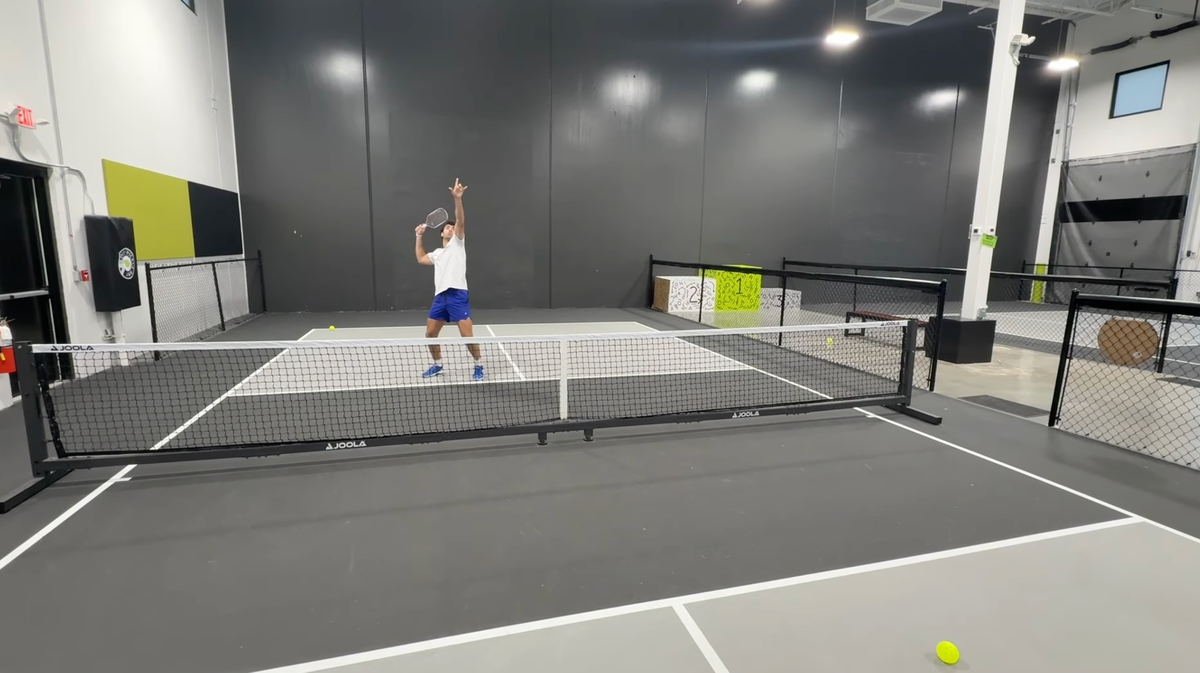
Why the Spin Serve Works at Every Level
The sudden change of direction once the ball lands is what makes it so hard to handle.
Your opponent's brain is expecting the ball to travel in a straight line, and when it doesn't, they're already committed to the wrong position.
At the amateur level, this serve is almost unstoppable.
Most players haven't developed the reflexes or court sense to adjust mid-rally when a serve moves unexpectedly.
Even at higher levels, throwing in a spin serve occasionally can catch someone off-guard, especially if they've been facing your standard serves all match.
The key to making this work consistently is practice. Alex notes that some of the serves might still go out as you're learning, but that's part of the process.
You're experimenting with different paddle angles and contact points to find what works for your body and your style.
One thing that helped Alex improve was focusing on the contact point.
By reaching further out in front, you can help propel the ball forward while still maintaining the spin.
This prevents the serve from dying in the net, which is a common problem when players first start learning the technique.
The Dink Media Team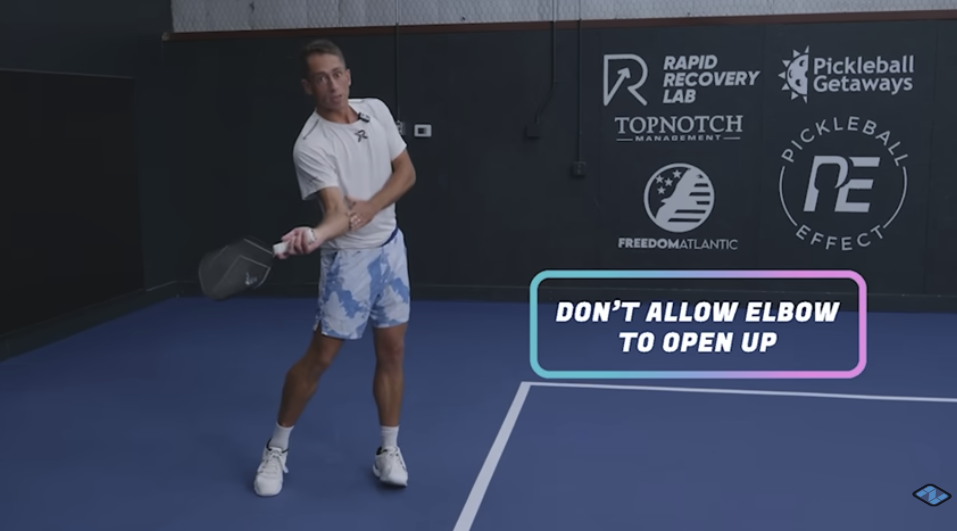
The Mental Game Behind the Spin Serve
Beyond the mechanics, there's a psychological component to the spin serve.
When your opponent sees you setting up in that open stance with the toss to the side, they know something different is coming.
That uncertainty alone can throw them off their rhythm.
The serve also forces your opponent to make a decision quickly.
- Do they try to block it?
- Do they try to attack it?
The unpredictable movement makes both options risky.
This is why the spin serve is such a valuable weapon in your arsenal, even if you don't use it every single time you serve.
Consistency matters more than frequency. If you throw in a spin serve once every few games, your opponent will be ready for it.
But if you can execute it reliably and mix it in strategically, it becomes a genuine threat that changes how they approach the net.
Frequently Asked Questions
What's the difference between a spin serve and a regular serve in pickleball?
A regular serve focuses on getting the ball in play with a simple, repeatable motion. A spin serve adds sidespin by hitting the exterior of the ball, which causes it to curve and move unpredictably after it bounces. The spin serve is more advanced and requires specific positioning and technique.
Can beginners learn the spin serve?
Yes, beginners can learn the spin serve, but it's typically easier to master after you've developed solid fundamentals with a standard serve. The technique requires body awareness and coordination, so spending time on basic serves first will make learning the spin serve easier.
Is the spin serve legal in pickleball?
Absolutely. The spin serve is completely legal as long as you follow the standard serving rules: the ball must be struck below the waist, the motion must be low-to-high, and the serve must land in the service box. The spin itself doesn't violate any rules.
How long does it take to master the spin serve?
This depends on your experience level and how much you practice. If you already have solid serving fundamentals, you might develop a reliable spin serve within a few weeks of focused practice. If you're newer to pickleball, it could take longer as you build the necessary body awareness and coordination.
Should I use the spin serve in every game?
No. The spin serve is most effective when used strategically and mixed in with your regular serves. If you use it too frequently, your opponent will adjust and be ready for it. Use it sparingly to keep them guessing and to capitalize on moments when you need a point.

Love Pickleball? Join 100k+ readers for free weekly tips, news & gear deals.
Subscribe to The Dink