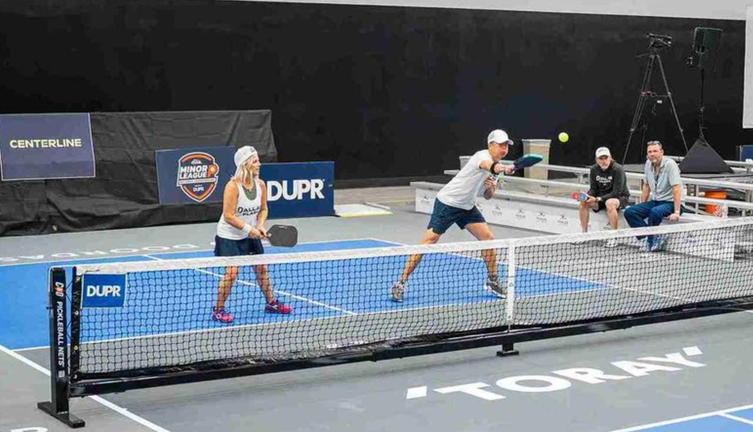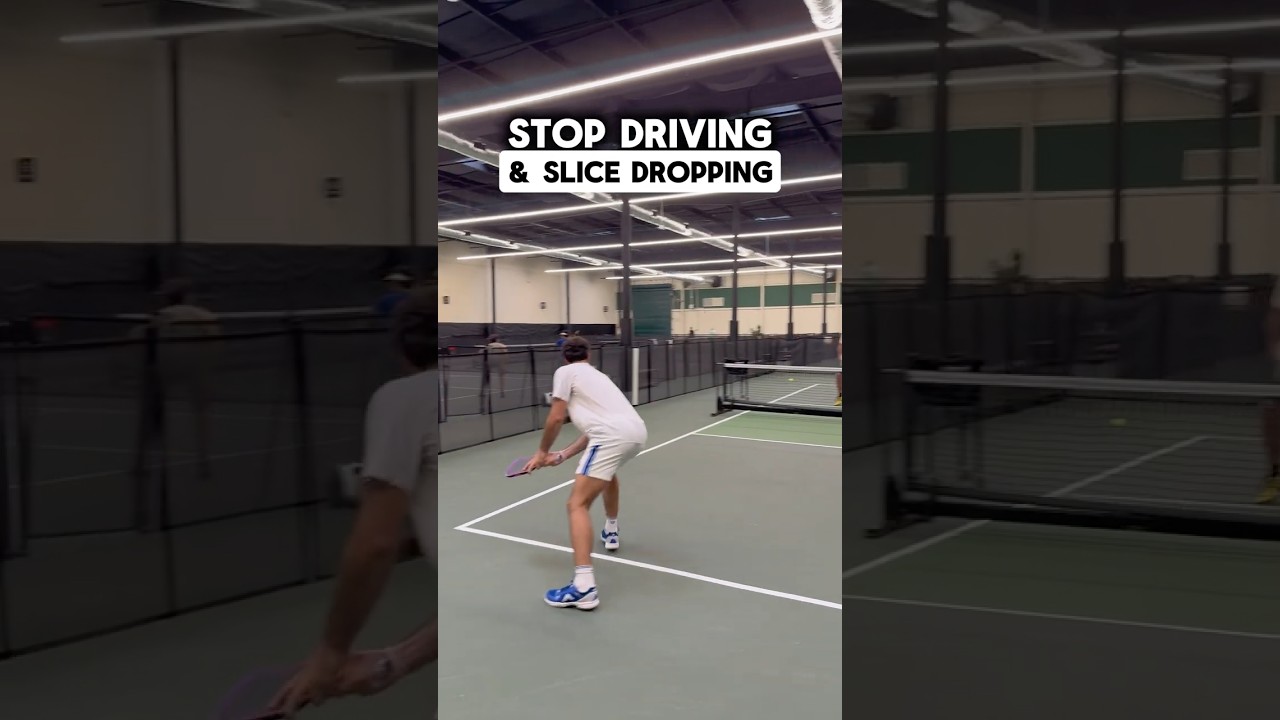


A mixed doubles strategy doesn't have to be complicated. Top PPA Tour pros Mari Humberg and Ryan Fu break down a simple three-shot pattern that immediately improves your ability to involve your partner and escape targeting.
Let's start with the obvious: in mixed doubles, one player usually becomes the target. It's not personal. It's strategy.
Opponents identify the weaker player (or the one in a worse court position) and attack relentlessly.
Your job isn't to avoid this; it's to have a mixed doubles strategy that turns targeting into an opportunity.
When you're being hammered, your instinct is to stay in a crosscourt rally and hope your opponent makes a mistake. That's passive. That's losing.
Mari Humberg and Ryan Fu teach something different: instead of accepting the rally, you control it with a predetermined pattern.
Love pickleball? Then you'll love our free newsletter. We send the latest news, tips, and highlights for free each week.
The Three-Shot Mixed Doubles Pickleball Pattern That Changes Everything
Here's the mixed doubles strategy that changes everything:
- Crosscourt.
- Middle.
- Behind.
That's it. Three shots. One pattern. Let me break down what each shot does:
- Shot 1: Crosscourt — You're still in the rally, still being attacked. Hit the ball crosscourt to keep the rally alive and buy time.
- Shot 2: Middle — Now you're shifting the angle. Hit the next ball down the middle of the court. This does two things: it forces your opponent to decide who's hitting it, and it starts to neutralize the targeting.
- Shot 3: Behind — This is where the magic happens. Hit the ball behind your opponents, forcing them to turn and reset. This almost always produces a popup or a weak return.
Ryan Fu explains it perfectly in the video:
"Patterns like this are going to up your level in mixed."
He's not exaggerating. This isn't advanced stuff. It's foundational mixed doubles strategy that separates players who understand court positioning from those who don't.
Why This Mixed Doubles Pickleball Pattern Works
The reason this mixed doubles strategy is so effective comes down to court geometry and decision-making.
When you hit crosscourt, you're staying in the comfort zone of the rally.
When you hit middle, you're forcing your opponents to communicate and decide who takes the ball.
When you hit behind, you're exploiting the fact that they're already committed to their court position.
Most players don't have a plan for this sequence. They react shot-to-shot, which means they're always one step behind.
Humberg and Fu teach you to think ahead. You know what your next two shots should be before you even hit the first one.
This is what separates recreational players from competitive ones. It's not about hitting harder or faster.
It's about having a mixed doubles strategy that's repeatable and reliable.
How to Practice This Mixed Doubles Strategy
You can't just read about this and expect it to work in a match. You need to drill it. Here's how:
- Start with a partner and have your opponents feed you balls in the crosscourt position.
- Hit the first shot crosscourt.
- Then hit the second shot down the middle.
- Then hit the third shot behind them.
- Do this 10 times in a row until it becomes muscle memory.
Once you've got the footwork down, add pressure. Have your opponents actually try to hit the ball back.
See how many times you can execute the full pattern before they break it.
Track your success rate. Aim for 70% consistency before you take it into a match.
The key is repetition. Mari Humberg and Ryan Fu didn't become top-ranked players by accident.
They drilled patterns like this thousands of times. You don't need thousands. You need dozens. Simple wall drills can also help you build the shot control this pattern demands before you even step on a court with a partner.
 The Dink Media Team
When to Deploy This Mixed Doubles Pickleball Strategy
Timing matters. You can't use this pattern on every shot. You need to recognize when you're in a situation where it applies.
- You're being targeted and stuck in a crosscourt rally
- Your opponent has just hit an aggressive shot and is expecting you to defend
- You have time to set up and execute the pattern without rushing
- Your partner is positioned at the net and ready to capitalize on the popup
- You're already at the net (this pattern is for baseline rallies)
- Your opponent has hit a weak ball that you can attack immediately
- You're out of position and just trying to get the ball back in play
The beauty of this mixed doubles strategy is that it's not rigid. It's a framework.
Knowing when to attack vs when to reset is a skill unto itself. Understanding the pickleball transition zone gives you the decision-making framework that makes this pattern even more dangerous.
The Dink Media Team
The Bigger Picture: Mixed Doubles Isn't About Individual Talent
Here's what Humberg and Fu are really teaching: mixed doubles strategy is about partnership and pattern recognition, not individual brilliance.
You don't need to be the best player on the court. You need to be the smartest.
When you have a repeatable pattern, you're not relying on luck or athleticism.
You're relying on preparation. And preparation beats talent when talent isn't prepared.
This is why top pros spend so much time drilling patterns. It's not glamorous. It's not Instagram-worthy. But it works.
If you want to improve at mixed doubles, stop trying to hit winners. Start trying to execute patterns. The wins will follow.
One of the best ways to accelerate this process is to watch how pros handle court positioning and steal their decision-making frameworks directly.
You can also study how pros use poaching off a partner's third shot to capitalize on exactly the kind of weak returns this three-shot pattern is designed to produce.
Frequently Asked Questions
What is the best mixed doubles pickleball strategy for beginners?
The crosscourt-middle-behind pattern taught by Mari Humberg and Ryan Fu is one of the most beginner-friendly frameworks in mixed doubles pickleball because it gives you a predetermined plan instead of forcing reactive decisions. You don't need elite shot-making to execute it, you just need repetition and awareness of your court position.
What if my opponent doesn't fall for the behind shot?
If they're positioned well or anticipate the pattern, they might block it or hit it back. That's fine. You've still accomplished your goal: you've moved them out of their comfort zone and created a neutral or slightly advantageous situation.
The pattern isn't a guaranteed winner. It's a way to regain control of the rally.
Can I use this mixed doubles pickleball pattern in singles?
Technically, yes, but it's less effective. The pattern is designed for mixed doubles pickleball because it exploits the positioning and communication challenges of two players.
In singles, your opponent has more court to cover, so the "behind" shot is less likely to produce a popup.
How long does it take to master this mixed doubles strategy?
Most players can execute the pattern with 70% consistency after 30 minutes of focused drilling. To make it truly automatic (90%+ consistency), plan on a few weeks of regular practice.
The key is drilling it in match-like conditions, not just in isolation.
What's the difference between this strategy and just hitting good shots?
Good shots are reactive. This mixed doubles pickleball strategy is proactive. You're not responding to what your opponent does. You're executing a plan that forces them to respond to you.
That's the difference between playing pickleball and playing smart pickleball.

Love Pickleball? Join 100k+ readers for free weekly tips, news & gear deals.
Subscribe to The Dink