
5 Pickleball Speed-Up Fixes That Create Instant Offense Off the Bounce
The best pickleball speed up comes from hitting less of the ball, not swinging harder. Here are five fixes that put the ball down fast off the bounce.
Your pickleball speed up keeps betraying you.
You see the ball sitting up off the bounce, you go for it, and it either sails long or floats up so slow that your opponent bats it back for a winner.
The shot that should end points keeps losing them.
Here is the fix, and it is going to feel backwards: you are hitting too much of the ball.
The players who bury speed ups off the bounce are actually hitting very little of it.
Top APP pro Richard Livornese Jr. breaks this down in a way that clicks the moment you try it, and it is the single biggest thing separating clean offense from popped up mistakes.
Love pickleball? Then you'll love our free newsletter. We send the latest news, tips, and highlights for free each week.
Why Your Pickleball Speed Up Keeps Missing
The reason your pickleball speed up flies long is simple: the more of the ball you hit, the more it travels. Power equals distance.
When you come behind the ball and push through it, you cannot swing hard without sending it past the baseline.
So players slow the shot down to keep it in.
Now it lands, but it lands soft and high, and a soft high ball at the net is a gift.
You are stuck choosing between fast and out or slow and attackable.
The way out is spin. The more spin you generate, the harder you can swing while still bringing the ball down inside the court.
And spin comes from hitting less of the ball, not more.
What "Hitting Less of the Ball" Actually Means
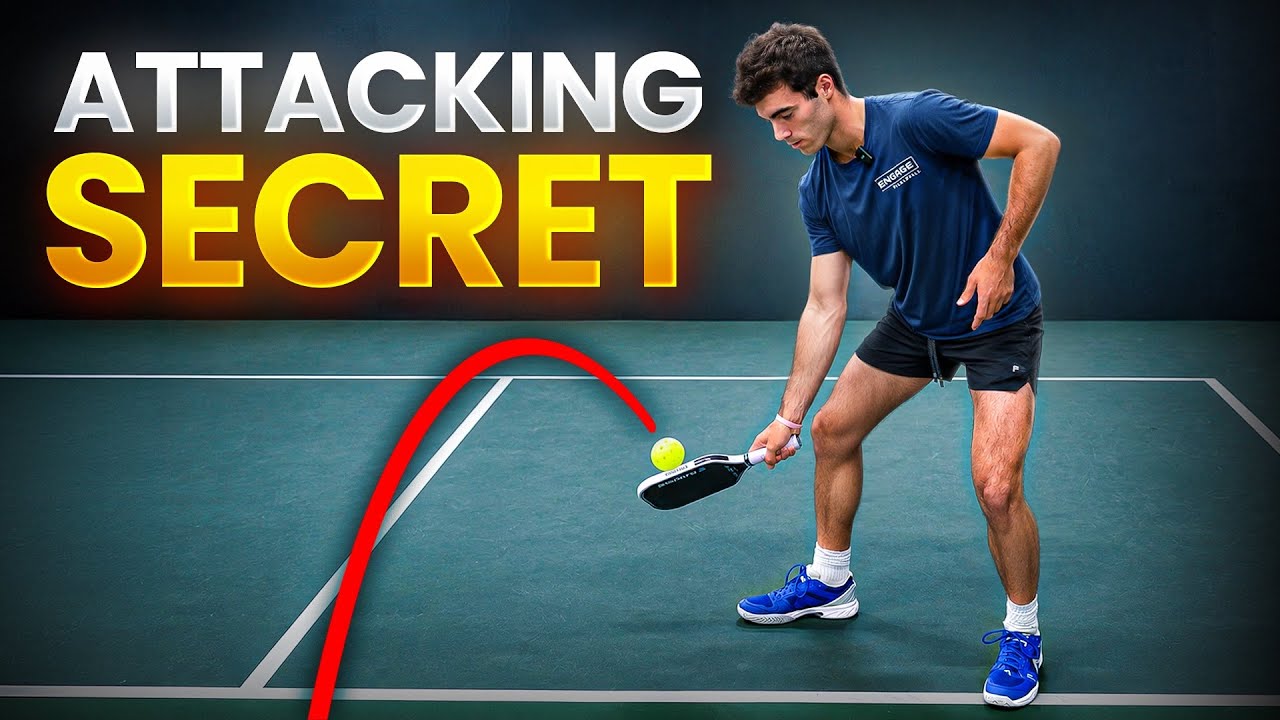
Hitting less of the ball means brushing the top half of it with a closing paddle face instead of driving through the back of it.
A closed face points down toward the ground. An open face points up toward the sky.
When you close the face and come over the top, you catch only the upper part of the ball, grab it with the paddle's grit, and the ball dives.
Picture the ideal path. If the ball is sitting up, you only want it to rise about three inches, just enough to clear the net, and then drop.
You are not lifting it up and hoping. You are pressing it down early with topspin so the apex sits as close to the net as possible.
The 5 Fixes for a Better Pickleball Speed Up
These five keys build on each other. Nail them in order and your pickleball speed up off the bounce stops being a gamble.
1. Brush the Top Half of the Ball
The whole system starts here: contact the top half of the ball, never the back. Hitting the back of the ball forces you to lift, and lift adds height you do not want. When you brush up and over the top instead, the ball takes on spin and gets down quickly, which lets you swing with real intent. This is the foundation of every good speed up off the bounce.
2. Close the Paddle Face on Contact
Closing the face is what makes hitting less of the ball possible. Open is the face tilted away from the ground, closed is the face tilted toward it. With a closed face you can come on top of the ball, generate heavy spin, and drive the ball down instead of out. Hit the same shot with an open face and you have to slow it down and add height, which is exactly the soft ball your opponent wants.
 The Dink Media Team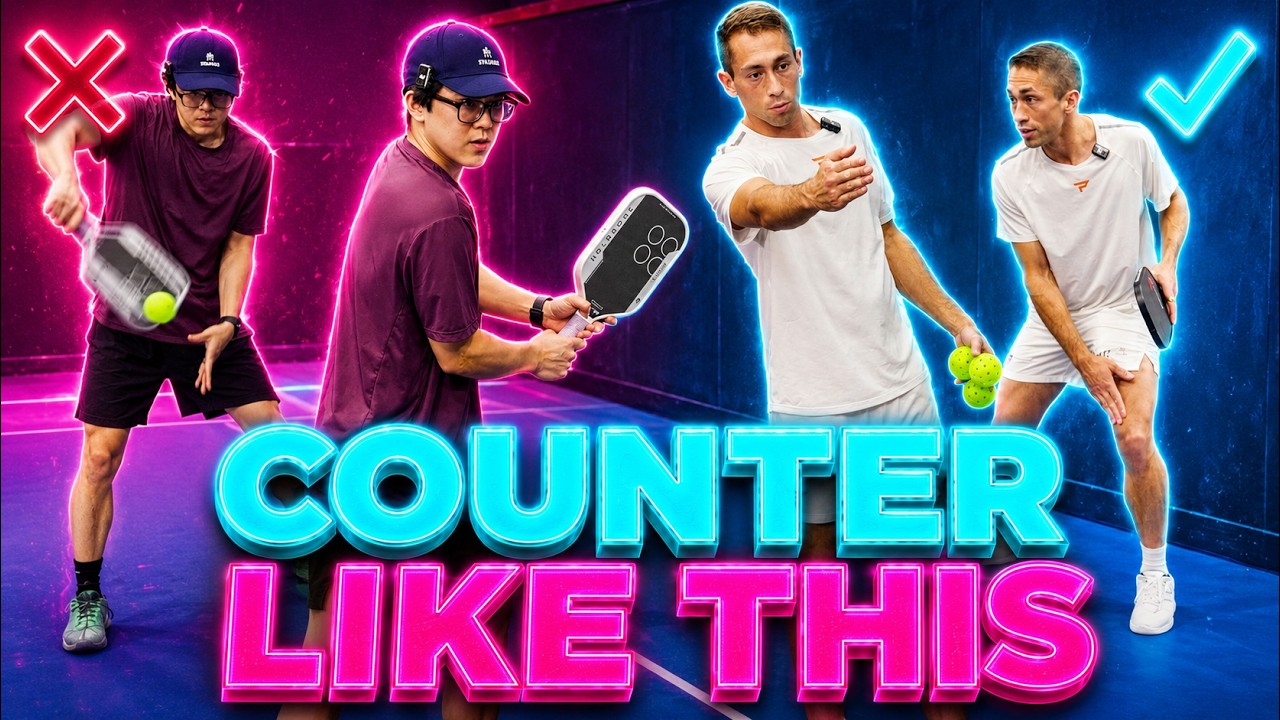
3. Get an Anchor Leg Behind the Ball
Footwork is the fix almost nobody talks about. Do not reach for your speed up with your arm stretched out wide. The farther your arm gets from your body, the more you have to compensate with your wrist, and wrist adjustments under pressure are where precision dies.
Instead, plant an anchor leg behind the ball. When your leg gets you into position, your arm stays close to your body and you can be precise about where and how you make contact. Good positioning here is the same discipline that keeps you out of trouble in the transition zone, where reaching instead of stepping wrecks the most shots.
4. Mirror With Your Off Hand on the Backhand
The two-handed backhand speed up works on the exact same principles, and players overcomplicate it. Start by checking your off hand. For a righty that is the left hand, for a lefty it is the right. If your paddle face is in a bad position, take your dominant hand off and set your off hand where it needs to be, then put the dominant hand back on. That is your speed up position.
From there it is identical to the forehand: anchor leg behind the ball, drop with a closed face, brush over the top. If you have been fighting your backhand, a genuine two-handed backhand gives you the structure to snap the ball down with control.
5. Snap the Wrist and Arm Together
The last piece is timing your wrist and arm as one motion. Keep the dominant hand loose so the off hand can snap over the top of the ball. If you use only your wrist, you spray the ball and miss. If you use only your arm, the shot goes loopy and slow.
Put them together, drop with a closed face, move the arms, and snap the wrist, and the ball gets down fast with pace.
This is exactly what you see when you watch Ben Johns flick a two-handed backhand off the bounce: the paddle stays closed, the snap is compact, and the ball drops onto the opponent's feet instead of sailing.
It is the same move that shows up in the best speed up drills.
 The Dink Media Team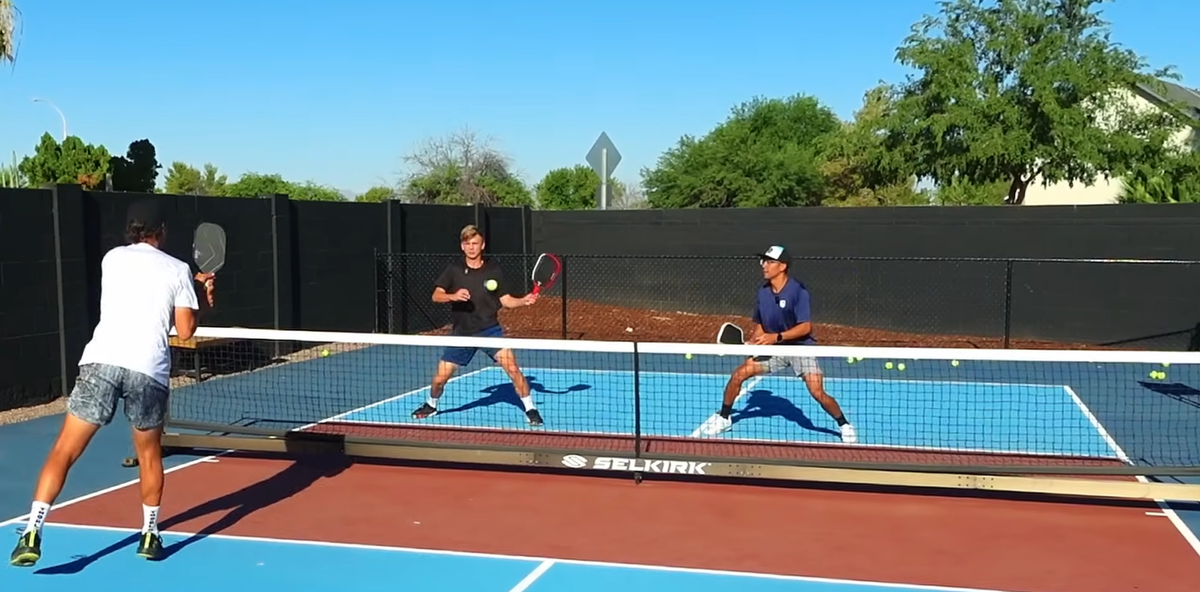
Does Your Paddle Actually Matter Here?
Yes, and more than it used to. This technique of hitting less of the ball only became possible because of modern paddle tech.
Today's paddles are hotter, grittier, and have more dwell time, so they grip the ball and let you do more with it.
That grip is what lets you brush the top half and still keep the ball on the strings long enough to shape it.
If you are playing with an old school paddle without real surface grit, you will not be able to hit these speed ups effectively.
Anything released in roughly the last year and a half will work.
The current wave of textured, spin friendly gear is a big reason net play has turned so aggressive, and a review of the top paddles for spin and control shows how much the surface technology now drives what shots are even on the table.
Squeezing more out of your equipment starts with how you hold it, which is why so many pros choke up on the grip.
 The Dink Media Team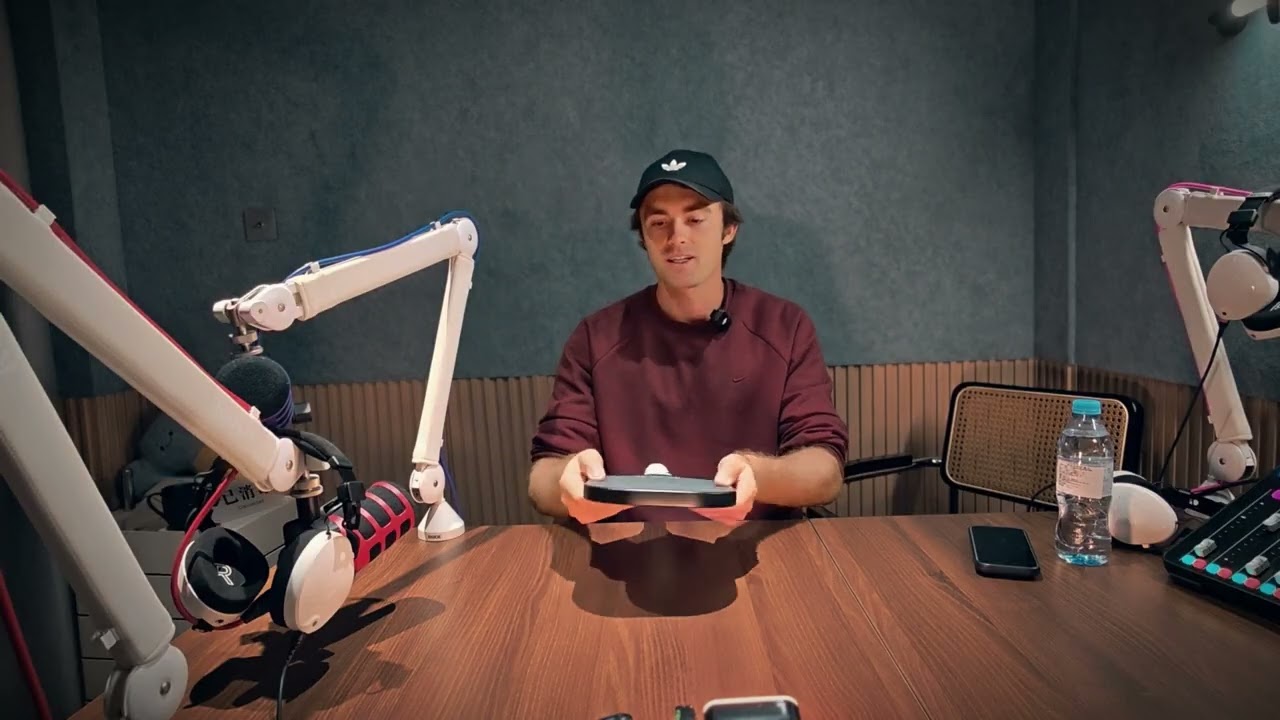
When the Ball Is Low, Adjust the Face
One more layer. The lower the ball, the lower you have to make contact, and that changes your paddle face slightly.
A ball around knee height lets you stay right on top of it with a closed face.
If the ball is lower than that, open the face just a touch so the ball gets enough height to clear the net.
The key word is slightly. You never want a fully open paddle face on a speed up, ever.
Even on a low ball you are still trying to come over the top, just with a hair more lift.
Reading that height correctly is part of knowing when to speed up in the first place.
Picking the wrong moment matters too.
As the crew at Yahoo Sports has noted, players who speed up while out of position tend to get the ball right back and have nothing left to defend with.
Balance first, then attack.
 The Dink Media Team
From 4.0 to 5.0: Why This One Change Matters
If you are trying to break through from 4.0 to 5.0, the pickleball speed up off the bounce is one of the clearest dividing lines.
The 4.0 player pushes through the back of the ball and hopes.
The 5.0 player brushes the top with a closed face, anchors the back leg, and snaps the ball down with spin.
Hit less of the ball. Close the face. Anchor your leg.
That progression is one of the real skills that separate 4.0 from 5.0 players, and it also makes you tougher to attack, because a compact closed face motion doubles as your best tool for taking the ball out of the air.
Once opponents feel your speed up land at their feet, they stop attacking you first.
Frequently Asked Questions
Why does my pickleball speed up keep going long?
You are hitting too much of the ball. When you drive through the back of the ball, power turns into distance and the shot sails. Brush the top half with a closing paddle face instead, and the spin brings the ball down inside the court even when you swing hard.
Should the paddle face be open or closed on a speed up?
Closed, in almost every case. A closed face lets you come over the top of the ball, add spin, and drive it down. Only open the face a small amount when the ball is well below knee height, and even then never open it fully.
What is an anchor leg on a pickleball speed up?
An anchor leg is the back leg you plant behind the ball so you can get into position without reaching. Keeping your arm close to your body instead of stretched out wide means you rely less on wrist compensation and hit the speed up far more precisely.
Do I need a new paddle to hit these speed ups?
Roughly speaking, yes if your paddle is old. The technique depends on surface grit and dwell time to grip and shape the ball, so old school paddles without texture cannot produce enough spin, but most paddles released in the last year and a half will do the job.
Is the backhand speed up different from the forehand?
The principles are identical: anchor leg, closed face, brush the top of the ball. The only addition on a two-handed backhand is setting your off hand in the right position first, then letting it snap over the top while your dominant hand stays loose.

Love Pickleball? Join 100k+ readers for free weekly tips, news & gear deals.
Subscribe to The Dink