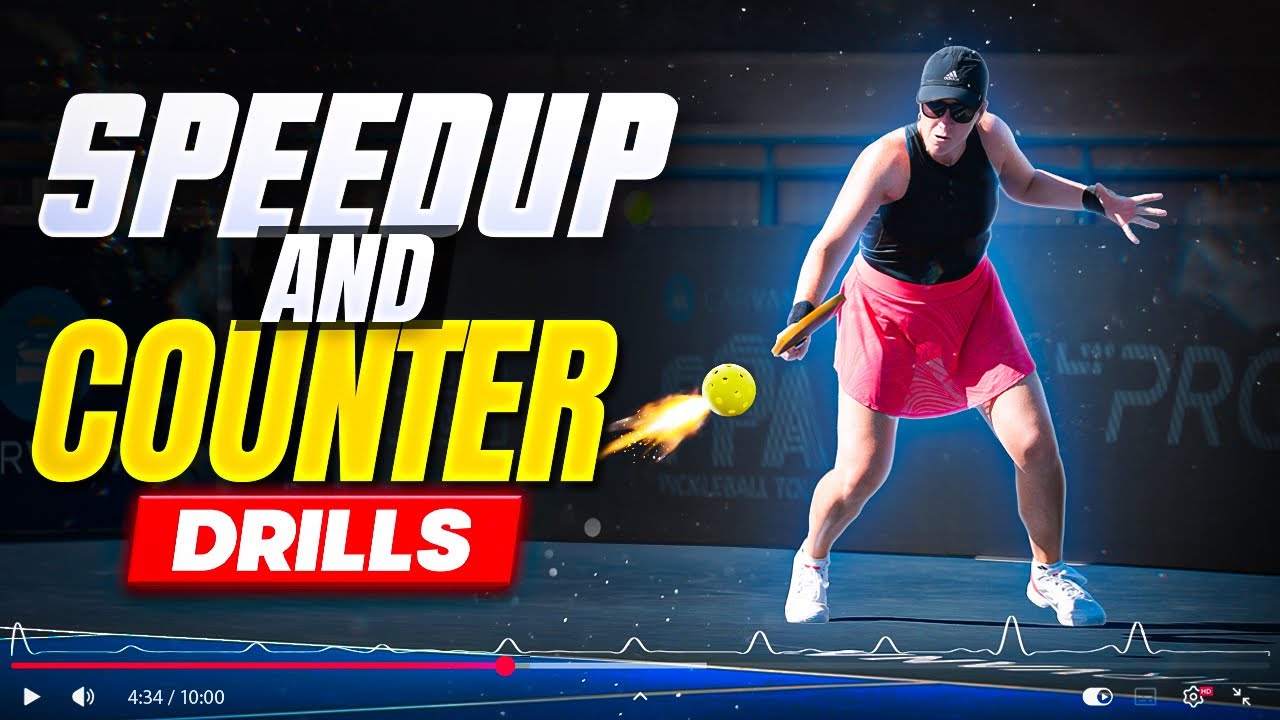
3 Pickleball Drills to Build Unbeatable Speed Ups and Counters
Most players warm up their hands and call it drilling. This pickleball speed up progression isolates the attack, the counter, and the dink that sets them up, so the skills actually hold under game pressure.
Your pickleball speed up works fine when you drill it, then falls apart the second a real game starts.
That gap is the most common reason 3.5 and 4.0 players stall at the kitchen line.
Pro Mari Humberg has a fix, and it is not "hit harder."
It is a three-drill progression that isolates each skill, the attack, the counter, and the dink that sets them up, before asking you to use all three at once.
Here is the exact sequence she runs, why each step matters, and how to turn it into something you will actually want to do.
Love pickleball? Then you'll love our free newsletter. We send the latest news, tips, and highlights for free each week.
Start With a Hands Battle to Warm Up Your Pickleball Speed Up
The first drill is a straight hands battle, and Humberg starts it standing inside the kitchen line, close enough that there is no time to wind up.
"We are not trying to hurt each other right now," she says.
The goal is rhythm, not power. Nice and slow, volley to volley, both players finding a shared pace before adding any heat.
That pace point matters more than it sounds.
The speed that works for you might be too fast for your partner or too slow for a banger you play twice a week. Find yours first, then push it.
Watch her feet and you will see the detail most players skip. She stays in an athletic position with a small bounce between shots.
For everyone who insists there is no time for a split step in a firefight: you are right. There is not.
But a little bounce keeps you established and ready for the next ball, which is the whole point of winning firefights instead of just surviving them.
This is the kind of body positioning habit that separates players who practice from players who improve.
Run this for five to ten minutes. Halfway through, both players back up a step and add a touch more pace, still controlled, still reloading fast.
A few ways to get more out of the warmup:
- Start slow and only speed up once the rhythm is clean. Consistency first, heat second.
- Keep a small bounce going between every shot so your hand speed has a stable base.
- Use this block to add a shot you do not own yet. Humberg is building in two hands here, and the warmup is the low-pressure place to do it.
If two-handed shots are that shot for you, start with her complete guide to the backhand flick and a two-handed backhand counter you can trust when the ball comes at your body.
Learning to attack with both hands is now one of the essential shots pros are drilling most in 2026.
 The Dink Media Team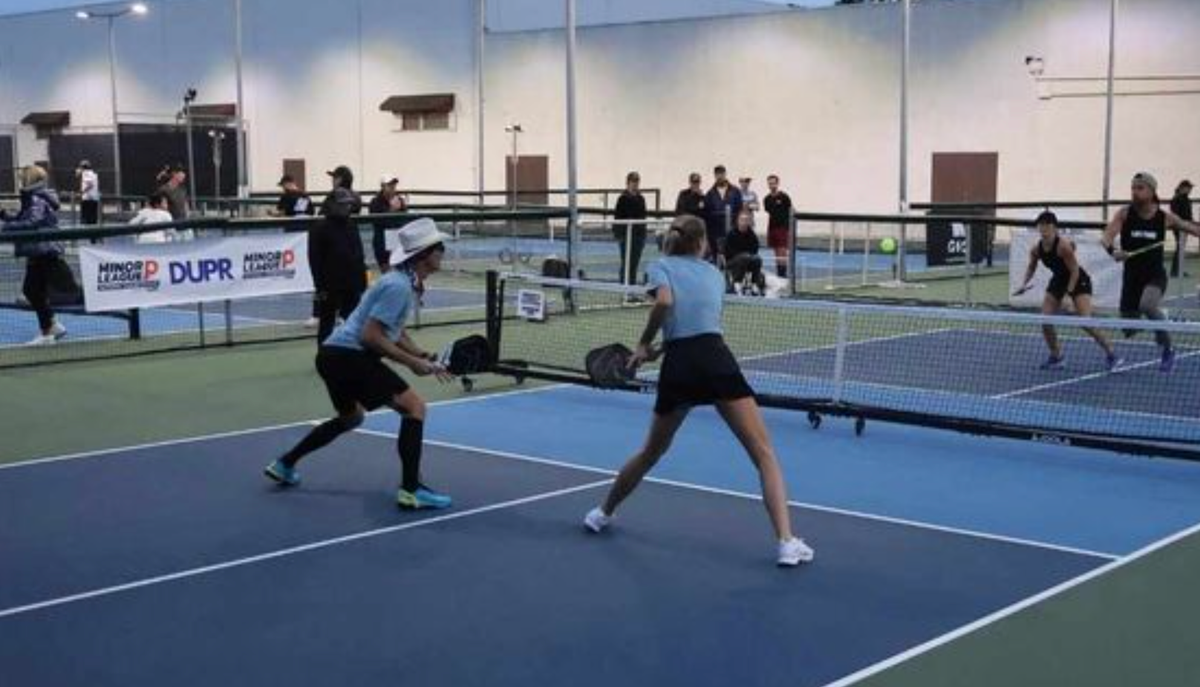
Why Should You Isolate Your Pickleball Speed Up From Your Counter?
The second drill is where the pickleball speed up actually gets built, and it works by giving each player exactly one job.
One side is allowed to attack. The other side is not allowed to speed up at all, only to counter. Then you switch.
Humberg calls this isolating parts, and it is the core of her whole method.
"My only focus is dinking with intention to get a ball that I can attack," she says.
Her partner's only focus is defending and countering without ever initiating.
That separation is the point. When you are responsible for the attack and the defense at the same time, neither skill gets real reps.
Split them and each one sharpens fast.
Score it like a quick game to three for practice, or play to eleven and switch sides at six, or to fifteen and switch at eight.
The number matters less than getting enough quality reps before you swap roles.
This is exactly the kind of structured drill format that helps you break the 5.0 barrier before the skills even feel hard.
Dink With Intention So the Pickleball Speed Up Is There
A pickleball speed up is only as good as the dink that creates it, which is why the attacking player's real job in this drill is the dink, not the bang.
You are not dinking and hoping. You are moving your opponent, watching for a dead ball that floats just high enough, and leaning in ready to fire.
This is also where you build combos.
Humberg describes going to her opponent's right hip hoping to draw a backhand, then reading where the counter goes and adjusting.
Keep your paddle out in front after every dink so the speed up is already loaded.
If you tend to float those setup balls instead of pinning them low, fix that first by checking why you keep popping up your dinks.
Understanding what a dead dink actually looks like is the first step to recognizing when your kitchen attack is actually on.
Make the Counter a Weapon, Not a Panic Button
On the defending side, the job is to read the attack early and counter it clean, which is a skill you almost never get to isolate in normal play.
Because this player cannot initiate, every rep is pure defense.
They learn to track the ball, hold their ready position, and absorb pace instead of flinching at it.
Humberg points out that good defenders start to know your patterns. "She knows my patterns pretty well," she says of her partner after a few rounds.
That reading ability is trainable, and it starts with anticipation rather than raw reflexes.
When the counter does come back hard, the cleanest answers are the compact ones: a punch, flick, or roll volley with no backswing.
And once you read a predictable attack, you can punish that forehand counter the next time it shows up.
Pro Michael Loyd's two-thing rule for hitting consistent pickleball counters is worth studying alongside this drill.
 The Dink Media Team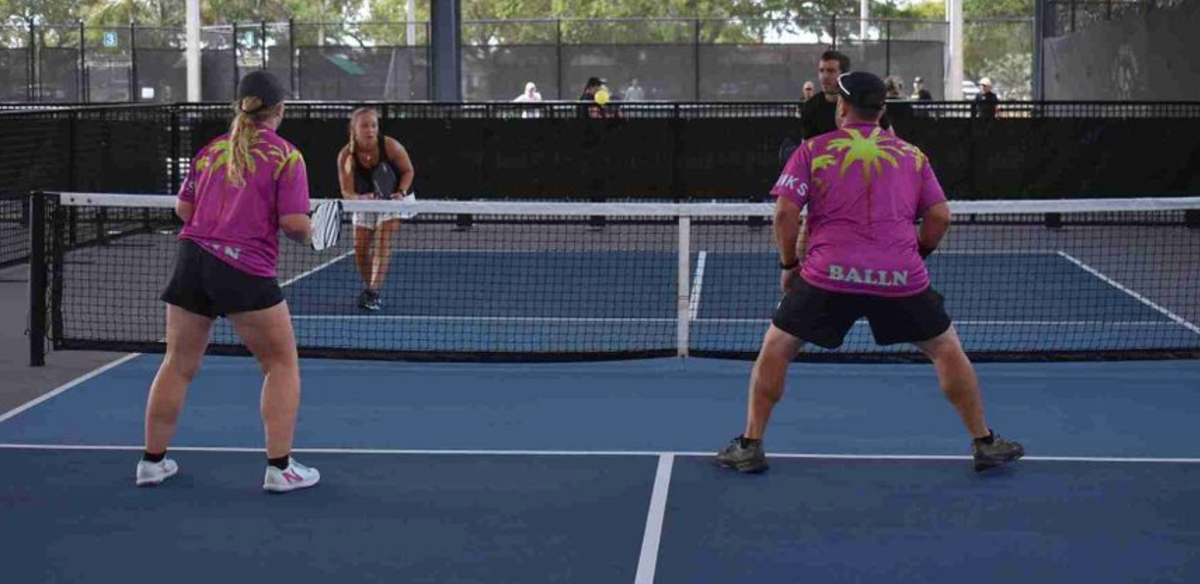
The Final Boss: Put Your Pickleball Speed Up and Counter Together Live
The third drill is a normal game where both players can attack, and Humberg calls it the final boss for a reason.
Now both sides can speed up, both sides can counter, and missed dinks count against you. There is no more isolation and no more safety net.
This is where the pressure shows up. In the first two drills you can take your time.
Here, every dink has to hold while you also hunt for the right attack and stay ready to counter the one coming back.
It is also where players get too ambitious. Humberg calls herself out for going for an attack she had no business taking.
"That was way too ambitious," she says, and the lesson is to take only the attack options you would actually trust in a match. T
his mirrors the modern pickleball strategy shift happening in 2026, where controlled aggression beats reckless power every time.
 The Dink Media Team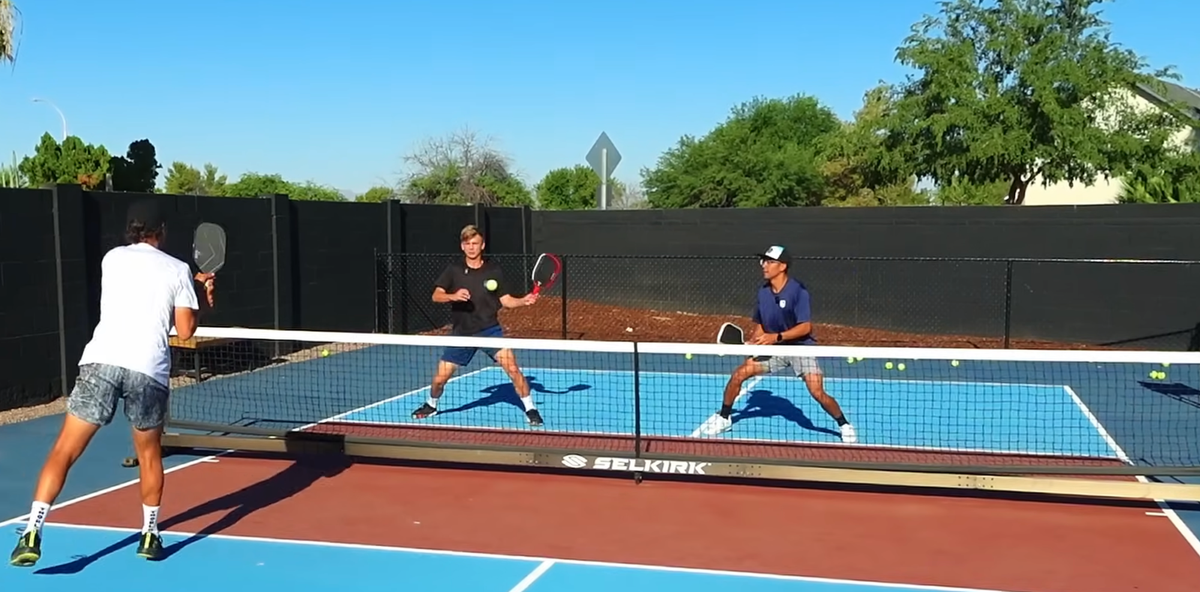
Why Does Your Dink Fall Apart Under Pressure?
Because consistency in a drill and consistency under pressure are different skills, and only the live game exposes the gap.
Humberg's partner can hit thirty dinks in a row in the warmup, then misses dinks once the game is on the line.
Nothing changed about the stroke. The only new variable is pressure.
That is the entire argument for this progression.
You build the dink, the attack, and the counter in isolation so they are automatic, then you stress test them in a game so they hold when it counts.
The same logic applies to your decisions.
Stop forcing shots you would not normally take.
A simple 4-step system to win more pickleball games in 2026 hammers the same idea from a strategy angle: keep the ball in play and build the point before you pull the trigger.
Watch the cleanest hands in the pro game and you see this discipline everywhere.
Anna Leigh Waters does not win net battles by swinging harder, she wins them by keeping every counter compact and only attacking the ball that earns it.
According to CBS Sports' 2025 coverage of elite pickleball technique, the best players in the world win kitchen exchanges not through power but through shot selection and patience, a principle that runs through every drill in this progression.
 The Dink Media Team
How to Build This Into Your Own Pickleball Speed Up Practice
The reason this pickleball speed up progression works is that Humberg turns every block into a game, so drilling stops feeling like a chore.
"I'm tired of hearing people say drilling sucks," she says.
She makes games out of all of it, which is why she can spend two hours on it in the morning and still want to play in the afternoon.
Stack the three drills in order and the logic is clear: warm the hands, isolate the attack and counter, then play it live.
A simple way to run the full session:
- Hands battle warmup, five to ten minutes, slow to fast, then back up a step.
- Isolation game, one side attacks and one side only counters, then switch roles at the halfway point.
- Full game to eleven or fifteen, both sides attacking, missed dinks count.
If you want more structured reps like these, pair this with a few targeted dink drills and the pro-level detail in our breakdown of the pickleball speed up.
The 3 technical tips for winning kitchen line hands battles are a natural companion piece once you have the basics locked in.
Add it to your routine today and the gap between your drilling and your games starts to close.
Frequently Asked Questions
What is a pickleball speed up?
A pickleball speed up is when you take a ball that is normally dinked and accelerate it, usually off the bounce or out of the air, to put your opponent on defense. The goal is not always a winner. Often it is to force a weak counter you can then attack again.
How do I stop my pickleball speed up from missing in games?
Isolate the skill in practice before you trust it in a game. Run a drill where you only attack and your partner only counters, so you get clean reps on the dink that sets up the speed up. Then play a live game where missed dinks count, which trains the same shot under pressure.
Should I speed up off the bounce or out of the air?
Both, and you should train both. Out of the air takes time away from your opponent but is harder to control. Off the bounce gives you a cleaner look but lets them reset their feet. Drilling each one separately tells you which you actually trust.
How long should I warm up my hands before drilling pickleball speed ups?
Five to ten minutes is plenty. Start slow inside the kitchen line to find a shared pace, then back up a step and add controlled pace for the second half. The point is rhythm and reloading fast, not trying to overpower your partner.
Why do my dinks hold in practice but not in matches?
Pressure. The stroke is the same, but match stakes tighten you up and rush your setup. The fix is to rehearse your dinks inside live, scored games where mistakes cost you, so the shot is built under the same pressure you feel on match point.

Love Pickleball? Join 100k+ readers for free weekly tips, news & gear deals.
Subscribe to The Dink