4 Forehand Dink Fixes That Turn a Consistent Shot Into a Weapon
A consistent forehand dink is a starting point, not a finish line. These four technique fixes will help you add real pressure and pace to your forehand dink at the kitchen line.
Your forehand dink lands in the kitchen every time. You are reliable, you are patient, and yet somehow you are still losing dinking rallies to players you should beat.
Consistency without pressure is just giving your opponent time to think.
If your forehand dink never forces a reaction, it is not actually working for you.
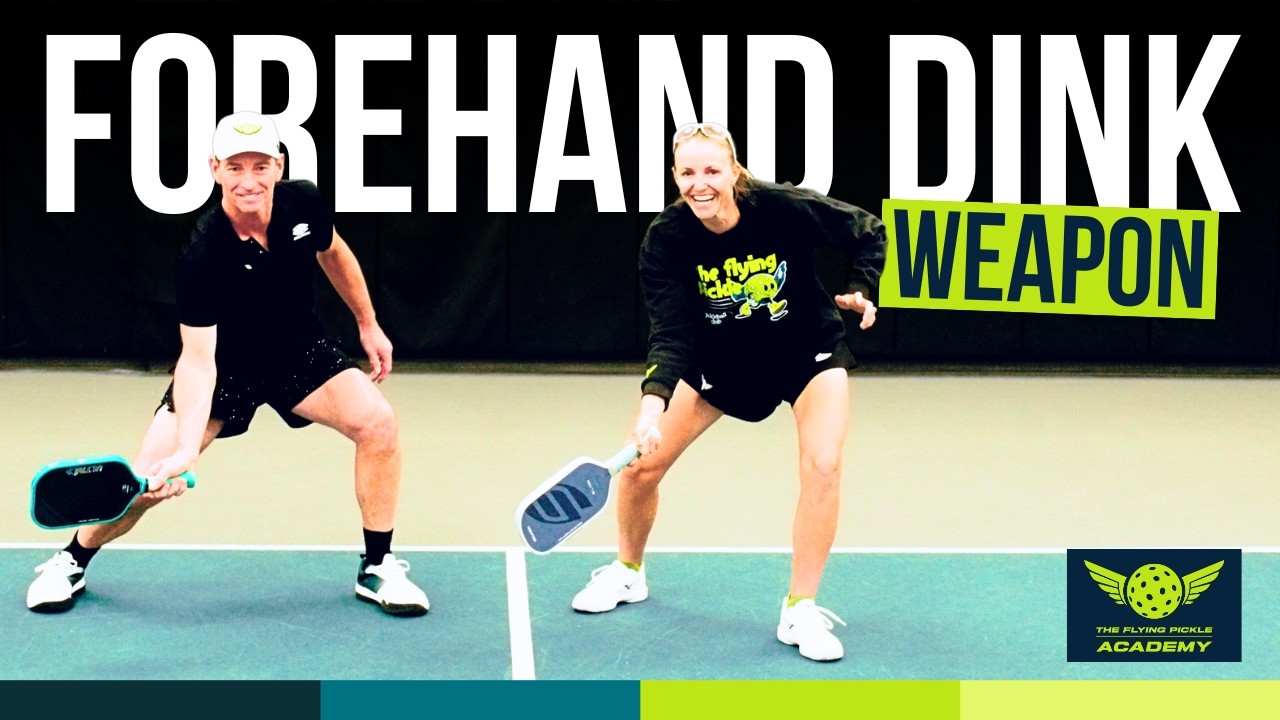
Coach Suzanna Barr of The Flying Pickle Academy walks through exactly this problem with her student Thomas in a recent coaching session, showing how a few targeted changes transform a safe, reliable dink into a shot that puts opponents on defense.
Love pickleball? Then you'll love our free newsletter. We send the latest news, tips, and highlights for free each week.
The Real Problem With a "Consistent" Forehand Dink
Most players who have a consistent forehand dink are actually just getting the ball over the net with minimal pace and spin.
Thomas had exactly this issue. He was putting some topspin on the ball, but there was not much behind it.
The root cause was a technical habit that is incredibly common: dropping the paddle tip straight down toward the ground.
When your paddle tip points at the court, you have to lift and roll at the same time during the swing.
That extra motion kills your ability to accelerate cleanly through the ball. The fix is not complicated.
But it does require you to change what you think the paddle setup for a forehand dink should look like.
Fix 1: Stop Dropping the Paddle Tip to the Ground
Instead of letting the paddle tip fall straight down, point the corner of the paddle toward the sideline.
The face will still be angled slightly downward because the ball is low, but the tip stays to the side rather than pointing at the ground.
This one adjustment does several things at once. It keeps the paddle in your field of vision so you can actually see what you are doing.
It also puts you in a position to accelerate through the ball rather than lifting up into it. Think of it as corner down, not tip down.
There is a big difference in what happens to the shot when you make that swap.
If you have been wondering why your forehand dink keeps getting attacked, this paddle position issue is likely part of the answer.
Fix 2: Drop Your Body, Not Your Paddle
This is the fix that separates players who understand dinking mechanics from those who are still guessing.
When the ball is low, the instinct is to drop the paddle to reach it. That instinct is wrong.
Drop your knees instead. Lower your body so your paddle stays in the correct position rather than compensating with the paddle tip.
Suzanna demonstrated this clearly in the session. She kept the paddle pointed at the sideline and at her opponent, then dropped herself to match the ball height.
Thomas noticed immediately that it demanded more from his legs than he was used to. That is actually the point.
A strong forehand dink is built on a solid athletic base.
If your legs are not working, your paddle has to do all the compensating, and that is what kills pace and control.
Understanding why you need to bend your knees instead of your back to get low is a foundational concept that applies directly here.
Your Body Position Checklist for the Forehand Dink
Here is a quick checklist for your body position on a forehand dink:
- Knees bent, weight slightly forward
- Paddle face open and pointing toward the sideline or opponent
- Hitting shoulder leaning into the shot
- Contact point out in front of your body, not alongside your hip
- Grip pressure at about a four or five out of ten
 The Dink Media Team
Fix 3: Get the Paddle Open Early
One of the most common timing mistakes in dinking is waiting too long to prepare the paddle face.
Many players are not opening the paddle to the correct angle until the ball has already bounced.
By then, they are rushing, and they pull back farther than they need to just to give themselves more time to set up.
As soon as you recognize the ball is coming to your forehand, open the paddle immediately.
Do not wait. Get the face angle set before you need to swing.
This early preparation lets your feet do the real work.
Instead of adjusting the paddle to compensate for poor positioning, you adjust your feet to get your body into the right spot.
Then the swing is just a short, controlled acceleration through the ball.
Suzanna made this point directly: the late paddle opening is one of the main reasons players end up pulling back too far and losing control of the shot.
 Alex E. Weaver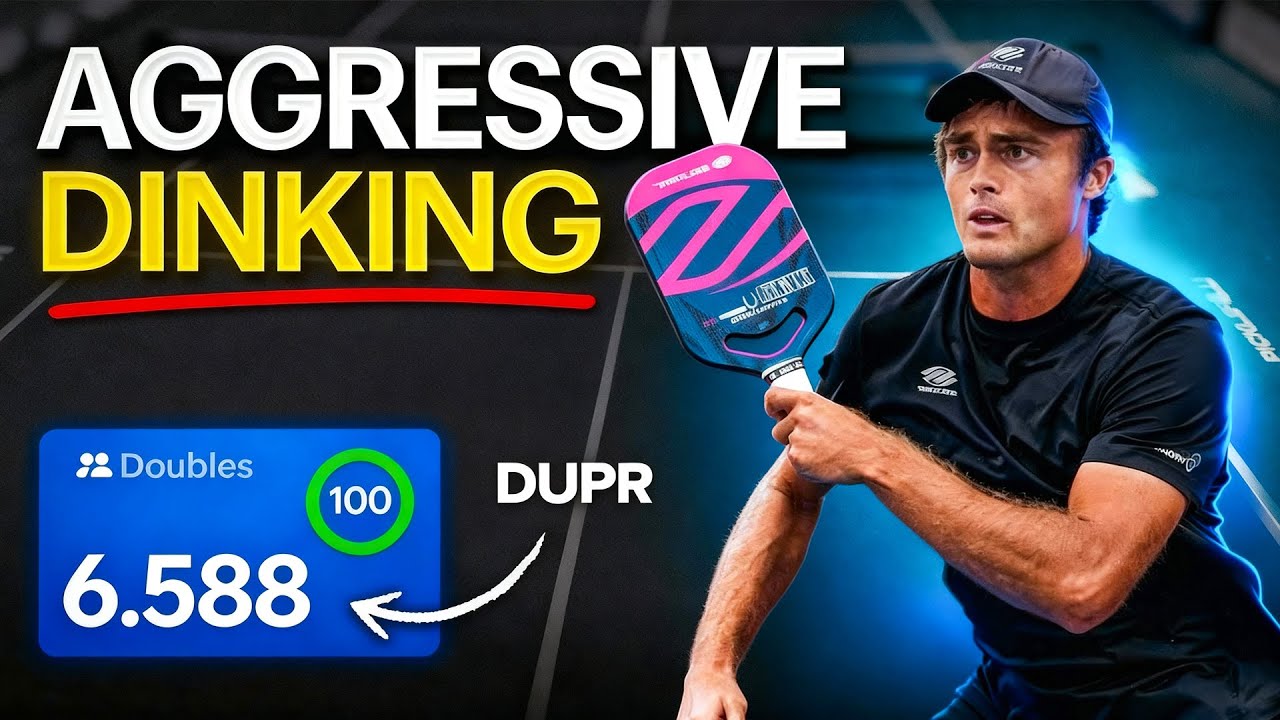
+-
What Does "Out in Front" Actually Mean?
You have heard coaches say to keep the ball out in front of your body. But what does that actually look like on a forehand dink?
The contact point should be far enough in front that you can see your paddle, the ball, and still get a peripheral view of the court.
If you tilt your head down to look at the paddle, it is too far back or too low.
Suzanna described the ideal contact point as being near her front foot, sometimes even slightly beyond it, when she is moving quickly enough to cut the ball off before it carries past her.
That forward contact is what gives you options. You can go cross court with a sharp angle. You can push down the line.
You can redirect to the inside foot. When the ball is too far back, all of those options disappear and you are just trying to get it over the net.
This connects directly to one cross court dinking principle that consistently stops opponents: controlling where the ball is when you hit it determines how much you can do with it.
 The Dink Media Team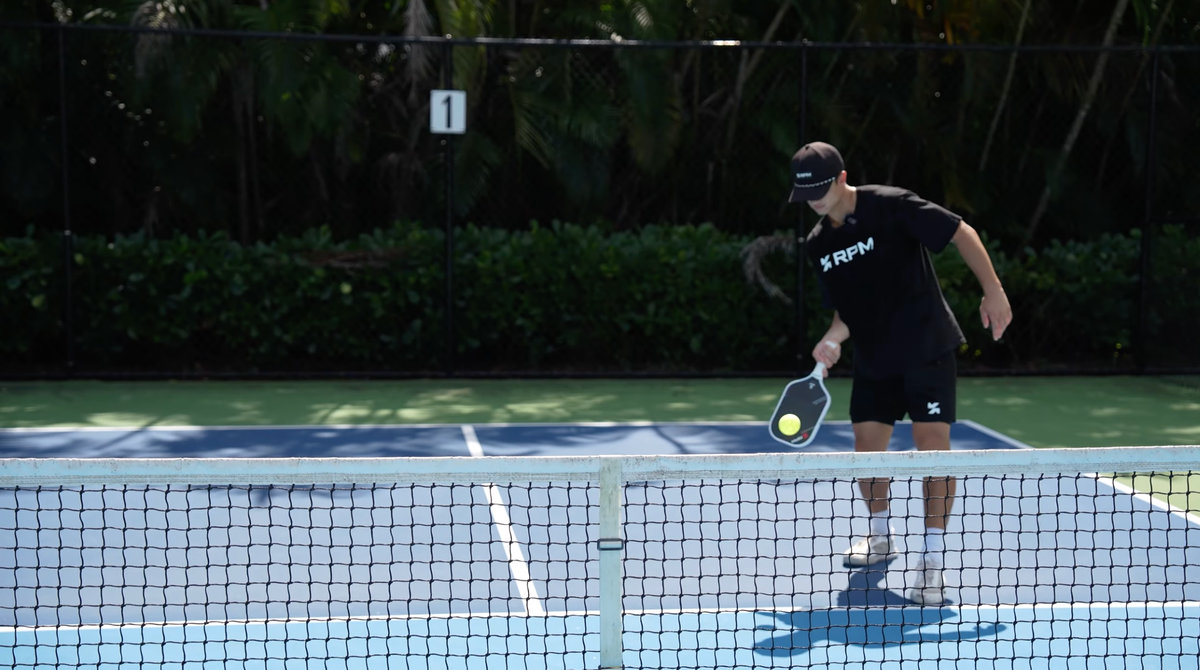
Fix 4: Accelerate Quickly Through a Short Swing
Pace on a forehand dink does not come from a long backswing. It comes from a short, explosive acceleration at contact.
Thomas was hitting with a swing that was slightly wristy and lacked clean follow through.
The fix was to get more deliberate with the motion: set the paddle early, stay compact, then fire quickly through the ball with a short follow through.
The wrist should be firm at contact. The grip stays relaxed at about a four or five, but the wrist does not flip or roll independently.
The forearm drives the acceleration and the wrist stays locked in to deliver it cleanly.
Understanding when to roll versus when to flick at the kitchen becomes much easier once you have this base mechanics sorted out.
The Full Sequence for an Aggressive Forehand Dink
Here is the full sequence for a high-quality aggressive forehand dink:
- Recognize the ball is coming to your forehand side
- Open the paddle immediately to the correct angle, corner down toward the sideline
- Adjust your feet and drop your knees to find the right height and spacing
- Pause briefly at the ready position with the ball in front of you
- Accelerate quickly through the ball with a compact, firm-wristed swing
- Keep the follow through short and controlled in the direction you want the ball to go
 The Dink Media Team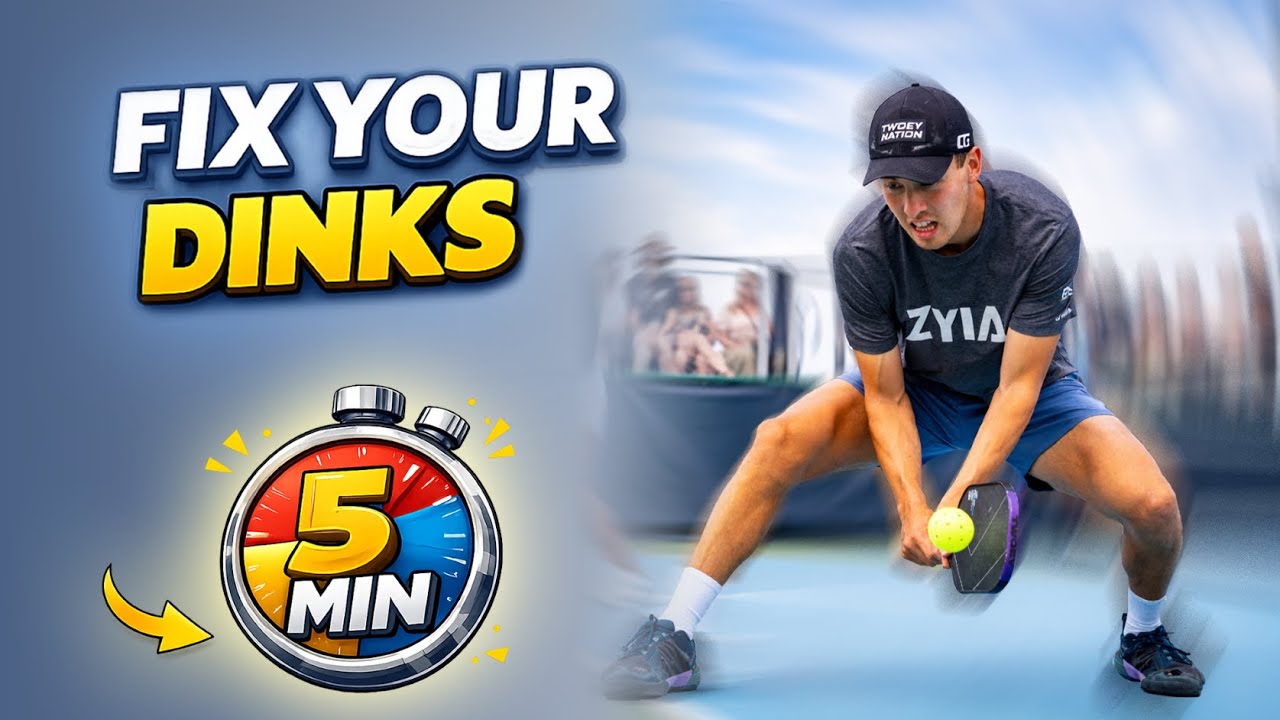
When to Go Aggressive and When to Dial It Back
Suzanna was clear about this with Thomas. You do not go for an aggressive dink every single time. You pick your spots.
Hit the aggressive forehand dink when you are balanced and the ball is out in front of you.
That is when you have real options and can actually dictate pace and direction.
When you are off balance or the ball has pushed you backward, go for something safer, aim middle, or target the inside foot of the near player just to reset control.
If you want to go down the line, that is when you let the ball carry a little further past your body.
If you want a sharp cross court angle, cut it off early before it gets too far across.
Both are available when your setup is right. This kind of decision making is what separates 4.0 dinking from 5.0 dinking.
It is not just hitting harder. It is knowing when the shot selection is right for the situation.
Players who get stuck at a certain rating are often making the same aggressive dink attempt regardless of their position.
There are specific reasons players stay stuck, and undisciplined shot selection at the kitchen is near the top of that list.
 The Dink Media Team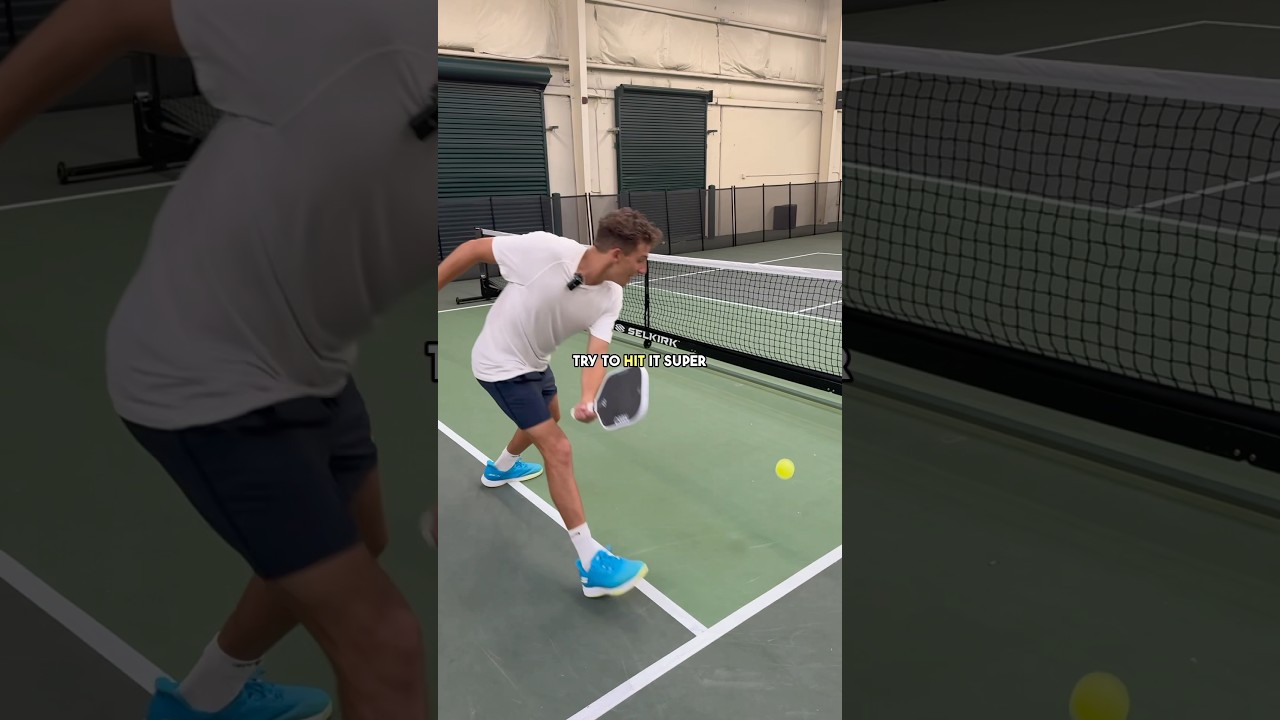
The Role of Spacing and Footwork
Thomas was short hopping the ball, meaning he was standing too close and catching it right off the bounce before it had time to rise.
That killed his spacing and forced awkward contact.
Back off the ball enough to let it bounce, rise, and just begin to drop before you hit it. That peak-and-drop window is where you have the most control.
Catching it too early off the bounce means less time and more rush in your swing.
Pulling the right foot back slightly to create more room was a cue Suzanna kept returning to with Thomas.
It sounds minor but it creates the space needed to swing without jamming yourself.
If you feel cramped on your forehand side, your feet are too close to the ball.
Good dink mechanics extend beyond just the swing and into how you position your whole body before contact.
If you want to see how these mechanics apply to the other side of the ball, the same principles around spacing and contact point show up in backhand dink technique as well.
Getting your forehand dink to a place where it can apply real pressure is about stacking small improvements.
Better paddle angle, lower body position, earlier preparation, and cleaner acceleration.
None of these are hard on their own. Together, they change the shot completely.
Thomas left the session with a dink that felt more under control and more dangerous at the same time. That combination is exactly what you are going for.
You do not have to choose between consistent and aggressive. The right technique gives you both.
Frequently Asked Questions
Why does my forehand dink have no pace even when I try to hit harder?
The most common reason is paddle tip position. If the tip is pointing toward the ground at setup, you have to lift and roll simultaneously, which kills clean acceleration. Point the paddle corner toward the sideline instead, and you will find it much easier to drive through the ball with pace.
How low should I bend my knees on a forehand dink?
Low enough that your paddle stays parallel to the ground rather than tilted tip-down. Your body height should match the ball height. If you are straining to reach the ball with your arm and paddle, your knees have not dropped far enough.
What is the correct grip pressure for an aggressive forehand dink?
Grip pressure should sit around a four or five out of ten. The grip stays relaxed but the wrist is firm at contact. A death grip on the paddle actually reduces your ability to feel the ball and control direction.
Should I take the forehand dink out of the air or let it bounce?
Take it out of the air when you can. Getting it before it bounces takes time away from your opponent and keeps you moving forward. If you cannot reach it comfortably in the air, let it bounce and catch it just after it peaks.
How do I know if my contact point is too far back on the forehand dink?
If you cannot see your paddle face without looking down or back toward your body, the contact point is too far behind you. You should be able to see the paddle, the ball, and get a peripheral view of the court all at the same time. If that is not possible, the ball has drifted too far past your front hip before contact.

Love Pickleball? Join 100k+ readers for free weekly tips, news & gear deals.
Subscribe to The Dink