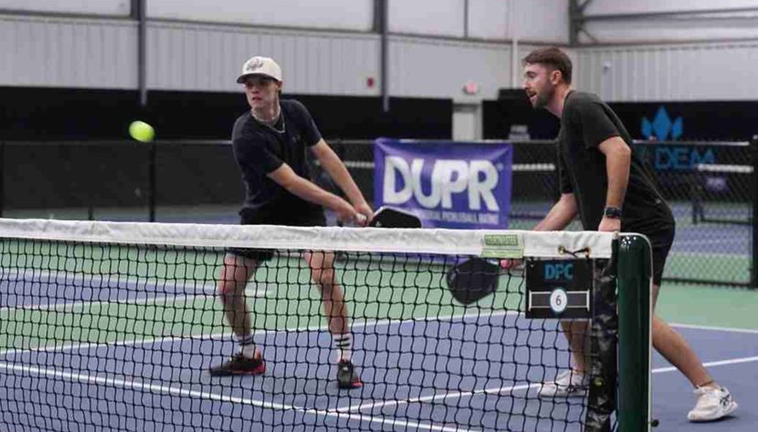


The pickleball flick feels hard because most players lean back and reach, not because their wrist is broken. These five fixes show you how to get your weight forward and attack dinks with control.
If your pickleball flick feels too far away, too slow, or too wild, you are probably fighting your own body position and not your wrist.
I see players reach, lean back, and then wonder why the ball has no pace and no placement.
The fix is simpler than most players think, and it has almost nothing to do with a magic grip. It comes down to where your weight sits and how you accelerate.
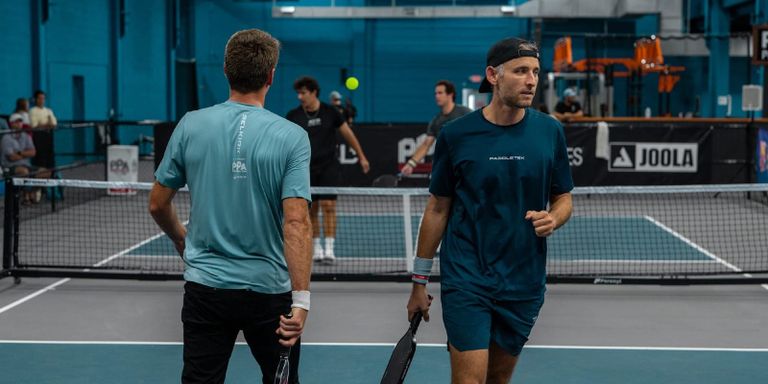
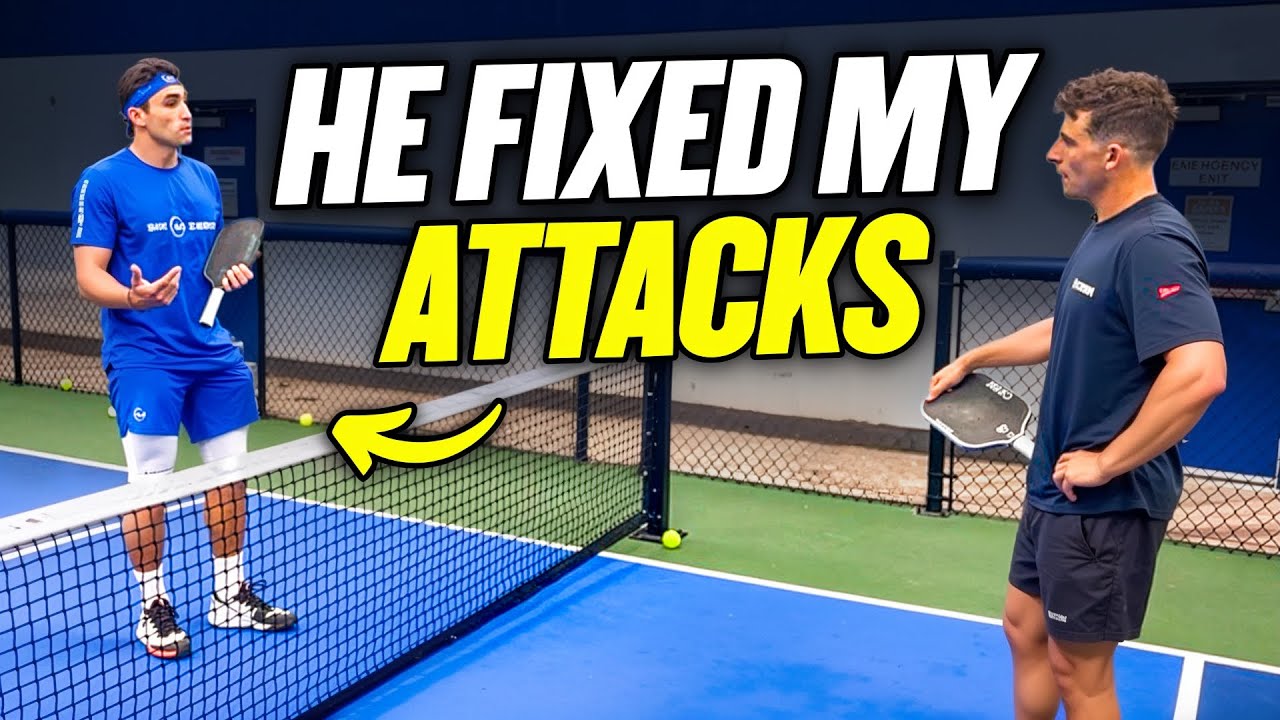
These lessons come from Connor Garnett, who worked with pro Mari to build a one-handed backhand flick from scratch.
Below, I break down every fix that took his flick from reachy and slow to controlled and disguised.
Love pickleball? Then you'll love our free newsletter. We send the latest news, tips, and highlights for free each week.
What Is a Pickleball Flick, and How Is It Different From a Roll?
A pickleball flick is a quick, wrist-driven attack on a dink taken out of the air, while a roll is a smoother low-to-high swing that keeps the wrist mostly locked.
Connor described it well: a roll goes up through the ball, and a flick goes through it with the wrist.
His first attempts looked more like rolls, which is a good shot but not the same tool.
Here is the catch that matters.
Because you can only take the ball out of the air once you are clear of the kitchen under the USA Pickleball rulebook, a ball below net height gives you very little room to add power.
The flick becomes a finesse shot there.
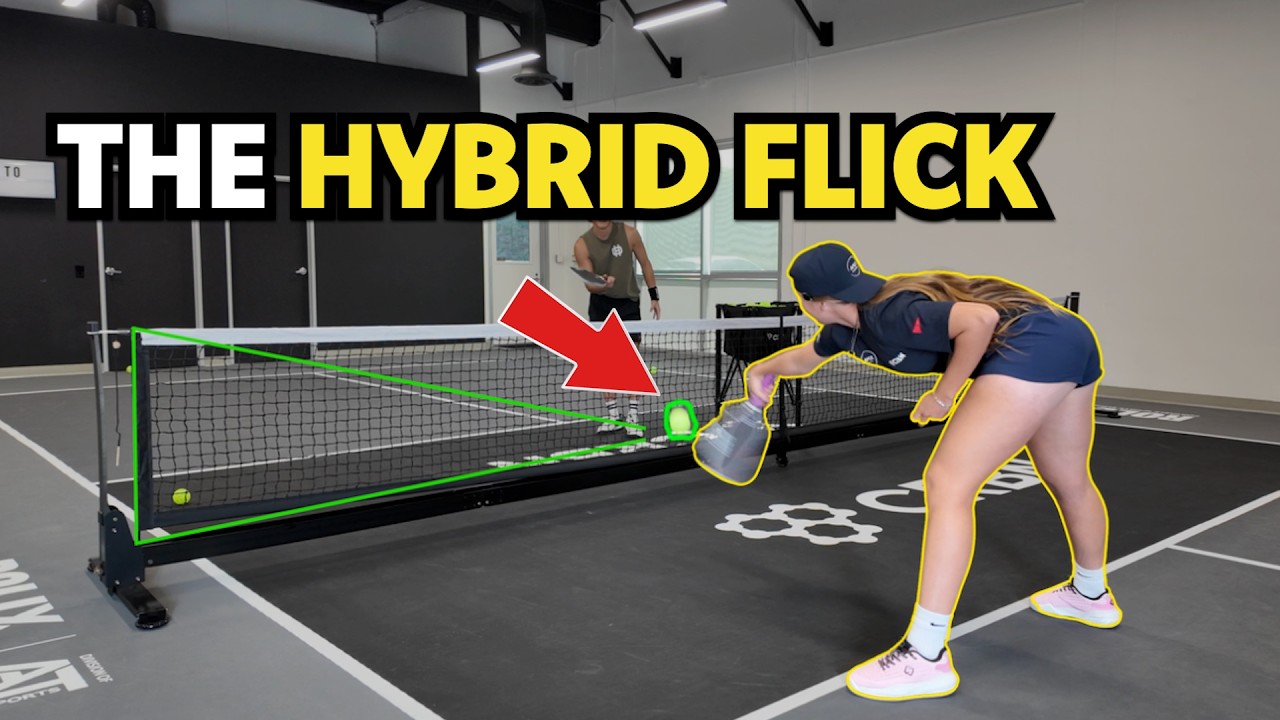
When the ball sits higher above the net, you can add shoulder and explode through it, which is a hybrid between a flick and a roll.
Knowing which version you are hitting keeps you from forcing pace that is not there.
Fix 1: Stop Obsessing Over Your Grip
Your grip matters far less than you think, as long as it sits between Continental and Eastern.
Mari’s point was blunt: she can hit her flick with nearly any grip in that range, and she proved Connor could too by having him try some crazy ones.
Copying a pro’s exact hold is a trap.
Even research on paddle design and wrist biomechanics treats equipment setup as one variable among many, not the thing that decides your wrist motion.
If you feel you need extra spin to keep the ball low, look at your position before you blame your grip.
Spin was covering for a body problem, not a broken pickleball flick.
Fix 2: Lean In Instead of Reaching
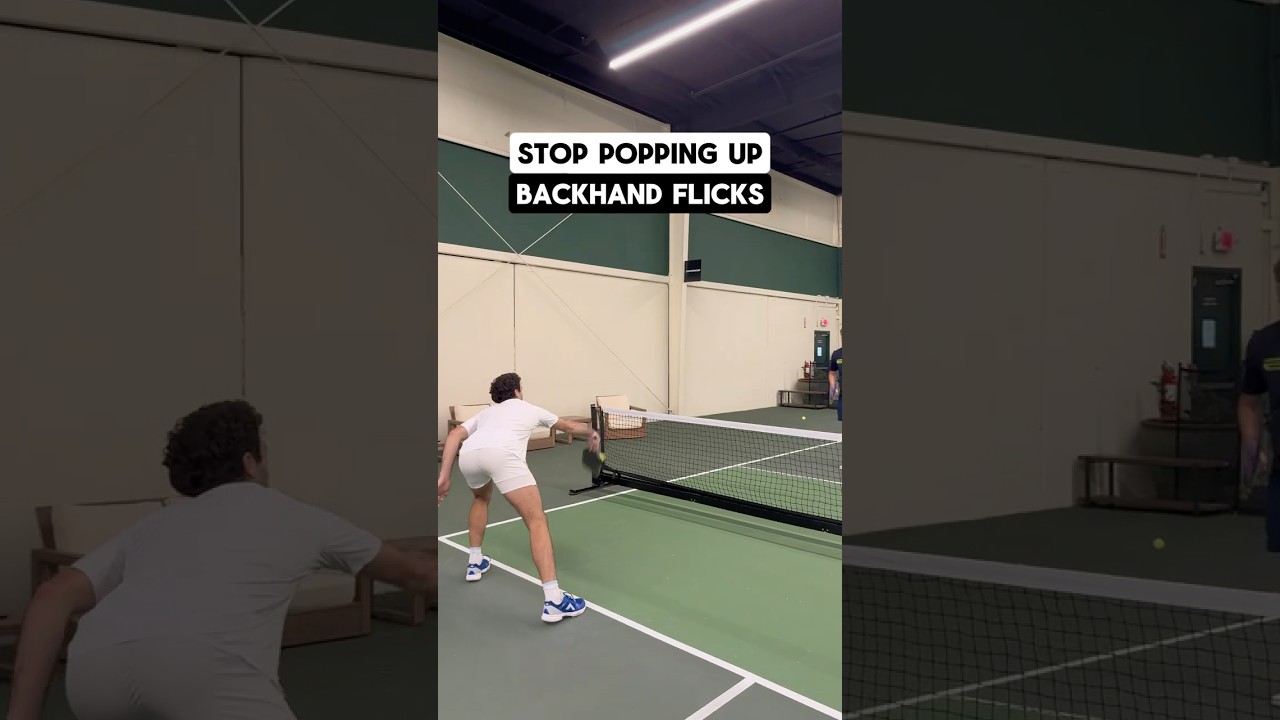
The biggest fix in the whole lesson was learning to lean your chest forward, not just push the paddle out.
Connor admitted he was not leaning with his chest at all. He kept the paddle forward but stayed back, which made every ball feel miles away.
Once he leaned over the line, his reach grew and the ball stopped feeling so distant.
Mari can reach further than someone taller simply because she is leaning into the shot.
If you want a deeper look at how this fits into kitchen play, read our guide on pickleball kitchen strategy.
 The Dink Media Team
Fix 3: Put Your Weight on the Front Toe
You need balance to hit a clean pickleball flick, which means shifting your weight onto your non-dominant leg and staying on the balls of your feet.
For a righty, that means weight on the left leg. For a lefty, flip it to the right.
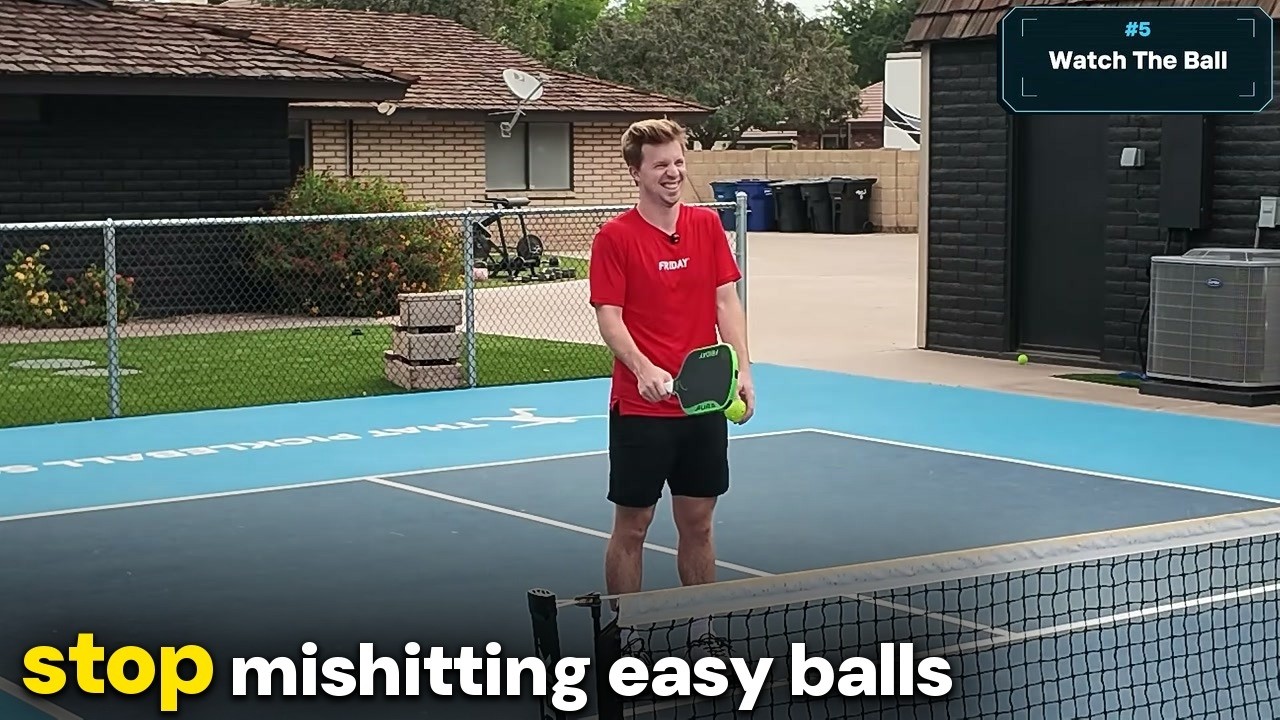
Connor was sitting on his heels, almost like he was in a chair.
When he reached in with his front toe and loaded that leg, he found far more lean without feeling like he would fall in.
After the flick, recover to neutral so you are ready for the next ball. This shift also pairs well with the ideas in our post on pickleball posture and footwork fixes.
 The Dink Media Team
Fix 4: Accelerate, Do Not Muscle It
More power is not the answer. More acceleration is.
When Connor tried to hit as hard as possible, he used his shoulder and his ball sailed.
Mari told him to put that same effort into speeding up the paddle through contact.
There is a big difference between swinging harder and getting faster at the end of the swing.
Think of pushing your paddle against the net and wanting the net to move at the finish.
Connor liked a related cue: let your finger lead the shot.
That feeling keeps the swing quick without tightening your arm, the same principle behind wrist lag and faster hands at the net.
If you want to see how pros set up a kitchen line attack, check out 3 keys pros use before every speed up.
 The Dink Media Team
Fix 5: Disguise Your Target With One Motion
Your opponents should not be able to tell where the flick is going until the paddle finishes.
Mari had Connor hit three flicks off crosscourt dinks: one down the line, one middle, and one short angle.
The goal was one identical swing with only the finish changing.
Where the paddle ends is where the ball goes. That is how you keep the other team guessing and stop them from leaning to one side early.
Connor realized he finally had options. Before, he felt he had to get rid of the ball as fast as possible, and now he could wait and choose.
This idea lines up with disguising your dink at the net and smart dink placement.
How Should You Practice the Flick?
Start with slow balls and focus on feel before you chase pace.
Here is the progression Mari used with Connor:
- Hit to the feet. Aim at your partner's shoes with less pace so the wrist moves naturally.
- Lean over the line. Use your chest and height, not just the paddle.
- Add acceleration. Speed the paddle up through contact instead of swinging harder.
- Hit three targets. Line, middle, and short angle off crosscourt dinks.
- Try different grips. Prove to yourself the shot works anywhere between Continental and Eastern.
Trust the shot, too. Mari kept telling Connor to let it go, even when his first reaction to a good flick was to doubt he could repeat it.
 The Dink Media Team
Which Dinks Are Worth Flicking?
Look for a crosscourt dink that is a little deeper or higher than usual, and use the tip of your paddle as a barometer for the zone you can reach.
That one habit kept Connor from being reachy on balls that were truly out of range.
If you miss, miss into the net rather than long. You are aiming low, so a net miss usually means you tried the right shot, not that your dink popped up.
Also be smarter about moving your feet.
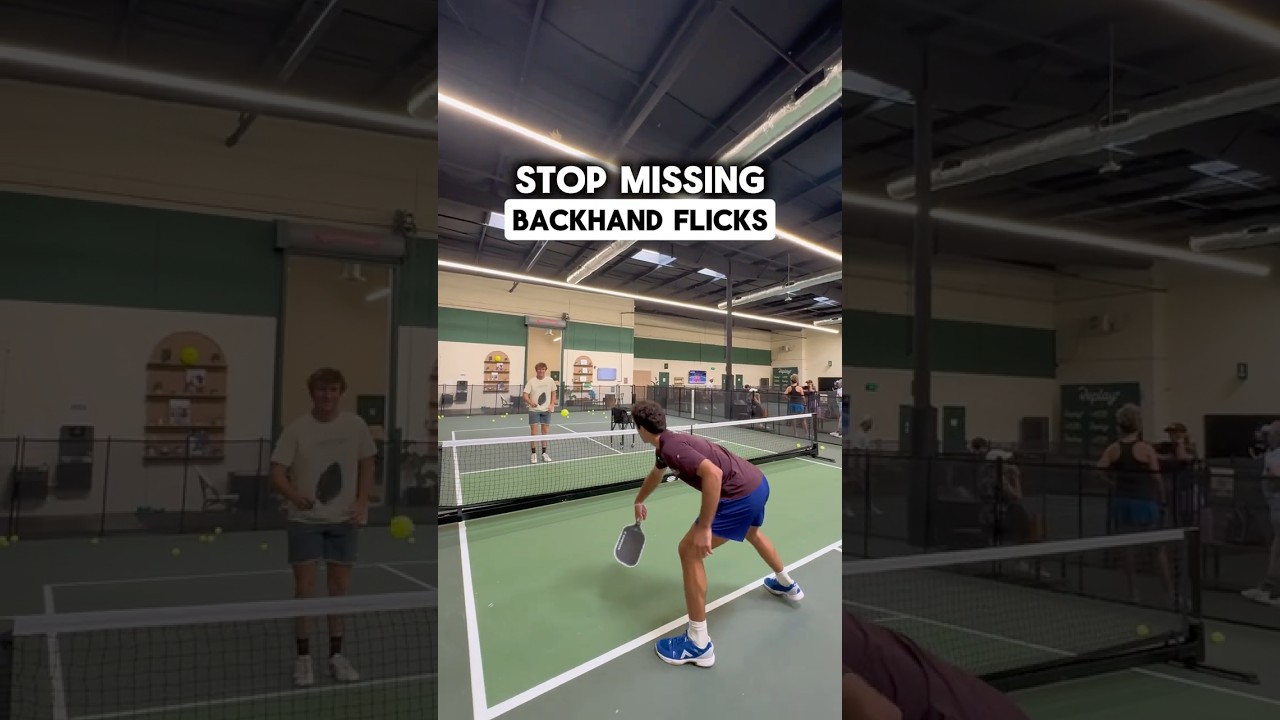
When the other team hits a good backhand slice dink and is on their back foot, step over early so you can change direction.
You can build on this with our breakdown of how to attack a dink out of the air.
 The Dink Media Team
Common Flick Mistakes to Avoid
- Leaning back. This forces you to generate power with your shoulder instead of your wrist.
- Reaching too far. Usually a sign your weight is not forward enough.
- Chasing spin. Spin was a bandage for bad positioning, not the real fix.
- Swinging too hard. Hard swings go long. Acceleration keeps the ball in.
- Telegraphing the target. Change only the finish, not the motion.
Each of these shows up in players who feel close but cannot get the shot to land.
Fix the body first and the wrist usually follows, which is also why most speed ups fail.
 The Dink Media Team
Why a Flick Beats a Twoey at the Kitchen
A twoey is a defensive, two-handed backhand dink, and it is a fine shot, but it rarely puts pressure on anyone.
A good pickleball flick takes time away from your opponent and gives you control of the point.
Connor, who has one of the best two-handed backhands in the game, said he would normally just hit another twoey in that spot.
Now he has a choice. That choice is what makes opponents hesitate.
If you want more ways to attack safely, study the set and snap technique and learn to spot a dead dink worth attacking.
You can also tighten your mechanics with our backhand roll fixes. For the broader mindset, why not to try to hit a pickleball winner is a useful companion read.
Frequently Asked Questions
What is the best grip for a pickleball flick?
Any grip between Continental and Eastern works. Mari proved she can hit the flick with almost any grip in that range, so pick the one that feels comfortable.
What is the difference between a flick and a roll in pickleball?
A roll keeps the wrist mostly locked and swings low to high. A flick uses the wrist to accelerate through the ball, usually with a shorter, quicker motion.
Why does my flick have no power?
You are probably leaning back or reaching with your arm. Shift your weight onto your front toe and lean your chest over the line so you can accelerate the paddle.
Can you add power to a flick on a low ball?
Not much. When the ball is below net height, the flick is a finesse shot, so focus on placement and spin rather than pace.
Where should I aim my flick?
Practice three targets: down the line, middle, and short angle. Use the same swing for each and only change where the paddle finishes.

Love Pickleball? Join 100k+ readers for free weekly tips, news & gear deals.
Subscribe to The Dink