
Cross-Court Strategy in Pickleball: The Shots That Actually Win Points
Cross-court strategy in pickleball is the difference between a rally you control and one you're just trying to survive. This guide breaks down the geometry, the shot calls, and the drills that make cross-court strategy in pickleball a habit instead of an accident.
Cross-court strategy in pickleball is the single easiest way to buy yourself more margin for error, and most players never think about why.
They just know the cross-court dink "feels safer."
Here's the thing: it's not a feeling. It's geometry, and once you understand it, you'll start making decisions instead of guesses.
Every advanced player you've ever watched grind out a third shot, whether it's Ben Johns resetting a chaotic exchange or a 4.5 partner at your local courts, leans on the same principle.
Cross-court is the wider window.
Down the line is the tighter one. Cross-court strategy in pickleball is really just the discipline of picking the wider window until your opponent gives you a reason not to.
Love pickleball? Then you'll love our free newsletter. We send the latest news, tips, and highlights for free each week.
What Is Cross-Court Strategy in Pickleball, Really?
At its simplest: cross-court strategy in pickleball means directing your shot diagonally across the net toward your opponent's forehand or backhand corner, rather than straight ahead down your own sideline.
That's the definition. The reason it matters is bigger than the definition.
The net is two inches lower in the middle than it is at the sidelines, per USA Pickleball's official court and equipment specifications.
Hit cross-court and you're clearing the net at its lowest point while also traveling the longest possible diagonal distance to the opposite corner.
That combination gives you more margin, more time, and more room for the ball to drop before your opponent can attack it.
Down the line, you're clearing the net at its highest point over the shortest distance.
Less room. Less time. More risk.
That tradeoff is exactly why smart sideline positioning matters so much in doubles, since your court coverage shifts depending on which angle you just gave your opponent.
Cross-Court Strategy in Pickleball vs. Down-the-Line Shots
Down-the-line shots aren't bad. They're just a different tool.
A down-the-line drive can end a point outright because it attacks the shorter distance and catches an opponent who's cheated toward the middle.
But it also travels over the highest part of the net with almost no margin if your timing is off by a fraction of a second.
Cross-court shot selection, on the other hand, rewards patience. You're not trying to end the point on contact.
You're trying to build the point, one diagonal ball at a time, until your opponent's positioning breaks down and the down-the-line window actually opens up.
Why Does the Net Play Favorites? The Geometry Behind Cross-Court Strategy in Pickleball
Here's the math nobody explains at your local clinic. The kitchen line measures 7 feet from the net on each side, and the full court is 20 feet wide.
Getting into position to exploit that geometry starts with footwork, which is why a drill like this one is worth building into your warmup before you even think about shot selection.
When you hit a cross-court dink from one kitchen corner to the opposite corner, the ball travels a longer diagonal path than a straight-ahead dink covering the same lateral distance.
That extra distance means the ball has more time to drop below net height before your opponent can pop it, which is exactly why cross-court dinking dominates high-level doubles.
A 2025 analysis of competitive rally patterns found that the large majority of points at the pro level are decided at the non-volley zone line rather than off the baseline, which tracks with how often top teams stay patient cross-court before attacking.
 Zoey Weil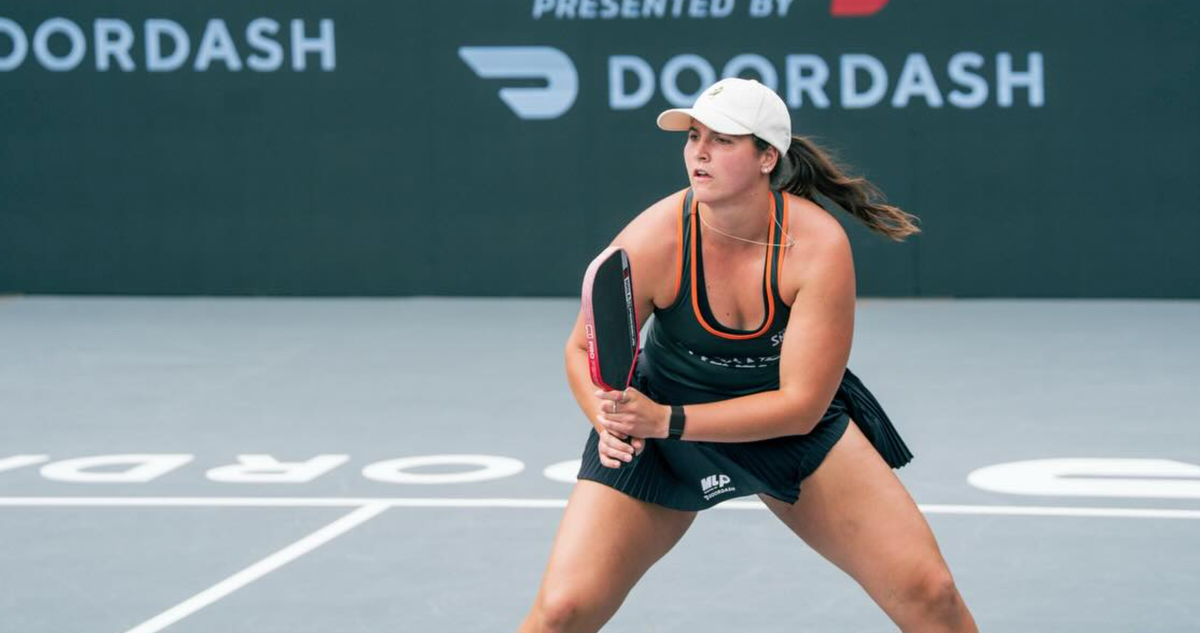
Cross-Court Dinking at the Kitchen Line
Watch any nationally ranked doubles team and count how many consecutive dinks stay cross-court before either side tries to reset the pattern.
It's rarely fewer than four or five. That's not conservative pickleball.
That's good shot selection versus bad positioning, and the players who understand the geometry are the ones dictating when the pattern finally breaks.
Honestly, this is where a lot of intermediate players get stuck. They treat the cross-court dink like a stall tactic instead of an offensive setup.
Every cross-court dink you hit is squeezing your opponent's angle back toward the middle, and that's what eventually opens up the put-away.
 The Dink Media Team
When Should You Actually Go Cross-Court?
Go cross-court whenever you need margin, whenever you're resetting a hard ball, and whenever your opponent is pulled wide and can't cover the full diagonal.
That's the short answer. The longer answer depends on what shot you're hitting and where the point stands.
The Third Shot Drop, Cross-Court Style
The third shot drop is where cross-court decision making gets tested first in almost every rally.
A cross-court third shot drop travels a longer path to the opposite kitchen corner, giving you extra time to get to the non-volley zone line before the return comes back.
Miss that window and you're stuck in no man's land against a team that already owns the net.
Research on reaction time in racket sports puts the average return window at well under half a second once an opponent reaches the kitchen line, which is exactly why that extra half step matters so much.
If your third shot drop tends to sail long or catch too much net, cross-court is the more forgiving option while you're still building consistency.
Save the straight-ahead drop for when your mechanics are dialed in and you actually need the shorter angle to attack a specific opponent.
Cross-Court Strategy in Pickleball During Resets
When a hard drive gets fired at your feet, cross-court strategy in pickleball becomes a survival tool, not just a preference.
Resetting the point cross-court gives the ball more room to travel and more time for your soft hands to absorb pace, which is exactly why you'll see even elite players bail cross-court under pressure instead of trying to redirect a heavy ball down the line.
There's a flip side, though. If your opponent has shown you five straight cross-court resets and started cheating toward that diagonal, that's your cue.
A well-timed down-the-line reset catches a team that's over-committed to defending the angle they expect.
 The Dink Media Team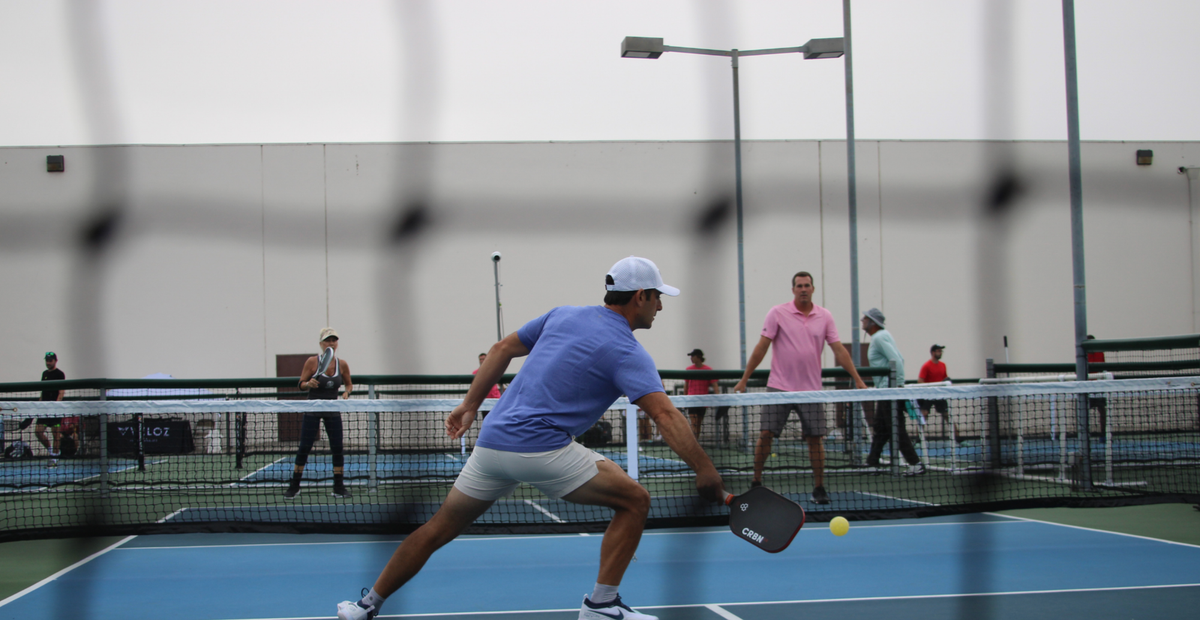
How Do You Train Cross-Court Habits Without a Coach?
You build cross-court habits the same way you build any other muscle memory: repetition against a target, with feedback.
Here are four drills that do the job without needing a partner who already plays at your level.
- Cross-court dink ladder. Stand at one kitchen corner with a partner or a wall rebounder. Hit twenty consecutive cross-court dinks before allowing a miss. This drill builds the touch and patience that most players skip straight past.
- Third shot drop targets. Set a towel or cone in the cross-court kitchen corner and aim your third shot drop at it from the baseline, ten reps per side.
- Reset under pressure. Have a partner drive balls at your body from the baseline while you practice resetting cross-court into the opposite kitchen corner.
- Backhand cross-court reps. Most players' cross-court backhand is weaker than their forehand. Dedicated backhand work closes that gap faster than almost anything else you can drill.
Solo practice works too.
If you don't have a partner most days, these solo drills translate directly to cross-court repetition against a backboard or ball machine.
 The Dink Media Team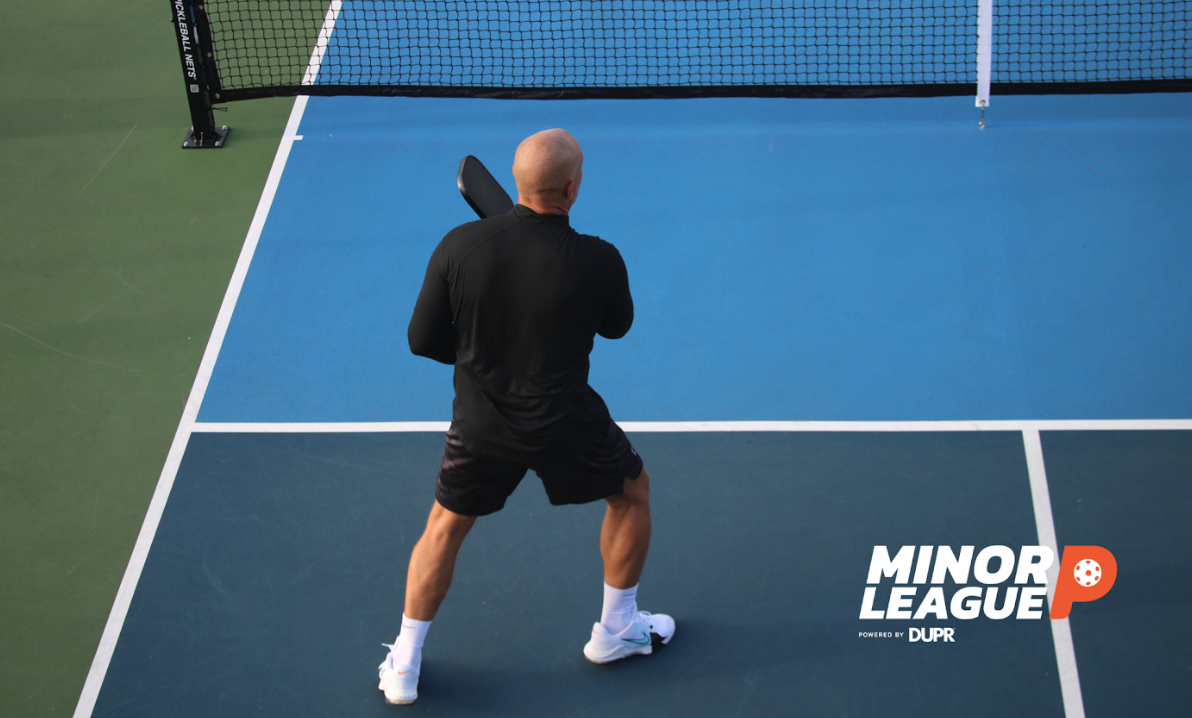
The Mistakes That Wreck Cross-Court Strategy in Pickleball
The most common mistake isn't hitting down the line too often.
It's the opposite: hitting cross-court on autopilot without ever varying the pattern, which lets a sharp opponent read every single ball before you hit it.
The second mistake is footwork. Players hit a good cross-court shot and then fail to reset their position at the kitchen line to cover the return.
A great cross-court dink means nothing if you're standing in the wrong spot when it comes back.
The third mistake shows up on the backhand side specifically.
A lot of recreational players avoid the cross-court backhand entirely and run around it, which tells your opponent exactly where to attack.
Simone Jardim's backhand approach is worth studying if that's your pattern, because avoiding a shot is its own tell.
 The Dink Media Team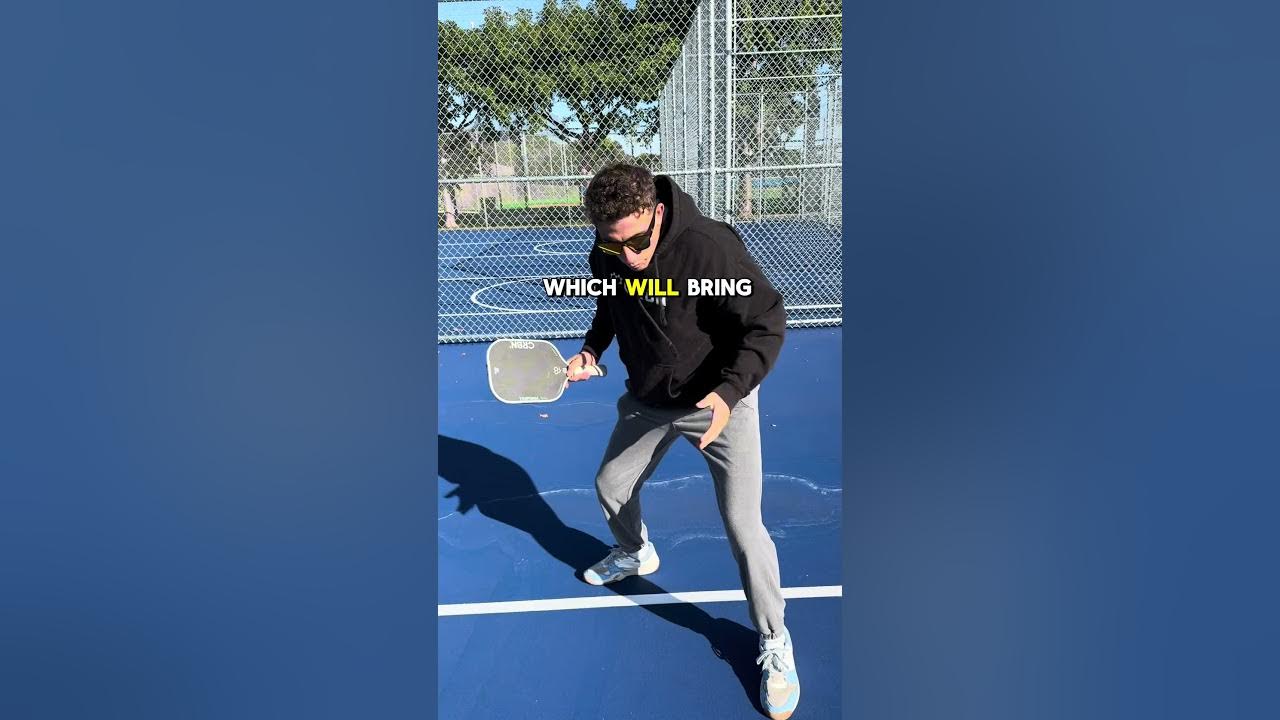
Key Takeaways
- Cross-court strategy in pickleball works because the net is lower in the middle and the diagonal distance is longer, giving every shot more margin.
- The cross-court dink is the backbone of high-level kitchen line play, and it's an offensive tool, not just a defensive stall.
- Cross-court resets buy time against hard drives; down-the-line resets punish opponents who over-commit to defending the diagonal.
- Drilling cross-court patterns, especially on the backhand, closes the biggest gap between recreational and advanced play.
- Cross-court strategy in pickleball still needs variation. Predictable is beatable, no matter how sound the geometry is.
- The same diagonal logic applies to shots beyond the dink, including the cross-court lob, so keep the geometry in mind on every shot type, not just at the kitchen line.
Frequently Asked Questions
What is cross-court strategy in pickleball?
Cross-court strategy in pickleball means directing shots diagonally across the net toward the opposite corner instead of straight down your own sideline. It takes advantage of the longer diagonal distance and the lower net height at the center, giving you more margin on nearly every shot type. Unconventional technique aside, the underlying geometry is the same for every player at every level.
Why is cross-court considered the safer shot?
Cross-court shots travel a longer path and clear the net at its lowest point, which gives the ball more time to drop and more room for error. Down-the-line shots cross at the net's highest point over a shorter distance, which leaves far less margin if your timing is even slightly off. Drilling shot selection directly is the fastest way to internalize that tradeoff instead of just reading about it.
When should you hit down the line instead of cross-court?
Hit down the line when your opponent has clearly cheated toward defending the cross-court angle, or when you have a clean look at a shorter, more direct attack. Court coverage on the fourth shot matters here too, since a down-the-line winner only works if your partner is already covering the middle. It's a lower-percentage shot overall, so it works best as a surprise, not as your default pattern.
How do you practice cross-court shots without a partner?
Solo drills against a wall, rebounder, or ball machine work well for building cross-court repetition. A rebounder-style setup is especially useful here. Focus on consistent target zones in the opposite kitchen corner and count consecutive makes rather than just hitting randomly.
What's the biggest mistake players make with cross-court strategy in pickleball?
The biggest mistake is running around the cross-court backhand instead of developing it, which signals exactly where an opponent should attack. A close second is failing to reset court positioning immediately after hitting a cross-court shot.
Love Pickleball? Join 100k+ readers for free weekly tips, news & gear deals.
Subscribe to The Dink