

6 Backhand Roll Fixes That Make Your Fourth Shot Aggressive
Your backhand roll should put pressure on the other team, not float mid court. Six simple fixes to grip, stance, and extension will get your fourth shot deeper and more aggressive.
You know the feeling: the third shot drop comes in, you reach for your backhand roll, and the ball floats to mid court with nothing on it.
Your opponents step in and attacks, and the point is gone.
The fix is rarely more power. It is almost always your grip, your stance, and how much your wrist is doing.
These cues come from Cori Elliott, who worked with a student named Brandon on making his fourth shot backhand roll more aggressive.
Here is exactly what changed and how you can copy it.
Love pickleball? Then you'll love our free newsletter. We send the latest news, tips, and highlights for free each week.
What Is a Backhand Roll on the Fourth Shot?
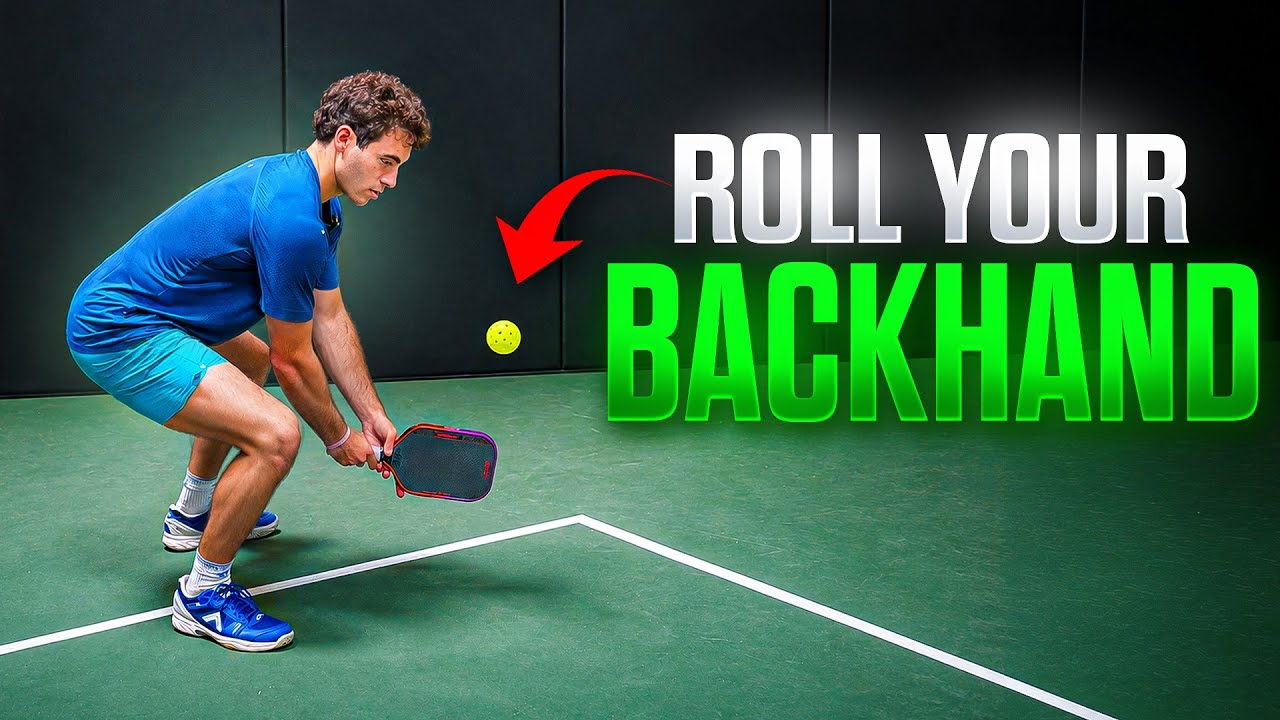
A backhand roll is an aggressive, topspin driven shot hit from low to high on your backhand side, usually off a third shot drop that lands near your feet or in the transition zone.
It is not a flick and it is not a swing from the wrist. It is a controlled lift that gets under the ball and sends it deep with pressure.
Brandon came from a ping pong background, which means he naturally manipulates the paddle face with his wrist.
That works great at a table and badly on a pickleball court, where you need depth and a stable face through contact.
Fix 1: Wrap Your Thumb and Shake Hands With the Paddle
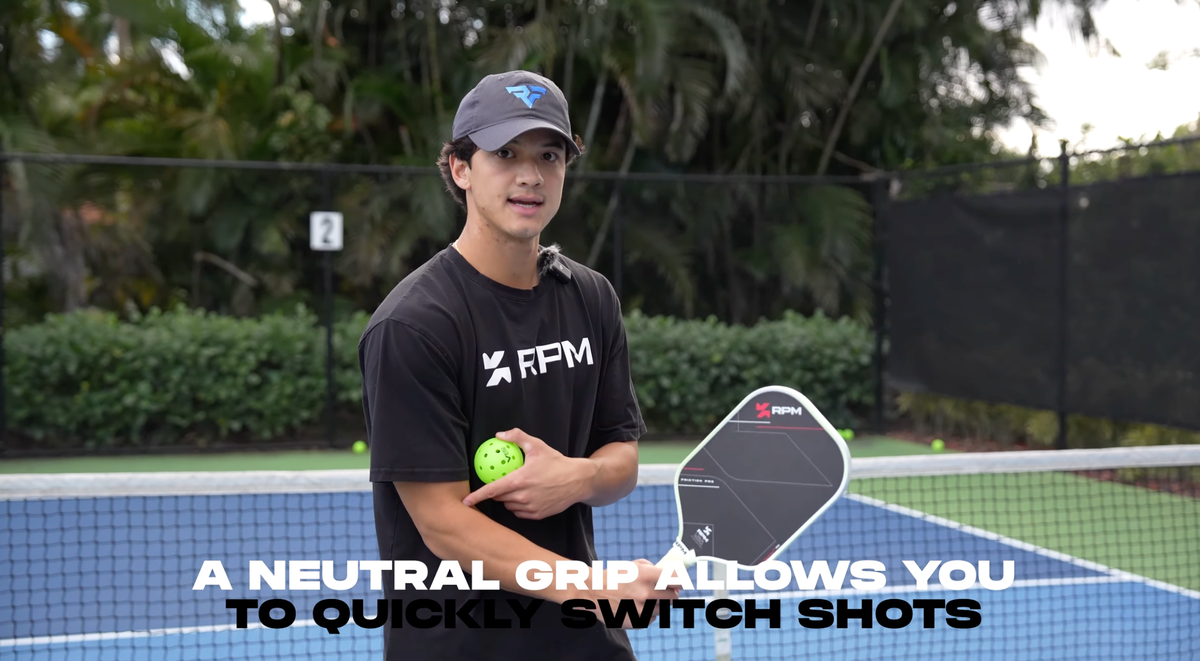
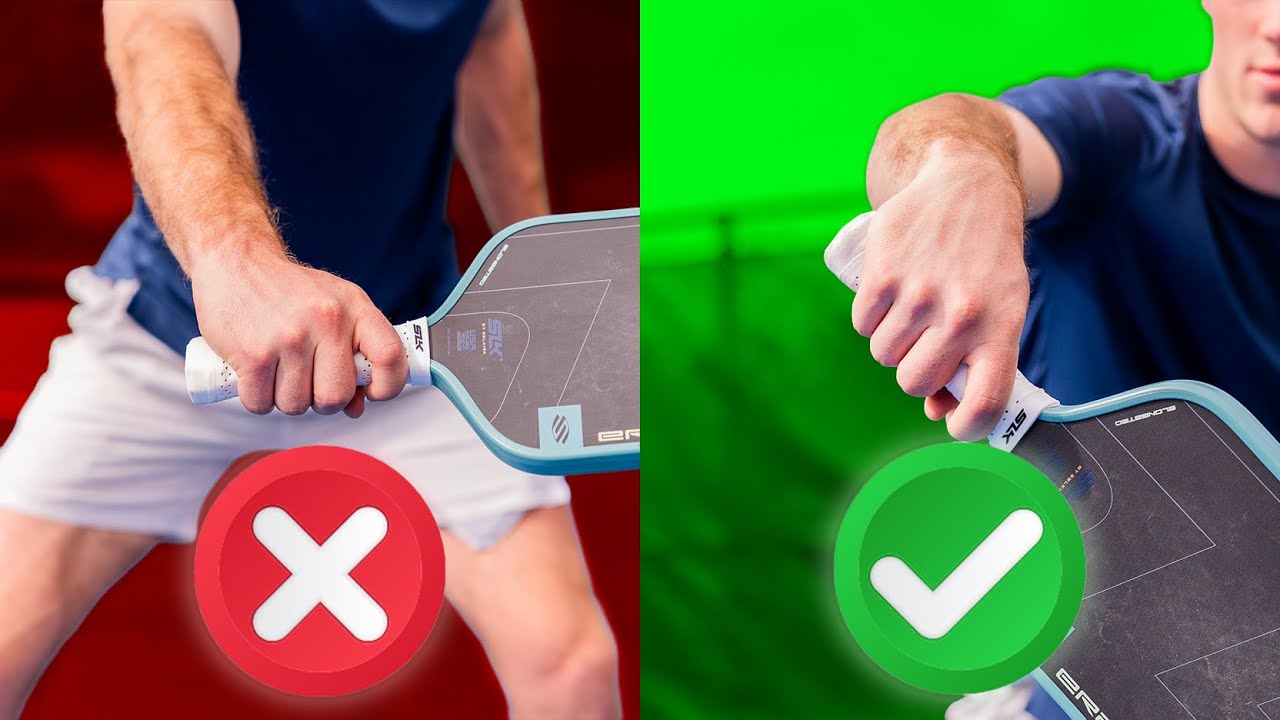
Your grip is the first thing to check, because a thumb perched up the back of the handle locks your wrist into the wrong job.
Cori noticed Brandon’s thumb sitting up high and told him to wrap it around the handle, almost like a handshake.
That one change makes the paddle feel like an extension of your forearm instead of a tool you steer with your fingers.
Later in the session, she had him turn his hand a little more on the grip, then relax the wrist before locking it.
A loose wrist that firms up at contact gives you feel without the flicking. There is a second reason to stop squeezing.
According to a 2025 study in the Journal of Functional Morphology and Kinesiology, recreational players who held a tight baseline grip reported acute upper extremity injuries at 2.67 times the rate of players who did not.
Fix 2: Anticipate Early and Get Low
You cannot roll a ball well if you are still moving when it arrives, so your first job is to read the third shot drop while it is in the air.
Cori’s coaching was simple: if you are already at the line and the drop is coming, you can tell early that it will land somewhere in your vicinity.
Use that time to set up, not to react.
Here is the sequence she asked for:
- Spot the drop off your opponent’s paddle and decide you are rolling it.
- Drop your body down with soft knees, butt out, and a slight lean forward.
- Bring your paddle tip slightly down, with the corner pointing toward the ground.
- Hold that low position until the ball gets to you.
This is the same idea behind good prep on any soft game shot. If you want more on early preparation, check out the pre-point routine that keeps you focused.
 The Dink Media Team
Fix 3: Keep the Paddle Tip Down and Roll Up
The roll comes from underneath the ball, not from flipping the paddle over the top of it.
Cori was clear that you do not want to flip the paddle. You keep the tip down, get under the ball, and then move the paddle up through it in one smooth path.
This low to high path is also what separates a backhand roll from a flat push.
If you want to refine how your paddle face works on spin shots, this paddle angle fix for topspin pairs nicely with it.
 The Dink Media Team
Why Does My Backhand Roll Sit Mid Court?
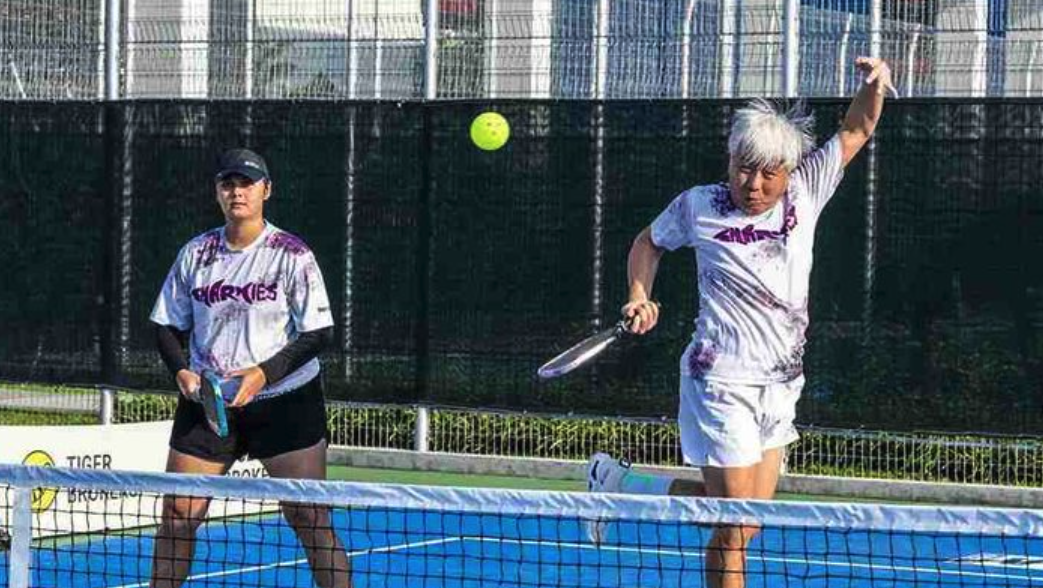
Your backhand roll sits mid court because you are coming up without extending, which produces topspin but no depth.
Cori put it plainly: the more you extend, the more depth you get. If you just come up with the arm, you only get topspin.
Her cue was to extend with the opposite arm too, almost like stretching a rubber band.
As one arm reaches, the other pulls back, and that opposite arm motion creates the rolling action and drives the ball deeper.
Think of it as two jobs. The lift gives you spin, and the extension gives you distance.
 The Dink Media Team
Fix 4: Stay Low Through Contact
The most common timing error is standing up too early, and Brandon did exactly that.
Cori noticed him coming up before the ball arrived, then dipping back down to hit it. That creates extra movement and extra chances to miss.
Her fix was to shadow swing and wait. Hold your low position, let the ball come to you, and only then come through.
Once you get more consistent, you can add more movement. For now, patience beats athleticism.
If your lower body tends to give out on contact, this cross step footwork fix on the backhand will help you get balanced before you swing.
 The Dink Media Team
Fix 5: Use Your Shoulder, Not Your Wrist
When your wrist flicks, the paddle face opens and closes in the air, and the ball goes wherever it feels like going.
Brandon asked if the motion was mostly shoulder, and Cori confirmed it. The shoulder drives the lift while the wrist stays quiet.
She called out a flicked ball directly, saying there was too much paddle face manipulation. Her rule was three words: set, hold, and extend.
Here is how that looks in practice:
- Set your paddle low with the tip down and your knees bent.
- Hold your position without bobbing up or down.
- Extend with your shoulder and opposite arm through the ball.
 The Dink Media Team
Fix 6: Turn the Drill Into a Squat Workout
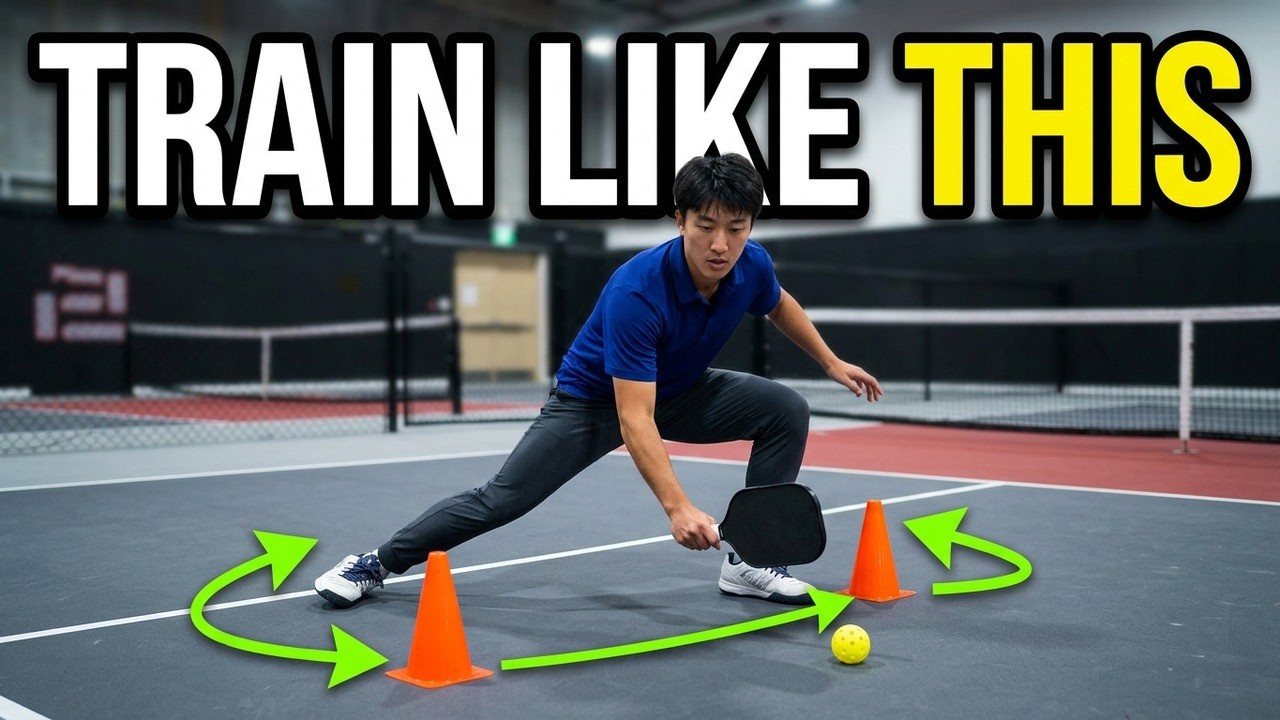
Cori had Brandon stay in the low, athletic position for the entire feed, which she joked would be a squat workout.
This is the part most players skip. They know the cue, but their body pops up the moment the ball gets close.
Ask a partner to feed you ten slow balls while you stay down the whole time. Do not stand between feeds, and do not cheat the depth of your stance.
If you want a few more ways to practice without wearing out a partner, here are practice drills for any skill level.
 The Dink Media Team
How Do You Know It Is Working?
You know your backhand roll is working when the ball lands deep in your opponent's court instead of mid court, and the sequence feels smoother with less arm.
Cori told Brandon that his balls were landing mid court at first. After extending with the left arm, she counted his reps and said they were getting deeper.
Use these checkpoints during practice:
- The ball clears the net with topspin and drops deep, not short.
- Your paddle face stays steady until after contact.
- You finish balanced, not falling forward or backward.
- Your knees stay bent from setup to follow through.
Do not rush to add power. A deeper, more controlled roll pushes your opponents back and makes your next shot easier, which is a bigger win than raw speed.
 The Dink Media Team
Why Fourth Shot Aggression Matters
Your fourth shot sets the tone for the point, because it is your first chance after the third shot drop to take control.
If your roll floats, the other team attacks. If it lands deep with pressure, you get to move forward and trade from a stronger spot.
This ties into a larger idea about playing with intention.
If you tend to freeze up instead of attacking, take a look at the difference between playing safe and playing scared.
Aggression also does not mean recklessness. Playing aggressively without taking bad risks is the balance you want on every fourth shot.
 The Dink Media Team
What If You Come From Another Racquet Sport?
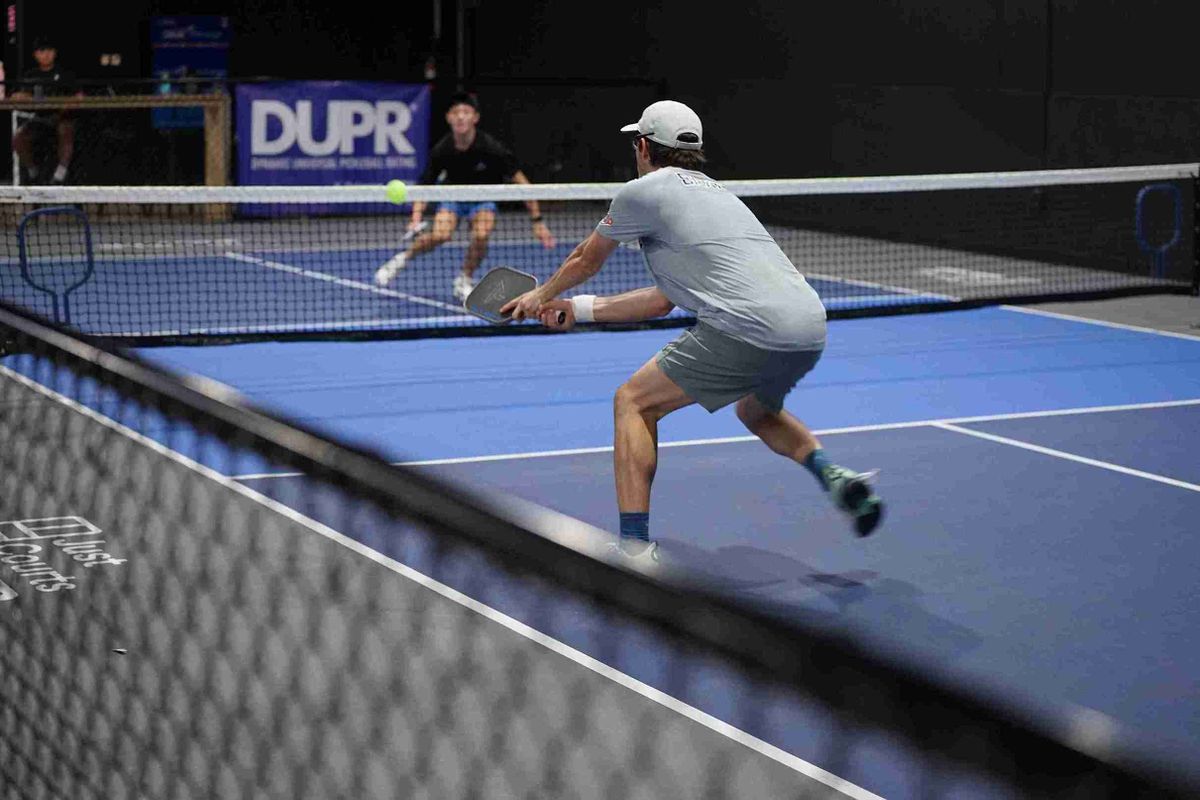
If you grew up on ping pong, tennis, or badminton, your wrist habits are probably your biggest obstacle on the backhand roll.
You are far from alone in making that switch, since SFIA’s participation research counted 24.3 million American pickleball players in 2025, with roughly 4.5 million of them picking up a paddle for the first time that year.
Brandon’s table tennis background gave him great hand speed, but it also taught him to flick and adjust the paddle face constantly.
Cori’s job was to calm that down and rebuild the motion around the shoulder and the extension.
Be patient with the retraining. Old habits show up fastest when the ball gets tight, which is why slow, repeated reps at the low position matter so much.
If you are teaching a newer partner the same ideas, that framing is worth borrowing.
 The Dink Media Team
A Simple Practice Plan for This Week
You can build a reliable backhand roll in about three short sessions if you focus on one cue at a time.
- Session one: Work only on the grip. Wrap the thumb, relax the wrist, and shadow swing ten times with no ball.
- Session two: Add the low stance. Have a partner feed slow balls to your backhand while you hold your squat the whole time.
- Session three: Add the extension. Reach with your opposite arm like a rubber band and aim for the baseline.
Keep your reps controlled and count how many land deep. Aim for seven out of ten before you add any speed.
A solid warm up also helps your shoulder and lower body handle this kind of work. Here is a warm up routine that preps you to compete.
 The Dink Media Team
Putting It All Together
An aggressive backhand roll comes from preparation, not power.
Wrap your thumb, get low, keep the tip down, and extend through the ball with your shoulder and opposite arm.
Cori summed up Brandon's progress simply: the work was grip, body position, paddle position, and using the shoulder instead of the wrist.
That is a short list, and it is exactly where most players should start.
For another look at attacking from the transition area, see how to hit a pickleball at your feet without popping it up.
Frequently Asked Questions
What is a backhand roll in pickleball?
A backhand roll is a low to high topspin shot hit on your backhand side, usually used on the fourth shot to add pressure. It uses a quiet wrist and a shoulder driven lift to send the ball deep.
How do I get more depth on my backhand roll?
Extend through the ball instead of only lifting up. Reaching with your opposite arm, like stretching a rubber band, adds distance while the lift adds topspin.
Should I use my wrist on a backhand roll?
No, keep it relaxed and let your shoulder do the work. Too much wrist flicks the paddle face open and closed, which costs you control and depth.
What grip should I use for a backhand roll?
Wrap your thumb around the handle in a handshake style grip instead of resting it up the back. Rotate your hand slightly if needed and keep the wrist relaxed until contact.
Why do I pop the ball up when I try to roll it?
You are likely standing up too early or flipping the paddle over the ball. Stay low through contact with the paddle tip down, and roll up from underneath the ball.

Love Pickleball? Join 100k+ readers for free weekly tips, news & gear deals.
Subscribe to The Dink


