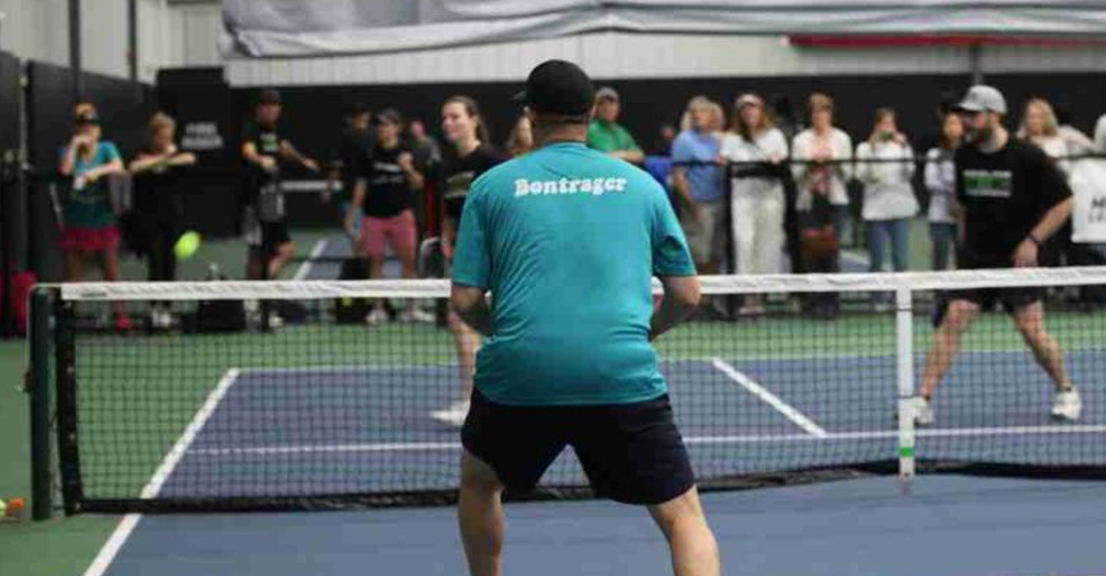
Advanced Pickleball Tips to Hide Your Intentions and Disguise the Dink at the Net
These advanced pickleball tips show you how to hide your intentions at the kitchen line so opponents never know whether a dink or a speedup is coming. Learn the paddle prep, contact timing, and pattern work that separate readable players from unreadable ones.
The best advanced pickleball tips have nothing to do with hitting harder and everything to do with hitting the same.
Same stance. Same paddle prep. Same compact backswing, whether you're rolling a soft crosscourt dink or flicking at your opponent's right shoulder.
Most 4.0 players have the shots.
What they don't have is the ability to hide which shot is coming, which is why their speedups keep failing against anyone paying attention.
Here's the thing about the kitchen line: your opponent isn't reacting to the ball. They're reacting to you.
And most players broadcast their intentions a full half second before contact, which is the same leak that gets them read and poached in doubles.
Love pickleball? Then you'll love our free newsletter. We send the latest news, tips, and highlights for free each week.
Why Disguise Beats Power in Advanced Pickleball Tips
Disguise wins because most points aren't won, they're lost. Independent match tracking from Pickleball Research's Match Analytics Lab found that only about 4% of shots in pro doubles are outright winners, while the majority of rallies end in errors.
You aren't trying to blast through anyone. You're trying to make them guess wrong.
That same dataset found roughly two thirds of all shot activity happens at the kitchen line.
So the non-volley zone is where the match actually lives, and it's where disguise pays the highest dividend.
A readable dinker gets attacked, which is exactly why aggressive dinking backfires without cover. An unreadable one gets respected, and respect buys you free points.
Think of it this way: every one of these advanced pickleball tips is really one tip wearing different clothes. Make your shots look identical until it's too late.
What Is a Disguised Dink, Exactly?
A disguised dink is a soft shot hit with setup mechanics identical to your speedup, so the opponent can't commit early.
The ball still lands soft in the kitchen, using the same dinking technique you already own.
The difference is everything that happens before contact: grip pressure, paddle height, shoulder angle, and backswing length all stay neutral.
Compare that to a tell, which is any pre-contact movement that leaks information. Dropping your paddle tip to scoop a dink.
Loading your shoulder before a flick. Widening your stance when you plan to attack.
Those are tells, and good opponents read them off your body language long before they read the ball.
Disguise isn't a trick shot. It's a habit of sameness, and it's the backbone of every deception tactic the pros run.
How Do You Hide the Dink With Your Paddle Prep?
Set the paddle early, keep the tip toward the ground, and don't move it again until the last quarter second.
This is the holding your dinks concept in practice.
USA Pickleball's coaching guidance on disguising speedups calls this holding your dinks: prepare with a short, compact backswing, then wait.
The delay is the weapon.
Three things to check the next time you're at the kitchen:
- Paddle tip down, out in front. A paddle tip that rises is a speedup announcement. Keep it low and neutral so both shots start from the same place. This is the same paddle positioning that keeps you from popping balls up.
- Grip pressure constant. Squeezing before a flick is the most common tell in rec pickleball. Stay at a 4 out of 10 on everything.
- Backswing length identical. If your dink takes back six inches and your flick takes back eighteen, you don't have a disguise. You have a warning label.
That last one is where most players break. They've drilled dink placement for hours and never once drilled the setup that precedes it.
Advanced Pickleball Tips for Late Contact
Contact late and flat rather than early and carved.
Pros largely walked away from the heavy slice dink because a telegraphed carve gives opponents a full read.
A late, flat redirect doesn't.
Your backhand dink especially benefits here, since the two-handed roll lets you change direction at the last instant without a visible windup.
Slice still has a place, but slice versus topspin is now a decision, not a default.
Delay contact by even a tenth of a second and your opponent has already leaned. That's the whole game.
 The Dink Media Team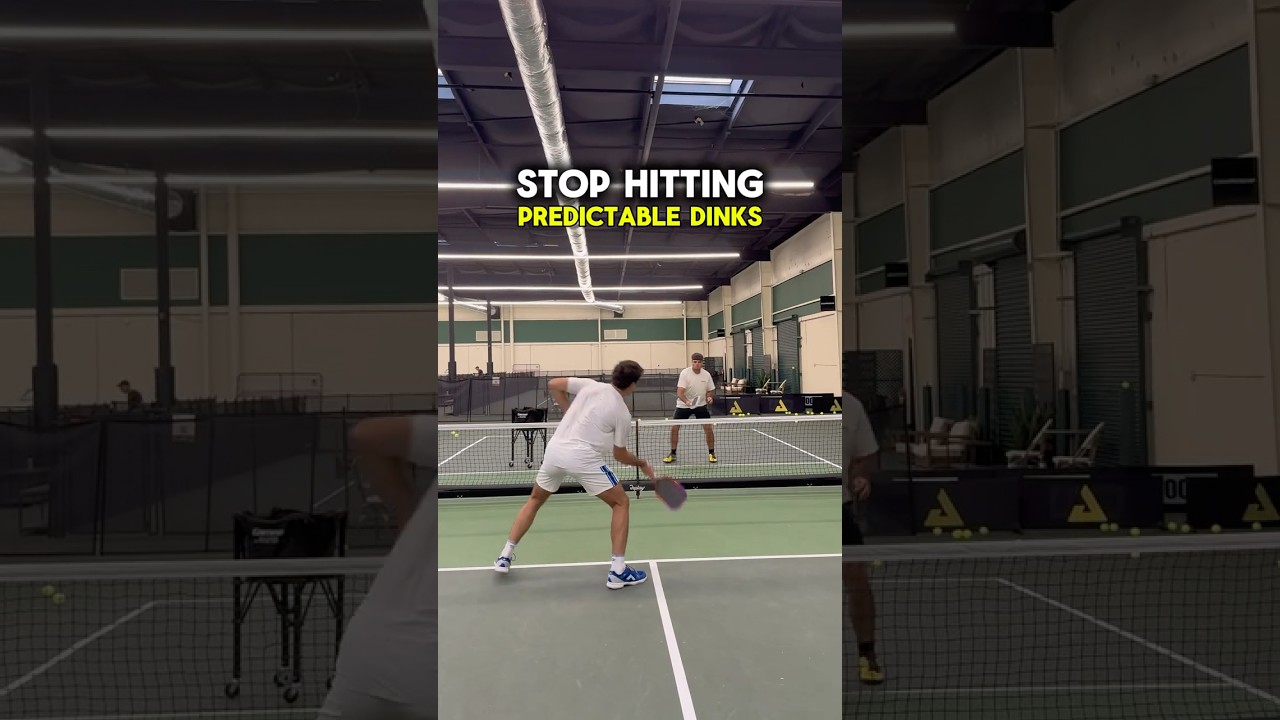
Can Pattern Flipping Actually Break Good Opponents?
Yes, and it's the most underrated tool at the kitchen line.
Hit three or four dinks in a row to the same spot, let your opponent settle into the read, then flip it on a point that matters.
Their feet are already moving the wrong way before your paddle finishes.
The math is simple.
Opponents at 4.0 and up are planning several shots ahead, which means they're vulnerable to exactly one thing: a broken pattern. Build the habit, then invert it.
Crosscourt is your best staging ground.
The net sits at 34 inches in the center versus 36 at the posts, so the crosscourt dink travels over the lowest part of the net and buys you more margin and more court.
Establish crosscourt, then go behind them down the line, the same way you'd set up a crosscourt attack.
That's the attack pattern that separates the good from the great.
One caution: don't flip every rally. A fake used constantly stops being a fake. Mix in real dinks until the disguise means something.
There's a second flavor of pattern work that almost nobody uses: flipping speed, not direction.
Send three dinks at the same pace, then send a fourth that's identical in placement but slightly deader, dying just over the tape.
Your opponent reaches, pops it, and you're attacking instead of resetting. Same target, different tempo. The read they built is now worthless.
 Eric Roddy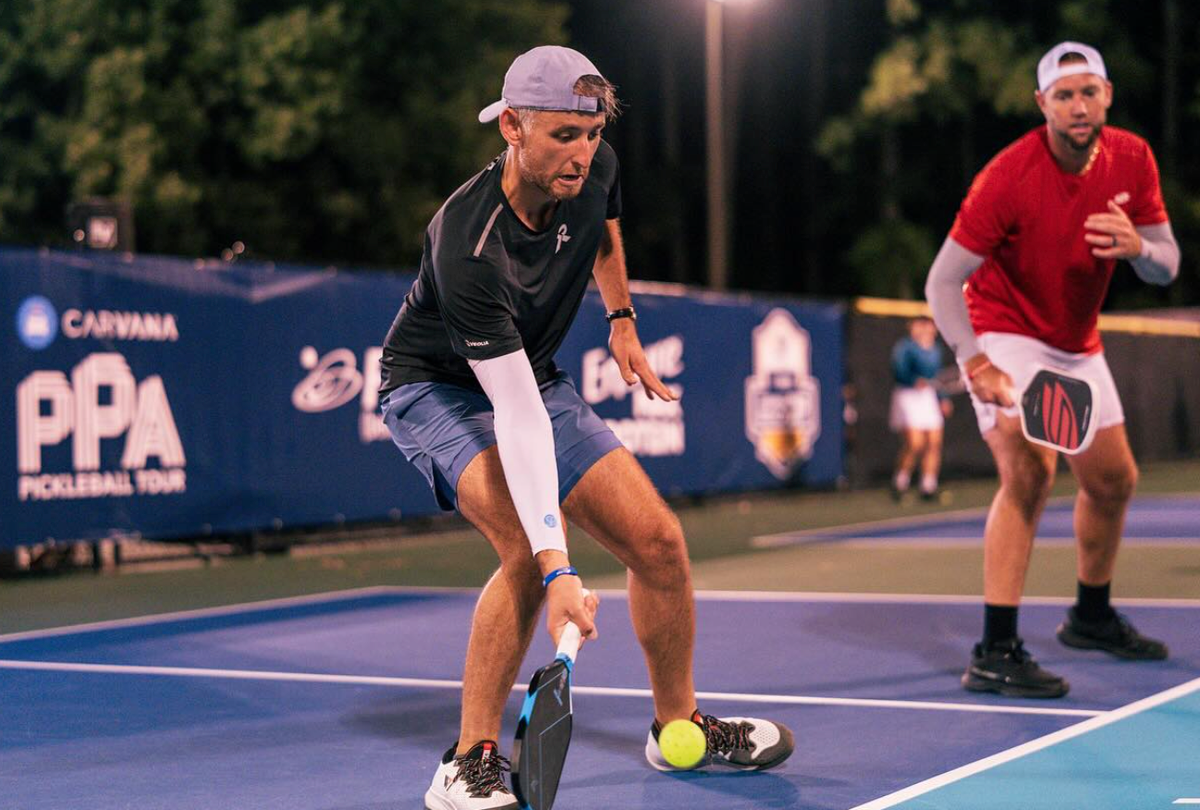
Advanced Pickleball Tips for Drilling Deception
Drill the setup, not the shot. You already know how to dink, and you've probably drilled the two-handed backhand dink to death.
What you need is repetition of the identical preparation, and that requires drills built around disguise rather than placement.
Advanced Pickleball Tips: Two Drills That Work
Start with the shadow drill. No ball. Ten reps of a dink swing, ten reps of a speedup swing, and film it on your phone. I
f you can spot the difference on video, so can your opponent. Fix it until the first 80% of both swings is indistinguishable.
Then run the partner read drill. Your partner calls "real" or "fake" out loud the instant they see your paddle start forward.
If they're right more than half the time, you're leaking.
This pairs well with standard shot selection and creation work since you're training decision and disguise together.
Add one more layer: practice your flick from the exact dink position you use most. Not from a comfortable setup.
From the awkward one, because that's where real points happen.
 The Dink Media Team
How Do You Read Their Disguise Right Back?
Watch the shoulders and the paddle path, not the ball. Deception runs both directions, and the best defense is knowing what you're looking for.
Shoulder rotation, hip turn, and a rising paddle tip all precede an attack.
If you train yourself to read your opponent's eyes and body, you'll start neutralizing speedups before they leave the paddle.
Most advanced pickleball tips stop at offense, which is a mistake.
Stay in an athletic, correct ready position with the paddle up and you buy yourself an extra beat, which is often the entire margin in a kitchen line hands battle.
Combine that with becoming unattackable at the kitchen and you'll win the hands battles you used to lose.
Honestly, most players lose those exchanges before the first ball is even struck.
 The Dink Media Team
Key Takeaways
- The strongest advanced pickleball tips for the kitchen line are about sameness: identical stance, grip pressure, and backswing on every soft shot.
- Roughly two thirds of shot activity happens at the non-volley zone, and only about 4% of pro shots are outright winners, so forcing errors beats hunting winners.
- Hold your dinks: prep early, tip down, and delay the swing until the last quarter second.
- Build a pattern over three or four dinks, then flip it on a high-value point.
- Drill the preparation with shadow reps and a partner read drill, not just placement.
Frequently Asked Questions
What are the best advanced pickleball tips for disguising a dink?
Keep your paddle tip pointed at the ground, prepare early with a compact backswing, and hold the swing until the last possible moment. The dink and the speedup should look identical for the first 80% of the motion. Constant grip pressure matters as much as paddle position.
How do I stop telegraphing my speedups?
Film yourself from the opponent's side of the net and watch only your setup, not the ball. Most players lift the paddle tip, squeeze the grip, or lengthen their backswing before attacking. Fix whichever one shows up on video and your speedup success rate climbs immediately.
Is crosscourt or straight-ahead better for disguised dinks?
Crosscourt gives you more room to work with because the net is two inches lower in the center than at the posts. It also opens a wider angle, which makes the eventual flip down the line far more dangerous. Use crosscourt as your default and the line as your surprise.
How often should I flip a pattern during a rally?
Build the pattern over three or four consistent dinks before inverting it, and save the flip for points that actually matter. Flipping constantly trains your opponent to expect it, which defeats the purpose. Unpredictability only works if the baseline is predictable.
Do these advanced pickleball tips work at the 3.5 level?
Yes, and arguably faster than at higher levels, because 3.5 opponents commit early and often. Disguise punishes early commitment. Start with paddle prep and grip pressure before layering in pattern flipping.

Love Pickleball? Join 100k+ readers for free weekly tips, news & gear deals.
Subscribe to The Dink