3 Shot Disguise Techniques That Make You Impossible to Read in Pickleball
Good players read your body before you even swing. These three shot disguise techniques will make your pickleball shots impossible to predict.
If your opponents always seem to be in the right spot, the problem is not your power or your placement.
It is that they are reading your body to disguise pickleball shots before you even make contact.
Good players do not react to the ball alone. They watch your shoulders, your hips, and your paddle path to predict exactly where the shot is going before you hit it.
The good news is that the same body language that gives you away can become your biggest weapon.
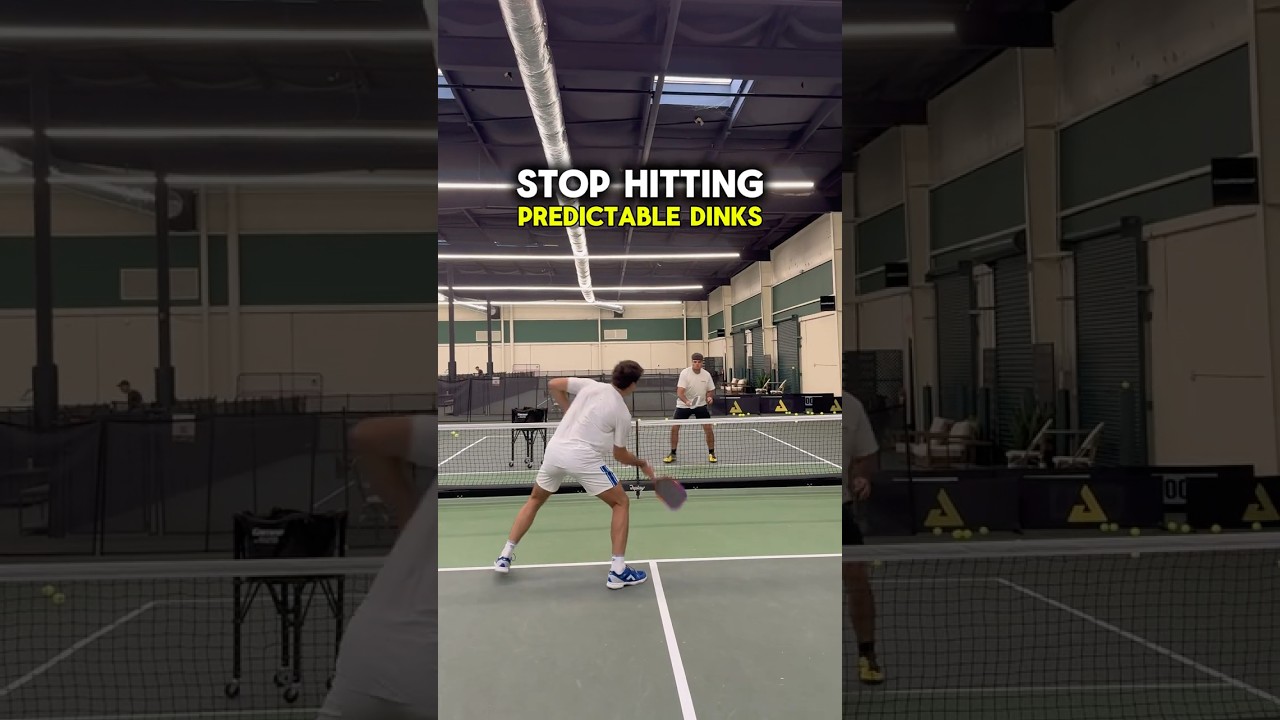
This breakdown comes from Richard Livornese on YouTube, who demonstrates exactly how to use body fakes and late wrist snaps to keep opponents completely off balance.
Love pickleball? Then you'll love our free newsletter. We send the latest news, tips, and highlights for free each week.
Why Smart Players Are Already Reading You
Skilled players process your body movement first.
They track your weight shift, your shoulder rotation, and your paddle face angle, and by the time you make contact they have already started moving.
This is not luck.
It is pattern recognition built from thousands of repetitions, and until you break those patterns on purpose, you will keep getting read.
The size of the player pool makes this worse every season.
According to the SFIA's most recent Topline Participation Report, pickleball participation in the United States has climbed past 19 million players, which means far more people have logged the reps needed to read you cold.
If you want to understand what higher-level players actually see, this breakdown of what 6.0 players see that 4.0 players miss shows how much court awareness separates the levels.
The same gap shows up in the 5 pickleball shots you must master before 2026.
The fix is not randomness. It is pickleball shot disguise: using your body as a decoy while your wrist and paddle deliver the real message.
What Does Shot Disguise Actually Mean?
Pickleball shot disguise means using your body movement to signal one direction while delivering the ball to another.
It is the intentional separation of your body cue from your actual shot outcome.
Think of it as sending a false signal. Your torso says left. Your paddle says right.
Your opponent commits to the fake and you win the point.
This is different from being inconsistent or wild.
True deception is controlled and repeatable, which is why it belongs in the same bucket as advanced pickleball strategy rather than trick-shot territory.
Understanding shot selection as a deliberate system is what makes pickleball shot disguise work.
Without a base of controlled, predictable shots, fakes have nothing to push against.
Deception is also a live tactic, not a rulebook loophole.
Nothing here conflicts with the current USA Pickleball rulebook, and the 7 new USAP rules for 2026 leave fakes and body feints fully legal.
Technique 1: The Body Lean Fake
The body lean fake is the foundation of shot disguise.
You shift your weight or rotate your torso toward one side of the court, let your opponent read that movement, then redirect the ball in the opposite direction.
Here is how it works in practice:
- Set up on a dead ball with your body visibly shifting left.
- Let your opponent see that weight transfer and start to anticipate the middle.
- Redirect the ball back to the right, away from where they are moving.
The key is making the body movement readable enough to commit to but not so exaggerated that it looks staged.
If the fake is too obvious, experienced players will not bite.
This works best once you have established a pattern.
Hit two or three shots in the direction your body is signaling, then break it when your opponent is fully locked in.
Improving your shot selection habits is what gives deception its teeth.
Predictable players who suddenly become unpredictable are far more dangerous than players who are random from the start.
 The Dink Media Team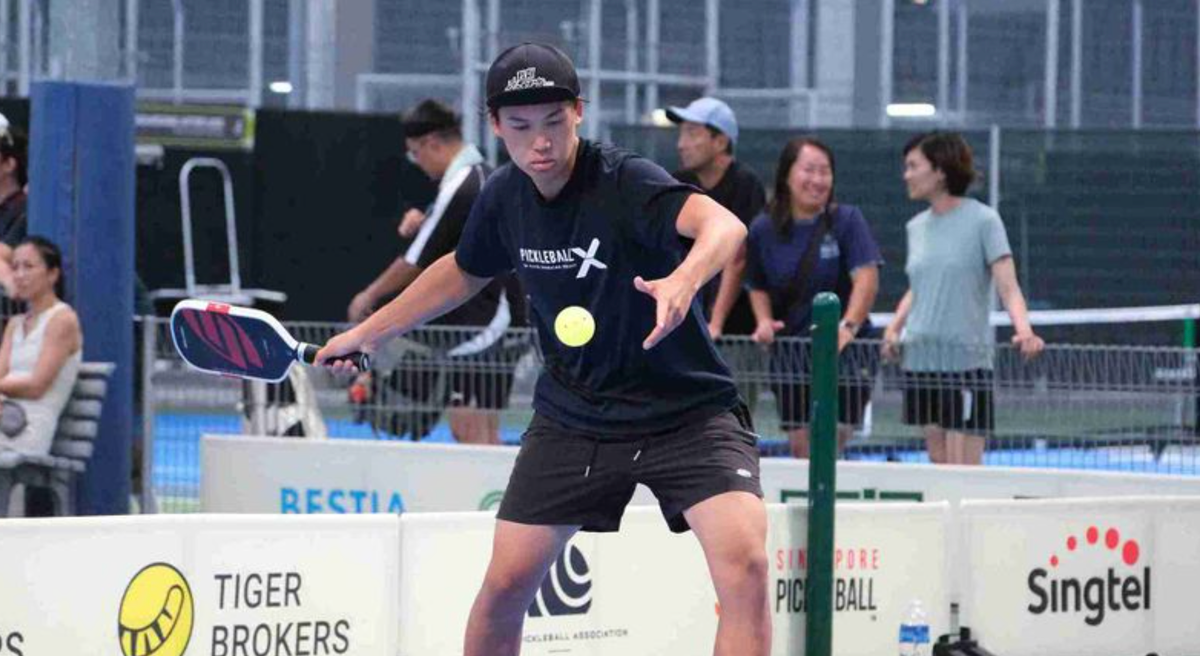
Technique 2: The Hold and Snap
The hold and snap is the reverse of the body lean fake.
Instead of moving your body one way and going the other, you keep your body completely still and use a late wrist snap to redirect the ball at the last possible moment.
This catches a different type of opponent. Some smart players have learned to distrust obvious body fakes. They wait a fraction longer before committing.
The hold and snap punishes exactly that hesitation.
Here is the sequence:
- Set up your body in a neutral or slightly held position, giving nothing away.
- Let the opponent wait, watching for a cue that never comes.
- Snap your wrist across at contact and send the ball to the open side.
The wrist snap is the whole play. Without a sharp, controlled flick at contact, the ball will not redirect convincingly.
This is exactly the movement covered in the tip position fix that adds real snap to your flick.
You can also use wrist lag principles to build the late release this technique depends on.
Worth noting where the pros landed on spin-heavy contact: professional players abandoned the slice shot in 2025 largely because late, flat redirects beat telegraphed carve.
 The Dink Media Team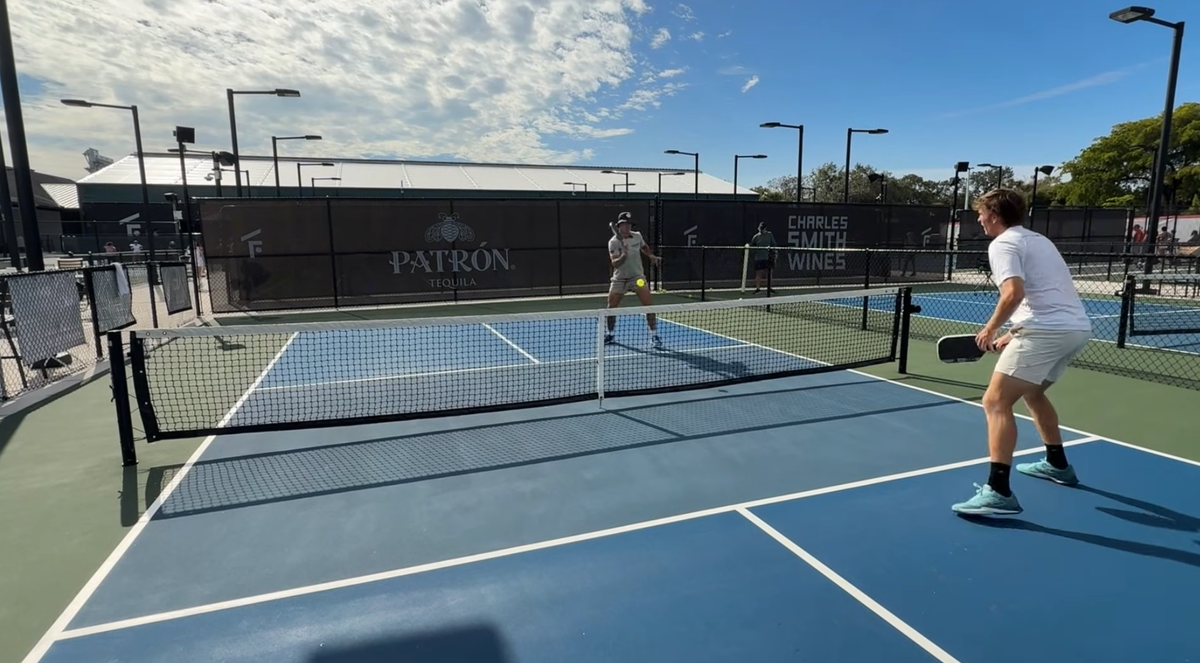
How Do You Know Which Fake to Use?
The choice between the body lean fake and the hold and snap depends entirely on what your opponent is reacting to.
Watch them for two or three rallies before you commit to a deception strategy.
If they move early and aggressively based on your body, the body lean fake will destroy them.
They are already pre-committing, so all you need is a convincing setup.
If they are patient and waiting for a clear signal, the hold and snap is your weapon. Their patience becomes a liability when there is no signal to wait for.
This is a core part of pickleball IQ and it separates players who win through athleticism from players who win through thinking.
The ability to read what your opponent is reading and then exploit it is what the best players in the world do on every single point.
 Alex E. Weaver
Technique 3: Flip the Pattern on Them
The most advanced version of shot disguise is pattern flipping.
This means intentionally building a habit over several rallies, then inverting the entire thing at a critical moment.
You are not just faking on one shot. You are setting a trap over multiple exchanges.
Here is how to build and flip a pattern:
- Hit three to four shots signaled clearly by your body to the same area.
- Watch your opponent start to anticipate that zone before you swing.
- On a high-value point, use the body lean fake or hold and snap to send the ball somewhere completely different.
- The longer you built the pattern, the bigger the reaction when you break it.
The longer you build the pattern, the bigger the reaction when you break it.
Timing matters enormously. Do not flip a pattern on a throwaway rally, and save it for a big point where the surprise is worth the most.
This is the thinking that separates levels.
The ways 5.0 pickleball players see the court are fundamentally different, and pattern awareness is a huge part of that gap.
 Eric Roddy
Building Your Body Awareness
None of these techniques work if you do not have baseline control over your body movement. You cannot fake something you do not control naturally.
Start by becoming aware of what your body is actually doing when you hit your most common shots. Record yourself from the side if possible.
You will almost certainly find that your body telegraphs your shots far more than you realized.
Once you can see the tells, you can start to exaggerate them on purpose. That exaggeration is the setup. The redirection is the punchline.
Solid footwork and weight transfer habits give you the physical control to make body fakes convincing without throwing yourself off balance after the shot.
 Eric Roddy
Why Drilling Deception Is Different From Drilling Technique
You cannot drill deception the way you drill a third-shot drop.
Technique drills build muscle memory through repetition, but pickleball shot disguise requires a live, reactive partner to train against.
Find a partner who hits back and tells you honestly whether they were fooled. Without real feedback, you are just guessing whether your fakes are working.
None of it works without baseline body control, either.
Solid footwork and weight transfer habits let you sell a fake without throwing yourself off balance after the shot.
A good deception session looks like this:
- Ten minutes drilling the body lean fake until it feels natural, not forced.
- Ten minutes on the hold and snap, focusing on the wrist contact point.
- Short games where you intentionally build and flip one pattern per game.
The feedback loop is everything.
If your partner always guesses right, your tells are still too obvious, and if they never guess right, you have tipped into randomness instead of disguise.
Slot this into your existing routine using the 12 drills you need to play your best pickleball in 2026, and pair it with more deception tips once the mechanics feel automatic.
 The Dink Media Team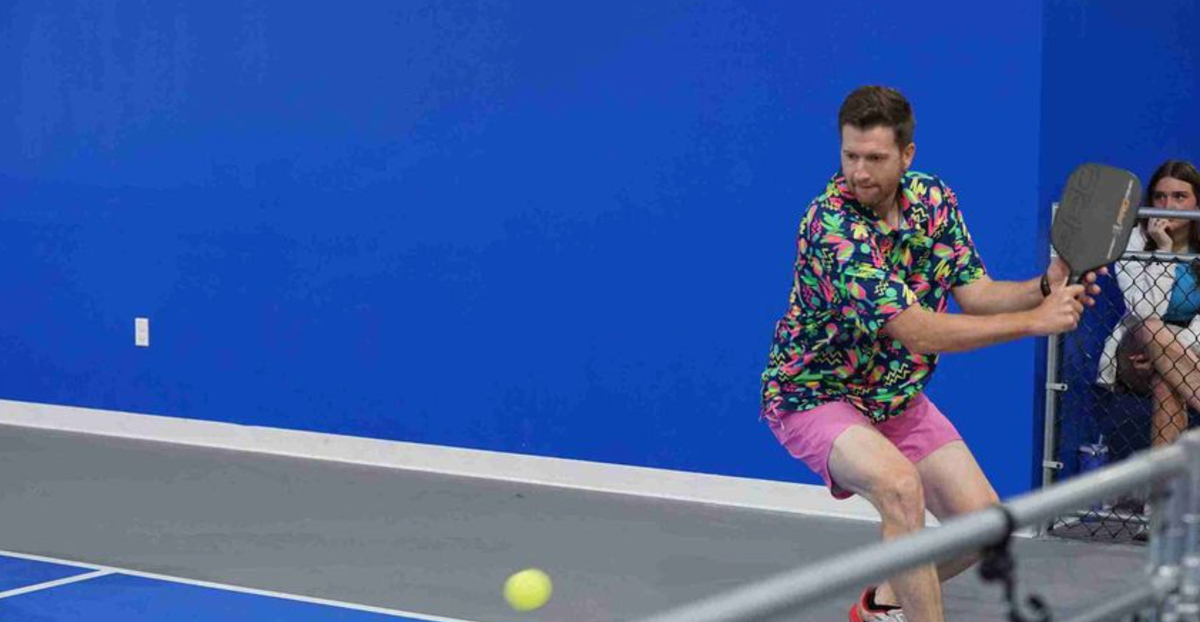
Putting It All Together on the Court
Pickleball shot disguise is not a trick you pull out randomly. It is a system you build, maintain, and deploy at the right moment.
Start simple. Pick one technique and commit to using it deliberately at least twice per game, then track whether your opponent bites.
Over time you build a library of patterns and counters. You start to see every rally as a conversation, not just an exchange of shots.
If your opponents always know where the ball is going, it is not because you have bad hands. It is because you have been handing them a road map.
For more on reading opponents in live play, learn how to anticipate every shot like a pro and study the IQ decisions that pros make every point.
And if you want to sharpen the mechanics that make these fakes land, mastering the pickleball flick with the step most players skip gives you the wrist control the hold and snap depends on.
Build it into the simple 4-step system to win more pickleball games in 2026 and the 6 essential pickleball shots to master for 2026.
Frequently Asked Questions
What does it mean to disguise your pickleball shots?
Disguising your pickleball shots means using your body movement to signal one direction while actually sending the ball somewhere else. The goal is to make your body a decoy so your opponent commits to the wrong position before contact. It is a deliberate technique, not randomness.
How do I stop telegraphing my shots in pickleball?
Start by recording yourself from the side to see what your body does before contact on your most common shots. Once you identify the tells, you can either eliminate them for neutral play or exaggerate them intentionally as fakes. Most players do not realize how much they give away until they see it on video.
Is the wrist snap important for shot disguise in pickleball?
Yes, the wrist snap is critical for the hold and snap technique specifically. Without a sharp, late wrist redirect at contact, the ball will not change direction convincingly enough to fool a good opponent. Building strong, controlled wrist mechanics in practice is what makes this technique work in games.
How long does it take to build a pattern before flipping it?
Three to four consistent shots in the same direction is usually enough to get a good opponent leaning. The more high-value the point, the longer you may want to invest in building the pattern first. Do not flip it too early or too late.
Can beginners use shot disguise or is it only for advanced players?
Beginners can start with basic body lean fakes even at the 3.0 or 3.5 level because opponents at that range react strongly to body movement. However, the hold and snap and advanced pattern flipping require consistent shot control first, so those are better developed once your mechanics are reliable. Master the basics before adding deception on top.

Love Pickleball? Join 100k+ readers for free weekly tips, news & gear deals.
Subscribe to The Dink