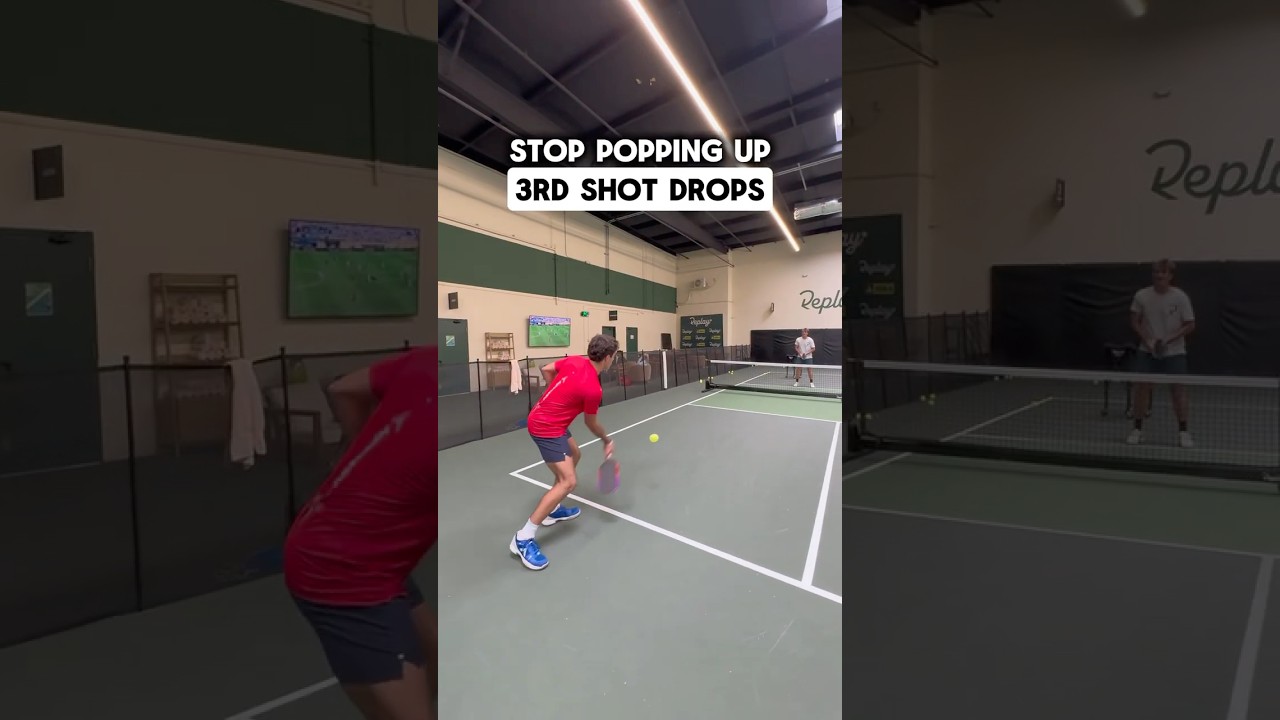
The One Wrist Change That Makes Your Pickleball Drop Instantly Better
Most players miss their pickleball drop because of one wrist mistake they don't even notice. Fix this one thing and your drops become dramatically more consistent.
Your pickleball drop is one of the most important shots in the game, and there is a good chance you are sabotaging it before you even swing.
The problem is not your footwork. It is not your paddle choice. It is your wrist, and specifically, when you are moving it.
This tip comes from Richard Pickleball on YouTube, who broke down a single mechanical change that clears up the most common drop mistake players at every level make.
Love pickleball? Then you'll love our free newsletter. We send the latest news, tips, and highlights for free each week.
The Real Reason Your Drop Keeps Failing
Most players start with their wrist high, drop it on the way through, and then try to scoop or lift the ball up over the net.
That sequence creates a massive timing problem.
You are essentially asking your hand and wrist to do three jobs in a fraction of a second: drop, redirect, and push forward. That is too much happening all at once.
The result? Pop-ups. Balls into the net.
Drops that float too high and get attacked. Sound familiar?
If you want to understand exactly why this mistake is so damaging, this breakdown of the backhand third shot drop gets into the mechanics in detail.
What Should You Actually Do With Your Wrist?
Set your wrist back before the swing starts. That's the fix. All of it.
As soon as you drop your paddle in preparation for the shot, your wrist should already be in its final loaded position.
By the time you start moving forward toward contact, the wrist is already done doing its job.
This means your forward swing becomes a simple, clean push. No last-second flipping. No scooping.
Just forward momentum through the ball.
Think of it this way: the wrist sets the angle, and the arm delivers the shot. Those are two separate jobs, and they should happen at two separate times.
Why Timing Is the Actual Obstacle
When you try to use your wrist during the swing, you are adding a timing variable that does not need to be there.
Every millisecond that your wrist is still adjusting mid-swing is a millisecond where something can go wrong.
Outdoor wind, a slightly awkward bounce, any small distraction, and the whole thing falls apart.
Players who struggle with consistency on the pickleball drop are almost always over-relying on their wrist at the wrong moment.
The apex fix for the third shot drop is another version of this same idea, reducing variables before contact instead of trying to fix things mid-swing.
Pre-setting the wrist removes one of the biggest variables in the pickleball drop entirely.
 The Dink Media Team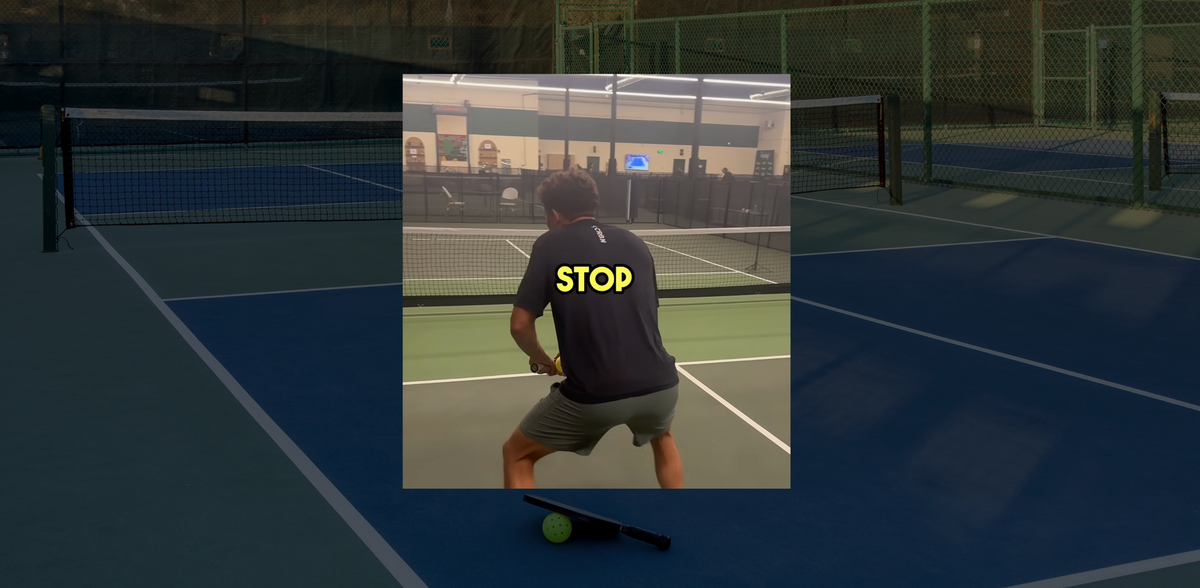
How Do You Build This Into Your Game?
The key is making the wrist set a reflex, not a conscious decision. Here is a simple process to train it:
- Shadow swing slowly. Without a ball, practice dropping the paddle and immediately setting your wrist back. Freeze there. Look at the angle. That's where you want to be every time before contact.
- Feed balls from close range. Have a partner toss balls from just past the kitchen line. Focus only on getting the wrist set before you swing. Don't worry about placement yet.
- Add distance gradually. Move back to the transition zone, then to the baseline. At each position, your only job is to pre-set the wrist before the forward swing begins.
- Check yourself mid-rally. In practice games, pause after a failed drop and ask one question: was my wrist already set, or was I still adjusting it when I hit?
This is the kind of deliberate repetition that builds a reliable shot.
These third shot drop fixes for placement pair well with the wrist correction, because once your mechanics are clean, you can start directing the ball with intent.
 The Dink Media Team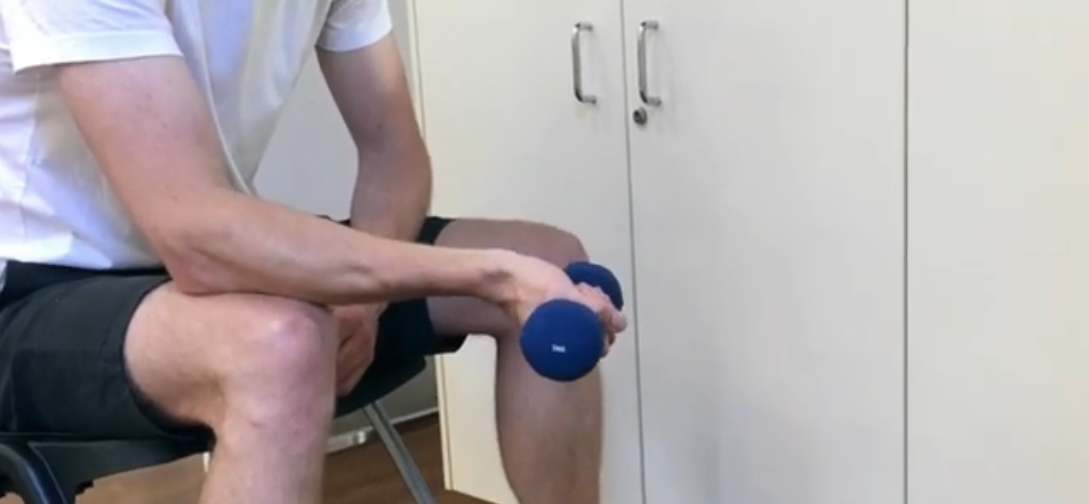
What Does the Forward Swing Feel Like When It's Right?
When your wrist is already pre-set, the forward swing feels almost passive. There is very little active hand movement happening.
You are simply carrying the paddle forward and letting the pre-set angle do the work.
This is what pros mean when they talk about a "quiet hand" through contact.
The wrist is not frozen, it is simply finished. It already did its job during the setup phase.
Compare this to what most recreational players do, which is an active wrist flip or lift through the ball.
That active movement is almost impossible to repeat consistently, especially under pressure.
Jack Sock has talked about drop technique in ways that reinforce exactly this idea: the less your hand does at contact, the more repeatable the shot becomes.
 The Dink Media Team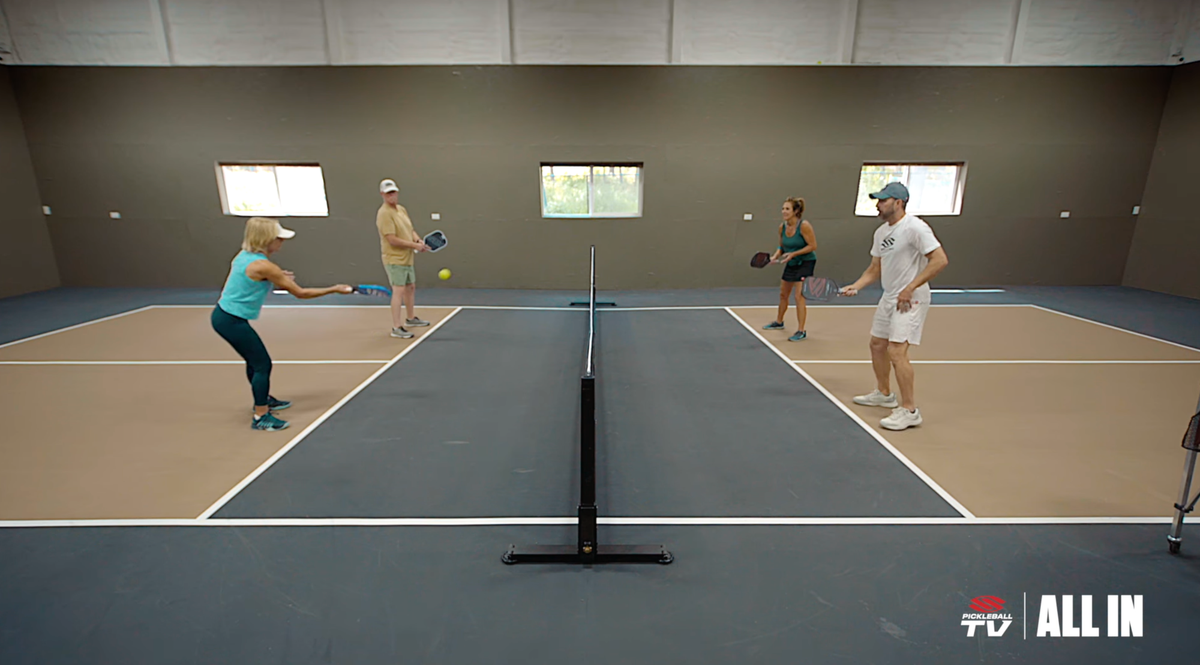
Is This Different for Forehand vs. Backhand Drops?
The principle is the same on both sides, but the wrist position you pre-set will look different depending on which side you are hitting from.
On the forehand drop, the wrist typically sets slightly back and under, creating a slight upward angle in the paddle face.
On the backhand drop, the wrist loads back toward the body, then the whole unit moves forward as one piece.
Neither version should involve the wrist changing direction or angle during the forward swing.
If it is changing, that's where your inconsistency is coming from.
For more detail on the forehand side specifically, these forehand drop techniques walk through the mechanics clearly.
 The Dink Media Team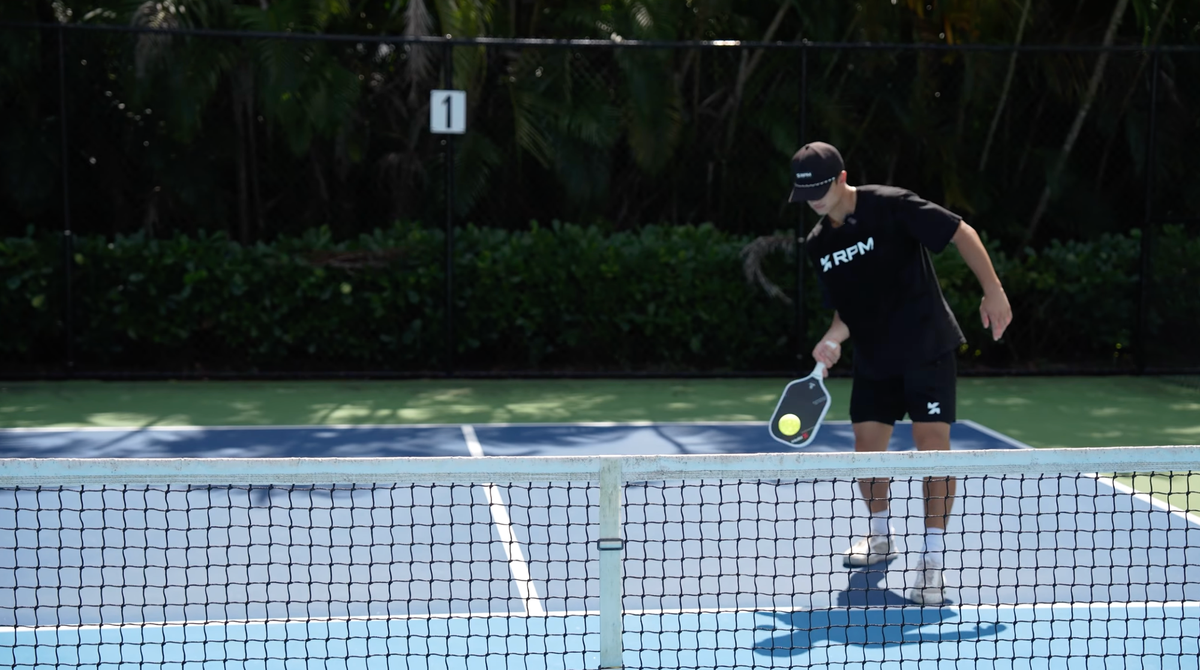
Common Mistakes Players Make When Trying This Fix
This adjustment sounds simple, and it is, but there are a few ways players mess it up when first trying it:
- Setting the wrist too late. If you are setting it as you start the forward swing rather than during the backswing or paddle drop, you are still creating the same timing problem. The wrist needs to be done before forward motion begins.
- Over-cocking the wrist. Some players hear "set your wrist back" and yank it into an extreme position. The wrist set should be firm but natural, not strained. You should feel relaxed.
- Forgetting about it under pressure. In a real rally, when you are moving to the ball and under time pressure, the wrist often reverts to old habits. That is why drilling this in isolation first matters.
- Confusing wrist angle with spin intent. Pre-setting the wrist is about creating a stable contact angle, not about generating spin. Spin can come later, once the basic motion is grooved.
If you find the pickleball drop still popping up even after working on the wrist, these fixes for popping the ball up will help you find the next layer of the problem.
 The Dink Media Team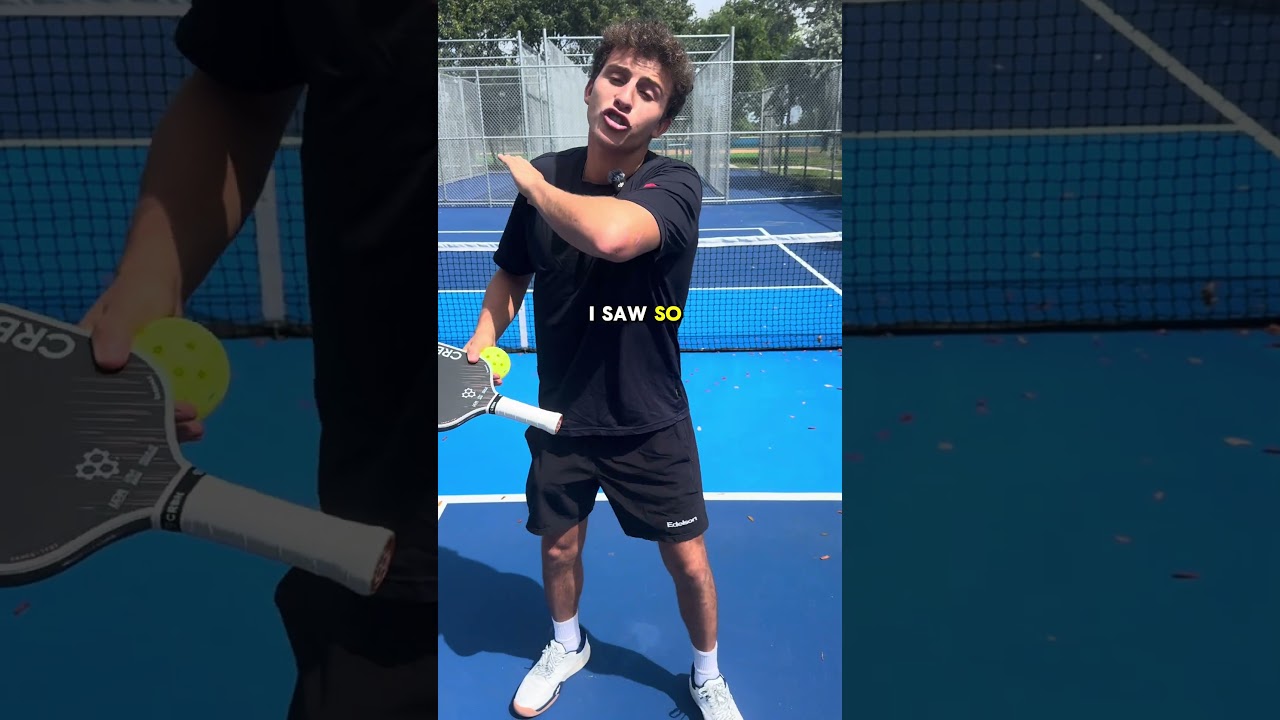
How Does This Connect to the Rest of Your Transition Game?
A cleaner pickleball drop does not just win you points directly. It changes what happens after the drop.
When your drop lands low and soft, you get to move forward into the transition zone with confidence.
When it floats, you are stuck at the baseline defending a counterattack before you even get moving.
This is why the pickleball drop is worth spending real time on.
It is the shot that decides whether you get to play at the kitchen line or whether you spend the whole point scrambling.
These tips that fix your dink, drop, and reset show how the three shots connect to each other throughout a point.
A reliable pickleball drop also changes how opponents read your game.
They stop attacking your third shot and start having to worry about what you are going to do once you get to the net.
 The Dink Media Team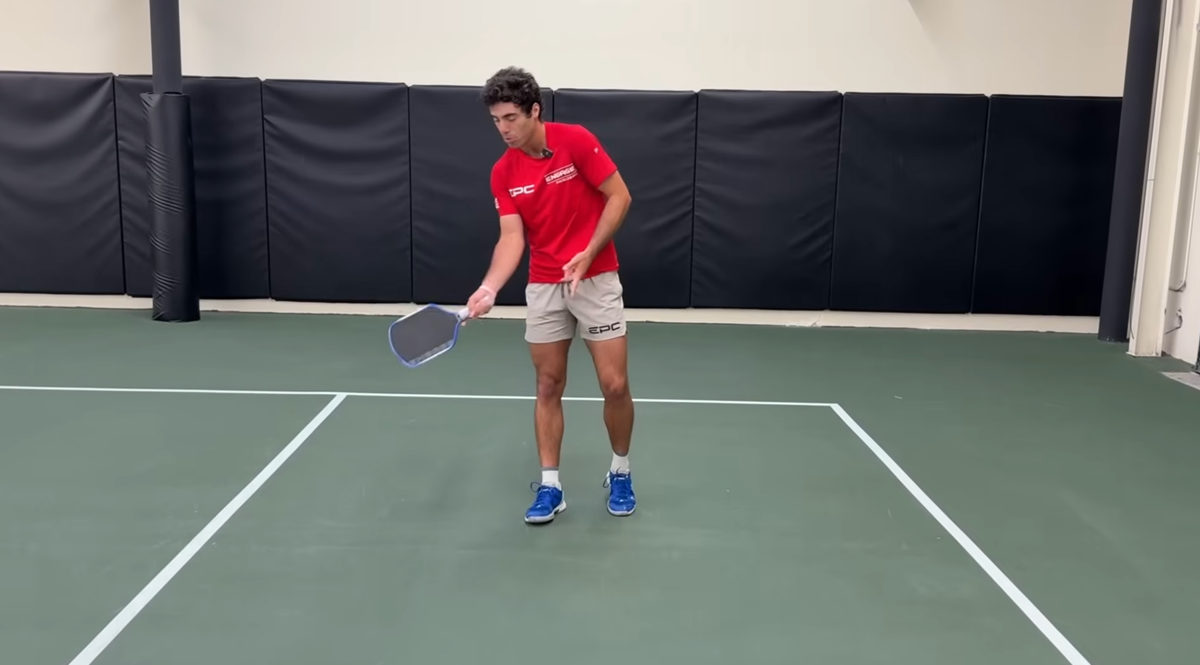
Putting It All Together in Practice
The mechanical change here is genuinely small. Get the wrist back early. Move forward with a quiet hand.
That is it.
But small changes require real repetition before they stick under match conditions. Do not try to ingrain this during a competitive game.
Take it to a drilling session, drill it until it feels automatic, then let it show up naturally in play.
If you want a full practice structure to build this into, these drills that build fitness and improve play give you a solid framework for practice sessions that actually move your game forward.
And if you are looking for additional ways to sharpen your shot consistency overall, these fixes that erase unforced errors are worth going through one by one.
The drop is learnable. The wrist fix is real. Now go drill it.
Frequently Asked Questions
Why does my pickleball drop keep going into the net?
The most common cause is lifting with the wrist at contact instead of pre-setting it before the swing. When the wrist is still moving downward as you start forward, the paddle face often closes and drives the ball into the net. Set the wrist back during your backswing and keep it stable through contact.
What does "pre-setting the wrist" mean in pickleball?
Pre-setting the wrist means loading your wrist into its final position during the backswing or paddle drop, before your forward swing begins. This way, the wrist is not changing angle or direction during contact. The forward motion of the arm then delivers the shot without any last-second hand adjustments.
How do I stop popping up my third shot drop?
Pop-ups on the drop almost always come from an active wrist flip or scoop through the ball. Get the wrist set early, then push forward with a quiet hand through contact. The ball should roll off the paddle face softly rather than being flicked upward.
Does the wrist fix work for both forehand and backhand drops?
Yes, the principle applies to both sides. The specific wrist angle will differ depending on the side, but on both the forehand and backhand, the wrist should be fully set before the forward swing begins. Any wrist movement that happens during the swing creates timing problems on either side.
How long does it take to fix your pickleball drop mechanics?
Most players notice a difference within one or two focused drilling sessions when they isolate the wrist pre-set specifically. Making it automatic under match pressure usually takes a few weeks of consistent practice. Drilling it at close range first, then adding distance, is the fastest way to build the habit.

Love Pickleball? Join 100k+ readers for free weekly tips, news & gear deals.
Subscribe to The Dink