
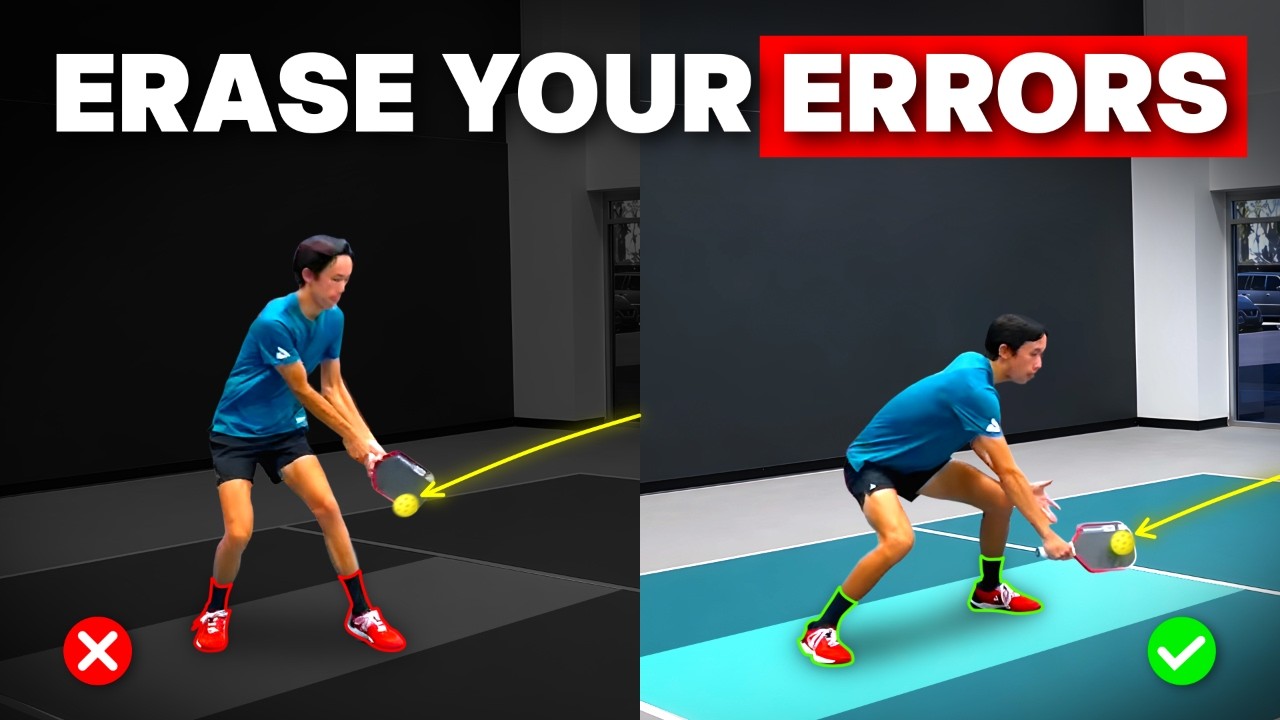
Unforced errors in pickleball are the fastest way to lose points you should have won. These 6 fixes target the exact moments where most players self-destruct.
Unforced errors in pickleball are not bad luck. They are patterns, and once you see them clearly, you can stop them.
Most players lose rallies they should win.
Not because their opponents made a great shot, but because they stood still, attacked the wrong ball, or panicked off the line.
These six fixes come straight from Briones Pickleball Academy on YouTube, one of the most practical coaching channels for players who want real, court-tested solutions.
Every tip here targets a mistake you have almost certainly made in your last session.
Love pickleball? Then you'll love our free newsletter. We send the latest news, tips, and highlights for free each week.
Fix 1: Stop Being a Spectator After You Hit
The single most common positioning mistake is hitting a shot and then standing still to watch it.
This one habit produces more unforced errors in pickleball than any technical flaw in your swing.
Every shot you hit must trigger movement. You need to be shifting, shading, and repositioning before your opponent even contacts the ball.
Here is the rule: when the ball is cross-court from you, the middle is your responsibility. Full stop.
If you hit a dink cross-court and stay on the outside of the court, you have just opened a lane straight down the middle for a winner.
On the flip side, if the ball is straight ahead of you, your job is to cover your body and the sideline. Your partner should be covering the middle.
This is how positioning works in doubles, and skipping it costs you points every single game.
Fix 2: Dink to the Middle When You Get Pulled Wide
Getting pulled wide at the kitchen line creates panic for most players. Their instinct is to try a hero shot cross-court to make something happen.
That shot almost never works. What you should do instead is dink to the middle of the court every time you get stretched out wide.
There are three clear reasons why the middle is your best option here:
- The net is lower in the middle, which gives you more margin on a ball you are already reaching for
- A middle dink keeps you and your partner from getting pulled further out of position
- It forces a miscommunication between your opponents on who takes the ball
When you go cross again from a wide position, your partner has no idea whether to cover for you or shade toward the ball.
Keep it simple and keep it middle.
This is the same principle behind smart cross-court dinking strategy: use the geometry of the court to your advantage, not against you.
Which Unforced Errors in Pickleball Happen When You Get Pushed Off the Kitchen Line?
This is the scenario that causes more panic attacks at the recreational level than almost anything else.
It is also where the ugliest unforced errors in pickleball show up on the stat sheet.
The ball gets behind you, you take a step back off the line, and suddenly your brain sees a big hole in the court and screams at you to attack.
Do not attack from a pushed-back position. It does not work.
The shot fails the vast majority of the time, and you hand your opponents a free point.
The correct play is to stay calm, hit a controlled dink, probably to the middle where the net is lowest, and use that shot to buy yourself time to get back up to the line.
Being stuck back in the court is manageable if you reset instead of forcing the issue.
Staying calm is not just mental advice. It is a tactical decision that keeps the point alive and gets you back into a position where you can actually create offense.
 The Dink Media Team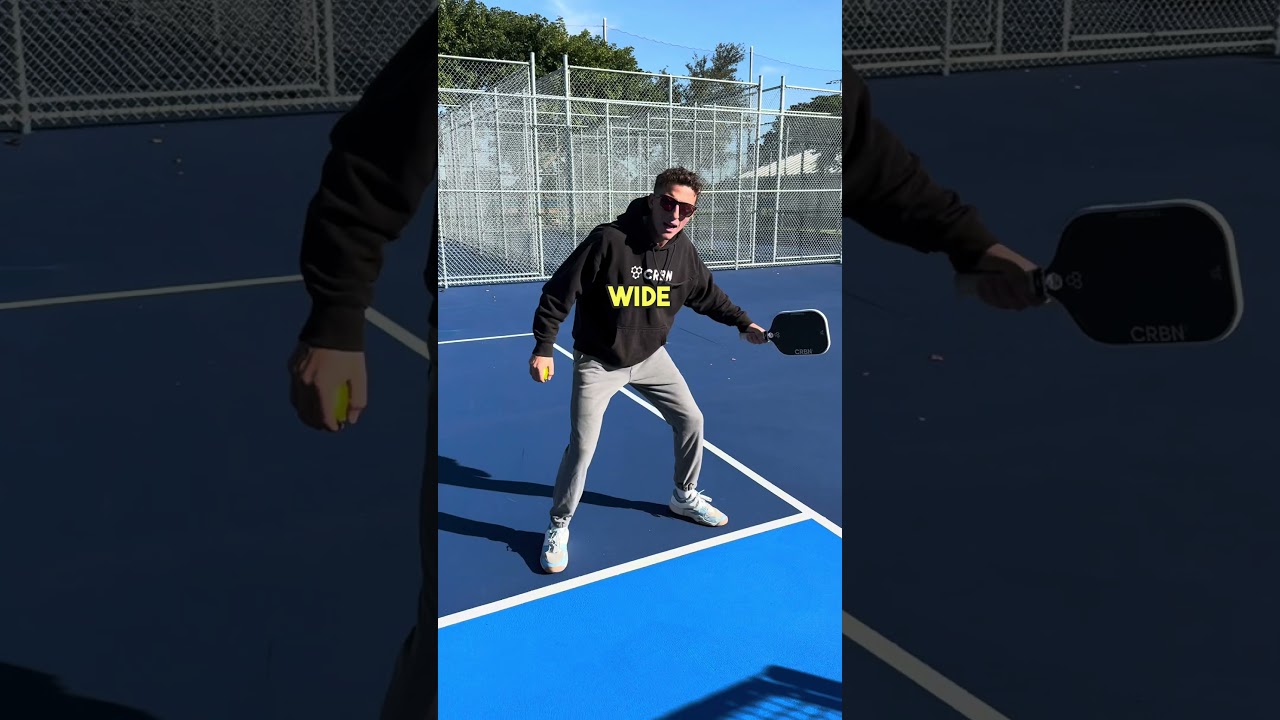
Fix 3: Return Serves to the Middle, Not the Sideline
Players love trying to rip returns down the sideline. It looks flashy, it feels aggressive, and it misses wide constantly.
Returning to the middle of the court is the smarter play in almost every situation. Here is why:
- You eliminate the risk of missing wide entirely
- A middle return of serve forces your opponents into a communication problem on the third shot
- It cuts off the sharp angles that strong drivers love to use
- It sets your partner up to take control at the kitchen line
When opponents receive a middle return, they cannot create a big angle on their third shot drive.
They are forced to hit it back toward the center of the court where you and your partner are already waiting.
For more depth on this exact situation, these return of serve secrets cover the mechanics and placement in detail.
Sloppy returns remain one of the highest-volume sources of unforced errors in pickleball at every rating below 5.0.
 The Dink Media Team
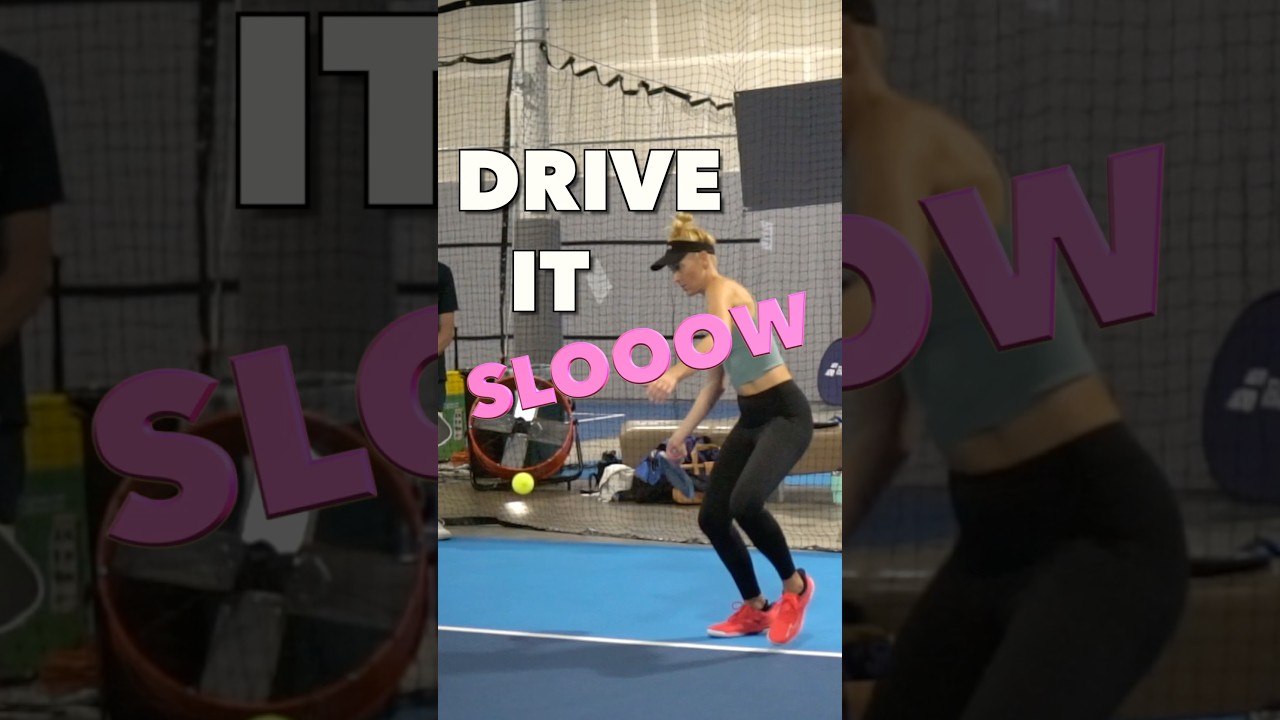
Fix 4: Stop Swinging Your Third Shot Drives at Full Power
Big third shot drives feel good. They rarely work the way you think they will.
When you swing at 100 percent, you lose control of the ball, your margin for error disappears, and you set your partner up to absorb a hard counterpunch block right at their body.
That is not a third shot strategy. That is just chaos.
Hit your drives at 60 to 70 percent pace. That is the target.
At that speed, you stay consistent, you keep the ball down, and you give yourself a realistic path to the next shot.
The second part of this fix is equally important: stop driving over and over without a plan. Drive the third. Maybe drive the fifth.
After that, you should be looking to drop the ball and reset the point.
Ignoring that sequence is how a clean rally turns into a pile of unforced errors in pickleball in under four shots.
If you keep driving without a clear reason, your partner cannot track the rally, and the rhythm of your team completely falls apart.
Understanding when to drop and when to drive is one of the most important strategic decisions in doubles pickleball.
 The Dink Media Team
Is There a Right Number of Drives Per Rally?
Yes, and it is lower than most recreational players think.
Two drives per rally is a reasonable ceiling. Drive the third. Drive the fifth if the ball sets up well.
After that, the right play is almost always to drop the ball and get control of the kitchen line.
The only exception is if your opponents genuinely pop the ball up on that next drive. In that case, yes, attack it.
But if the rally is still contested, a drop or reset is almost always the smarter shot after your second drive.
This connects directly to the concept of when the third shot drive actually matters and when players overuse it as a default instead of a tool.
 The Dink Media Team
Fix 5: Split Step in Transition After Your Drop
This is the tip that trips up even intermediate players who have solid technique everywhere else.
You hit your third shot drop, it goes well, and then you run straight through the transition zone without stopping.
The next ball comes right at your feet and you have no chance.
You have to split step before your opponent makes contact with the ball.
That means you are moving forward after your drop, but you come to a controlled athletic ready position right before they hit.
From there, you can defend, reset, or attack based on what they give you.
The non-volley zone rules published by USA Pickleball are worth reviewing here, because most footwork faults in transition come from momentum, not intent.
If your goal is to come forward after the drop, commit to it. But stop and split step before they swing.
Getting jammed at the feet is almost always the result of running through the zone instead of pausing to read the ball.
 The Dink Media Team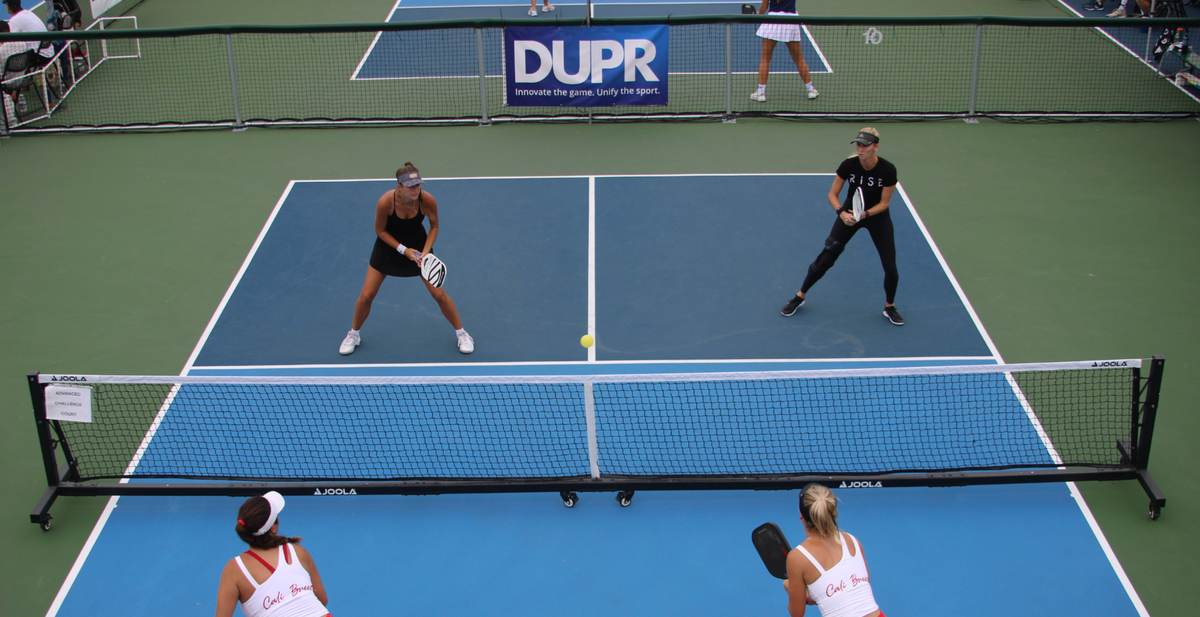
Fix 6: Know Your Goal Before You Hit Every Shot
This last fix ties everything together. Most unforced errors in pickleball happen because players have no clear intention going into the shot.
Before you hit, you need to know two things: where the ball is going, and what you plan to do right after you hit it.
Are you coming forward? Staying back? Covering middle or sideline?
Indecision creates errors.
When you are halfway to the kitchen and halfway waiting to see what happens, you get caught in no man's land and have no good options on the next ball.
Commit to a plan. Hit the shot that fits the plan. Move to the position the plan requires.
That is how you stop giving away points that should have been yours.
Understanding the root causes of unforced errors makes it easier to catch yourself before the mistake happens.
The players who eliminate errors fastest are not the ones with the best technique. They are the ones with the clearest plan on every single shot.
A simple three-step strategic formula can help you build that habit quickly.
 The Dink Media Team
Putting It All Together
Unforced errors in pickleball are not random.
They cluster around the same six situations almost every time: standing still after shots, panicking wide, attacking from bad positions, spraying return serves, over-driving, and running through transition without a split step.
Fix these six and you will immediately win more rallies without changing anything else about your game.
Stopping unforced errors in tournament play starts with the same discipline you build in casual games.
Pick one fix from this list and focus on it in your next session. You will notice the difference before the session ends.
Your habits on the court reveal your level instantly, and cleaning up these patterns is one of the fastest ways to show measurable improvement.
Frequently Asked Questions
What causes the most unforced errors in pickleball?
The most common cause is poor positioning after each shot, specifically failing to move and cover the middle after hitting cross-court. Standing still and watching the ball instead of repositioning creates wide-open gaps that opponents exploit easily.
Should I ever attack when I get pushed off the kitchen line?
Almost never. When you are pushed back off the line, the smarter play is to hit a controlled dink to the middle and use that time to reposition back up to the kitchen. Attacking from a compromised position fails the overwhelming majority of the time and costs you the point outright.
Why is returning to the middle of the court better than going down the sideline?
A middle return eliminates the risk of missing wide and creates communication problems for your opponents on the third shot. It also cuts off the sharp angles that drive-heavy players rely on to create pressure.
What is a split step in pickleball and why does it matter?
A split step is a small hop into an athletic ready position that you make right before your opponent contacts the ball. It allows you to move quickly in any direction to handle the next shot, and skipping it in transition is one of the most common reasons players get jammed at the feet.
How hard should I be hitting my third shot drives?
Target 60 to 70 percent of your maximum pace. That range keeps the ball down consistently, reduces errors, and prevents you from setting up a hard counterpunch block that hurts your partner. Full-power drives sacrifice too much control for the marginal pace gain.

Love Pickleball? Join 100k+ readers for free weekly tips, news & gear deals.
Subscribe to The Dink