3 Causes of Unforced Errors in Pickleball (And How to Fix All of Them)
Unforced errors in pickleball are never random. Every single one has a cause, and once you know the cause, you can fix it.
Unforced errors in pickleball are the number one reason recreational players lose games they should win.
It is not your opponent's skill that beats you most of the time. It is your own mistakes.
The good news is that unforced errors are never random. Every single one has a cause, and once you can name that cause, you can eliminate it.
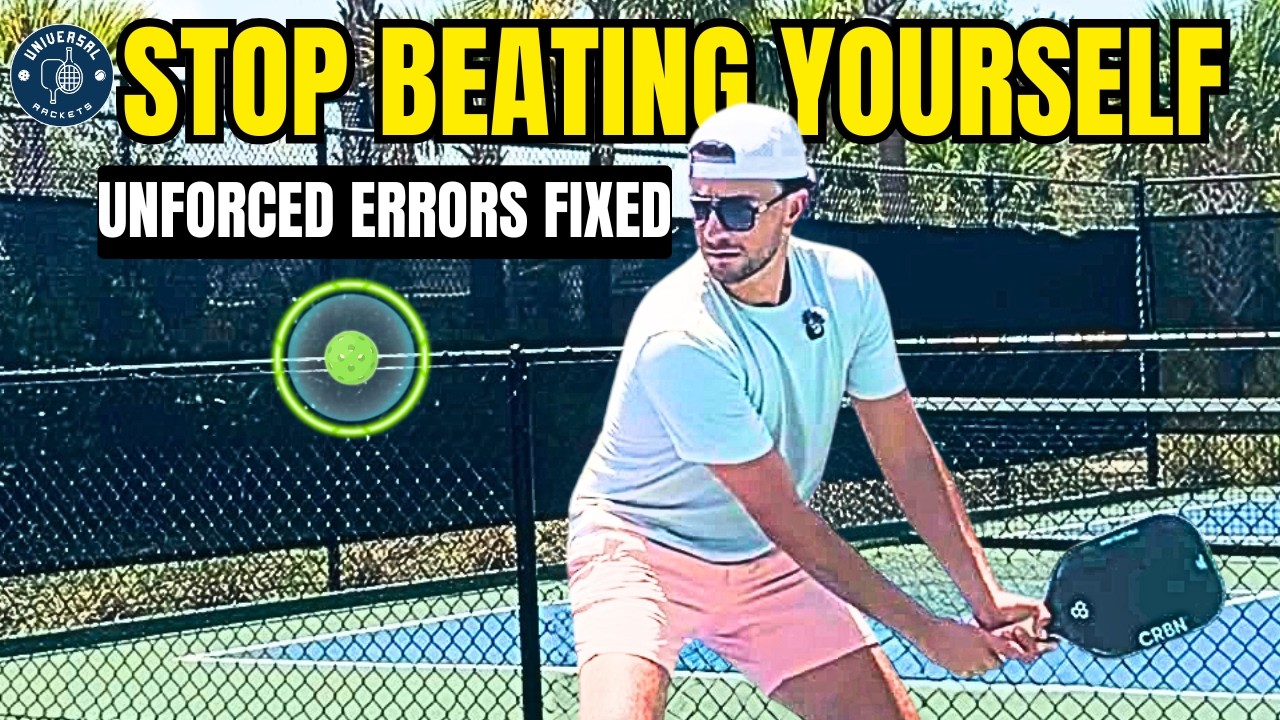
The breakdown below comes from Universal Rackets on YouTube, who has coached hundreds of players through exactly these patterns.
There are three root causes behind almost every unforced error, and three specific fixes you can apply immediately.
Love pickleball? Then you'll love our free newsletter. We send the latest news, tips, and highlights for free each week.
Why Unforced Errors Happen in the First Place
Most players think errors are about technique. They are not, at least not entirely.
The majority of unforced errors come from decisions, focus, and tension, not swing mechanics.
Here are the three causes that show up again and again at every level of recreational play.
Cause 1: Trying to Do Too Much
This one shows up everywhere. You get pulled wide and immediately try to blast a winner down the line instead of buying yourself time.
You aim for the sideline on a third shot drop and watch it sail out.
You focus so hard on keeping a drop low that you dump it into the net.
Trying to do too much is the most common source of unforced errors.
The shot that feels aggressive is usually the lowest percentage option in the moment.
Think of it this way. When you are pulled out wide in singles, the smart play is to hit the ball high and give yourself time to recover to the middle.
That is the boring, correct choice.
The exciting choice, going hard down the line, either misses or lands right at your opponent's feet, and you cannot get to the next ball anyway.
The mental shift you need is simple: stop trying to win the point on every single shot and start trying to not lose it.
Play the ball in front of you, not the winner you wish you had.
 The Dink Media Team
How Do You Know Which Shot to Hit?
Use this two-question framework before every ball:
- Is the ball above the net on your side? You can attack.
- Is the ball below the net, or are you out of position? Reset. Hit with height. Give yourself time.
If you are balanced and moving forward, you can be aggressive. If you are running back or scrambling wide, play a high, consistent shot and reset the rally.
This is exactly what separates smart players from players who look busy but keep losing.
Impulse control is the skill nobody talks about enough at the recreational level.
A great drill to build this habit: grab a bucket of balls and toss them to yourself from different positions on the court.
Before you swing, decide whether it is an attack ball or a reset ball. Do this at the kitchen, in the transition zone, and from the baseline.
Drilling with intention is what locks in the right decision under pressure.
 The Dink Media Team
Cause 2: Losing Focus Mid-Rally
The most common moment for an unforced error is immediately after a good shot.
You hit a clean dink, you watch it land, you celebrate in your head, and then the next ball catches you completely flat-footed.
You lost focus for half a second. That half second cost you the point.
This also shows up when you think a ball is going out.
You see your opponent's drive heading long, you mentally check out, and then it clips the line and you have no idea where to go.
You need to play every ball until it bounces twice or lands clearly out.
Not almost out. Clearly out.
 The Dink Media Team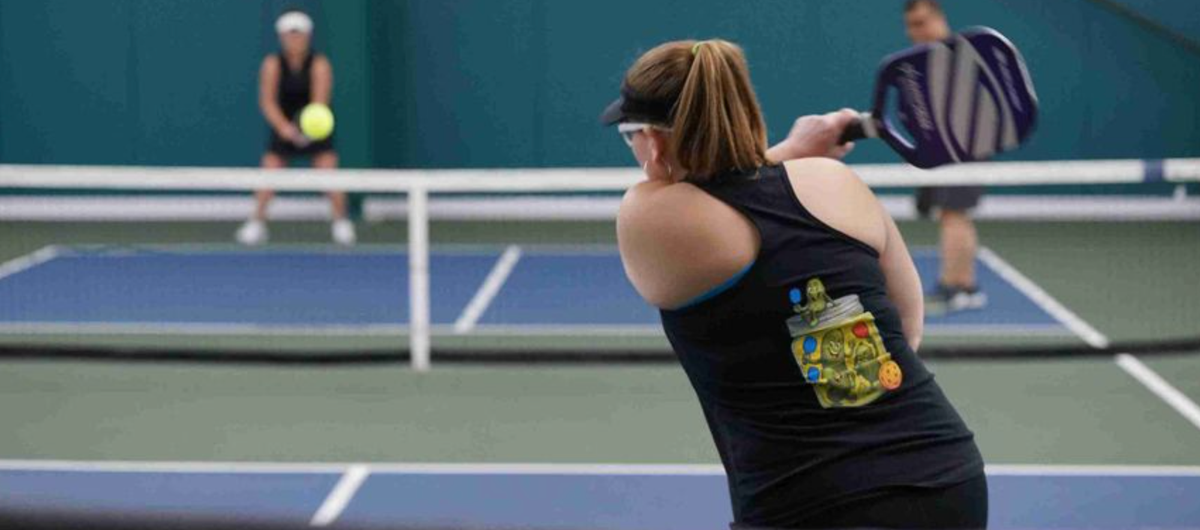
Are You Watching Your Shot Instead of Recovering?
This is one of the sneakiest bad habits in the game. You hit a drop, then you stand there waiting to see if it was good.
Meanwhile, five feet of court position just disappeared.
The fix is learning to trust your shots. Hit the ball and move. If you hit a drop, move up toward the kitchen immediately. Do not wait for confirmation.
The moment you start watching your shot instead of recovering your position, you are giving away time, and in pickleball, time is currency.
If you have ever gotten stuck in no man's land after a third shot, this is likely why.
Most transition zone mistakes trace back to hesitation after the previous shot, not the transition itself.
The rule is straightforward. After every shot, reset your feet, recover your position, and get ready for the next ball. The point is not over until it is over.
This also applies to returns and serves. If you serve and then freeze to see if it lands in, you have already given up ground. Serve and move. Drive and move.
Drop and move. Every shot should trigger immediate recovery, not a pause for review.
 The Dink Media Team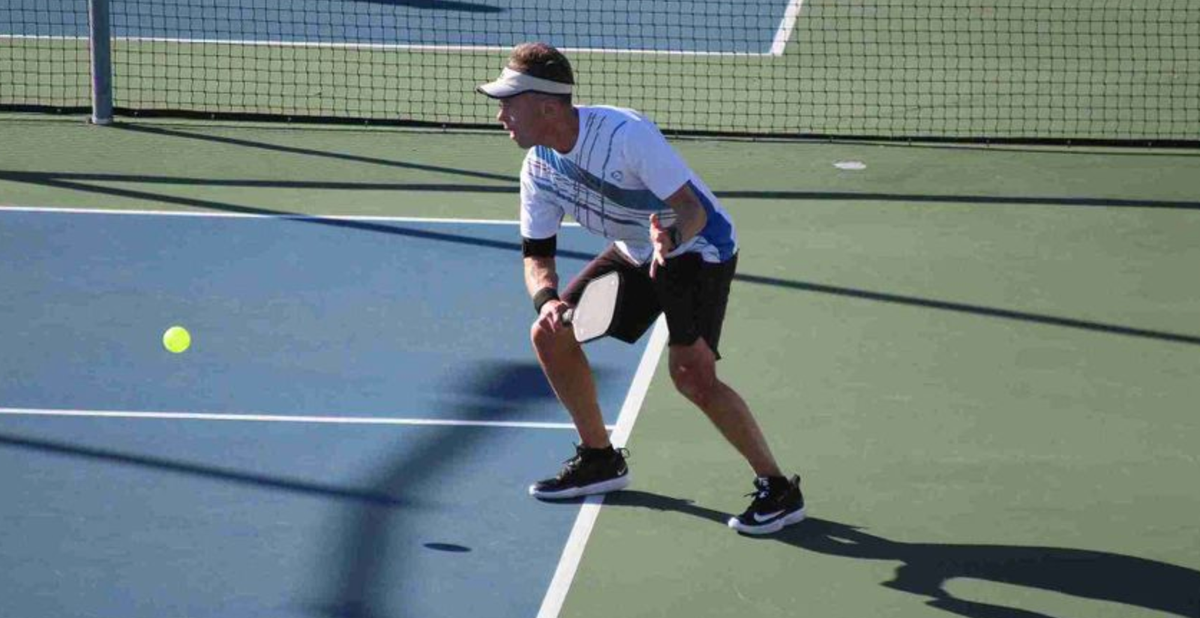
Cause 3: Tension Under Pressure
Tension is the silent killer of consistent pickleball.
The moment a point feels important, your grip tightens, your shoulders rise, and your swing shortens. Tight muscles produce inconsistent shots, every time.
Here is the problem. You do not notice it happening. It is automatic.
And the worse it gets, the more errors you make, which creates more tension, which creates more errors. It is a downward spiral.
The core principle to remember: in pickleball, to gain control, you have to give up control.
The more you let the paddle work for you instead of forcing the shot, the better your results will be.
A tight grip produces either a blocked, short shot or a ball that sprays long because you could not finish your swing.
 The Dink Media Team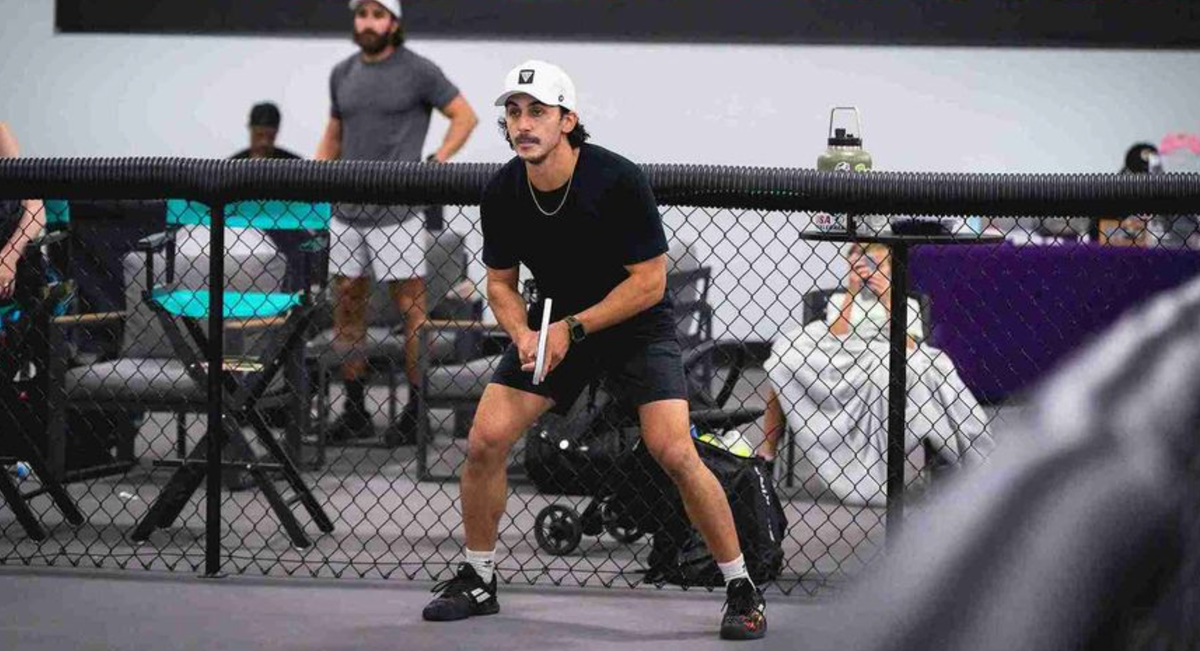
What Can You Do Before a Big Point?
You need a pre-shot routine. It does not need to be complicated. Before every serve, take one breath and drop your shoulders.
One breath. That is it. Shoulders drop, grip loosens, and you are reset.
Some specific options that work:
- Bounce the ball on your paddle before every serve to create a consistent rhythm and give your nervous system a moment to calm down.
- Set up your return stance deliberately, look at your paddle, get on your toes, and then go. The routine creates a psychological anchor.
- Have a go-to shot for big points. When tension is high, default to your most reliable shot. Not the most impressive one. The one you make nine times out of ten. If you are nervous, that might be an out-wide serve or a simple drive to the middle of the court.
- Use the time between points. If you do not have a timeout, there is nothing wrong with a moment to tie your shoe or picking up a ball that rolled away. Use that time to breathe and reset.
Pressure is going to happen. What matters is how you handle it when it does. Getting nervous during games is completely normal.
The players who manage it best have routines, not willpower.
If your paddle grip is contributing to tension, it is worth examining. Overgrip condition affects how much you naturally clench during stress.
A worn grip can make tension worse without you realizing it.
 Eric Roddy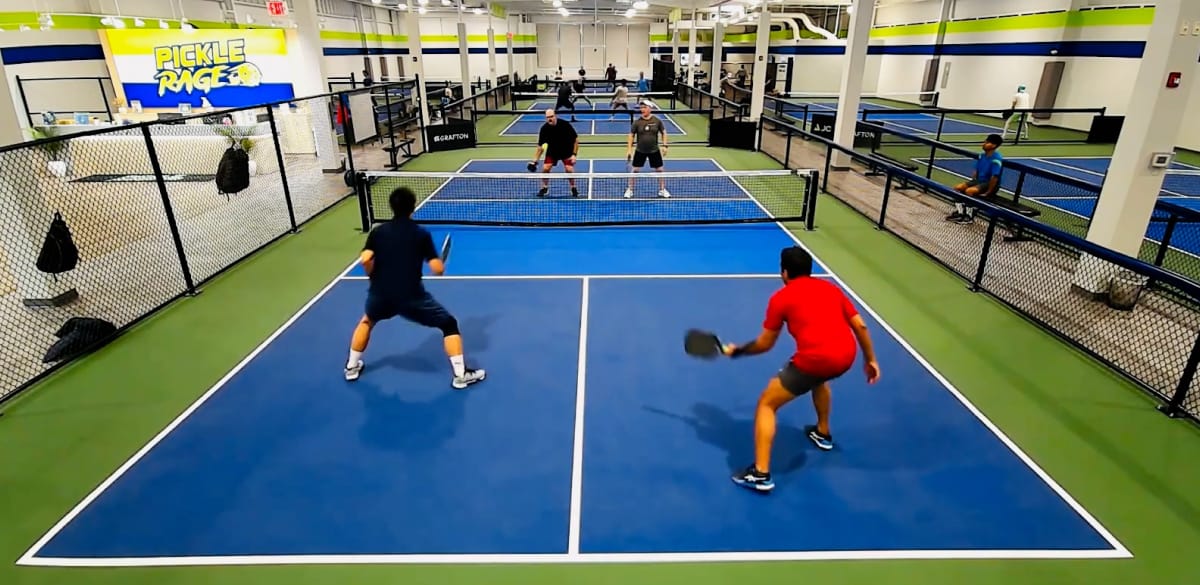
The Mental Game Behind All Three Fixes
Here is what ties all three causes together. Every unforced error is a mental decision before it is a physical miss.
You decided to go for too much. You decided to stop playing. You let tension take over your swing.
The players who eliminate unforced errors fastest are not necessarily the most skilled.
They are the most disciplined about playing the right shot at the right time, staying present through every rally, and managing their emotional state between points.
Think about how elite players move on the court. They look like they are barely trying. That is not because the game is easy for them.
It is because they are playing the percentages instead of chasing impressive shots.
The right shot at the right time beats the impressive shot at the wrong time every single time.
That consistency is a skill you can build. Mental game habits are just as trainable as your forehand. You just have to practice them intentionally.
Also worth noting: when you go into a match, play the shots you have actually been working on. A match is not the time to experiment.
Smart strategy means showing what you know, not reinventing your game under pressure.
If you have been drilling drives, hit drives. If you have been working on drops, trust your drop and move up.
And when the unforced errors do show up, because they will, bouncing back from a bad shot is its own skill.
Do not let one error become five. Reset between every single point.
The goal is simple. Make your opponent beat you. Do not beat yourself.
If you can walk off the court knowing you played the highest percentage shot available on most rallies, stayed present until the ball was actually out, and kept your grip loose under pressure, you are already winning more than you think.
For more on how shot selection creates offense without extra risk, look at these shot fixes for 3.0 players that apply at every level.
And if your resets keep popping up and giving opponents easy attacks, this breakdown explains exactly why that happens and how to correct it.
Put these three fixes together and you will immediately be a more consistent, harder-to-beat player, not because your strokes changed, but because your decisions did.
Frequently Asked Questions
What counts as an unforced error in pickleball?
An unforced error is any mistake you make when you had enough time and position to execute the shot correctly. If you drive a ball into the net when you were balanced and set up, that is an unforced error. It is different from a forced error, which happens when your opponent puts you in a difficult position with a strong shot.
Why do I play better in practice than in actual games?
Practice does not carry the same pressure as a real match, so your grip stays loose and your decisions stay clear. The moment a point feels important, tension creeps in and changes everything about how you swing. Building a pre-point routine and having go-to shots for big moments is the most direct fix for this gap.
How do I stop going for too much on low-percentage shots?
Before every ball, ask yourself two questions: is this ball attackable, and am I in position to attack? If the ball is below the net or you are scrambling, the answer is always reset. Training yourself to recognize the difference between an attack ball and a reset ball is the fastest way to cut unforced errors in half.
Why do I keep missing shots right after I hit a good one?
You are celebrating in your head before the rally is over. The moment you hit a clean shot and mentally check out, you lose your court position and miss the next ball completely. Train yourself to reset your feet and focus immediately after every shot, regardless of how good the previous one was.
What is the best way to stay calm during a close game?
Breathing is the fastest reset available. One breath before a serve, shoulders dropped, grip loosened, is enough to interrupt the tension cycle. Having a specific go-to shot you trust completely for big points removes the decision-making pressure that causes mistakes when the score is tight.

Love Pickleball? Join 100k+ readers for free weekly tips, news & gear deals.
Subscribe to The Dink